


 Home
HomeMarc Lore Predicts AI Will Democratize Restaurant Ownership
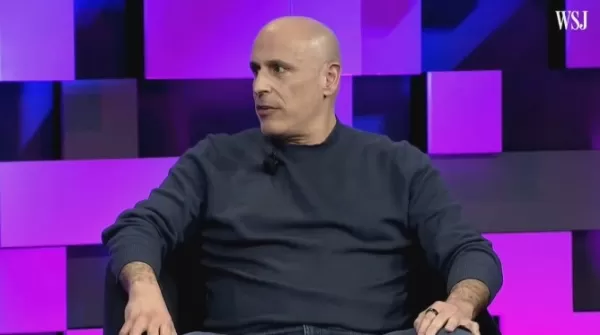
Marc Lore, the veteran e-commerce entrepreneur who sold his previous startups to Amazon and Walmart, has ambitious plans to integrate AI into his current venture, Wonder.
The centerpiece of this strategy is Wonder Create, an initiative designed to enable anyone—from food entrepreneurs to social media influencers—to use AI to design and launch their own restaurant brand in under a minute. These virtual restaurants would then become operational across Wonder's expanding network of tech-enabled kitchen locations, which currently number 120 and are projected to reach 400 next year.
Lore's startup, a vertically integrated dining and delivery platform, has evolved from food trucks to fast-casual restaurants with 10 to 20 seats. However, these are not conventional restaurants; they are "programmable cooking platforms" capable of functioning as 25 different types of cuisine-specific restaurants, all within their all-electric kitchens that are increasingly incorporating robotics.
Speaking at The Wall Street Journal's "Future of Everything" conference this week, Lore explained that these kitchens utilize a library of 700 ingredients. The "restaurants" operating within them actually consist of numerous distinct brands running from the same physical locations.
In addition to a staff of up to 12 people in these kitchens, cooking technology such as conveyors and robotic arms is involved in the food preparation process. The company recently acquired Spice Robotics, a manufacturer of an automatic bowl-making machine previously used by Sweetgreen. Next year, Wonder plans to introduce an "infinite sauce machine" capable of producing approximately 80% of all the sauces found in online recipes today.
Wonder Create was announced earlier this year as a platform allowing anyone to use Wonder's software to launch their own restaurant brand and recipes.
Lore elaborated on how this would function by leveraging AI technology, describing the concept as akin to a "Shopify front-end with an AI prompt."
"You type in what kind of restaurant you want to build. The AI constructs the restaurant—including the name, branding, description, images, pricing, health information, and all the recipes—in under a minute," Lore explained during an interview at the WSJ event. The aspiring restaurateur could then refine the AI's output if adjustments were needed. Once finalized, the restaurant would launch across all of Wonder's locations.
The company currently operates 120 of these "programmable cooking platforms," a number expected to grow to 400 next year. As robotics are integrated, Lore noted that the company does not necessarily plan to reduce headcount. Instead, the automation will increase the number of meals a kitchen can produce within a given timeframe.
"We currently achieve about 7 million meals in throughput capacity with 12 people," he said. "We see a path to reaching 20 million meals in throughput from a 2,500-square-foot space with just 12 people. The goal, by 2035, is to have 1,000 unique restaurants operating out of that same 2,500 square feet," Lore added.
The objective with these AI-generated "restaurants" is to enable people to experiment with food concepts in novel ways. For example, a restaurateur could test new recipes to gauge customer response before introducing them to their own physical locations.
Lore envisions other applications for the platform, such as allowing influencers to connect with their audience through their own "restaurant" brands without the need to establish actual physical chains.
"It could be a mega-influencer, a micro-influencer—anyone who wants to monetize their following," Lore said. "Or it could be a personal trainer who wants to create specific meal bowls. It could be a non-profit organization. It could be Disney marketing a new movie. Essentially, anybody can create a restaurant."
Whether a significant number of people will actually want to do so remains an open question. Ghost kitchens—a similar concept that promised to let brands sell food without operating a traditional restaurant—faced challenges in the early 2020s, with several prominent operators scaling back or shutting down after struggling to build customer loyalty. Wonder's added layer of automation and AI may help address some of these pitfalls, but the model's success at scale is yet to be proven.
The MrBeast Burger experiment, a famous ghost kitchen venture, vividly illustrated these challenges. The brand encountered widespread complaints regarding inconsistent food quality—a direct consequence of relying on dozens of different contracted kitchens and staff. Wonder's programmable, increasingly automated kitchens are specifically designed to solve this exact problem.
Lore acknowledged there are still limits to this model. Wonder's team (including its robots) cannot perform tasks like tossing pizza dough or rolling sushi. Instead, Wonder's focus is on simpler menu items such as burgers, chicken wings, fried chicken, and bowls.
This comprehensive plan aligns with Lore's other acquisitions—Grubhub for its business handling 250 million deliveries per year and Blue Apron for its meal kit operations. Wonder is now concentrating on acquiring established restaurant brands, such as New York City-based Blue Ribbon Fried Chicken, which it purchased for $6.5 million in February.
"When you acquire a brand—whether it has 10 locations or even 50 locations—and can then deploy it across 1,000 locations overnight, there is an incredible arbitrage opportunity there," Lore noted.
Related article
 Khosla-backed Genesis AI Unveils Full-Stack Robotics Solution
Genesis AI, a startup that secured a $105 million seed round to develop foundational AI for robotics, has launched its inaugural model, GENE-26.5, featuring unexpectedly dexterous hands. In a demonstration video, the company highlighted various advan
Robotics demand surges across sectors in Q2 2026, A3 reports
Automotive component makers increased robot orders, while OEMs did not in Q2. Source: A3While progress in artificial intelligence and humanoid robots continues to capture public and investor interest, industrial automation is still the leading segmen
How US$900m Funding Will Shape XPENG’s Robotics Vision
XPENG’s robotics division secures over US$900 million in funding, achieving a post-money valuation exceeding US$6.3 billion and accelerating the deployment of physical AI. Credit: XPENGSven De Smet, Head of Brand & Marketing at XPENG Europe, describe
Related Special Topic Recommendations
chatbot
Khosla-backed Genesis AI Unveils Full-Stack Robotics Solution
Genesis AI, a startup that secured a $105 million seed round to develop foundational AI for robotics, has launched its inaugural model, GENE-26.5, featuring unexpectedly dexterous hands. In a demonstration video, the company highlighted various advan
Robotics demand surges across sectors in Q2 2026, A3 reports
Automotive component makers increased robot orders, while OEMs did not in Q2. Source: A3While progress in artificial intelligence and humanoid robots continues to capture public and investor interest, industrial automation is still the leading segmen
How US$900m Funding Will Shape XPENG’s Robotics Vision
XPENG’s robotics division secures over US$900 million in funding, achieving a post-money valuation exceeding US$6.3 billion and accelerating the deployment of physical AI. Credit: XPENGSven De Smet, Head of Brand & Marketing at XPENG Europe, describe
Related Special Topic Recommendations
chatbot
 Best AI Roleplay Chat Apps for Language Practice, Interview Prep, and Daily Fluency
2026 Latest Best Top-rated AI Roleplay Chat Apps for Language Practice, Interview Prep, and Daily Fluency! XIX.AI curates a powerful game-changing collection that offers free vs paid comparison, real-world tests, and updated rankings weekly. These must-try tools help you boost writing skills, overcome fluency challenges, and improve communication efficiency across all daily scenarios. Explore now to discover your perfect tool for language growth!
 10 tools
 xix.ai
Music composition
AI Stem Separation Tools for Remix Production, Sampling Prep, and Karaoke Masters
xix.ai
Music composition
AI Stem Separation Tools for Remix Production, Sampling Prep, and Karaoke Masters
2026 Latest Best Top-rated AI Stem Separation Tools Curated for Remix Production, Sampling Prep, and Karaoke Masters. These powerful game-changing tools offer real-world tests to deliver precise audio isolation, boosting productivity significantly. XIX.AI provides a weekly updated free vs paid comparison guide to help you find the must-try solution that suits your needs. Explore now to unlock your AI edge.
8 tools
xix.ai
Data Analysis
AI SQL Copilots for Revenue Dashboards, Funnel Analysis, and Product Metrics
2026 Latest Best AI SQL Copilots Ranked Top-Rated! XIX.AI curates a powerful game-changing collection for weekly updated real-world tests. These must-try tools help you generate accurate revenue dashboards, analyze sales funnels, and track product metrics swiftly, boosting productivity massively. Explore now to Discover your perfect tool for data-driven decision making! 238 characters
9 tools
xix.ai
Music composition
Best AI Melody Writing Tools for Song Drafts
2026 Latest Best Top-Rated AI Melody Writing Tools for Song Drafts! XIX.AI has curated a highly powerful game-changing collection that goes through rigorous real-world tests to deliver the best writing experience. You can find detailed free vs paid comparisons, accurate rankings, and must-try options designed to help you create stunning song drafts effortlessly and boost your creative productivity significantly. Explore now to discover your perfect tool!
8 tools
xix.ai
chatbot
Best AI Conversation Trainer Tools for Interview Practice
2026 Latest Best Top-rated AI Conversation Trainer Tools for Interview Practice are here on XIX.AI! This curated collection features powerful, game-changing tools that go through rigorous real-world tests to deliver accurate feedback. You’ll find a free vs paid comparison and detailed rankings to help you choose the must-try option that boosts your confidence and skills. Explore now to Discover your perfect tool for interview success!
12 tools
xix.ai
Design & Art
Best AI Style Transfer Tools for Creative Experiments
2026 Latest Best Top-rated AI Style Transfer Tools for Creative Experiments! XIX.AI has curated a powerful, game-changing collection of must-try tools that deliver exceptional results through real-world tests and rigorous rankings. These top solutions help creatives boost productivity significantly by accelerating content creation and unlocking endless creative possibilities. Explore now to discover your perfect tool and start creating today!
9 tools
xix.ai

 Comments (0)
0/500
Comments (0)
0/500
Marc Lore, the veteran e-commerce entrepreneur who sold his previous startups to Amazon and Walmart, has ambitious plans to integrate AI into his current venture, Wonder.
The centerpiece of this strategy is Wonder Create, an initiative designed to enable anyone—from food entrepreneurs to social media influencers—to use AI to design and launch their own restaurant brand in under a minute. These virtual restaurants would then become operational across Wonder's expanding network of tech-enabled kitchen locations, which currently number 120 and are projected to reach 400 next year.
Lore's startup, a vertically integrated dining and delivery platform, has evolved from food trucks to fast-casual restaurants with 10 to 20 seats. However, these are not conventional restaurants; they are "programmable cooking platforms" capable of functioning as 25 different types of cuisine-specific restaurants, all within their all-electric kitchens that are increasingly incorporating robotics.
Speaking at The Wall Street Journal's "Future of Everything" conference this week, Lore explained that these kitchens utilize a library of 700 ingredients. The "restaurants" operating within them actually consist of numerous distinct brands running from the same physical locations.
In addition to a staff of up to 12 people in these kitchens, cooking technology such as conveyors and robotic arms is involved in the food preparation process. The company recently acquired Spice Robotics, a manufacturer of an automatic bowl-making machine previously used by Sweetgreen. Next year, Wonder plans to introduce an "infinite sauce machine" capable of producing approximately 80% of all the sauces found in online recipes today.
Wonder Create was announced earlier this year as a platform allowing anyone to use Wonder's software to launch their own restaurant brand and recipes.
Lore elaborated on how this would function by leveraging AI technology, describing the concept as akin to a "Shopify front-end with an AI prompt."
"You type in what kind of restaurant you want to build. The AI constructs the restaurant—including the name, branding, description, images, pricing, health information, and all the recipes—in under a minute," Lore explained during an interview at the WSJ event. The aspiring restaurateur could then refine the AI's output if adjustments were needed. Once finalized, the restaurant would launch across all of Wonder's locations.
The company currently operates 120 of these "programmable cooking platforms," a number expected to grow to 400 next year. As robotics are integrated, Lore noted that the company does not necessarily plan to reduce headcount. Instead, the automation will increase the number of meals a kitchen can produce within a given timeframe.
"We currently achieve about 7 million meals in throughput capacity with 12 people," he said. "We see a path to reaching 20 million meals in throughput from a 2,500-square-foot space with just 12 people. The goal, by 2035, is to have 1,000 unique restaurants operating out of that same 2,500 square feet," Lore added.
The objective with these AI-generated "restaurants" is to enable people to experiment with food concepts in novel ways. For example, a restaurateur could test new recipes to gauge customer response before introducing them to their own physical locations.
Lore envisions other applications for the platform, such as allowing influencers to connect with their audience through their own "restaurant" brands without the need to establish actual physical chains.
"It could be a mega-influencer, a micro-influencer—anyone who wants to monetize their following," Lore said. "Or it could be a personal trainer who wants to create specific meal bowls. It could be a non-profit organization. It could be Disney marketing a new movie. Essentially, anybody can create a restaurant."
Whether a significant number of people will actually want to do so remains an open question. Ghost kitchens—a similar concept that promised to let brands sell food without operating a traditional restaurant—faced challenges in the early 2020s, with several prominent operators scaling back or shutting down after struggling to build customer loyalty. Wonder's added layer of automation and AI may help address some of these pitfalls, but the model's success at scale is yet to be proven.
The MrBeast Burger experiment, a famous ghost kitchen venture, vividly illustrated these challenges. The brand encountered widespread complaints regarding inconsistent food quality—a direct consequence of relying on dozens of different contracted kitchens and staff. Wonder's programmable, increasingly automated kitchens are specifically designed to solve this exact problem.
Lore acknowledged there are still limits to this model. Wonder's team (including its robots) cannot perform tasks like tossing pizza dough or rolling sushi. Instead, Wonder's focus is on simpler menu items such as burgers, chicken wings, fried chicken, and bowls.
This comprehensive plan aligns with Lore's other acquisitions—Grubhub for its business handling 250 million deliveries per year and Blue Apron for its meal kit operations. Wonder is now concentrating on acquiring established restaurant brands, such as New York City-based Blue Ribbon Fried Chicken, which it purchased for $6.5 million in February.
"When you acquire a brand—whether it has 10 locations or even 50 locations—and can then deploy it across 1,000 locations overnight, there is an incredible arbitrage opportunity there," Lore noted.








 Khosla-backed Genesis AI Unveils Full-Stack Robotics Solution
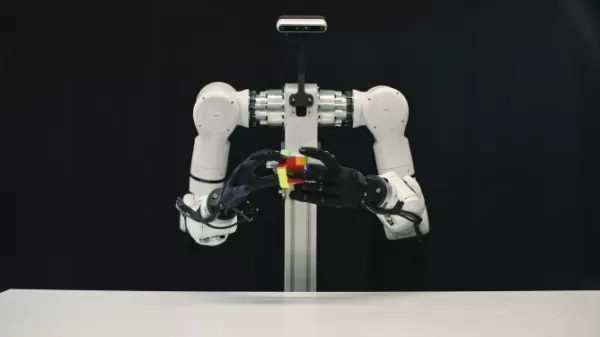
Genesis AI, a startup that secured a $105 million seed round to develop foundational AI for robotics, has launched its inaugural model, GENE-26.5, featuring unexpectedly dexterous hands. In a demonstration video, the company highlighted various advan
Khosla-backed Genesis AI Unveils Full-Stack Robotics Solution
Genesis AI, a startup that secured a $105 million seed round to develop foundational AI for robotics, has launched its inaugural model, GENE-26.5, featuring unexpectedly dexterous hands. In a demonstration video, the company highlighted various advan
 Robotics demand surges across sectors in Q2 2026, A3 reports
Automotive component makers increased robot orders, while OEMs did not in Q2. Source: A3While progress in artificial intelligence and humanoid robots continues to capture public and investor interest, industrial automation is still the leading segmen
Robotics demand surges across sectors in Q2 2026, A3 reports
Automotive component makers increased robot orders, while OEMs did not in Q2. Source: A3While progress in artificial intelligence and humanoid robots continues to capture public and investor interest, industrial automation is still the leading segmen
 How US$900m Funding Will Shape XPENG’s Robotics Vision
XPENG’s robotics division secures over US$900 million in funding, achieving a post-money valuation exceeding US$6.3 billion and accelerating the deployment of physical AI. Credit: XPENGSven De Smet, Head of Brand & Marketing at XPENG Europe, describe
How US$900m Funding Will Shape XPENG’s Robotics Vision
XPENG’s robotics division secures over US$900 million in funding, achieving a post-money valuation exceeding US$6.3 billion and accelerating the deployment of physical AI. Credit: XPENGSven De Smet, Head of Brand & Marketing at XPENG Europe, describe

2026 Latest Best Top-rated AI Roleplay Chat Apps for Language Practice, Interview Prep, and Daily Fluency! XIX.AI curates a powerful game-changing collection that offers free vs paid comparison, real-world tests, and updated rankings weekly. These must-try tools help you boost writing skills, overcome fluency challenges, and improve communication efficiency across all daily scenarios. Explore now to discover your perfect tool for language growth!
10 tools
xix.ai
2026 Latest Best Top-rated AI Stem Separation Tools Curated for Remix Production, Sampling Prep, and Karaoke Masters. These powerful game-changing tools offer real-world tests to deliver precise audio isolation, boosting productivity significantly. XIX.AI provides a weekly updated free vs paid comparison guide to help you find the must-try solution that suits your needs. Explore now to unlock your AI edge.
8 tools
xix.ai

2026 Latest Best AI SQL Copilots Ranked Top-Rated! XIX.AI curates a powerful game-changing collection for weekly updated real-world tests. These must-try tools help you generate accurate revenue dashboards, analyze sales funnels, and track product metrics swiftly, boosting productivity massively. Explore now to Discover your perfect tool for data-driven decision making! 238 characters
9 tools
xix.ai

2026 Latest Best Top-Rated AI Melody Writing Tools for Song Drafts! XIX.AI has curated a highly powerful game-changing collection that goes through rigorous real-world tests to deliver the best writing experience. You can find detailed free vs paid comparisons, accurate rankings, and must-try options designed to help you create stunning song drafts effortlessly and boost your creative productivity significantly. Explore now to discover your perfect tool!
8 tools
xix.ai
2026 Latest Best Top-rated AI Conversation Trainer Tools for Interview Practice are here on XIX.AI! This curated collection features powerful, game-changing tools that go through rigorous real-world tests to deliver accurate feedback. You’ll find a free vs paid comparison and detailed rankings to help you choose the must-try option that boosts your confidence and skills. Explore now to Discover your perfect tool for interview success!
12 tools
xix.ai

2026 Latest Best Top-rated AI Style Transfer Tools for Creative Experiments! XIX.AI has curated a powerful, game-changing collection of must-try tools that deliver exceptional results through real-world tests and rigorous rankings. These top solutions help creatives boost productivity significantly by accelerating content creation and unlocking endless creative possibilities. Explore now to discover your perfect tool and start creating today!
9 tools
xix.ai












