


 Home
HomeAppetronix Buys Cibotica to Automate Restaurant Kitchens
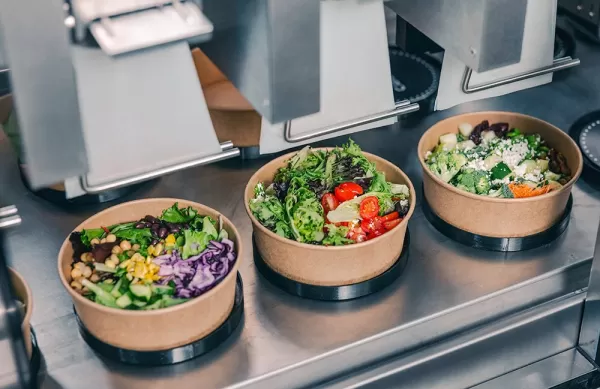
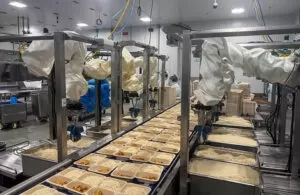
Cibotica, now part of Appetronix, offers Remy, an automated salad and bowl assembly line capable of handling a wide variety of ingredients. | Source: Appetronix
Appetronix has announced the acquisition of Cibotica, a developer of ingredient dispensing and portioning technology. This move expands Appetronix's capabilities beyond its core focus on building standalone, autonomous restaurants.
The deal will integrate Cibotica's flagship product—an automated bowl and salad assembly system—into Appetronix's restaurant operations. Financial terms of the acquisition were not disclosed.
"Cibotica has created remarkable, modular equipment," Nipun Sharma, CEO of Appetronix, told The Robot Report. "It integrates into existing restaurants and automates a significant portion of current kitchen tasks. They've already done the hard work. We have an infrastructure that can leverage their technology, as our machines can utilize their developments. Now, we can offer this service to a broader market."
Appetronix currently runs robotic pizza kitchens in partnership with Donatos, including a fully autonomous location at John Glenn Columbus International Airport in Ohio and another set to open this spring. By incorporating Cibotica's dispensing technology, the company says it is now better equipped to launch robotic concepts for multiple cuisines and formats that require precise ingredient handling.
Robotics may ease pressure on the restaurant industry
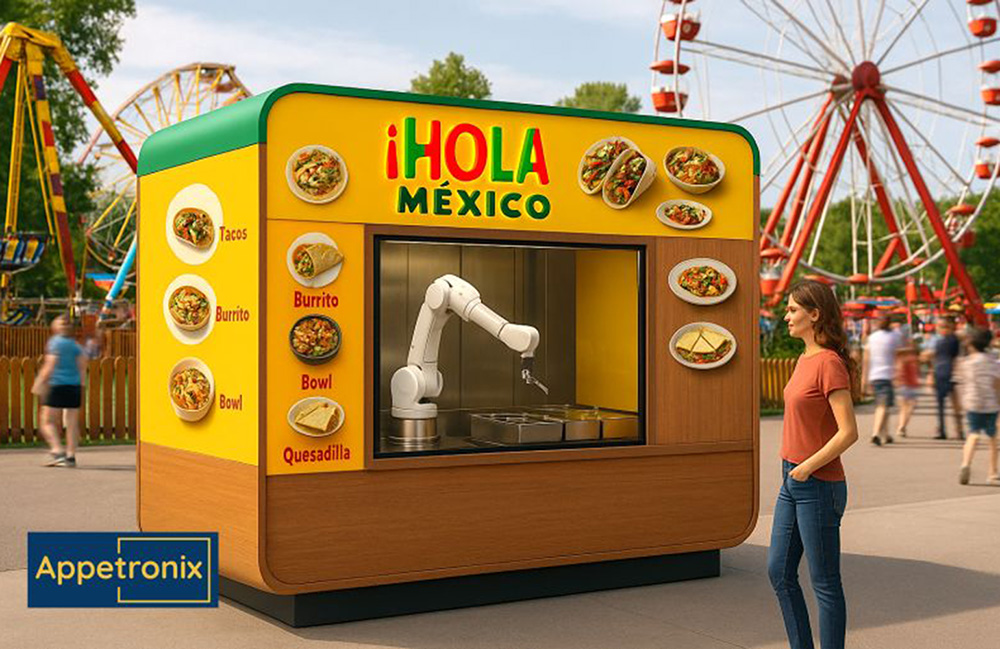
Appetronix aims to operate compact, automated restaurants serving various cuisines in diverse locations, including theme parks. | Source: Appetronix
"If you've been involved in the restaurant industry over the past decade, you've seen that labor is the biggest challenge," Sharma said. "A single oven can only do so much. If there's no one to press the buttons, you have a problem."
Furthermore, rising labor costs, combined with increased expenses from tariffs and inflation, have placed additional strain on restaurants in recent years.
"The restaurant industry is highly vulnerable, and we know robotics and automation will play a major role. Ultimately, people want their food prepared safely, quickly, and to taste excellent," Sharma added.
To address these challenges, Toronto-based Appetronix has concentrated on developing compact, standalone, fully autonomous kitchens. Sharma believes this approach is more effective than retrofitting existing kitchens.
"Many companies are automating existing kitchens, which is positive. But they weren't truly accelerating processes, cutting costs, or reducing labor," Sharma explained. "They were adding convenience, which is good, but it doesn't fundamentally improve the economics."
Using AI and robotics, Appetronix's restaurants forecast ingredient usage and replenishment needs based on historical traffic patterns and expected demand. "We estimate that when we provide this machine to an operator, they need to dedicate about three to four hours of one employee's time per day to manage it," Sharma noted.
Cibotica provides modular automation for existing kitchens
Appetronix and Cibotica are both Canadian robotics companies serving the food sector, so their paths have naturally crossed for years. "I've always been impressed by what they've achieved with limited resources, much like us. They've built a very powerful product," Sharma remarked.
Although Appetronix initially avoided automating existing kitchens, its perspective shifted through customer interactions.
"We deliberately chose not to automate existing kitchens because it's a smaller market and integrating new equipment is a complex process," Sharma said. "Our current and potential customers consistently asked, 'Can you automate our existing kitchens?' Our answer was always, 'No, we'll just build a new one.' But we were turning down an opportunity."
Sharma stated that Cibotica's intelligent, modular technology presented the ideal solution for automating established kitchens.
"With the knowledge base, products, and patents Cibotica has developed—it's astonishing what they've accomplished—we can now integrate it into our platform. We can approach existing customers and say, 'While we're building your new restaurant, we can likely automate your current setup as well,'" Sharma explained.
What's next for Appetronix?
Going forward, Sharma said Appetronix will offer a dual strategy: automating existing kitchens while also establishing new, fully autonomous ones. "This satisfies customers in the short term and ensures their long-term survival and growth," Sharma noted.
The company is also open to future acquisitions. According to Sharma, Appetronix is heavily invested in refining portion and temperature control. It is also exploring laser technology for cutting food—a method not feasible in staffed kitchens but viable in a fully autonomous environment.
"I firmly believe in not reinventing the wheel," Sharma said. "We're in discussions not only with hardware companies but also with software firms whose expertise in maintenance and AI data infrastructure aligns with our needs. We will pursue acquisitions whenever they can accelerate our development."
"Our core philosophy is that we don't sell robots; we sell food. And we sell the best-tasting food available," Sharma continued. Appetronix plans to expand into new culinary styles and locations, including theme parks, airports, gas stations, supermarkets, and offices.
Related article
 Robotics demand surges across sectors in Q2 2026, A3 reports
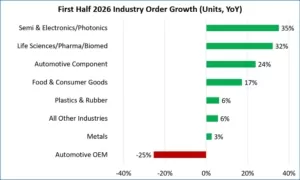
Automotive component makers increased robot orders, while OEMs did not in Q2. Source: A3While progress in artificial intelligence and humanoid robots continues to capture public and investor interest, industrial automation is still the leading segmen
Marc Lore Predicts AI Will Democratize Restaurant Ownership
Marc Lore, the veteran e-commerce entrepreneur who sold his previous startups to Amazon and Walmart, has ambitious plans to integrate AI into his current venture, Wonder.The centerpiece of this strategy is Wonder Create, an initiative designed to ena
Chef Robotics Hits Milestone of 100 Million Meals Served
Chef Robotics robots in operation at Chef Bombay. | Credit: Chef RoboticsChef Robotics Inc. announced yesterday that its robotic systems have now served 100 million meals at customer production facilities. The company states this figure is an order o
Related Special Topic Recommendations
writing
Robotics demand surges across sectors in Q2 2026, A3 reports
Automotive component makers increased robot orders, while OEMs did not in Q2. Source: A3While progress in artificial intelligence and humanoid robots continues to capture public and investor interest, industrial automation is still the leading segmen
Marc Lore Predicts AI Will Democratize Restaurant Ownership
Marc Lore, the veteran e-commerce entrepreneur who sold his previous startups to Amazon and Walmart, has ambitious plans to integrate AI into his current venture, Wonder.The centerpiece of this strategy is Wonder Create, an initiative designed to ena
Chef Robotics Hits Milestone of 100 Million Meals Served
Chef Robotics robots in operation at Chef Bombay. | Credit: Chef RoboticsChef Robotics Inc. announced yesterday that its robotic systems have now served 100 million meals at customer production facilities. The company states this figure is an order o
Related Special Topic Recommendations
writing
 AI Article Outline Tools for Long Form Writing
2026 Latest Best Top-Rated AI Article Outline Tools for Long Form Writing! This curated collection features powerful, game-changing tools that deliver accurate, structured outlines with real-world tests to boost writing efficiency significantly. XIX.AI is part of this elite selection. Get a free vs paid comparison to help you choose the perfect tool. Explore now and Unlock your AI edge!
 9 tools
 xix.ai
chatbot
Best AI Roleplay Chat Apps for Language Practice, Interview Prep, and Daily Fluency
xix.ai
chatbot
Best AI Roleplay Chat Apps for Language Practice, Interview Prep, and Daily Fluency
2026 Latest Best Top-rated AI Roleplay Chat Apps for Language Practice, Interview Prep, and Daily Fluency! XIX.AI curates a powerful game-changing collection that offers free vs paid comparison, real-world tests, and updated rankings weekly. These must-try tools help you boost writing skills, overcome fluency challenges, and improve communication efficiency across all daily scenarios. Explore now to discover your perfect tool for language growth!
10 tools
xix.ai
Music composition
AI Stem Separation Tools for Remix Production, Sampling Prep, and Karaoke Masters
2026 Latest Best Top-rated AI Stem Separation Tools Curated for Remix Production, Sampling Prep, and Karaoke Masters. These powerful game-changing tools offer real-world tests to deliver precise audio isolation, boosting productivity significantly. XIX.AI provides a weekly updated free vs paid comparison guide to help you find the must-try solution that suits your needs. Explore now to unlock your AI edge.
8 tools
xix.ai
Data Analysis
AI SQL Copilots for Revenue Dashboards, Funnel Analysis, and Product Metrics
2026 Latest Best AI SQL Copilots Ranked Top-Rated! XIX.AI curates a powerful game-changing collection for weekly updated real-world tests. These must-try tools help you generate accurate revenue dashboards, analyze sales funnels, and track product metrics swiftly, boosting productivity massively. Explore now to Discover your perfect tool for data-driven decision making! 238 characters
9 tools
xix.ai
Music composition
Best AI Melody Writing Tools for Song Drafts
2026 Latest Best Top-Rated AI Melody Writing Tools for Song Drafts! XIX.AI has curated a highly powerful game-changing collection that goes through rigorous real-world tests to deliver the best writing experience. You can find detailed free vs paid comparisons, accurate rankings, and must-try options designed to help you create stunning song drafts effortlessly and boost your creative productivity significantly. Explore now to discover your perfect tool!
8 tools
xix.ai
chatbot
Best AI Conversation Trainer Tools for Interview Practice
2026 Latest Best Top-rated AI Conversation Trainer Tools for Interview Practice are here on XIX.AI! This curated collection features powerful, game-changing tools that go through rigorous real-world tests to deliver accurate feedback. You’ll find a free vs paid comparison and detailed rankings to help you choose the must-try option that boosts your confidence and skills. Explore now to Discover your perfect tool for interview success!
12 tools
xix.ai

 Comments (0)
0/500
Comments (0)
0/500
Cibotica, now part of Appetronix, offers Remy, an automated salad and bowl assembly line capable of handling a wide variety of ingredients. | Source: Appetronix
Appetronix has announced the acquisition of Cibotica, a developer of ingredient dispensing and portioning technology. This move expands Appetronix's capabilities beyond its core focus on building standalone, autonomous restaurants.
The deal will integrate Cibotica's flagship product—an automated bowl and salad assembly system—into Appetronix's restaurant operations. Financial terms of the acquisition were not disclosed.
"Cibotica has created remarkable, modular equipment," Nipun Sharma, CEO of Appetronix, told The Robot Report. "It integrates into existing restaurants and automates a significant portion of current kitchen tasks. They've already done the hard work. We have an infrastructure that can leverage their technology, as our machines can utilize their developments. Now, we can offer this service to a broader market."
Appetronix currently runs robotic pizza kitchens in partnership with Donatos, including a fully autonomous location at John Glenn Columbus International Airport in Ohio and another set to open this spring. By incorporating Cibotica's dispensing technology, the company says it is now better equipped to launch robotic concepts for multiple cuisines and formats that require precise ingredient handling.
Robotics may ease pressure on the restaurant industry
Appetronix aims to operate compact, automated restaurants serving various cuisines in diverse locations, including theme parks. | Source: Appetronix
"If you've been involved in the restaurant industry over the past decade, you've seen that labor is the biggest challenge," Sharma said. "A single oven can only do so much. If there's no one to press the buttons, you have a problem."
Furthermore, rising labor costs, combined with increased expenses from tariffs and inflation, have placed additional strain on restaurants in recent years.
"The restaurant industry is highly vulnerable, and we know robotics and automation will play a major role. Ultimately, people want their food prepared safely, quickly, and to taste excellent," Sharma added.
To address these challenges, Toronto-based Appetronix has concentrated on developing compact, standalone, fully autonomous kitchens. Sharma believes this approach is more effective than retrofitting existing kitchens.
"Many companies are automating existing kitchens, which is positive. But they weren't truly accelerating processes, cutting costs, or reducing labor," Sharma explained. "They were adding convenience, which is good, but it doesn't fundamentally improve the economics."
Using AI and robotics, Appetronix's restaurants forecast ingredient usage and replenishment needs based on historical traffic patterns and expected demand. "We estimate that when we provide this machine to an operator, they need to dedicate about three to four hours of one employee's time per day to manage it," Sharma noted.
Cibotica provides modular automation for existing kitchens
Appetronix and Cibotica are both Canadian robotics companies serving the food sector, so their paths have naturally crossed for years. "I've always been impressed by what they've achieved with limited resources, much like us. They've built a very powerful product," Sharma remarked.
Although Appetronix initially avoided automating existing kitchens, its perspective shifted through customer interactions.
"We deliberately chose not to automate existing kitchens because it's a smaller market and integrating new equipment is a complex process," Sharma said. "Our current and potential customers consistently asked, 'Can you automate our existing kitchens?' Our answer was always, 'No, we'll just build a new one.' But we were turning down an opportunity."
Sharma stated that Cibotica's intelligent, modular technology presented the ideal solution for automating established kitchens.
"With the knowledge base, products, and patents Cibotica has developed—it's astonishing what they've accomplished—we can now integrate it into our platform. We can approach existing customers and say, 'While we're building your new restaurant, we can likely automate your current setup as well,'" Sharma explained.
What's next for Appetronix?
Going forward, Sharma said Appetronix will offer a dual strategy: automating existing kitchens while also establishing new, fully autonomous ones. "This satisfies customers in the short term and ensures their long-term survival and growth," Sharma noted.
The company is also open to future acquisitions. According to Sharma, Appetronix is heavily invested in refining portion and temperature control. It is also exploring laser technology for cutting food—a method not feasible in staffed kitchens but viable in a fully autonomous environment.
"I firmly believe in not reinventing the wheel," Sharma said. "We're in discussions not only with hardware companies but also with software firms whose expertise in maintenance and AI data infrastructure aligns with our needs. We will pursue acquisitions whenever they can accelerate our development."
"Our core philosophy is that we don't sell robots; we sell food. And we sell the best-tasting food available," Sharma continued. Appetronix plans to expand into new culinary styles and locations, including theme parks, airports, gas stations, supermarkets, and offices.








 Robotics demand surges across sectors in Q2 2026, A3 reports
Automotive component makers increased robot orders, while OEMs did not in Q2. Source: A3While progress in artificial intelligence and humanoid robots continues to capture public and investor interest, industrial automation is still the leading segmen
Robotics demand surges across sectors in Q2 2026, A3 reports
Automotive component makers increased robot orders, while OEMs did not in Q2. Source: A3While progress in artificial intelligence and humanoid robots continues to capture public and investor interest, industrial automation is still the leading segmen
 Marc Lore Predicts AI Will Democratize Restaurant Ownership
Marc Lore, the veteran e-commerce entrepreneur who sold his previous startups to Amazon and Walmart, has ambitious plans to integrate AI into his current venture, Wonder.The centerpiece of this strategy is Wonder Create, an initiative designed to ena
Marc Lore Predicts AI Will Democratize Restaurant Ownership
Marc Lore, the veteran e-commerce entrepreneur who sold his previous startups to Amazon and Walmart, has ambitious plans to integrate AI into his current venture, Wonder.The centerpiece of this strategy is Wonder Create, an initiative designed to ena
 Chef Robotics Hits Milestone of 100 Million Meals Served
Chef Robotics robots in operation at Chef Bombay. | Credit: Chef RoboticsChef Robotics Inc. announced yesterday that its robotic systems have now served 100 million meals at customer production facilities. The company states this figure is an order o
Chef Robotics Hits Milestone of 100 Million Meals Served
Chef Robotics robots in operation at Chef Bombay. | Credit: Chef RoboticsChef Robotics Inc. announced yesterday that its robotic systems have now served 100 million meals at customer production facilities. The company states this figure is an order o

2026 Latest Best Top-Rated AI Article Outline Tools for Long Form Writing! This curated collection features powerful, game-changing tools that deliver accurate, structured outlines with real-world tests to boost writing efficiency significantly. XIX.AI is part of this elite selection. Get a free vs paid comparison to help you choose the perfect tool. Explore now and Unlock your AI edge!
9 tools
xix.ai

2026 Latest Best Top-rated AI Roleplay Chat Apps for Language Practice, Interview Prep, and Daily Fluency! XIX.AI curates a powerful game-changing collection that offers free vs paid comparison, real-world tests, and updated rankings weekly. These must-try tools help you boost writing skills, overcome fluency challenges, and improve communication efficiency across all daily scenarios. Explore now to discover your perfect tool for language growth!
10 tools
xix.ai

2026 Latest Best Top-rated AI Stem Separation Tools Curated for Remix Production, Sampling Prep, and Karaoke Masters. These powerful game-changing tools offer real-world tests to deliver precise audio isolation, boosting productivity significantly. XIX.AI provides a weekly updated free vs paid comparison guide to help you find the must-try solution that suits your needs. Explore now to unlock your AI edge.
8 tools
xix.ai

2026 Latest Best AI SQL Copilots Ranked Top-Rated! XIX.AI curates a powerful game-changing collection for weekly updated real-world tests. These must-try tools help you generate accurate revenue dashboards, analyze sales funnels, and track product metrics swiftly, boosting productivity massively. Explore now to Discover your perfect tool for data-driven decision making! 238 characters
9 tools
xix.ai

2026 Latest Best Top-Rated AI Melody Writing Tools for Song Drafts! XIX.AI has curated a highly powerful game-changing collection that goes through rigorous real-world tests to deliver the best writing experience. You can find detailed free vs paid comparisons, accurate rankings, and must-try options designed to help you create stunning song drafts effortlessly and boost your creative productivity significantly. Explore now to discover your perfect tool!
8 tools
xix.ai

2026 Latest Best Top-rated AI Conversation Trainer Tools for Interview Practice are here on XIX.AI! This curated collection features powerful, game-changing tools that go through rigorous real-world tests to deliver accurate feedback. You’ll find a free vs paid comparison and detailed rankings to help you choose the must-try option that boosts your confidence and skills. Explore now to Discover your perfect tool for interview success!
12 tools
xix.ai












