


 Home
HomeChef Robotics Hits Milestone of 100 Million Meals Served
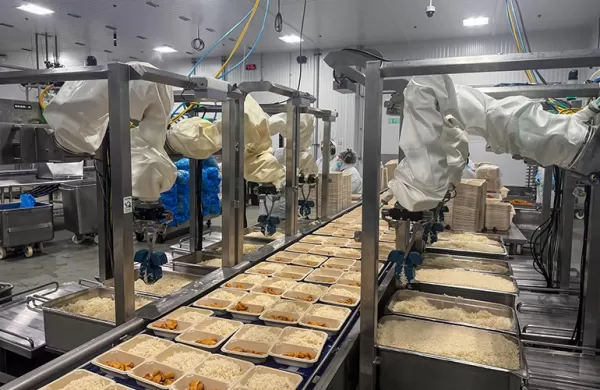
Chef Robotics robots in operation at Chef Bombay. | Credit: Chef Robotics
Chef Robotics Inc. announced yesterday that its robotic systems have now served 100 million meals at customer production facilities. The company states this figure is an order of magnitude greater than the combined total of all other food robotics firms. Chef Robotics also highlighted that it has compiled the world's most extensive real-world dataset for food manipulation and possesses more in-production training data on deformable materials than any other physical AI company.
The San Francisco-based startup noted that this achievement stems from deployments across over a dozen facilities in the United States, Canada, and Europe. According to the company, its systems have enabled food manufacturers to enhance yield, ensure consistency, and boost labor productivity.
In March 2025, Chef Robotics secured $43 million in a Series A funding round. This capital injection allowed the company to expand its engineering team and refine product features. More significantly, the investment accelerated the growth of its customer network and support capabilities, directly contributing to reaching the 100-million-meal milestone.
Chef Robotics leverages physical AI for cooking
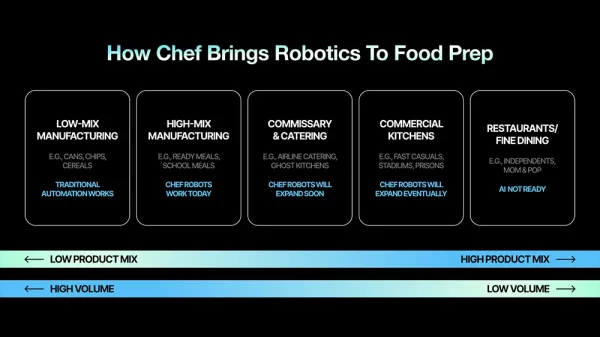
Chef Robotics specializes in high-mix food manufacturing applications. | Credit: Chef Robotics
Founded in 2019, Chef Robotics believes physical AI is unlocking new automation possibilities within the multi-trillion-dollar food preparation industry, which faces persistent labor shortages.
The company intentionally began by automating high-volume, lower-complexity tasks such as portioning and assembly, rather than targeting commercial kitchens where lower volumes and higher complexity would have made immediate robotic value delivery more challenging.
Food production fuels a data flywheel
Chef Robotics points out that, unlike autonomous vehicles, warehouse robots, or large language models (LLMs), food robotics cannot depend on simulation, synthetic data, or internet-scraped information for training. Food ingredients are organic, deformable, and highly variable, making them difficult to model accurately in synthetic environments.
The startup asserts that real-world production data is the only reliable method for building models that perform effectively in live customer settings.
The company trains its AI models exclusively on data gathered from actual production lines at customer sites, avoiding simulations or lab data. Each new deployment generates a richer, more diverse dataset, which in turn improves model performance. This enables the handling of more ingredients, use cases, and customer locations—creating a self-reinforcing data flywheel that gains momentum over time.
Chef Robotics' journey from zero to 100 million servings
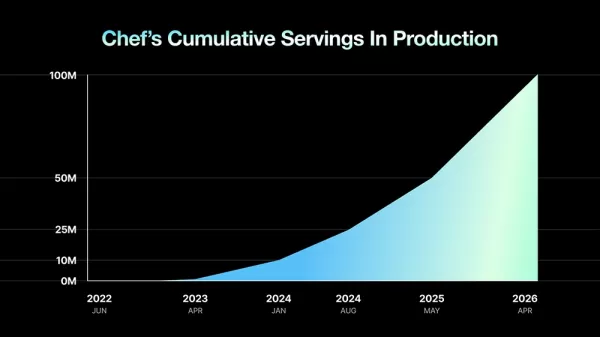
Chef Robotics has steadily expanded its installed base since June 2022. | Credit: Chef Robotics
Following its initial deployment with Amy’s Kitchen in 2022, Chef Robotics has hit several key milestones: 1 million servings by April 2023, 10 million by January 2024, 25 million by August 2024, and 50 million by May 2025.
The company has now doubled its cumulative serving count again in under a year.
“Food presents one of the most technically challenging manipulation environments in the physical world,” said Rajat Bhageria, Founder and CEO of Chef Robotics. “By first solving the complexities of high-variance, deformable food production, we have established ourselves not only as a leader in food robotics but as the defining physical AI platform for real-world automation.”
Related article
 Robotics demand surges across sectors in Q2 2026, A3 reports
Automotive component makers increased robot orders, while OEMs did not in Q2. Source: A3While progress in artificial intelligence and humanoid robots continues to capture public and investor interest, industrial automation is still the leading segmen
Marc Lore Predicts AI Will Democratize Restaurant Ownership
Marc Lore, the veteran e-commerce entrepreneur who sold his previous startups to Amazon and Walmart, has ambitious plans to integrate AI into his current venture, Wonder.The centerpiece of this strategy is Wonder Create, an initiative designed to ena
Appetronix Buys Cibotica to Automate Restaurant Kitchens
Cibotica, now part of Appetronix, offers Remy, an automated salad and bowl assembly line capable of handling a wide variety of ingredients. | Source: AppetronixAppetronix has announced the acquisition of Cibotica, a developer of ingredient dispensing
Related Special Topic Recommendations
Video creation
Robotics demand surges across sectors in Q2 2026, A3 reports
Automotive component makers increased robot orders, while OEMs did not in Q2. Source: A3While progress in artificial intelligence and humanoid robots continues to capture public and investor interest, industrial automation is still the leading segmen
Marc Lore Predicts AI Will Democratize Restaurant Ownership
Marc Lore, the veteran e-commerce entrepreneur who sold his previous startups to Amazon and Walmart, has ambitious plans to integrate AI into his current venture, Wonder.The centerpiece of this strategy is Wonder Create, an initiative designed to ena
Appetronix Buys Cibotica to Automate Restaurant Kitchens
Cibotica, now part of Appetronix, offers Remy, an automated salad and bowl assembly line capable of handling a wide variety of ingredients. | Source: AppetronixAppetronix has announced the acquisition of Cibotica, a developer of ingredient dispensing
Related Special Topic Recommendations
Video creation
 AI Short-Form Video Hook Generators for Reels, Shorts, and Product Launch Campaigns
2026 Latest Best AI Short-Form Video Hook Generators for Reels Shorts and Product Launch Campaigns! XIX.AI curates top-rated powerful game-changing tools that deliver must-try results through real-world tests. This weekly updated page offers free vs paid comparison rankings to help you find the perfect solution for boosting content creativity and productivity. Explore now to Unlock your AI edge!
 11 tools
 xix.ai
writing
AI Article Outline Tools for Long Form Writing
xix.ai
writing
AI Article Outline Tools for Long Form Writing
2026 Latest Best Top-Rated AI Article Outline Tools for Long Form Writing! This curated collection features powerful, game-changing tools that deliver accurate, structured outlines with real-world tests to boost writing efficiency significantly. XIX.AI is part of this elite selection. Get a free vs paid comparison to help you choose the perfect tool. Explore now and Unlock your AI edge!
9 tools
xix.ai
chatbot
Best AI Roleplay Chat Apps for Language Practice, Interview Prep, and Daily Fluency
2026 Latest Best Top-rated AI Roleplay Chat Apps for Language Practice, Interview Prep, and Daily Fluency! XIX.AI curates a powerful game-changing collection that offers free vs paid comparison, real-world tests, and updated rankings weekly. These must-try tools help you boost writing skills, overcome fluency challenges, and improve communication efficiency across all daily scenarios. Explore now to discover your perfect tool for language growth!
10 tools
xix.ai
Music composition
AI Stem Separation Tools for Remix Production, Sampling Prep, and Karaoke Masters
2026 Latest Best Top-rated AI Stem Separation Tools Curated for Remix Production, Sampling Prep, and Karaoke Masters. These powerful game-changing tools offer real-world tests to deliver precise audio isolation, boosting productivity significantly. XIX.AI provides a weekly updated free vs paid comparison guide to help you find the must-try solution that suits your needs. Explore now to unlock your AI edge.
8 tools
xix.ai
Data Analysis
AI SQL Copilots for Revenue Dashboards, Funnel Analysis, and Product Metrics
2026 Latest Best AI SQL Copilots Ranked Top-Rated! XIX.AI curates a powerful game-changing collection for weekly updated real-world tests. These must-try tools help you generate accurate revenue dashboards, analyze sales funnels, and track product metrics swiftly, boosting productivity massively. Explore now to Discover your perfect tool for data-driven decision making! 238 characters
9 tools
xix.ai
Music composition
Best AI Melody Writing Tools for Song Drafts
2026 Latest Best Top-Rated AI Melody Writing Tools for Song Drafts! XIX.AI has curated a highly powerful game-changing collection that goes through rigorous real-world tests to deliver the best writing experience. You can find detailed free vs paid comparisons, accurate rankings, and must-try options designed to help you create stunning song drafts effortlessly and boost your creative productivity significantly. Explore now to discover your perfect tool!
8 tools
xix.ai

 Comments (1)
0/500
Comments (1)
0/500
![JuanScott]()
100 million meals? That's a lot of robot-cooked food! I wonder how the taste compares to human-made? 🤔 Also, what about jobs for chefs? Interesting milestone though!
Chef Robotics robots in operation at Chef Bombay. | Credit: Chef Robotics
Chef Robotics Inc. announced yesterday that its robotic systems have now served 100 million meals at customer production facilities. The company states this figure is an order of magnitude greater than the combined total of all other food robotics firms. Chef Robotics also highlighted that it has compiled the world's most extensive real-world dataset for food manipulation and possesses more in-production training data on deformable materials than any other physical AI company.
The San Francisco-based startup noted that this achievement stems from deployments across over a dozen facilities in the United States, Canada, and Europe. According to the company, its systems have enabled food manufacturers to enhance yield, ensure consistency, and boost labor productivity.
In March 2025, Chef Robotics secured $43 million in a Series A funding round. This capital injection allowed the company to expand its engineering team and refine product features. More significantly, the investment accelerated the growth of its customer network and support capabilities, directly contributing to reaching the 100-million-meal milestone.
Chef Robotics leverages physical AI for cooking
Chef Robotics specializes in high-mix food manufacturing applications. | Credit: Chef Robotics
Founded in 2019, Chef Robotics believes physical AI is unlocking new automation possibilities within the multi-trillion-dollar food preparation industry, which faces persistent labor shortages.
The company intentionally began by automating high-volume, lower-complexity tasks such as portioning and assembly, rather than targeting commercial kitchens where lower volumes and higher complexity would have made immediate robotic value delivery more challenging.
Food production fuels a data flywheel
Chef Robotics points out that, unlike autonomous vehicles, warehouse robots, or large language models (LLMs), food robotics cannot depend on simulation, synthetic data, or internet-scraped information for training. Food ingredients are organic, deformable, and highly variable, making them difficult to model accurately in synthetic environments.
The startup asserts that real-world production data is the only reliable method for building models that perform effectively in live customer settings.
The company trains its AI models exclusively on data gathered from actual production lines at customer sites, avoiding simulations or lab data. Each new deployment generates a richer, more diverse dataset, which in turn improves model performance. This enables the handling of more ingredients, use cases, and customer locations—creating a self-reinforcing data flywheel that gains momentum over time.
Chef Robotics' journey from zero to 100 million servings
Chef Robotics has steadily expanded its installed base since June 2022. | Credit: Chef Robotics
Following its initial deployment with Amy’s Kitchen in 2022, Chef Robotics has hit several key milestones: 1 million servings by April 2023, 10 million by January 2024, 25 million by August 2024, and 50 million by May 2025.
The company has now doubled its cumulative serving count again in under a year.
“Food presents one of the most technically challenging manipulation environments in the physical world,” said Rajat Bhageria, Founder and CEO of Chef Robotics. “By first solving the complexities of high-variance, deformable food production, we have established ourselves not only as a leader in food robotics but as the defining physical AI platform for real-world automation.”








 Robotics demand surges across sectors in Q2 2026, A3 reports
Automotive component makers increased robot orders, while OEMs did not in Q2. Source: A3While progress in artificial intelligence and humanoid robots continues to capture public and investor interest, industrial automation is still the leading segmen
Robotics demand surges across sectors in Q2 2026, A3 reports
Automotive component makers increased robot orders, while OEMs did not in Q2. Source: A3While progress in artificial intelligence and humanoid robots continues to capture public and investor interest, industrial automation is still the leading segmen
 Marc Lore Predicts AI Will Democratize Restaurant Ownership
Marc Lore, the veteran e-commerce entrepreneur who sold his previous startups to Amazon and Walmart, has ambitious plans to integrate AI into his current venture, Wonder.The centerpiece of this strategy is Wonder Create, an initiative designed to ena
Marc Lore Predicts AI Will Democratize Restaurant Ownership
Marc Lore, the veteran e-commerce entrepreneur who sold his previous startups to Amazon and Walmart, has ambitious plans to integrate AI into his current venture, Wonder.The centerpiece of this strategy is Wonder Create, an initiative designed to ena
 Appetronix Buys Cibotica to Automate Restaurant Kitchens
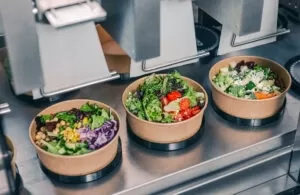
Cibotica, now part of Appetronix, offers Remy, an automated salad and bowl assembly line capable of handling a wide variety of ingredients. | Source: AppetronixAppetronix has announced the acquisition of Cibotica, a developer of ingredient dispensing
Appetronix Buys Cibotica to Automate Restaurant Kitchens
Cibotica, now part of Appetronix, offers Remy, an automated salad and bowl assembly line capable of handling a wide variety of ingredients. | Source: AppetronixAppetronix has announced the acquisition of Cibotica, a developer of ingredient dispensing

2026 Latest Best AI Short-Form Video Hook Generators for Reels Shorts and Product Launch Campaigns! XIX.AI curates top-rated powerful game-changing tools that deliver must-try results through real-world tests. This weekly updated page offers free vs paid comparison rankings to help you find the perfect solution for boosting content creativity and productivity. Explore now to Unlock your AI edge!
11 tools
xix.ai

2026 Latest Best Top-Rated AI Article Outline Tools for Long Form Writing! This curated collection features powerful, game-changing tools that deliver accurate, structured outlines with real-world tests to boost writing efficiency significantly. XIX.AI is part of this elite selection. Get a free vs paid comparison to help you choose the perfect tool. Explore now and Unlock your AI edge!
9 tools
xix.ai

2026 Latest Best Top-rated AI Roleplay Chat Apps for Language Practice, Interview Prep, and Daily Fluency! XIX.AI curates a powerful game-changing collection that offers free vs paid comparison, real-world tests, and updated rankings weekly. These must-try tools help you boost writing skills, overcome fluency challenges, and improve communication efficiency across all daily scenarios. Explore now to discover your perfect tool for language growth!
10 tools
xix.ai

2026 Latest Best Top-rated AI Stem Separation Tools Curated for Remix Production, Sampling Prep, and Karaoke Masters. These powerful game-changing tools offer real-world tests to deliver precise audio isolation, boosting productivity significantly. XIX.AI provides a weekly updated free vs paid comparison guide to help you find the must-try solution that suits your needs. Explore now to unlock your AI edge.
8 tools
xix.ai

2026 Latest Best AI SQL Copilots Ranked Top-Rated! XIX.AI curates a powerful game-changing collection for weekly updated real-world tests. These must-try tools help you generate accurate revenue dashboards, analyze sales funnels, and track product metrics swiftly, boosting productivity massively. Explore now to Discover your perfect tool for data-driven decision making! 238 characters
9 tools
xix.ai

2026 Latest Best Top-Rated AI Melody Writing Tools for Song Drafts! XIX.AI has curated a highly powerful game-changing collection that goes through rigorous real-world tests to deliver the best writing experience. You can find detailed free vs paid comparisons, accurate rankings, and must-try options designed to help you create stunning song drafts effortlessly and boost your creative productivity significantly. Explore now to discover your perfect tool!
8 tools
xix.ai

100 million meals? That's a lot of robot-cooked food! I wonder how the taste compares to human-made? 🤔 Also, what about jobs for chefs? Interesting milestone though!












