


 Home
HomeFedEx favors strategic partnerships for automation over in-house tech development.
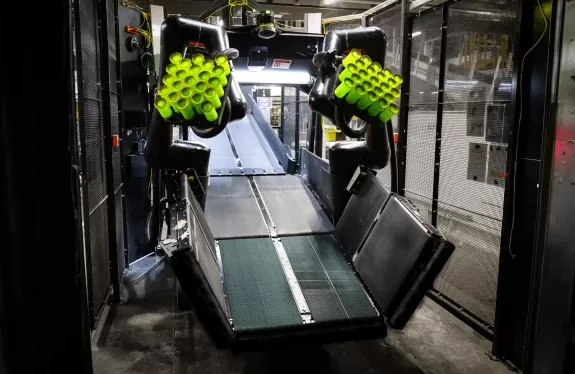
Warehouse automation is advancing at a rapid pace. While some corporations, such as Amazon, are building proprietary robotic fleets internally, many others are sourcing their automation technology from external specialists.
FedEx has experimented with both paths. Ultimately, this $84 billion logistics leader has determined that forging partnerships with robotics firms is the most effective strategy to remain competitive in the automation race.
The company’s recent multi-year collaboration with SoftBank-owned Berkshire Grey exemplifies this approach: leverage external expertise to create robots for repetitive and hazardous tasks. This non-exclusive partnership produced "Scoop," a bulk unloading robot designed to extract large bundles of parcels from delivery trucks in a single operation.
FedEx plans to initiate a pilot program for deploying these robots in its facilities later this year. Although the bots won't be compatible with every one of FedEx's thousands of unloading doors initially, the company aims to scale the technology widely following a successful trial.
Stephanie Cook, FedEx’s Director of Advanced Technology and Innovation for Robotics, explained to TechCrunch that bulk unloading is among the most physically taxing and variable jobs within their warehouses. According to Cook, this isn't the company's first effort to automate the process, as previous attempts struggled to find a suitable robotic solution.
“We recognized that no off-the-shelf product would meet our specific needs,” Cook stated. “Given our prior work with Berkshire Grey, a collaborative development felt like the right fit. We understood this wasn't a project we could complete in a few months; it required a multi-year commitment to reach this point.”
O.P. Skaaksrud, Vice President of Advanced Technology and Innovation at FedEx, added that bulk unloading is an ideal task for automation. While the robots must make some decisions, the process is less granular than picking or searching for individual packages, making it a more straightforward automation challenge.
“Given the immense variety in our package mix, specialized single-pick systems simply wouldn't be fast enough,” Skaaksrud noted. “That was a key consideration in our decision. Other unloaders that handle single parcels lack the necessary speed and versatility for our diverse loads.”
Cook emphasized that the company prioritizes automating the most dangerous and strenuous warehouse roles first. These repetitive tasks are generally well-suited for robotics, allowing employees to transition to safer, higher-skilled positions.
Strategic Automation Partnerships
The Memphis-based giant does develop certain technologies internally, such as the FedEx SenseAware and SenseAware ID sensor systems for package tracking.
However, Skaaksrud clarified that developing sensor hardware and creating robotics capabilities are fundamentally different challenges.
“Creating sensor hardware is complex, but robotics development is on another level entirely,” Skaaksrud said. “Partnering with established experts in the field allows us to move faster and more effectively. We view these collaborations as mutually beneficial for FedEx and our partners.”
Berkshire Grey is not FedEx's only automation partner. The company has secured several agreements and conducted numerous pilots in recent years to automate more of its warehouse and logistics operations.
Inside its facilities, FedEx works with Dexterity, a robotics unicorn specializing in robots with a delicate, human-like touch. It also has an agreement with Nimble, another startup valued over $1 billion, which focuses on building fully autonomous warehouses.
The pursuit of autonomous delivery, for both last-mile and long-haul routes, is another key focus.
In 2021, FedEx initiated a pilot with autonomous trucking startup Aurora Innovation, using self-driving trucks on specific Texas routes. The partnership expanded in 2022 and has since completed over 3,200 autonomous hauls.
That same year, FedEx also partnered with Nuro for last-mile autonomous delivery robots, expressing a long-term commitment to scaling the solution. However, after Nuro shifted its business model to licensing its technology in 2025, the collaboration ended.
FedEx has also explored in-house development for last-mile delivery, with mixed results. The company launched the SameDay Bot in 2019, but the reception was lukewarm—the robots were even ordered out of New York City by former Mayor Bill de Blasio. FedEx discontinued the project a few years later but maintains that last-mile innovation remains a priority.
A Pragmatic Approach to Innovation
While determined not to fall behind in automation, Skaaksrud and Cook stress that FedEx will not chase technology for its own sake. The company avoids impulsively adopting every new robot or system that hits the market.
“We can't focus solely on the technology itself, or we will fail,” Skaaksrud cautioned. “This is a complex, multi-dimensional challenge. You must solve for all the components—many of which aren't glamorous—that form the complete solution. We are committed to deploying not just interesting technology, but productive technology that solves real business problems.”
The company is also unconcerned that its partnership model might limit proprietary technology development. Skaaksrud argued that hardware is just hardware; FedEx trucks, for instance, are standard vehicles. What truly defines FedEx is the intelligent network and logistics brainpower behind its delivery ecosystem.
Although media coverage might suggest a frantic rush to automate everything, FedEx plans a measured, calculated rollout of new technologies.
For Cook, the central focus remains the warehouse employees. Technology must be designed to work alongside people, enhancing their jobs and ensuring their safety.
Consequently, and because the company prioritizes areas with a clear return on investment, FedEx currently has no plans to implement humanoid robots.
“Coordinating multiple humanoids in a confined, highly dynamic space is incredibly difficult,” Skaaksrud explained. “Humanoids are fascinating, and we’re certainly monitoring their progress, but it's about fit-for-purpose. You have to cut through the hype, understand the current limitations, and set realistic expectations, even considering their long-term potential.”
Related article
 Toyota’s $6.4bn robotics estimate puts physical AI in focus
Toyota Motor projects that rolling out automation across its manufacturing facilities, subsidiaries, and key suppliers may require approximately 400,000 robots and an annual expenditure of roughly 1 trillion yen ($6.4 billion) starting in 2028.Accord
Japan tackles labor shortage with AI model for 10 million robots
Japan’s AI robotics initiative has transitioned from a discussion topic into an official national strategy. The government recently validated widely cited projections: deploying 10 million AI-driven robots across 18 sectors by 2040, supported by publ
Universal Robots Unveils Gen 7 for Physical AI Deployment
Will Healy, Director of Product & Industry Marketing at Universal Robots, credited for the imageWill Healy, Director of Product & Industry Marketing at Universal Robots, emphasizes that following the Gen 7 release, AI-driven robots must prioritize ad
Related Special Topic Recommendations
Design & Art
Toyota’s $6.4bn robotics estimate puts physical AI in focus
Toyota Motor projects that rolling out automation across its manufacturing facilities, subsidiaries, and key suppliers may require approximately 400,000 robots and an annual expenditure of roughly 1 trillion yen ($6.4 billion) starting in 2028.Accord
Japan tackles labor shortage with AI model for 10 million robots
Japan’s AI robotics initiative has transitioned from a discussion topic into an official national strategy. The government recently validated widely cited projections: deploying 10 million AI-driven robots across 18 sectors by 2040, supported by publ
Universal Robots Unveils Gen 7 for Physical AI Deployment
Will Healy, Director of Product & Industry Marketing at Universal Robots, credited for the imageWill Healy, Director of Product & Industry Marketing at Universal Robots, emphasizes that following the Gen 7 release, AI-driven robots must prioritize ad
Related Special Topic Recommendations
Design & Art
 Top AI Illustration Tools: Create Editorial Scenes and Cover Art Faster
2026 Latest Top-rated AI Illustration Tools: Our curated list features the best powerfully designed tools for creating stunning editorial scenes and eye-catching cover art quickly. Each option has gone through rigorous real-world tests, offering a free vs paid comparison to help you find the perfect match for your workflow. Try these must-try solutions today to unlock your AI edge and boost your creative productivity. Explore now at XIX.AI.
 10 tools
 xix.ai
Education and Learning
Top AI Tutors for Exam Prep: Practice Math, Science, and English
xix.ai
Education and Learning
Top AI Tutors for Exam Prep: Practice Math, Science, and English
2026 Latest Top-Rated Best AI Tutors for Exam Prep are here on XIX.AI! Our curated list features powerful game-changing tools that offer free vs paid comparison, real-world tests, and weekly updated rankings. They help boost your writing efficiency, simplify complex topic learning, and unlock your academic potential. Explore now to Discover your perfect exam prep tool and Start creating today to Unlock your AI edge!
10 tools
xix.ai
Finance
AI Budget Planning Tools for Personal Money Management
2026 Latest Best Top-Rated AI Budget Planning Tools for Personal Money Management are here on XIX.AI! This curated collection features powerful, game-changing solutions that help you conduct real-world tests, understand spending habits, and create personalized plans to boost productivity. Enjoy a free vs paid comparison along with detailed rankings. Must-try tools designed to simplify money management and unlock your AI edge. Explore now!
11 tools
xix.ai
Health & Wellness
AI Sleep Tracking Assistants: Improve Recovery with Better Bedtime Habits
2026 Latest Best Top-Rated AI Sleep Tracking Assistants curated for ultimate recovery. This fully updated weekly guide features powerful tools that deliver real-world tests, free vs paid comparison, and detailed rankings to help you find the must-try solution that boosts sleep quality and supports better bedtime habits. Explore now at XIX.AI to Unlock your AI edge.
10 tools
xix.ai
Data Analysis
AI SQL Copilots for Product and Revenue Analytics
2026 Latest Best Top-Rated AI SQL Copilots for Product and Revenue Analytics! XIX.AI has curated a powerful, game-changing collection of must-try tools that undergo real-world tests through weekly updated rankings. These tools help users boost productivity significantly by accelerating data analysis, streamlining complex queries, and generating accurate insights to drive smarter business decisions. Explore now to Discover your perfect tool for unlocking your AI edge!
14 tools
xix.ai
Education and Learning
Best AI Homework Helpers That Teach: Learn Concepts, Not Just Answers
2026 Latest Best Top-Rated AI Homework Helpers That Teach Core Concepts Not Just Answers Powerful Tools for Students Must-Try Curated List Weekly Updated Free vs Paid Comparison Real-World Tests Accurate Rankings to Help You Unlock Your Full Learning Potential Explore now to Discover your perfect tool for smarter studying.
10 tools
xix.ai

 Comments (1)
0/500
Comments (1)
0/500
![JamesGreen]()
Interessant, dass FedEx auf Partnerschaften setzt statt alles selbst zu entwickeln. 🤔 Finde ich eigentlich clever – so kann man flexibler auf neue Technologien reagieren, ohne riesige eigene Entwicklungsabteilungen aufbauen zu müssen. Aber ob das langfristig wirklich kostengünstiger ist? Die Abhängigkeit von externen Anbietern könnte auch zum Nachteil werden, wenn die Preise steigen oder die Technik nicht perfekt integriert ist. Mal sehen, wie sich das im Wettbewerb mit Amazon auswirkt.
Warehouse automation is advancing at a rapid pace. While some corporations, such as Amazon, are building proprietary robotic fleets internally, many others are sourcing their automation technology from external specialists.
FedEx has experimented with both paths. Ultimately, this $84 billion logistics leader has determined that forging partnerships with robotics firms is the most effective strategy to remain competitive in the automation race.
The company’s recent multi-year collaboration with SoftBank-owned Berkshire Grey exemplifies this approach: leverage external expertise to create robots for repetitive and hazardous tasks. This non-exclusive partnership produced "Scoop," a bulk unloading robot designed to extract large bundles of parcels from delivery trucks in a single operation.
FedEx plans to initiate a pilot program for deploying these robots in its facilities later this year. Although the bots won't be compatible with every one of FedEx's thousands of unloading doors initially, the company aims to scale the technology widely following a successful trial.
Stephanie Cook, FedEx’s Director of Advanced Technology and Innovation for Robotics, explained to TechCrunch that bulk unloading is among the most physically taxing and variable jobs within their warehouses. According to Cook, this isn't the company's first effort to automate the process, as previous attempts struggled to find a suitable robotic solution.
“We recognized that no off-the-shelf product would meet our specific needs,” Cook stated. “Given our prior work with Berkshire Grey, a collaborative development felt like the right fit. We understood this wasn't a project we could complete in a few months; it required a multi-year commitment to reach this point.”
O.P. Skaaksrud, Vice President of Advanced Technology and Innovation at FedEx, added that bulk unloading is an ideal task for automation. While the robots must make some decisions, the process is less granular than picking or searching for individual packages, making it a more straightforward automation challenge.
“Given the immense variety in our package mix, specialized single-pick systems simply wouldn't be fast enough,” Skaaksrud noted. “That was a key consideration in our decision. Other unloaders that handle single parcels lack the necessary speed and versatility for our diverse loads.”
Cook emphasized that the company prioritizes automating the most dangerous and strenuous warehouse roles first. These repetitive tasks are generally well-suited for robotics, allowing employees to transition to safer, higher-skilled positions.
Strategic Automation Partnerships
The Memphis-based giant does develop certain technologies internally, such as the FedEx SenseAware and SenseAware ID sensor systems for package tracking.
However, Skaaksrud clarified that developing sensor hardware and creating robotics capabilities are fundamentally different challenges.
“Creating sensor hardware is complex, but robotics development is on another level entirely,” Skaaksrud said. “Partnering with established experts in the field allows us to move faster and more effectively. We view these collaborations as mutually beneficial for FedEx and our partners.”
Berkshire Grey is not FedEx's only automation partner. The company has secured several agreements and conducted numerous pilots in recent years to automate more of its warehouse and logistics operations.
Inside its facilities, FedEx works with Dexterity, a robotics unicorn specializing in robots with a delicate, human-like touch. It also has an agreement with Nimble, another startup valued over $1 billion, which focuses on building fully autonomous warehouses.
The pursuit of autonomous delivery, for both last-mile and long-haul routes, is another key focus.
In 2021, FedEx initiated a pilot with autonomous trucking startup Aurora Innovation, using self-driving trucks on specific Texas routes. The partnership expanded in 2022 and has since completed over 3,200 autonomous hauls.
That same year, FedEx also partnered with Nuro for last-mile autonomous delivery robots, expressing a long-term commitment to scaling the solution. However, after Nuro shifted its business model to licensing its technology in 2025, the collaboration ended.
FedEx has also explored in-house development for last-mile delivery, with mixed results. The company launched the SameDay Bot in 2019, but the reception was lukewarm—the robots were even ordered out of New York City by former Mayor Bill de Blasio. FedEx discontinued the project a few years later but maintains that last-mile innovation remains a priority.
A Pragmatic Approach to Innovation
While determined not to fall behind in automation, Skaaksrud and Cook stress that FedEx will not chase technology for its own sake. The company avoids impulsively adopting every new robot or system that hits the market.
“We can't focus solely on the technology itself, or we will fail,” Skaaksrud cautioned. “This is a complex, multi-dimensional challenge. You must solve for all the components—many of which aren't glamorous—that form the complete solution. We are committed to deploying not just interesting technology, but productive technology that solves real business problems.”
The company is also unconcerned that its partnership model might limit proprietary technology development. Skaaksrud argued that hardware is just hardware; FedEx trucks, for instance, are standard vehicles. What truly defines FedEx is the intelligent network and logistics brainpower behind its delivery ecosystem.
Although media coverage might suggest a frantic rush to automate everything, FedEx plans a measured, calculated rollout of new technologies.
For Cook, the central focus remains the warehouse employees. Technology must be designed to work alongside people, enhancing their jobs and ensuring their safety.
Consequently, and because the company prioritizes areas with a clear return on investment, FedEx currently has no plans to implement humanoid robots.
“Coordinating multiple humanoids in a confined, highly dynamic space is incredibly difficult,” Skaaksrud explained. “Humanoids are fascinating, and we’re certainly monitoring their progress, but it's about fit-for-purpose. You have to cut through the hype, understand the current limitations, and set realistic expectations, even considering their long-term potential.”








 Toyota’s $6.4bn robotics estimate puts physical AI in focus
Toyota Motor projects that rolling out automation across its manufacturing facilities, subsidiaries, and key suppliers may require approximately 400,000 robots and an annual expenditure of roughly 1 trillion yen ($6.4 billion) starting in 2028.Accord
Toyota’s $6.4bn robotics estimate puts physical AI in focus
Toyota Motor projects that rolling out automation across its manufacturing facilities, subsidiaries, and key suppliers may require approximately 400,000 robots and an annual expenditure of roughly 1 trillion yen ($6.4 billion) starting in 2028.Accord
 Japan tackles labor shortage with AI model for 10 million robots
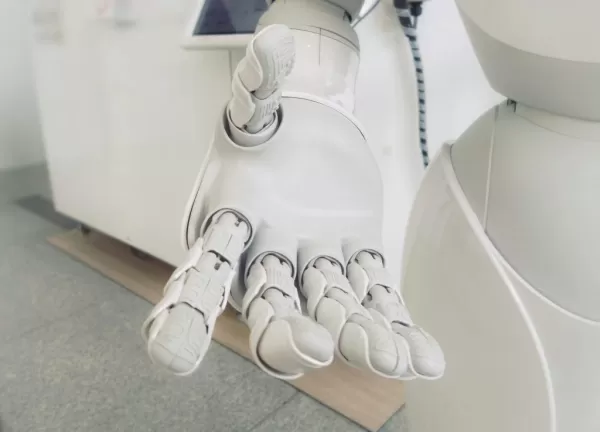
Japan’s AI robotics initiative has transitioned from a discussion topic into an official national strategy. The government recently validated widely cited projections: deploying 10 million AI-driven robots across 18 sectors by 2040, supported by publ
Japan tackles labor shortage with AI model for 10 million robots
Japan’s AI robotics initiative has transitioned from a discussion topic into an official national strategy. The government recently validated widely cited projections: deploying 10 million AI-driven robots across 18 sectors by 2040, supported by publ
 Universal Robots Unveils Gen 7 for Physical AI Deployment
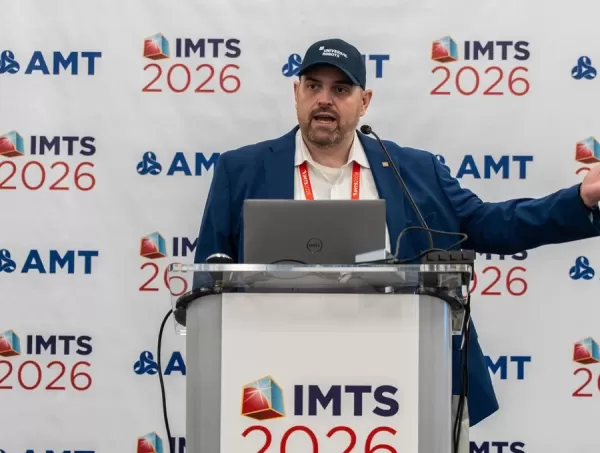
Will Healy, Director of Product & Industry Marketing at Universal Robots, credited for the imageWill Healy, Director of Product & Industry Marketing at Universal Robots, emphasizes that following the Gen 7 release, AI-driven robots must prioritize ad
Universal Robots Unveils Gen 7 for Physical AI Deployment
Will Healy, Director of Product & Industry Marketing at Universal Robots, credited for the imageWill Healy, Director of Product & Industry Marketing at Universal Robots, emphasizes that following the Gen 7 release, AI-driven robots must prioritize ad

2026 Latest Top-rated AI Illustration Tools: Our curated list features the best powerfully designed tools for creating stunning editorial scenes and eye-catching cover art quickly. Each option has gone through rigorous real-world tests, offering a free vs paid comparison to help you find the perfect match for your workflow. Try these must-try solutions today to unlock your AI edge and boost your creative productivity. Explore now at XIX.AI.
10 tools
xix.ai

2026 Latest Top-Rated Best AI Tutors for Exam Prep are here on XIX.AI! Our curated list features powerful game-changing tools that offer free vs paid comparison, real-world tests, and weekly updated rankings. They help boost your writing efficiency, simplify complex topic learning, and unlock your academic potential. Explore now to Discover your perfect exam prep tool and Start creating today to Unlock your AI edge!
10 tools
xix.ai

2026 Latest Best Top-Rated AI Budget Planning Tools for Personal Money Management are here on XIX.AI! This curated collection features powerful, game-changing solutions that help you conduct real-world tests, understand spending habits, and create personalized plans to boost productivity. Enjoy a free vs paid comparison along with detailed rankings. Must-try tools designed to simplify money management and unlock your AI edge. Explore now!
11 tools
xix.ai

2026 Latest Best Top-Rated AI Sleep Tracking Assistants curated for ultimate recovery. This fully updated weekly guide features powerful tools that deliver real-world tests, free vs paid comparison, and detailed rankings to help you find the must-try solution that boosts sleep quality and supports better bedtime habits. Explore now at XIX.AI to Unlock your AI edge.
10 tools
xix.ai

2026 Latest Best Top-Rated AI SQL Copilots for Product and Revenue Analytics! XIX.AI has curated a powerful, game-changing collection of must-try tools that undergo real-world tests through weekly updated rankings. These tools help users boost productivity significantly by accelerating data analysis, streamlining complex queries, and generating accurate insights to drive smarter business decisions. Explore now to Discover your perfect tool for unlocking your AI edge!
14 tools
xix.ai

2026 Latest Best Top-Rated AI Homework Helpers That Teach Core Concepts Not Just Answers Powerful Tools for Students Must-Try Curated List Weekly Updated Free vs Paid Comparison Real-World Tests Accurate Rankings to Help You Unlock Your Full Learning Potential Explore now to Discover your perfect tool for smarter studying.
10 tools
xix.ai

Interessant, dass FedEx auf Partnerschaften setzt statt alles selbst zu entwickeln. 🤔 Finde ich eigentlich clever – so kann man flexibler auf neue Technologien reagieren, ohne riesige eigene Entwicklungsabteilungen aufbauen zu müssen. Aber ob das langfristig wirklich kostengünstiger ist? Die Abhängigkeit von externen Anbietern könnte auch zum Nachteil werden, wenn die Preise steigen oder die Technik nicht perfekt integriert ist. Mal sehen, wie sich das im Wettbewerb mit Amazon auswirkt.












