


 Home
Home
Ex-OpenAI and DeepMind Scientists Secure Record $300 Million Seed Funding for AI-Powered Science Automation

Periodic Labs emerged from stealth mode on Tuesday, announcing a monumental $300 million seed round. The funding is backed by a veritable all-star lineup from the tech industry, including Andreessen Horowitz, DST Global, Nvidia, Accel, Elad Gil, Jeff Dean, Eric Schmidt, and Jeff Bezos.
The company was founded by Ekin Dogus Cubuk and Liam Fedus. Cubuk previously led the materials and chemistry team at Google Brain and DeepMind. There, he spearheaded projects like GNoME, an AI tool that in 2023 identified over 2 million new crystals—materials researchers believe could fuel future technological breakthroughs.
Fedus is a former Vice President of Research at OpenAI and was one of the key researchers behind the creation of ChatGPT. He also led the team that developed the first trillion-parameter neural network.
The core team is similarly composed of researchers with deep experience in major AI and materials science initiatives, ranging from developing OpenAI's agent, Operator, to contributing to Microsoft's MatterGen, an LLM for materials discovery.
Periodic Labs states its ambitious mission is to automate scientific discovery by creating AI scientists. This involves building autonomous laboratories where robotics systems conduct physical experiments, gather data, iterate on findings, and continuously learn and improve.
The lab's primary initial objective is to develop new superconductors that offer superior performance and potentially greater energy efficiency than current materials. However, the well-capitalized startup also aims to discover a wide range of other novel materials.
A parallel goal is to systematically aggregate all the physical-world data generated by its AI scientists as they mix, heat, and manipulate various powders and raw materials in their quest for innovation.
"Historically, advances in scientific AI have relied on models trained on internet data," the company notes in an introductory post, suggesting that large language models have largely "exhausted" the web as a scalable data source. "At Periodic, we are building AI scientists and the autonomous laboratories for them to operate within."
The vision is that these labs will not only invent next-generation materials but also produce a continuous stream of invaluable, fresh experimental data to fuel the ongoing evolution of AI models.
While this assembly of talent is remarkable, Periodic Labs is not alone in pursuing AI-driven scientific discovery. Using AI to automate chemistry breakthroughs has been an active academic research area since at least 2023. It's also the focus of other entities, from smaller startups like Tetsuwan Scientific to nonprofits such as Future House and the University of Toronto's Acceleration Consortium.
Related article
 Toyota’s $6.4bn robotics estimate puts physical AI in focus
Toyota Motor projects that rolling out automation across its manufacturing facilities, subsidiaries, and key suppliers may require approximately 400,000 robots and an annual expenditure of roughly 1 trillion yen ($6.4 billion) starting in 2028.Accord
Japan tackles labor shortage with AI model for 10 million robots
Japan’s AI robotics initiative has transitioned from a discussion topic into an official national strategy. The government recently validated widely cited projections: deploying 10 million AI-driven robots across 18 sectors by 2040, supported by publ
Universal Robots Unveils Gen 7 for Physical AI Deployment
Will Healy, Director of Product & Industry Marketing at Universal Robots, credited for the imageWill Healy, Director of Product & Industry Marketing at Universal Robots, emphasizes that following the Gen 7 release, AI-driven robots must prioritize ad
Related Special Topic Recommendations
Design & Art
Toyota’s $6.4bn robotics estimate puts physical AI in focus
Toyota Motor projects that rolling out automation across its manufacturing facilities, subsidiaries, and key suppliers may require approximately 400,000 robots and an annual expenditure of roughly 1 trillion yen ($6.4 billion) starting in 2028.Accord
Japan tackles labor shortage with AI model for 10 million robots
Japan’s AI robotics initiative has transitioned from a discussion topic into an official national strategy. The government recently validated widely cited projections: deploying 10 million AI-driven robots across 18 sectors by 2040, supported by publ
Universal Robots Unveils Gen 7 for Physical AI Deployment
Will Healy, Director of Product & Industry Marketing at Universal Robots, credited for the imageWill Healy, Director of Product & Industry Marketing at Universal Robots, emphasizes that following the Gen 7 release, AI-driven robots must prioritize ad
Related Special Topic Recommendations
Design & Art
 Top AI Illustration Tools: Create Editorial Scenes and Cover Art Faster
2026 Latest Top-rated AI Illustration Tools: Our curated list features the best powerfully designed tools for creating stunning editorial scenes and eye-catching cover art quickly. Each option has gone through rigorous real-world tests, offering a free vs paid comparison to help you find the perfect match for your workflow. Try these must-try solutions today to unlock your AI edge and boost your creative productivity. Explore now at XIX.AI.
 10 tools
 xix.ai
Education and Learning
Top AI Tutors for Exam Prep: Practice Math, Science, and English
xix.ai
Education and Learning
Top AI Tutors for Exam Prep: Practice Math, Science, and English
2026 Latest Top-Rated Best AI Tutors for Exam Prep are here on XIX.AI! Our curated list features powerful game-changing tools that offer free vs paid comparison, real-world tests, and weekly updated rankings. They help boost your writing efficiency, simplify complex topic learning, and unlock your academic potential. Explore now to Discover your perfect exam prep tool and Start creating today to Unlock your AI edge!
10 tools
xix.ai
Finance
AI Budget Planning Tools for Personal Money Management
2026 Latest Best Top-Rated AI Budget Planning Tools for Personal Money Management are here on XIX.AI! This curated collection features powerful, game-changing solutions that help you conduct real-world tests, understand spending habits, and create personalized plans to boost productivity. Enjoy a free vs paid comparison along with detailed rankings. Must-try tools designed to simplify money management and unlock your AI edge. Explore now!
11 tools
xix.ai
Health & Wellness
AI Sleep Tracking Assistants: Improve Recovery with Better Bedtime Habits
2026 Latest Best Top-Rated AI Sleep Tracking Assistants curated for ultimate recovery. This fully updated weekly guide features powerful tools that deliver real-world tests, free vs paid comparison, and detailed rankings to help you find the must-try solution that boosts sleep quality and supports better bedtime habits. Explore now at XIX.AI to Unlock your AI edge.
10 tools
xix.ai
Data Analysis
AI SQL Copilots for Product and Revenue Analytics
2026 Latest Best Top-Rated AI SQL Copilots for Product and Revenue Analytics! XIX.AI has curated a powerful, game-changing collection of must-try tools that undergo real-world tests through weekly updated rankings. These tools help users boost productivity significantly by accelerating data analysis, streamlining complex queries, and generating accurate insights to drive smarter business decisions. Explore now to Discover your perfect tool for unlocking your AI edge!
14 tools
xix.ai
Education and Learning
Best AI Homework Helpers That Teach: Learn Concepts, Not Just Answers
2026 Latest Best Top-Rated AI Homework Helpers That Teach Core Concepts Not Just Answers Powerful Tools for Students Must-Try Curated List Weekly Updated Free vs Paid Comparison Real-World Tests Accurate Rankings to Help You Unlock Your Full Learning Potential Explore now to Discover your perfect tool for smarter studying.
10 tools
xix.ai

 Comments (1)
0/500
Comments (1)
0/500
![ArthurThomas]()
Wow, $300M seed funding is insane! 🤯 It feels like the AI gold rush is shifting from chatbots to hard science. Excited to see what they can automate, but also a bit worried about the hype and pressure with that much money upfront. Hope they focus on real breakthroughs, not just VC returns.
Periodic Labs emerged from stealth mode on Tuesday, announcing a monumental $300 million seed round. The funding is backed by a veritable all-star lineup from the tech industry, including Andreessen Horowitz, DST Global, Nvidia, Accel, Elad Gil, Jeff Dean, Eric Schmidt, and Jeff Bezos.
The company was founded by Ekin Dogus Cubuk and Liam Fedus. Cubuk previously led the materials and chemistry team at Google Brain and DeepMind. There, he spearheaded projects like GNoME, an AI tool that in 2023 identified over 2 million new crystals—materials researchers believe could fuel future technological breakthroughs.
Fedus is a former Vice President of Research at OpenAI and was one of the key researchers behind the creation of ChatGPT. He also led the team that developed the first trillion-parameter neural network.
The core team is similarly composed of researchers with deep experience in major AI and materials science initiatives, ranging from developing OpenAI's agent, Operator, to contributing to Microsoft's MatterGen, an LLM for materials discovery.
Periodic Labs states its ambitious mission is to automate scientific discovery by creating AI scientists. This involves building autonomous laboratories where robotics systems conduct physical experiments, gather data, iterate on findings, and continuously learn and improve.
The lab's primary initial objective is to develop new superconductors that offer superior performance and potentially greater energy efficiency than current materials. However, the well-capitalized startup also aims to discover a wide range of other novel materials.
A parallel goal is to systematically aggregate all the physical-world data generated by its AI scientists as they mix, heat, and manipulate various powders and raw materials in their quest for innovation.
"Historically, advances in scientific AI have relied on models trained on internet data," the company notes in an introductory post, suggesting that large language models have largely "exhausted" the web as a scalable data source. "At Periodic, we are building AI scientists and the autonomous laboratories for them to operate within."
The vision is that these labs will not only invent next-generation materials but also produce a continuous stream of invaluable, fresh experimental data to fuel the ongoing evolution of AI models.
While this assembly of talent is remarkable, Periodic Labs is not alone in pursuing AI-driven scientific discovery. Using AI to automate chemistry breakthroughs has been an active academic research area since at least 2023. It's also the focus of other entities, from smaller startups like Tetsuwan Scientific to nonprofits such as Future House and the University of Toronto's Acceleration Consortium.








 Toyota’s $6.4bn robotics estimate puts physical AI in focus
Toyota Motor projects that rolling out automation across its manufacturing facilities, subsidiaries, and key suppliers may require approximately 400,000 robots and an annual expenditure of roughly 1 trillion yen ($6.4 billion) starting in 2028.Accord
Toyota’s $6.4bn robotics estimate puts physical AI in focus
Toyota Motor projects that rolling out automation across its manufacturing facilities, subsidiaries, and key suppliers may require approximately 400,000 robots and an annual expenditure of roughly 1 trillion yen ($6.4 billion) starting in 2028.Accord
 Japan tackles labor shortage with AI model for 10 million robots
Japan’s AI robotics initiative has transitioned from a discussion topic into an official national strategy. The government recently validated widely cited projections: deploying 10 million AI-driven robots across 18 sectors by 2040, supported by publ
Japan tackles labor shortage with AI model for 10 million robots
Japan’s AI robotics initiative has transitioned from a discussion topic into an official national strategy. The government recently validated widely cited projections: deploying 10 million AI-driven robots across 18 sectors by 2040, supported by publ
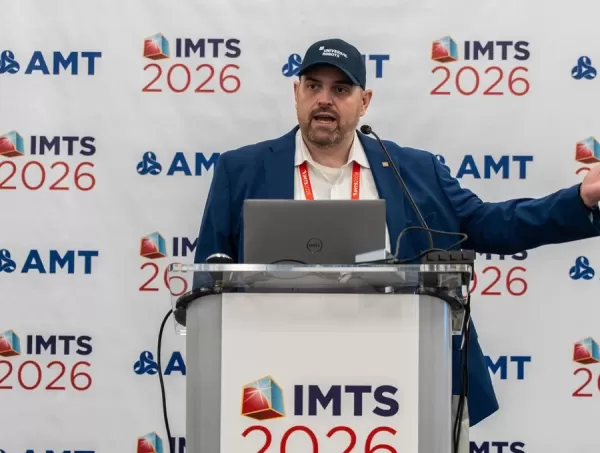 Universal Robots Unveils Gen 7 for Physical AI Deployment
Will Healy, Director of Product & Industry Marketing at Universal Robots, credited for the imageWill Healy, Director of Product & Industry Marketing at Universal Robots, emphasizes that following the Gen 7 release, AI-driven robots must prioritize ad
Universal Robots Unveils Gen 7 for Physical AI Deployment
Will Healy, Director of Product & Industry Marketing at Universal Robots, credited for the imageWill Healy, Director of Product & Industry Marketing at Universal Robots, emphasizes that following the Gen 7 release, AI-driven robots must prioritize ad

2026 Latest Top-rated AI Illustration Tools: Our curated list features the best powerfully designed tools for creating stunning editorial scenes and eye-catching cover art quickly. Each option has gone through rigorous real-world tests, offering a free vs paid comparison to help you find the perfect match for your workflow. Try these must-try solutions today to unlock your AI edge and boost your creative productivity. Explore now at XIX.AI.
10 tools
xix.ai

2026 Latest Top-Rated Best AI Tutors for Exam Prep are here on XIX.AI! Our curated list features powerful game-changing tools that offer free vs paid comparison, real-world tests, and weekly updated rankings. They help boost your writing efficiency, simplify complex topic learning, and unlock your academic potential. Explore now to Discover your perfect exam prep tool and Start creating today to Unlock your AI edge!
10 tools
xix.ai

2026 Latest Best Top-Rated AI Budget Planning Tools for Personal Money Management are here on XIX.AI! This curated collection features powerful, game-changing solutions that help you conduct real-world tests, understand spending habits, and create personalized plans to boost productivity. Enjoy a free vs paid comparison along with detailed rankings. Must-try tools designed to simplify money management and unlock your AI edge. Explore now!
11 tools
xix.ai

2026 Latest Best Top-Rated AI Sleep Tracking Assistants curated for ultimate recovery. This fully updated weekly guide features powerful tools that deliver real-world tests, free vs paid comparison, and detailed rankings to help you find the must-try solution that boosts sleep quality and supports better bedtime habits. Explore now at XIX.AI to Unlock your AI edge.
10 tools
xix.ai

2026 Latest Best Top-Rated AI SQL Copilots for Product and Revenue Analytics! XIX.AI has curated a powerful, game-changing collection of must-try tools that undergo real-world tests through weekly updated rankings. These tools help users boost productivity significantly by accelerating data analysis, streamlining complex queries, and generating accurate insights to drive smarter business decisions. Explore now to Discover your perfect tool for unlocking your AI edge!
14 tools
xix.ai

2026 Latest Best Top-Rated AI Homework Helpers That Teach Core Concepts Not Just Answers Powerful Tools for Students Must-Try Curated List Weekly Updated Free vs Paid Comparison Real-World Tests Accurate Rankings to Help You Unlock Your Full Learning Potential Explore now to Discover your perfect tool for smarter studying.
10 tools
xix.ai

Wow, $300M seed funding is insane! 🤯 It feels like the AI gold rush is shifting from chatbots to hard science. Excited to see what they can automate, but also a bit worried about the hype and pressure with that much money upfront. Hope they focus on real breakthroughs, not just VC returns.












