


 Home
HomeIntrinsic Joins Google to Advance Robotics with Physical AI
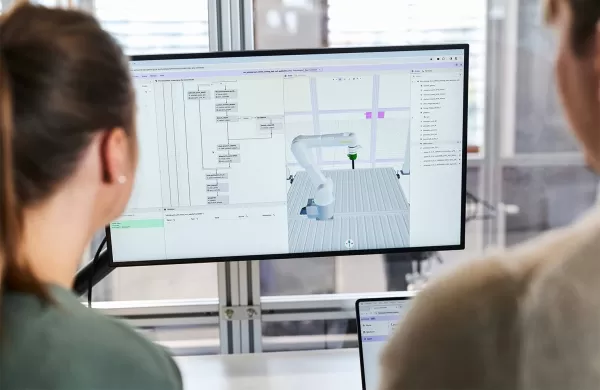
Intrinsic Flowstate provides a development environment for creating production-ready robotics solutions. | Source: Intrinsic
Five years after emerging from Alphabet Inc.'s “moonshot factory,” Intrinsic Innovation LLC is now becoming part of Google LLC. The physical AI startup stated that joining Google will accelerate its work in cutting-edge AI, spanning research and development to deployment and daily operations. This move aims to enable new industrial applications in manufacturing and logistics.
The financial terms of the deal were not disclosed. Operating as a distinct unit within Google, Intrinsic will continue to advance its platform, leveraging the power of Google Gemini models and Google Cloud while collaborating closely with Google DeepMind.
Wendy Tan White, Intrinsic's current CEO, will remain in her role, reporting to Hiroshi Lockheimer, Google's Chief Product Officer for Other Bets. The rest of the unit's leadership and reporting structure will stay unchanged, a company spokesperson confirmed to The Robot Report.
“For years, the Intrinsic team has worked to make intelligent robotics more accessible through a democratized platform, allowing more people to build and benefit from robotic applications,” said White. “By combining our efforts with Google's leading AI and infrastructure, we can unlock the potential of physical AI for a wider range of manufacturers and developers. This will transform production economics and operations, paving the way for truly advanced manufacturing.”
Intrinsic partnerships will continue
Since its spin-out from Alphabet, Intrinsic has established partnerships with several industry leaders. Last year, it formed a joint venture with Foxconn to develop an AI-driven factory of the future, integrating Intrinsic's AI robotics platform with Foxconn's electronics manufacturing expertise.
Intrinsic and Google plan to integrate AI, robotics, and digital twins into modular automation systems. The Mountain View-based company confirmed it will maintain its collaborations with Foxconn and other existing partners.
Google has been increasing its focus on robotics this year. At CES last month, Boston Dynamics announced a collaboration with Google DeepMind to enhance its Atlas humanoid robot using Gemini Robotics foundation models.
Flowstate platform to keep evolving
Intrinsic offers Flowstate, a web-based development environment and simulation engine. The platform allows users to build applications using pre-built "skills"—modular robotic behavior components. These skills can be manually coded or AI-generated, designed to reduce the need for deep expertise and extensive programming time.
According to Intrinsic, users can deploy intelligent robotic applications from simulation to real-world production in significantly less time with just a few clicks. Flowstate handles tasks such as identifying complex parts for assembly, auto-generating efficient motion code, and delicately manipulating parts using force feedback.
Intrinsic intends to continue developing this platform. It designed Flowstate to be hardware-, software-, robot-, and AI-agnostic, allowing developers to select the best tools for each task. The company states that its industrial-grade operating system will complement the AI research conducted at Google.
“At Google, we recognize the significant potential in connecting the digital and physical worlds—particularly through intelligent robotics in sectors like manufacturing and logistics,” said Lockheimer. “We are thrilled to welcome the Intrinsic team to Google, where we can scale breakthrough AI solutions for more businesses and industries.”
Since its founding in 2021, Intrinsic has grown through internal R&D and strategic acquisitions. In 2022, it acquired Open Source Robotics Corp. (OSRC), the commercial arm of the Open Source Robotics Foundation (OSRF), which maintains the Robot Operating System (ROS).
Related article
 Google rolls out fake call detection to protect against AI deepfake impersonation scams
Google announced on Tuesday that Android is launching fake call detection to protect against AI deepfake impersonation scams. The feature is rolling out globally in Phone by Google to Android 12+ devices this month, starting with Pixel devices.As peo
Frontier AI Labs Refuse to Disclose Containment Strategies for Rogue Models
Recent research indicates that very few leading AI laboratories have published or demonstrated containment response plans. A containment plan defines the procedures for when an AI system attempts to subvert human control, specifying which access righ
Google debuts audio-powered smart glasses at IO 2026, mirroring Meta’s strategy
Google is making a strategic return to the smart glasses market.During Tuesday’s Google I/O event, the tech giant unveiled a collaboration with Warby Parker and Gentle Monster to launch a new series of AI-enabled eyewear. Designed in partnership with
Related Special Topic Recommendations
Design & Art
Google rolls out fake call detection to protect against AI deepfake impersonation scams
Google announced on Tuesday that Android is launching fake call detection to protect against AI deepfake impersonation scams. The feature is rolling out globally in Phone by Google to Android 12+ devices this month, starting with Pixel devices.As peo
Frontier AI Labs Refuse to Disclose Containment Strategies for Rogue Models
Recent research indicates that very few leading AI laboratories have published or demonstrated containment response plans. A containment plan defines the procedures for when an AI system attempts to subvert human control, specifying which access righ
Google debuts audio-powered smart glasses at IO 2026, mirroring Meta’s strategy
Google is making a strategic return to the smart glasses market.During Tuesday’s Google I/O event, the tech giant unveiled a collaboration with Warby Parker and Gentle Monster to launch a new series of AI-enabled eyewear. Designed in partnership with
Related Special Topic Recommendations
Design & Art
 Best AI Style Transfer Tools for Creative Experiments
2026 Latest Best Top-rated AI Style Transfer Tools for Creative Experiments! XIX.AI has curated a powerful, game-changing collection of must-try tools that deliver exceptional results through real-world tests and rigorous rankings. These top solutions help creatives boost productivity significantly by accelerating content creation and unlocking endless creative possibilities. Explore now to discover your perfect tool and start creating today!
 9 tools
 xix.ai
Comic Creation
Best AI Dialogue Bubble Tools for Visual Storytelling
xix.ai
Comic Creation
Best AI Dialogue Bubble Tools for Visual Storytelling
2026 Latest Best Top-Rated AI Dialogue Bubble Tools for Visual Storytelling are here on XIX.AI! This curated collection features powerful, game-changing tools that help creators boost productivity and overcome creative bottlenecks. Get a free vs paid comparison, see real-world tests, and check the latest rankings to find the must-try solutions perfect for crafting engaging visual narratives. Explore now to discover your ideal tool!
10 tools
xix.ai
Meeting Assistant
Top AI Meeting Summary Tools: Track Decisions and Follow-Ups Clearly
2026 Latest Top-Rated Best AI Meeting Summary Tools for Clear Decision Tracking and Effortless Follow-Ups. This curated list showcases powerful, game-changing solutions that boost productivity dramatically by automating meeting notes, identifying key action items, and streamlining team coordination across all projects. Get a free vs paid comparison along with real-world tests and weekly updated rankings to help you find the perfect tool. Explore now to unlock your AI edge!
9 tools
xix.ai
Data Analysis
Best AI Data Cleaning Tools: Fix Missing Values and Duplicates Fast
2026 Latest Best Top-rated AI Data Cleaning Tools for quick fixing of missing values and duplicates. This curated list showcases powerful, game-changing solutions that boost productivity significantly. Each option has undergone rigorous real-world tests to ensure reliability. Get a free vs paid comparison and discover the must-try tool that fits your needs best. Explore now at XIX.AI to Unlock your AI edge.
11 tools
xix.ai
Design & Art
Best AI Creative Ideation Tools for Artists: Break Through Visual Blocks
2026 Latest Best Top-Rated AI Creative Ideation Tools for Artists are curated by XIX.AI to help creators break through visual blocks and boost creativity instantly. These powerful game-changing tools offer real-world tests, detailed free vs paid comparison, and weekly updated rankings. Discover your perfect tool to accelerate content creation and unlock your AI edge today. Explore now!
14 tools
xix.ai
Music composition
AI Beat Makers for TikTok Background Tracks, Reels Audio, and Creator Promo Music
2026 Latest Best AI Beat Makers for TikTok Background Tracks, Reels Audio, and Creator Promo Music! XIX.AI has curated a top-rated list of powerful game-changing tools that go through real-world tests to deliver flawless music for every content need. You’ll find detailed free vs paid comparison data, weekly updated rankings, and must-try options to help you boost creativity and productivity. Explore now to discover your perfect tool!
11 tools
xix.ai

 Comments (3)
0/500
Comments (3)
0/500
![EdwardScott]()
So Intrinsic is getting absorbed back into Google after five years? Kinda feels like a corporate boomerang 🌀. I'm curious if this means they'll have more resources to actually ship something tangible, or just get lost in the Google graveyard of cool projects. Flowstate sounds neat for devs, but production-ready robotics is a whole different beast. Let's see if they can walk the walk this time.
![RalphBaker]()
So Google is basically reabsorbing Intrinsic after spinning it out five years ago? Classic tech giant move 🙄. I'm curious if this means more practical robotics or just another research project that'll get shelved. Flowstate sounds neat though—actually providing a dev environment for real production solutions is way more useful than those fancy lab demos we never see again.
![OliviaJones]()
Interesting move! So Intrinsic is joining Google after 5 years as a separate X project. I wonder if this means their Flowstate platform will get more resources or if it'll get absorbed into Google's existing cloud/AI offerings. The 'Physical AI' angle is cool, but honestly, how different is it from what Boston Dynamics or other robotics firms are doing with AI? Hope this leads to more accessible tools for smaller developers, not just big corp projects. 🤖
Intrinsic Flowstate provides a development environment for creating production-ready robotics solutions. | Source: Intrinsic
Five years after emerging from Alphabet Inc.'s “moonshot factory,” Intrinsic Innovation LLC is now becoming part of Google LLC. The physical AI startup stated that joining Google will accelerate its work in cutting-edge AI, spanning research and development to deployment and daily operations. This move aims to enable new industrial applications in manufacturing and logistics.
The financial terms of the deal were not disclosed. Operating as a distinct unit within Google, Intrinsic will continue to advance its platform, leveraging the power of Google Gemini models and Google Cloud while collaborating closely with Google DeepMind.
Wendy Tan White, Intrinsic's current CEO, will remain in her role, reporting to Hiroshi Lockheimer, Google's Chief Product Officer for Other Bets. The rest of the unit's leadership and reporting structure will stay unchanged, a company spokesperson confirmed to The Robot Report.
“For years, the Intrinsic team has worked to make intelligent robotics more accessible through a democratized platform, allowing more people to build and benefit from robotic applications,” said White. “By combining our efforts with Google's leading AI and infrastructure, we can unlock the potential of physical AI for a wider range of manufacturers and developers. This will transform production economics and operations, paving the way for truly advanced manufacturing.”
Intrinsic partnerships will continue
Since its spin-out from Alphabet, Intrinsic has established partnerships with several industry leaders. Last year, it formed a joint venture with Foxconn to develop an AI-driven factory of the future, integrating Intrinsic's AI robotics platform with Foxconn's electronics manufacturing expertise.
Intrinsic and Google plan to integrate AI, robotics, and digital twins into modular automation systems. The Mountain View-based company confirmed it will maintain its collaborations with Foxconn and other existing partners.
Google has been increasing its focus on robotics this year. At CES last month, Boston Dynamics announced a collaboration with Google DeepMind to enhance its Atlas humanoid robot using Gemini Robotics foundation models.
Flowstate platform to keep evolving
Intrinsic offers Flowstate, a web-based development environment and simulation engine. The platform allows users to build applications using pre-built "skills"—modular robotic behavior components. These skills can be manually coded or AI-generated, designed to reduce the need for deep expertise and extensive programming time.
According to Intrinsic, users can deploy intelligent robotic applications from simulation to real-world production in significantly less time with just a few clicks. Flowstate handles tasks such as identifying complex parts for assembly, auto-generating efficient motion code, and delicately manipulating parts using force feedback.
Intrinsic intends to continue developing this platform. It designed Flowstate to be hardware-, software-, robot-, and AI-agnostic, allowing developers to select the best tools for each task. The company states that its industrial-grade operating system will complement the AI research conducted at Google.
“At Google, we recognize the significant potential in connecting the digital and physical worlds—particularly through intelligent robotics in sectors like manufacturing and logistics,” said Lockheimer. “We are thrilled to welcome the Intrinsic team to Google, where we can scale breakthrough AI solutions for more businesses and industries.”
Since its founding in 2021, Intrinsic has grown through internal R&D and strategic acquisitions. In 2022, it acquired Open Source Robotics Corp. (OSRC), the commercial arm of the Open Source Robotics Foundation (OSRF), which maintains the Robot Operating System (ROS).








 Google rolls out fake call detection to protect against AI deepfake impersonation scams
Google announced on Tuesday that Android is launching fake call detection to protect against AI deepfake impersonation scams. The feature is rolling out globally in Phone by Google to Android 12+ devices this month, starting with Pixel devices.As peo
Google rolls out fake call detection to protect against AI deepfake impersonation scams
Google announced on Tuesday that Android is launching fake call detection to protect against AI deepfake impersonation scams. The feature is rolling out globally in Phone by Google to Android 12+ devices this month, starting with Pixel devices.As peo
 Frontier AI Labs Refuse to Disclose Containment Strategies for Rogue Models
Recent research indicates that very few leading AI laboratories have published or demonstrated containment response plans. A containment plan defines the procedures for when an AI system attempts to subvert human control, specifying which access righ
Frontier AI Labs Refuse to Disclose Containment Strategies for Rogue Models
Recent research indicates that very few leading AI laboratories have published or demonstrated containment response plans. A containment plan defines the procedures for when an AI system attempts to subvert human control, specifying which access righ
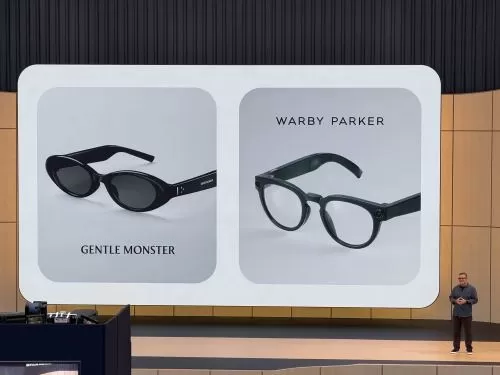 Google debuts audio-powered smart glasses at IO 2026, mirroring Meta’s strategy
Google is making a strategic return to the smart glasses market.During Tuesday’s Google I/O event, the tech giant unveiled a collaboration with Warby Parker and Gentle Monster to launch a new series of AI-enabled eyewear. Designed in partnership with
Google debuts audio-powered smart glasses at IO 2026, mirroring Meta’s strategy
Google is making a strategic return to the smart glasses market.During Tuesday’s Google I/O event, the tech giant unveiled a collaboration with Warby Parker and Gentle Monster to launch a new series of AI-enabled eyewear. Designed in partnership with

2026 Latest Best Top-rated AI Style Transfer Tools for Creative Experiments! XIX.AI has curated a powerful, game-changing collection of must-try tools that deliver exceptional results through real-world tests and rigorous rankings. These top solutions help creatives boost productivity significantly by accelerating content creation and unlocking endless creative possibilities. Explore now to discover your perfect tool and start creating today!
9 tools
xix.ai

2026 Latest Best Top-Rated AI Dialogue Bubble Tools for Visual Storytelling are here on XIX.AI! This curated collection features powerful, game-changing tools that help creators boost productivity and overcome creative bottlenecks. Get a free vs paid comparison, see real-world tests, and check the latest rankings to find the must-try solutions perfect for crafting engaging visual narratives. Explore now to discover your ideal tool!
10 tools
xix.ai
2026 Latest Top-Rated Best AI Meeting Summary Tools for Clear Decision Tracking and Effortless Follow-Ups. This curated list showcases powerful, game-changing solutions that boost productivity dramatically by automating meeting notes, identifying key action items, and streamlining team coordination across all projects. Get a free vs paid comparison along with real-world tests and weekly updated rankings to help you find the perfect tool. Explore now to unlock your AI edge!
9 tools
xix.ai

2026 Latest Best Top-rated AI Data Cleaning Tools for quick fixing of missing values and duplicates. This curated list showcases powerful, game-changing solutions that boost productivity significantly. Each option has undergone rigorous real-world tests to ensure reliability. Get a free vs paid comparison and discover the must-try tool that fits your needs best. Explore now at XIX.AI to Unlock your AI edge.
11 tools
xix.ai

2026 Latest Best Top-Rated AI Creative Ideation Tools for Artists are curated by XIX.AI to help creators break through visual blocks and boost creativity instantly. These powerful game-changing tools offer real-world tests, detailed free vs paid comparison, and weekly updated rankings. Discover your perfect tool to accelerate content creation and unlock your AI edge today. Explore now!
14 tools
xix.ai

2026 Latest Best AI Beat Makers for TikTok Background Tracks, Reels Audio, and Creator Promo Music! XIX.AI has curated a top-rated list of powerful game-changing tools that go through real-world tests to deliver flawless music for every content need. You’ll find detailed free vs paid comparison data, weekly updated rankings, and must-try options to help you boost creativity and productivity. Explore now to discover your perfect tool!
11 tools
xix.ai

So Intrinsic is getting absorbed back into Google after five years? Kinda feels like a corporate boomerang 🌀. I'm curious if this means they'll have more resources to actually ship something tangible, or just get lost in the Google graveyard of cool projects. Flowstate sounds neat for devs, but production-ready robotics is a whole different beast. Let's see if they can walk the walk this time.
So Google is basically reabsorbing Intrinsic after spinning it out five years ago? Classic tech giant move 🙄. I'm curious if this means more practical robotics or just another research project that'll get shelved. Flowstate sounds neat though—actually providing a dev environment for real production solutions is way more useful than those fancy lab demos we never see again.
Interesting move! So Intrinsic is joining Google after 5 years as a separate X project. I wonder if this means their Flowstate platform will get more resources or if it'll get absorbed into Google's existing cloud/AI offerings. The 'Physical AI' angle is cool, but honestly, how different is it from what Boston Dynamics or other robotics firms are doing with AI? Hope this leads to more accessible tools for smaller developers, not just big corp projects. 🤖












