


 Home
HomeUV Light Reduces Strawberry Pesticide Use at TRIC Robotics
Strawberries are America's most consumed and grown berry. However, they also rank among the most pesticide-dependent fruits and frequently lead the Environmental Working Group's "Dirty Dozen" list of produce with high contamination levels.
TRIC Robotics, based in San Luis Obispo, California, believes its solution using UV light and robotics can help strawberry growers cut down on chemical applications.
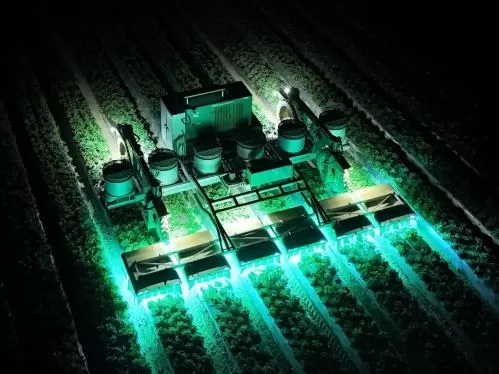
The startup developed a fleet of tractor-sized autonomous robots that utilize UV-C light—a type of ultraviolet light mostly filtered by Earth's atmosphere—to eliminate bacteria and disrupt pest populations. These robots can treat up to 100 acres and are equipped with specialized vacuums to remove insect debris without damaging the plants.
TRIC operates its robots overnight as a service for farmers rather than selling the machines outright. Co-founder and CEO Adam Stager explained to TechCrunch that while this model is more challenging to scale, it proved to be the fastest way to gain initial traction.
"We collaborated extensively with growers to determine the best way to introduce the technology and the optimal business model," Stager said. "We learned that many farmers already pay for pest and disease control as a service, with companies coming in to handle spraying. We've essentially replaced that with our service-based approach."
Although Stager notes the company is now highly attuned to farmer needs, this wasn't always the case. In fact, TRIC didn't start out in agriculture at all.
Stager founded the company in 2017 after completing his PhD in robotics. Initially, TRIC focused on developing 3D-printed robots for SWAT teams. In 2020, Stager decided to pivot toward a field with greater potential impact and turned his attention to agriculture.
"I seriously asked myself, if I died tomorrow, would I be content with what I had achieved?" Stager recalled. "The answer led me to pursue work that could genuinely help many people and provide a sense of purpose. That journey brought me to agriculture, where I realized we could make a significant difference for nearly everyone."
Knowing from his academic experience that many promising technologies never leave the lab, Stager contacted the United States Department of Agriculture (USDA) to explore innovations ready for commercialization.
He connected with a USDA program that links entrepreneurs like himself with scientists whose research hasn't yet been commercialized. This partnership introduced him to the UV light technology that became the foundation for TRIC's robotic systems.
"My co-founder Vishnu Somasundaram and I loaded two robots we built in my garage onto an SUV," Stager said. "With the USDA's help, we secured connections with two farmers willing to allocate small plots of land for testing in 2021. That was the true beginning of the company. We spent eight months traveling cross-country, staying in Airbnbs, deploying two robots, and collecting invaluable data alongside those growers."
Today, the company—co-founded by Stager, Somasundaram, and Ryan Berard—partners with four major strawberry producers, has nine robots in active deployment, and has three more units on the way.
TRIC Robotics recently closed a $5.5 million seed funding round led by Version One Ventures. The round included participation from Garage Capital, Todd and Rahul Capital, Lucas Venture Group, and several other investment firms and individual angel investors.
The company plans to allocate the new capital toward expanding its fleet of autonomous robots. TRIC also aims to eventually adapt its technology for use with other crop types.
"I believe the future for agricultural technology is exceptionally bright," Stager said. "People should know the industry is moving in a fantastic direction, with many exciting developments on the horizon."
Related article
 Toyota’s $6.4bn robotics estimate puts physical AI in focus
Toyota Motor projects that rolling out automation across its manufacturing facilities, subsidiaries, and key suppliers may require approximately 400,000 robots and an annual expenditure of roughly 1 trillion yen ($6.4 billion) starting in 2028.Accord
Japan tackles labor shortage with AI model for 10 million robots
Japan’s AI robotics initiative has transitioned from a discussion topic into an official national strategy. The government recently validated widely cited projections: deploying 10 million AI-driven robots across 18 sectors by 2040, supported by publ
Universal Robots Unveils Gen 7 for Physical AI Deployment
Will Healy, Director of Product & Industry Marketing at Universal Robots, credited for the imageWill Healy, Director of Product & Industry Marketing at Universal Robots, emphasizes that following the Gen 7 release, AI-driven robots must prioritize ad
Related Special Topic Recommendations
Design & Art
Toyota’s $6.4bn robotics estimate puts physical AI in focus
Toyota Motor projects that rolling out automation across its manufacturing facilities, subsidiaries, and key suppliers may require approximately 400,000 robots and an annual expenditure of roughly 1 trillion yen ($6.4 billion) starting in 2028.Accord
Japan tackles labor shortage with AI model for 10 million robots
Japan’s AI robotics initiative has transitioned from a discussion topic into an official national strategy. The government recently validated widely cited projections: deploying 10 million AI-driven robots across 18 sectors by 2040, supported by publ
Universal Robots Unveils Gen 7 for Physical AI Deployment
Will Healy, Director of Product & Industry Marketing at Universal Robots, credited for the imageWill Healy, Director of Product & Industry Marketing at Universal Robots, emphasizes that following the Gen 7 release, AI-driven robots must prioritize ad
Related Special Topic Recommendations
Design & Art
 Top AI Illustration Tools: Create Editorial Scenes and Cover Art Faster
2026 Latest Top-rated AI Illustration Tools: Our curated list features the best powerfully designed tools for creating stunning editorial scenes and eye-catching cover art quickly. Each option has gone through rigorous real-world tests, offering a free vs paid comparison to help you find the perfect match for your workflow. Try these must-try solutions today to unlock your AI edge and boost your creative productivity. Explore now at XIX.AI.
 10 tools
 xix.ai
Education and Learning
Top AI Tutors for Exam Prep: Practice Math, Science, and English
xix.ai
Education and Learning
Top AI Tutors for Exam Prep: Practice Math, Science, and English
2026 Latest Top-Rated Best AI Tutors for Exam Prep are here on XIX.AI! Our curated list features powerful game-changing tools that offer free vs paid comparison, real-world tests, and weekly updated rankings. They help boost your writing efficiency, simplify complex topic learning, and unlock your academic potential. Explore now to Discover your perfect exam prep tool and Start creating today to Unlock your AI edge!
10 tools
xix.ai
Finance
AI Budget Planning Tools for Personal Money Management
2026 Latest Best Top-Rated AI Budget Planning Tools for Personal Money Management are here on XIX.AI! This curated collection features powerful, game-changing solutions that help you conduct real-world tests, understand spending habits, and create personalized plans to boost productivity. Enjoy a free vs paid comparison along with detailed rankings. Must-try tools designed to simplify money management and unlock your AI edge. Explore now!
11 tools
xix.ai
Health & Wellness
AI Sleep Tracking Assistants: Improve Recovery with Better Bedtime Habits
2026 Latest Best Top-Rated AI Sleep Tracking Assistants curated for ultimate recovery. This fully updated weekly guide features powerful tools that deliver real-world tests, free vs paid comparison, and detailed rankings to help you find the must-try solution that boosts sleep quality and supports better bedtime habits. Explore now at XIX.AI to Unlock your AI edge.
10 tools
xix.ai
Data Analysis
AI SQL Copilots for Product and Revenue Analytics
2026 Latest Best Top-Rated AI SQL Copilots for Product and Revenue Analytics! XIX.AI has curated a powerful, game-changing collection of must-try tools that undergo real-world tests through weekly updated rankings. These tools help users boost productivity significantly by accelerating data analysis, streamlining complex queries, and generating accurate insights to drive smarter business decisions. Explore now to Discover your perfect tool for unlocking your AI edge!
14 tools
xix.ai
Education and Learning
Best AI Homework Helpers That Teach: Learn Concepts, Not Just Answers
2026 Latest Best Top-Rated AI Homework Helpers That Teach Core Concepts Not Just Answers Powerful Tools for Students Must-Try Curated List Weekly Updated Free vs Paid Comparison Real-World Tests Accurate Rankings to Help You Unlock Your Full Learning Potential Explore now to Discover your perfect tool for smarter studying.
10 tools
xix.ai

 Comments (0)
0/500
Comments (0)
0/500
Strawberries are America's most consumed and grown berry. However, they also rank among the most pesticide-dependent fruits and frequently lead the Environmental Working Group's "Dirty Dozen" list of produce with high contamination levels.
TRIC Robotics, based in San Luis Obispo, California, believes its solution using UV light and robotics can help strawberry growers cut down on chemical applications.
The startup developed a fleet of tractor-sized autonomous robots that utilize UV-C light—a type of ultraviolet light mostly filtered by Earth's atmosphere—to eliminate bacteria and disrupt pest populations. These robots can treat up to 100 acres and are equipped with specialized vacuums to remove insect debris without damaging the plants.
TRIC operates its robots overnight as a service for farmers rather than selling the machines outright. Co-founder and CEO Adam Stager explained to TechCrunch that while this model is more challenging to scale, it proved to be the fastest way to gain initial traction.
"We collaborated extensively with growers to determine the best way to introduce the technology and the optimal business model," Stager said. "We learned that many farmers already pay for pest and disease control as a service, with companies coming in to handle spraying. We've essentially replaced that with our service-based approach."
Although Stager notes the company is now highly attuned to farmer needs, this wasn't always the case. In fact, TRIC didn't start out in agriculture at all.
Stager founded the company in 2017 after completing his PhD in robotics. Initially, TRIC focused on developing 3D-printed robots for SWAT teams. In 2020, Stager decided to pivot toward a field with greater potential impact and turned his attention to agriculture.
"I seriously asked myself, if I died tomorrow, would I be content with what I had achieved?" Stager recalled. "The answer led me to pursue work that could genuinely help many people and provide a sense of purpose. That journey brought me to agriculture, where I realized we could make a significant difference for nearly everyone."
Knowing from his academic experience that many promising technologies never leave the lab, Stager contacted the United States Department of Agriculture (USDA) to explore innovations ready for commercialization.
He connected with a USDA program that links entrepreneurs like himself with scientists whose research hasn't yet been commercialized. This partnership introduced him to the UV light technology that became the foundation for TRIC's robotic systems.
"My co-founder Vishnu Somasundaram and I loaded two robots we built in my garage onto an SUV," Stager said. "With the USDA's help, we secured connections with two farmers willing to allocate small plots of land for testing in 2021. That was the true beginning of the company. We spent eight months traveling cross-country, staying in Airbnbs, deploying two robots, and collecting invaluable data alongside those growers."
Today, the company—co-founded by Stager, Somasundaram, and Ryan Berard—partners with four major strawberry producers, has nine robots in active deployment, and has three more units on the way.
TRIC Robotics recently closed a $5.5 million seed funding round led by Version One Ventures. The round included participation from Garage Capital, Todd and Rahul Capital, Lucas Venture Group, and several other investment firms and individual angel investors.
The company plans to allocate the new capital toward expanding its fleet of autonomous robots. TRIC also aims to eventually adapt its technology for use with other crop types.
"I believe the future for agricultural technology is exceptionally bright," Stager said. "People should know the industry is moving in a fantastic direction, with many exciting developments on the horizon."








 Toyota’s $6.4bn robotics estimate puts physical AI in focus
Toyota Motor projects that rolling out automation across its manufacturing facilities, subsidiaries, and key suppliers may require approximately 400,000 robots and an annual expenditure of roughly 1 trillion yen ($6.4 billion) starting in 2028.Accord
Toyota’s $6.4bn robotics estimate puts physical AI in focus
Toyota Motor projects that rolling out automation across its manufacturing facilities, subsidiaries, and key suppliers may require approximately 400,000 robots and an annual expenditure of roughly 1 trillion yen ($6.4 billion) starting in 2028.Accord
 Japan tackles labor shortage with AI model for 10 million robots
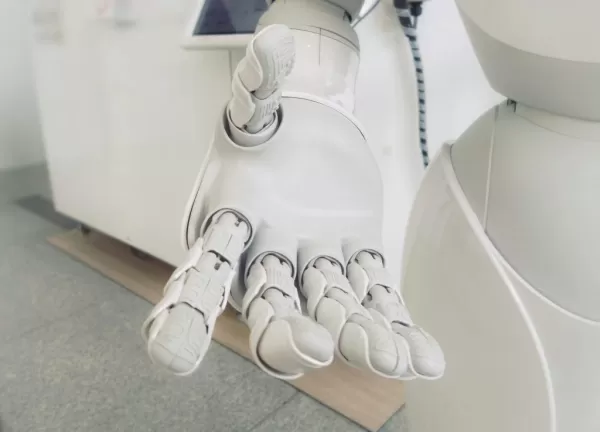
Japan’s AI robotics initiative has transitioned from a discussion topic into an official national strategy. The government recently validated widely cited projections: deploying 10 million AI-driven robots across 18 sectors by 2040, supported by publ
Japan tackles labor shortage with AI model for 10 million robots
Japan’s AI robotics initiative has transitioned from a discussion topic into an official national strategy. The government recently validated widely cited projections: deploying 10 million AI-driven robots across 18 sectors by 2040, supported by publ
 Universal Robots Unveils Gen 7 for Physical AI Deployment
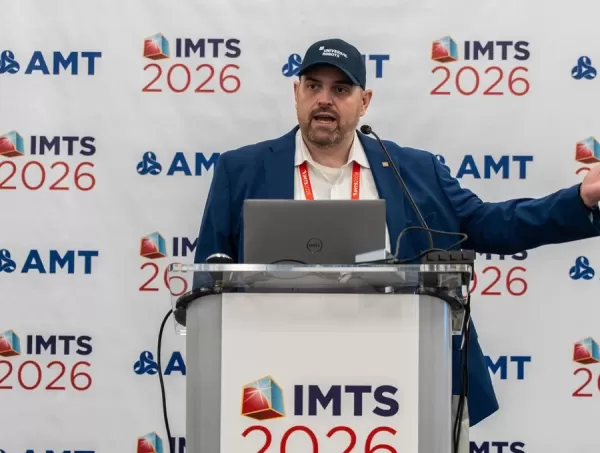
Will Healy, Director of Product & Industry Marketing at Universal Robots, credited for the imageWill Healy, Director of Product & Industry Marketing at Universal Robots, emphasizes that following the Gen 7 release, AI-driven robots must prioritize ad
Universal Robots Unveils Gen 7 for Physical AI Deployment
Will Healy, Director of Product & Industry Marketing at Universal Robots, credited for the imageWill Healy, Director of Product & Industry Marketing at Universal Robots, emphasizes that following the Gen 7 release, AI-driven robots must prioritize ad

2026 Latest Top-rated AI Illustration Tools: Our curated list features the best powerfully designed tools for creating stunning editorial scenes and eye-catching cover art quickly. Each option has gone through rigorous real-world tests, offering a free vs paid comparison to help you find the perfect match for your workflow. Try these must-try solutions today to unlock your AI edge and boost your creative productivity. Explore now at XIX.AI.
10 tools
xix.ai

2026 Latest Top-Rated Best AI Tutors for Exam Prep are here on XIX.AI! Our curated list features powerful game-changing tools that offer free vs paid comparison, real-world tests, and weekly updated rankings. They help boost your writing efficiency, simplify complex topic learning, and unlock your academic potential. Explore now to Discover your perfect exam prep tool and Start creating today to Unlock your AI edge!
10 tools
xix.ai

2026 Latest Best Top-Rated AI Budget Planning Tools for Personal Money Management are here on XIX.AI! This curated collection features powerful, game-changing solutions that help you conduct real-world tests, understand spending habits, and create personalized plans to boost productivity. Enjoy a free vs paid comparison along with detailed rankings. Must-try tools designed to simplify money management and unlock your AI edge. Explore now!
11 tools
xix.ai

2026 Latest Best Top-Rated AI Sleep Tracking Assistants curated for ultimate recovery. This fully updated weekly guide features powerful tools that deliver real-world tests, free vs paid comparison, and detailed rankings to help you find the must-try solution that boosts sleep quality and supports better bedtime habits. Explore now at XIX.AI to Unlock your AI edge.
10 tools
xix.ai

2026 Latest Best Top-Rated AI SQL Copilots for Product and Revenue Analytics! XIX.AI has curated a powerful, game-changing collection of must-try tools that undergo real-world tests through weekly updated rankings. These tools help users boost productivity significantly by accelerating data analysis, streamlining complex queries, and generating accurate insights to drive smarter business decisions. Explore now to Discover your perfect tool for unlocking your AI edge!
14 tools
xix.ai

2026 Latest Best Top-Rated AI Homework Helpers That Teach Core Concepts Not Just Answers Powerful Tools for Students Must-Try Curated List Weekly Updated Free vs Paid Comparison Real-World Tests Accurate Rankings to Help You Unlock Your Full Learning Potential Explore now to Discover your perfect tool for smarter studying.
10 tools
xix.ai












