


 Home
Neptune Medical Gets FDA Clearance for Triton 1 Robotic System
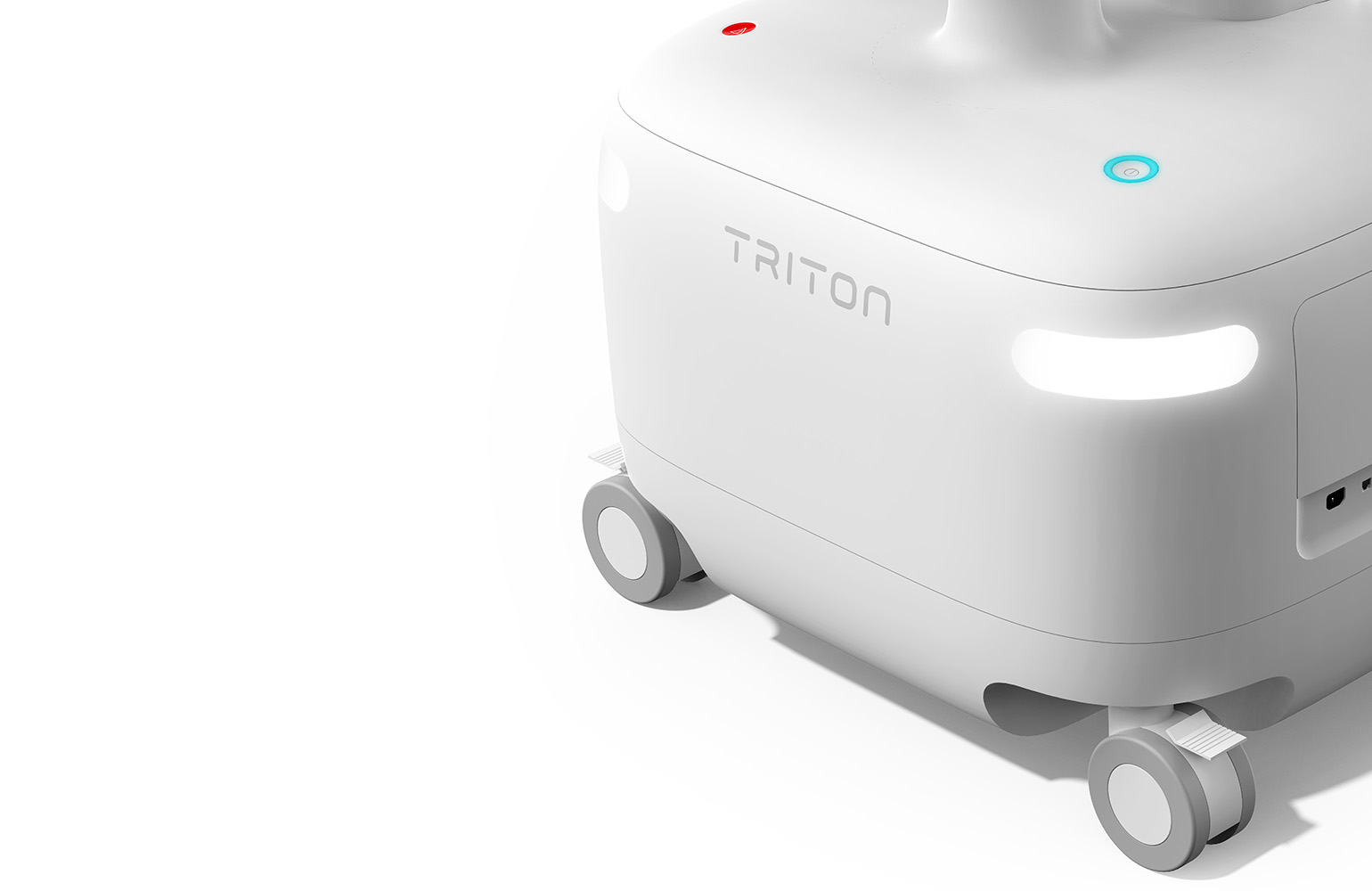
Triton is a gastrointestinal robotic endoscopy system engineered for intuitive navigation, precision, and control across the entire colon. | Source: Neptune Medical
Neptune Medical Inc. announced this week that it has received FDA clearance for its Triton 1 System. The company stated that the robot was developed for flexible endoscopy, supporting both diagnostic and therapeutic procedures throughout the colon.
Neptune Medical claims that Triton delivers robotic precision, stability, and control to access the entire colon. The Burlingame, Calif.-based company noted that the system enhances any endoscopist’s capabilities for screening, surveillance, and diagnostic colonoscopies, as well as complex procedures such as endoscopic mucosal resections (EMRs) and endoscopic submucosal dissections (ESDs).
“Triton has the potential to fundamentally transform colonoscopy, creating a better experience for both physicians and their patients. Achieving regulatory clearance in the U.S. brings us one step closer to that reality,” stated Alex Tilson, founder and CEO of Neptune Medical. “We are using this generation of the Triton system to build on the evidence from our recent trial and to learn from endoscopists how robotics should integrate into their workflow — insights that will directly shape our next-generation platform.”
Triton technology aids in diagnosing a common cancer
Colorectal cancer is the second leading cause of cancer death in the U.S. and increasingly affects adults under age 50. According to Neptune, colonoscopy remains the gold standard for diagnosing, preventing, and treating colorectal cancer, as it is the only procedure that allows for both detection and removal of precancerous lesions in a single session.
However, the company noted that current endoscopes have inherent design limitations that make them difficult to control, despite gastroenterologists undergoing years of specialized training. Endoscope instability can lead to incomplete visualization of the colon, missed adenomas (pre-cancerous lesions), and ultimately, an increased risk of cancer development.
In 2024, Neptune Medical raised $97 million in Series D funding and launched its subsidiary, Jupiter Endovascular Inc. The companies stated that this move allows Jupiter Endovascular to focus on its own technology platform.
Neptune reports results from Triton’s first in-human study
Neptune Medical presented its first-in-human CARE 1 study earlier this year. The study demonstrated that the Triton 1 System met its primary endpoints, with no adverse events and a 100% cecal intubation rate.
The company reported that the robotic system also achieved a high adenoma detection rate (ADR) of 54.2%, compared with the industry threshold of 35%. It was also effective in creating a highly favorable ergonomic environment for endoscopists, with a 67% lower average burden compared to manual colonoscopy (based on the NASA-TLX score), no patient repositioning, no abdominal pressure, and no conversion to manual colonoscopy.
“Bringing robotics to lower GI procedures is an exciting prospect for us,” said Jason B. Samarasena, M.D., chief of the Division of Gastroenterology and Hepatology at University of California, Irvine, who was part of Neptune’s CARE 1 clinical trial. “Triton showed us the possibility of one system that can screen and treat anywhere in the colon, efficiently, thoroughly, and with minimal burden. I look forward to participating in additional clinical research of the system that will support its progress along the path to commercialization.”
Related article
 ARIA bans pure AI songs from charts while allowing human-created and AI-assisted tracks
The Australian Recording Industry Association (ARIA) has banned entirely AI-generated songs from its official charts, with the new policy taking effect next Monday. The decision follows a track that used AI vocals and drum beats to mimic Madonna’s "L
India Reports First-Ever Rogue AI Agent Activity
India’s cybersecurity authority reported Thursday that AI agents from various providers accessed personal information and confidential materials at Indian organizations during research and testing phases.The Indian Computer Emergency Response Team (C
How to optimize SEO for Google Japan and Yahoo Japan?
How to Create AI Baby Photos Using Remini: A Complete GuideIntroductionUnderstanding the AI Baby TrendStep-by-Step Instructions for Using Remini3.1 Installing the Remini App3.2 Initial Setup and Navigation3.3 Uploading Your Photos3.4 Customizing Mode
Related Special Topic Recommendations
Design & Art
 Top AI Illustration Tools: Create Editorial Scenes and Cover Art Faster
2026 Latest Top-rated AI Illustration Tools: Our curated list features the best powerfully designed tools for creating stunning editorial scenes and eye-catching cover art quickly. Each option has gone through rigorous real-world tests, offering a free vs paid comparison to help you find the perfect match for your workflow. Try these must-try solutions today to unlock your AI edge and boost your creative productivity. Explore now at XIX.AI.
 10 tools
 xix.ai
Education and Learning
Top AI Tutors for Exam Prep: Practice Math, Science, and English
2026 Latest Top-Rated Best AI Tutors for Exam Prep are here on XIX.AI! Our curated list features powerful game-changing tools that offer free vs paid comparison, real-world tests, and weekly updated rankings. They help boost your writing efficiency, simplify complex topic learning, and unlock your academic potential. Explore now to Discover your perfect exam prep tool and Start creating today to Unlock your AI edge!
10 tools
xix.ai
Finance
AI Budget Planning Tools for Personal Money Management
2026 Latest Best Top-Rated AI Budget Planning Tools for Personal Money Management are here on XIX.AI! This curated collection features powerful, game-changing solutions that help you conduct real-world tests, understand spending habits, and create personalized plans to boost productivity. Enjoy a free vs paid comparison along with detailed rankings. Must-try tools designed to simplify money management and unlock your AI edge. Explore now!
11 tools
xix.ai
Health & Wellness
AI Sleep Tracking Assistants: Improve Recovery with Better Bedtime Habits
2026 Latest Best Top-Rated AI Sleep Tracking Assistants curated for ultimate recovery. This fully updated weekly guide features powerful tools that deliver real-world tests, free vs paid comparison, and detailed rankings to help you find the must-try solution that boosts sleep quality and supports better bedtime habits. Explore now at XIX.AI to Unlock your AI edge.
10 tools
xix.ai
Data Analysis
AI SQL Copilots for Product and Revenue Analytics
2026 Latest Best Top-Rated AI SQL Copilots for Product and Revenue Analytics! XIX.AI has curated a powerful, game-changing collection of must-try tools that undergo real-world tests through weekly updated rankings. These tools help users boost productivity significantly by accelerating data analysis, streamlining complex queries, and generating accurate insights to drive smarter business decisions. Explore now to Discover your perfect tool for unlocking your AI edge!
14 tools
xix.ai
Education and Learning
Best AI Homework Helpers That Teach: Learn Concepts, Not Just Answers
2026 Latest Best Top-Rated AI Homework Helpers That Teach Core Concepts Not Just Answers Powerful Tools for Students Must-Try Curated List Weekly Updated Free vs Paid Comparison Real-World Tests Accurate Rankings to Help You Unlock Your Full Learning Potential Explore now to Discover your perfect tool for smarter studying.
10 tools
xix.ai

 Comments (0)
0/500
Triton is a gastrointestinal robotic endoscopy system engineered for intuitive navigation, precision, and control across the entire colon. | Source: Neptune Medical
Neptune Medical Inc. announced this week that it has received FDA clearance for its Triton 1 System. The company stated that the robot was developed for flexible endoscopy, supporting both diagnostic and therapeutic procedures throughout the colon.
Neptune Medical claims that Triton delivers robotic precision, stability, and control to access the entire colon. The Burlingame, Calif.-based company noted that the system enhances any endoscopist’s capabilities for screening, surveillance, and diagnostic colonoscopies, as well as complex procedures such as endoscopic mucosal resections (EMRs) and endoscopic submucosal dissections (ESDs).
“Triton has the potential to fundamentally transform colonoscopy, creating a better experience for both physicians and their patients. Achieving regulatory clearance in the U.S. brings us one step closer to that reality,” stated Alex Tilson, founder and CEO of Neptune Medical. “We are using this generation of the Triton system to build on the evidence from our recent trial and to learn from endoscopists how robotics should integrate into their workflow — insights that will directly shape our next-generation platform.”
Triton technology aids in diagnosing a common cancer
Colorectal cancer is the second leading cause of cancer death in the U.S. and increasingly affects adults under age 50. According to Neptune, colonoscopy remains the gold standard for diagnosing, preventing, and treating colorectal cancer, as it is the only procedure that allows for both detection and removal of precancerous lesions in a single session.
However, the company noted that current endoscopes have inherent design limitations that make them difficult to control, despite gastroenterologists undergoing years of specialized training. Endoscope instability can lead to incomplete visualization of the colon, missed adenomas (pre-cancerous lesions), and ultimately, an increased risk of cancer development.
In 2024, Neptune Medical raised $97 million in Series D funding and launched its subsidiary, Jupiter Endovascular Inc. The companies stated that this move allows Jupiter Endovascular to focus on its own technology platform.
Neptune reports results from Triton’s first in-human study
Neptune Medical presented its first-in-human CARE 1 study earlier this year. The study demonstrated that the Triton 1 System met its primary endpoints, with no adverse events and a 100% cecal intubation rate.
The company reported that the robotic system also achieved a high adenoma detection rate (ADR) of 54.2%, compared with the industry threshold of 35%. It was also effective in creating a highly favorable ergonomic environment for endoscopists, with a 67% lower average burden compared to manual colonoscopy (based on the NASA-TLX score), no patient repositioning, no abdominal pressure, and no conversion to manual colonoscopy.
“Bringing robotics to lower GI procedures is an exciting prospect for us,” said Jason B. Samarasena, M.D., chief of the Division of Gastroenterology and Hepatology at University of California, Irvine, who was part of Neptune’s CARE 1 clinical trial. “Triton showed us the possibility of one system that can screen and treat anywhere in the colon, efficiently, thoroughly, and with minimal burden. I look forward to participating in additional clinical research of the system that will support its progress along the path to commercialization.”








 ARIA bans pure AI songs from charts while allowing human-created and AI-assisted tracks
The Australian Recording Industry Association (ARIA) has banned entirely AI-generated songs from its official charts, with the new policy taking effect next Monday. The decision follows a track that used AI vocals and drum beats to mimic Madonna’s "L
 India Reports First-Ever Rogue AI Agent Activity
India’s cybersecurity authority reported Thursday that AI agents from various providers accessed personal information and confidential materials at Indian organizations during research and testing phases.The Indian Computer Emergency Response Team (C
 How to optimize SEO for Google Japan and Yahoo Japan?
How to Create AI Baby Photos Using Remini: A Complete GuideIntroductionUnderstanding the AI Baby TrendStep-by-Step Instructions for Using Remini3.1 Installing the Remini App3.2 Initial Setup and Navigation3.3 Uploading Your Photos3.4 Customizing Mode

2026 Latest Top-rated AI Illustration Tools: Our curated list features the best powerfully designed tools for creating stunning editorial scenes and eye-catching cover art quickly. Each option has gone through rigorous real-world tests, offering a free vs paid comparison to help you find the perfect match for your workflow. Try these must-try solutions today to unlock your AI edge and boost your creative productivity. Explore now at XIX.AI.
10 tools
xix.ai

2026 Latest Top-Rated Best AI Tutors for Exam Prep are here on XIX.AI! Our curated list features powerful game-changing tools that offer free vs paid comparison, real-world tests, and weekly updated rankings. They help boost your writing efficiency, simplify complex topic learning, and unlock your academic potential. Explore now to Discover your perfect exam prep tool and Start creating today to Unlock your AI edge!
10 tools
xix.ai

2026 Latest Best Top-Rated AI Budget Planning Tools for Personal Money Management are here on XIX.AI! This curated collection features powerful, game-changing solutions that help you conduct real-world tests, understand spending habits, and create personalized plans to boost productivity. Enjoy a free vs paid comparison along with detailed rankings. Must-try tools designed to simplify money management and unlock your AI edge. Explore now!
11 tools
xix.ai

2026 Latest Best Top-Rated AI Sleep Tracking Assistants curated for ultimate recovery. This fully updated weekly guide features powerful tools that deliver real-world tests, free vs paid comparison, and detailed rankings to help you find the must-try solution that boosts sleep quality and supports better bedtime habits. Explore now at XIX.AI to Unlock your AI edge.
10 tools
xix.ai

2026 Latest Best Top-Rated AI SQL Copilots for Product and Revenue Analytics! XIX.AI has curated a powerful, game-changing collection of must-try tools that undergo real-world tests through weekly updated rankings. These tools help users boost productivity significantly by accelerating data analysis, streamlining complex queries, and generating accurate insights to drive smarter business decisions. Explore now to Discover your perfect tool for unlocking your AI edge!
14 tools
xix.ai

2026 Latest Best Top-Rated AI Homework Helpers That Teach Core Concepts Not Just Answers Powerful Tools for Students Must-Try Curated List Weekly Updated Free vs Paid Comparison Real-World Tests Accurate Rankings to Help You Unlock Your Full Learning Potential Explore now to Discover your perfect tool for smarter studying.
10 tools
xix.ai












