


 Home
HomeYC-Backed Bucket Robotics Navigates CES Debut
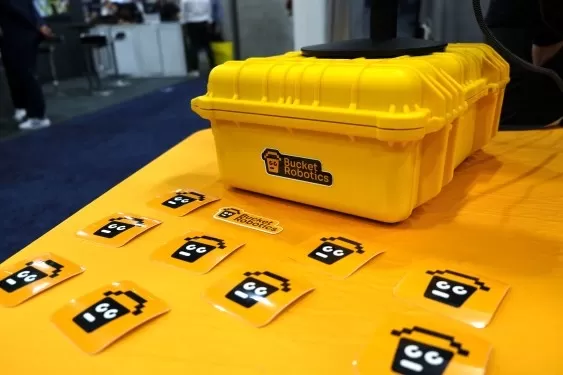
The outlook for the weather in Las Vegas was concerning. The original plan for the YC-backed company Bucket Robotics was for each employee to carry parts of their exhibition booth in their luggage to the 2026 Consumer Electronics Show. However, CEO and founder Matt Puchalski wasn't willing to risk delays with one or all of their flights. So, he rented a Hyundai Santa Fe and loaded it up instead.
"It was... a tight fit," he chuckled on the show floor.
The 12-hour drive through the rain was worth it; the equipment — and Puchalski — arrived safely in Las Vegas, marking the beginning of the young company's very first CES.
Based in San Francisco, Bucket Robotics was just one of thousands of exhibitors at the annual tech conference, a single grain of sand on a vast beach of products and promises. Despite its modest setup in the automotive-focused West Hall, Puchalski considered the trip a success.
A key part of that success was a commitment to being tireless, observant, and always prepared to deliver a pitch.
An engineer by profession, Puchalski spent most of the past decade working on autonomous vehicles at companies like Uber, Argo AI, Ford's subsidiary Latitude AI, and SoftBank-backed Stack AV.
Those roles allowed him to forge deep connections within the automotive industry, and our paths crossed multiple times throughout the week.
I spotted him at an industry networking event one evening. On another night, he was in my hotel lobby at 10 p.m., deep in discussion with Sanjay Dastoor—founder of mobility startups Skip and Boosted, also YC alumni—about balancing quality with manufacturing yield.
But I first met Puchalski over breakfast at the hotel. Seated at the next table, he and sales associate Max Joseph were reviewing preparations for the conference's "Media Day" over their (reportedly) cage-free eggs.
His enthusiasm caught my attention. After introducing myself, he explained Bucket Robotics's mission. Before long, he had opened a bright yellow Pelican case and I was holding a small plastic component.
Launched as part of Y Combinator's Spring 2024 batch, Bucket Robotics focuses on using advanced vision systems for quality inspection, specifically for surface defects. The goal is to automate a tedious task that Puchalski jokingly said is often handled by "guys in Wisconsin," and to support the broader, cross-industry push to bring manufacturing back onshore.
He used car door handles as an example. It's a part customers interact with daily, so it must be structurally sound—a quality check that is largely figured out.
The real challenge lies in ensuring a flawless surface. Is the color consistent? Are there any burn marks or scuffs? These are the questions Bucket Robotics aims to answer.
"It's extremely difficult to automate this kind of inspection without massive amounts of data, so automakers typically just assign guys in Wisconsin to the problem," he explained.
Bucket Robotics tackles the data issue by starting with the CAD files for a specific part. The system then generates numerous simulated defects—like burn marks, bumps, or breaks—enabling its vision software to quickly identify these issues on a production line.
This approach eliminates the need for manual labeling. The company claims its models can deploy "in minutes" and adapt as products or production lines evolve. A major selling point, Puchalski noted, is that Bucket Robotics integrates into existing production lines without requiring new hardware.
This capability has already drawn customers from both the automotive and defense sectors, positioning Bucket Robotics to pursue the increasingly common "dual-use" company pathway.
When the show floor opened, the first two hours were "intense," Puchalski recalled. Attendees in suits examined the startup's display, picked up orange stickers with the Bucket Robotics logo, and questioned the team about their technology.
More importantly, Puchalski said interest remained steady all week. He engaged in "real technical discussions" with professionals from manufacturing, robotics, and automation. By Friday, he was already busy with follow-up calls from potential customers and investors.
CES can be a marathon, but Bucket Robotics made it through. Now comes the truly difficult part: building the business, scaling up, securing funding, and closing commercial deals.
As for the "guys in Wisconsin," Puchalski doesn't see his company as a threat to their jobs. He pointed out that those roles involve not just spotting defects, but also diagnosing their root causes.
Furthermore, he added, automating surface quality inspection is a challenge the manufacturing industry has been grappling with for decades.
"So when we approach our customers, it's incredibly exciting for them," he said.
Related article
 What Is an Applied Research Lab?
AfterQuery is an applied research lab curating data solutions to accelerate foundation model development. Credit: AfterQueryBacked by Altos Ventures and Y Combinator, AfterQuery is an applied research lab that encodes human expertise into data to tra
Khosla-backed Genesis AI Unveils Full-Stack Robotics Solution
Genesis AI, a startup that secured a $105 million seed round to develop foundational AI for robotics, has launched its inaugural model, GENE-26.5, featuring unexpectedly dexterous hands. In a demonstration video, the company highlighted various advan
How US$900m Funding Will Shape XPENG’s Robotics Vision
XPENG’s robotics division secures over US$900 million in funding, achieving a post-money valuation exceeding US$6.3 billion and accelerating the deployment of physical AI. Credit: XPENGSven De Smet, Head of Brand & Marketing at XPENG Europe, describe
Related Special Topic Recommendations
Design & Art
What Is an Applied Research Lab?
AfterQuery is an applied research lab curating data solutions to accelerate foundation model development. Credit: AfterQueryBacked by Altos Ventures and Y Combinator, AfterQuery is an applied research lab that encodes human expertise into data to tra
Khosla-backed Genesis AI Unveils Full-Stack Robotics Solution
Genesis AI, a startup that secured a $105 million seed round to develop foundational AI for robotics, has launched its inaugural model, GENE-26.5, featuring unexpectedly dexterous hands. In a demonstration video, the company highlighted various advan
How US$900m Funding Will Shape XPENG’s Robotics Vision
XPENG’s robotics division secures over US$900 million in funding, achieving a post-money valuation exceeding US$6.3 billion and accelerating the deployment of physical AI. Credit: XPENGSven De Smet, Head of Brand & Marketing at XPENG Europe, describe
Related Special Topic Recommendations
Design & Art
 Best AI Style Transfer Tools for Creative Experiments
2026 Latest Best Top-rated AI Style Transfer Tools for Creative Experiments! XIX.AI has curated a powerful, game-changing collection of must-try tools that deliver exceptional results through real-world tests and rigorous rankings. These top solutions help creatives boost productivity significantly by accelerating content creation and unlocking endless creative possibilities. Explore now to discover your perfect tool and start creating today!
 9 tools
 xix.ai
Comic Creation
Best AI Dialogue Bubble Tools for Visual Storytelling
xix.ai
Comic Creation
Best AI Dialogue Bubble Tools for Visual Storytelling
2026 Latest Best Top-Rated AI Dialogue Bubble Tools for Visual Storytelling are here on XIX.AI! This curated collection features powerful, game-changing tools that help creators boost productivity and overcome creative bottlenecks. Get a free vs paid comparison, see real-world tests, and check the latest rankings to find the must-try solutions perfect for crafting engaging visual narratives. Explore now to discover your ideal tool!
10 tools
xix.ai
Meeting Assistant
Top AI Meeting Summary Tools: Track Decisions and Follow-Ups Clearly
2026 Latest Top-Rated Best AI Meeting Summary Tools for Clear Decision Tracking and Effortless Follow-Ups. This curated list showcases powerful, game-changing solutions that boost productivity dramatically by automating meeting notes, identifying key action items, and streamlining team coordination across all projects. Get a free vs paid comparison along with real-world tests and weekly updated rankings to help you find the perfect tool. Explore now to unlock your AI edge!
9 tools
xix.ai
Data Analysis
Best AI Data Cleaning Tools: Fix Missing Values and Duplicates Fast
2026 Latest Best Top-rated AI Data Cleaning Tools for quick fixing of missing values and duplicates. This curated list showcases powerful, game-changing solutions that boost productivity significantly. Each option has undergone rigorous real-world tests to ensure reliability. Get a free vs paid comparison and discover the must-try tool that fits your needs best. Explore now at XIX.AI to Unlock your AI edge.
11 tools
xix.ai
Design & Art
Best AI Creative Ideation Tools for Artists: Break Through Visual Blocks
2026 Latest Best Top-Rated AI Creative Ideation Tools for Artists are curated by XIX.AI to help creators break through visual blocks and boost creativity instantly. These powerful game-changing tools offer real-world tests, detailed free vs paid comparison, and weekly updated rankings. Discover your perfect tool to accelerate content creation and unlock your AI edge today. Explore now!
14 tools
xix.ai
Music composition
AI Beat Makers for TikTok Background Tracks, Reels Audio, and Creator Promo Music
2026 Latest Best AI Beat Makers for TikTok Background Tracks, Reels Audio, and Creator Promo Music! XIX.AI has curated a top-rated list of powerful game-changing tools that go through real-world tests to deliver flawless music for every content need. You’ll find detailed free vs paid comparison data, weekly updated rankings, and must-try options to help you boost creativity and productivity. Explore now to discover your perfect tool!
11 tools
xix.ai

 Comments (1)
0/500
Comments (1)
0/500
![WillieHernández]()
CES初登場を敢行したBucket Robotics、その戦略と苦労が垣間見える記事でしたね。CEOの言葉も具体的で、実現に向けた困難が伝わってきます。スタートアップの展示参加って、想像以上に大変なんだな…。次はどんなロボットを発表するのか、個人的に楽しみです🤖
The outlook for the weather in Las Vegas was concerning. The original plan for the YC-backed company Bucket Robotics was for each employee to carry parts of their exhibition booth in their luggage to the 2026 Consumer Electronics Show. However, CEO and founder Matt Puchalski wasn't willing to risk delays with one or all of their flights. So, he rented a Hyundai Santa Fe and loaded it up instead.
"It was... a tight fit," he chuckled on the show floor.
The 12-hour drive through the rain was worth it; the equipment — and Puchalski — arrived safely in Las Vegas, marking the beginning of the young company's very first CES.
Based in San Francisco, Bucket Robotics was just one of thousands of exhibitors at the annual tech conference, a single grain of sand on a vast beach of products and promises. Despite its modest setup in the automotive-focused West Hall, Puchalski considered the trip a success.
A key part of that success was a commitment to being tireless, observant, and always prepared to deliver a pitch.
An engineer by profession, Puchalski spent most of the past decade working on autonomous vehicles at companies like Uber, Argo AI, Ford's subsidiary Latitude AI, and SoftBank-backed Stack AV.
Those roles allowed him to forge deep connections within the automotive industry, and our paths crossed multiple times throughout the week.
I spotted him at an industry networking event one evening. On another night, he was in my hotel lobby at 10 p.m., deep in discussion with Sanjay Dastoor—founder of mobility startups Skip and Boosted, also YC alumni—about balancing quality with manufacturing yield.
But I first met Puchalski over breakfast at the hotel. Seated at the next table, he and sales associate Max Joseph were reviewing preparations for the conference's "Media Day" over their (reportedly) cage-free eggs.
His enthusiasm caught my attention. After introducing myself, he explained Bucket Robotics's mission. Before long, he had opened a bright yellow Pelican case and I was holding a small plastic component.
Launched as part of Y Combinator's Spring 2024 batch, Bucket Robotics focuses on using advanced vision systems for quality inspection, specifically for surface defects. The goal is to automate a tedious task that Puchalski jokingly said is often handled by "guys in Wisconsin," and to support the broader, cross-industry push to bring manufacturing back onshore.
He used car door handles as an example. It's a part customers interact with daily, so it must be structurally sound—a quality check that is largely figured out.
The real challenge lies in ensuring a flawless surface. Is the color consistent? Are there any burn marks or scuffs? These are the questions Bucket Robotics aims to answer.
"It's extremely difficult to automate this kind of inspection without massive amounts of data, so automakers typically just assign guys in Wisconsin to the problem," he explained.
Bucket Robotics tackles the data issue by starting with the CAD files for a specific part. The system then generates numerous simulated defects—like burn marks, bumps, or breaks—enabling its vision software to quickly identify these issues on a production line.
This approach eliminates the need for manual labeling. The company claims its models can deploy "in minutes" and adapt as products or production lines evolve. A major selling point, Puchalski noted, is that Bucket Robotics integrates into existing production lines without requiring new hardware.
This capability has already drawn customers from both the automotive and defense sectors, positioning Bucket Robotics to pursue the increasingly common "dual-use" company pathway.
When the show floor opened, the first two hours were "intense," Puchalski recalled. Attendees in suits examined the startup's display, picked up orange stickers with the Bucket Robotics logo, and questioned the team about their technology.
More importantly, Puchalski said interest remained steady all week. He engaged in "real technical discussions" with professionals from manufacturing, robotics, and automation. By Friday, he was already busy with follow-up calls from potential customers and investors.
CES can be a marathon, but Bucket Robotics made it through. Now comes the truly difficult part: building the business, scaling up, securing funding, and closing commercial deals.
As for the "guys in Wisconsin," Puchalski doesn't see his company as a threat to their jobs. He pointed out that those roles involve not just spotting defects, but also diagnosing their root causes.
Furthermore, he added, automating surface quality inspection is a challenge the manufacturing industry has been grappling with for decades.
"So when we approach our customers, it's incredibly exciting for them," he said.








 What Is an Applied Research Lab?
AfterQuery is an applied research lab curating data solutions to accelerate foundation model development. Credit: AfterQueryBacked by Altos Ventures and Y Combinator, AfterQuery is an applied research lab that encodes human expertise into data to tra
What Is an Applied Research Lab?
AfterQuery is an applied research lab curating data solutions to accelerate foundation model development. Credit: AfterQueryBacked by Altos Ventures and Y Combinator, AfterQuery is an applied research lab that encodes human expertise into data to tra
 Khosla-backed Genesis AI Unveils Full-Stack Robotics Solution
Genesis AI, a startup that secured a $105 million seed round to develop foundational AI for robotics, has launched its inaugural model, GENE-26.5, featuring unexpectedly dexterous hands. In a demonstration video, the company highlighted various advan
Khosla-backed Genesis AI Unveils Full-Stack Robotics Solution
Genesis AI, a startup that secured a $105 million seed round to develop foundational AI for robotics, has launched its inaugural model, GENE-26.5, featuring unexpectedly dexterous hands. In a demonstration video, the company highlighted various advan
 How US$900m Funding Will Shape XPENG’s Robotics Vision
XPENG’s robotics division secures over US$900 million in funding, achieving a post-money valuation exceeding US$6.3 billion and accelerating the deployment of physical AI. Credit: XPENGSven De Smet, Head of Brand & Marketing at XPENG Europe, describe
How US$900m Funding Will Shape XPENG’s Robotics Vision
XPENG’s robotics division secures over US$900 million in funding, achieving a post-money valuation exceeding US$6.3 billion and accelerating the deployment of physical AI. Credit: XPENGSven De Smet, Head of Brand & Marketing at XPENG Europe, describe

2026 Latest Best Top-rated AI Style Transfer Tools for Creative Experiments! XIX.AI has curated a powerful, game-changing collection of must-try tools that deliver exceptional results through real-world tests and rigorous rankings. These top solutions help creatives boost productivity significantly by accelerating content creation and unlocking endless creative possibilities. Explore now to discover your perfect tool and start creating today!
9 tools
xix.ai

2026 Latest Best Top-Rated AI Dialogue Bubble Tools for Visual Storytelling are here on XIX.AI! This curated collection features powerful, game-changing tools that help creators boost productivity and overcome creative bottlenecks. Get a free vs paid comparison, see real-world tests, and check the latest rankings to find the must-try solutions perfect for crafting engaging visual narratives. Explore now to discover your ideal tool!
10 tools
xix.ai

2026 Latest Top-Rated Best AI Meeting Summary Tools for Clear Decision Tracking and Effortless Follow-Ups. This curated list showcases powerful, game-changing solutions that boost productivity dramatically by automating meeting notes, identifying key action items, and streamlining team coordination across all projects. Get a free vs paid comparison along with real-world tests and weekly updated rankings to help you find the perfect tool. Explore now to unlock your AI edge!
9 tools
xix.ai

2026 Latest Best Top-rated AI Data Cleaning Tools for quick fixing of missing values and duplicates. This curated list showcases powerful, game-changing solutions that boost productivity significantly. Each option has undergone rigorous real-world tests to ensure reliability. Get a free vs paid comparison and discover the must-try tool that fits your needs best. Explore now at XIX.AI to Unlock your AI edge.
11 tools
xix.ai

2026 Latest Best Top-Rated AI Creative Ideation Tools for Artists are curated by XIX.AI to help creators break through visual blocks and boost creativity instantly. These powerful game-changing tools offer real-world tests, detailed free vs paid comparison, and weekly updated rankings. Discover your perfect tool to accelerate content creation and unlock your AI edge today. Explore now!
14 tools
xix.ai

2026 Latest Best AI Beat Makers for TikTok Background Tracks, Reels Audio, and Creator Promo Music! XIX.AI has curated a top-rated list of powerful game-changing tools that go through real-world tests to deliver flawless music for every content need. You’ll find detailed free vs paid comparison data, weekly updated rankings, and must-try options to help you boost creativity and productivity. Explore now to discover your perfect tool!
11 tools
xix.ai

CES初登場を敢行したBucket Robotics、その戦略と苦労が垣間見える記事でしたね。CEOの言葉も具体的で、実現に向けた困難が伝わってきます。スタートアップの展示参加って、想像以上に大変なんだな…。次はどんなロボットを発表するのか、個人的に楽しみです🤖












