


 Home
HomeWhy this VC thinks 2026 will be 'the year of the consumer'
Consumer tech startup funding has slumped since 2022, as macroeconomic volatility and persistent inflation have made venture capitalists hesitant about consumer spending power. Over the last few years, AI capital has largely targeted enterprise clients, drawn by substantial budgets, multi-year agreements, and faster scaling opportunities.
Yet one venture capitalist anticipates a consumer sector resurgence in 2026.
“This is going to be the year of the consumer,” Vanessa Larco, a partner at Premise and former NEA partner, stated on this week’s Equity podcast episode.
Larco notes that despite enterprises’ large budgets and urgent drive to adopt AI, progress often stalls because “they don’t know where to start.”
“The advantage of consumer and prosumer markets…is that users already have a clear idea of how they want to use the technology,” Larco explained. “They buy it, and if it works, they keep using it.”
Essentially, adoption accelerates, allowing AI startups to verify product-market fit through actual usage rather than relying solely on signed contracts.
“When selling to consumers, you quickly learn whether your product solves a real problem. You’ll immediately know if you need to pivot, adjust your offering, or abandon the project entirely,” Larco added.
Techcrunch event Join the Disrupt 2026 Waitlist
Add yourself to the Disrupt 2026 waitlist to be first in line when Early Bird tickets drop. Past Disrupts have brought Google Cloud, Netflix, Microsoft, Box, Phia, a16z, ElevenLabs, Wayve, Hugging Face, Elad Gil, and Vinod Khosla to the stages — part of 250+ industry leaders driving 200+ sessions built to fuel your growth and sharpen your edge. Plus, meet the hundreds of startups innovating across every sector.
Join the Disrupt 2026 Waitlist
Add yourself to the Disrupt 2026 waitlist to be first in line when Early Bird tickets drop. Past Disrupts have brought Google Cloud, Netflix, Microsoft, Box, Phia, a16z, ElevenLabs, Wayve, Hugging Face, Elad Gil, and Vinod Khosla to the stages — part of 250+ industry leaders driving 200+ sessions built to fuel your growth and sharpen your edge. Plus, meet the hundreds of startups innovating across every sector.
San Francisco | October 13-15, 2026 WAITLIST NOW In today’s uncertain economy, consumer tech products that achieve scale demonstrate particularly robust product-market fit.
Early signs suggest consumer tech is gaining momentum. Late last year, OpenAI introduced apps within ChatGPT, enabling users to shop via Target, browse housing listings on Zillow, book travel with Expedia, or create Spotify playlists—all through the ChatGPT interface.
“AI will function like concierge services, handling tasks you have in mind,” Larco said. “The key question is determining which applications should be specialized versus general purpose.”
Alternatively, as OpenAI strives to make ChatGPT the new operating system for the consumer internet, the question arises: which legacy companies—such as Tripadvisor or WebMD—will survive independently, and which will be absorbed by OpenAI?
While Larco views 2026 as a “gangbuster” year for mergers and acquisitions, she is focused on investing in startups that “OpenAI won’t want to eliminate.”
“OpenAI doesn’t manage real-world assets,” she explained. “I don’t believe they’ll build an Airbnb competitor because they don’t want to manage properties…I don’t think they’ll create marketplaces requiring human interaction, as they prefer not to manage people.”
Beyond identifying startups that fill these gaps, Larco is monitoring the potential impact if OpenAI “decides to emulate Apple or Android by taking a 30% cut of all traffic they direct to you.”
“Would Airbnb agree to such terms?” she asked.
Overall, Larco predicts that new monetization strategies and innovative business models will emerge from the evolving online consumer experience.
“Social has to change”
While scrolling through Instagram during news about Trump’s capture of Venezuelan leader Nicolás Maduro, Larco noticed something. She had visited the platform for updates on the escalating crisis, but instead encountered an overwhelming flood of AI-generated content about Maduro.
Although deepfakes have gradually become mainstream on social media, this was one of the first major news events where AI-generated noise obscured the truth.
“At that point, I thought, if I’m just going to watch AI-generated videos and photos, I want them to be entertaining,” she said.
Larco reports being inundated with realistic AI videos on social media to the point where she assumes everything is AI-generated, and she is not alone. If users begin to doubt the authenticity of content on Meta’s platforms or TikTok, the question becomes: where can you find genuine content?
Larco suggests that platforms like Reddit and Digg might fill the void by verifying human content. However, for Meta, it may simply become an entertainment company, serving as a platform for user-generated short films.
“I think we should stop getting news from [Meta],” Larco stated. “You’re just seeing funny videos there. It’s not social media; it’s gaming and entertainment media.”
“Some things are better with voice than a screen“

Meta Ray-Ban displayImage Credits:Meta / Meta When Meta acquired AI agent startup Manus last week, many interpreted it as an enterprise-focused move. Larco believes it could be a strategic step to enhance Meta’s Ray-Ban smart glasses, a product she highly favors for allowing her to answer calls, reply to messages, capture photos and videos, and ask Meta AI questions—all without needing to pull out her phone or navigate a screen.
Larco believes that truly useful voice AI assistants are finally “on the verge of becoming reality,” driven by advanced technology and increased computing power.
“Some tasks are better suited for voice than a screen,” she said. “Because voice technology was previously poor, we relied on screens as a crutch. But I’d love to start distinguishing which tasks are truly better on a screen and which are better handled via audio.”
Getting answers to questions her kids ask about the tallest building? Definitely voice. Taking out her phone to type the question now feels “archaic,” Larco noted.
“I think it will be exciting for designers, as they finally get to choose the best form factor for each use case,” she said.
Related article
 Liu Zhenyun, Ma Yi on AI Era: Machines Handle Commonalities, Humans Guard Individuality
As AI grows increasingly sophisticated, what role remains for humanity? On the morning of September 10, the 2026 Inclusion · Bund Conference kicked off in Shanghai with its opening ceremony and main forum. During a roundtable discussion, acclaimed au
WeChat Pay launches Smart Glasses SDK; Rokid becomes first compatible brand
WeChat has officially launched the WeChat Pay smart glasses SDK, making it fully accessible. This solution integrates WeChat’s core “scan to pay” functionality into a standard SDK, available to smart glasses manufacturers meeting specific standards.
OpenAI Enhances Codex Security with Dangerous Operation Blocking and Permission Controls
OpenAI has bolstered the security framework for its AI coding agent, Codex, by introducing multiple safeguards designed to mitigate risks associated with destructive actions, such as accidental file deletion or data overwriting during code execution.
Related Special Topic Recommendations
Social Media
Liu Zhenyun, Ma Yi on AI Era: Machines Handle Commonalities, Humans Guard Individuality
As AI grows increasingly sophisticated, what role remains for humanity? On the morning of September 10, the 2026 Inclusion · Bund Conference kicked off in Shanghai with its opening ceremony and main forum. During a roundtable discussion, acclaimed au
WeChat Pay launches Smart Glasses SDK; Rokid becomes first compatible brand
WeChat has officially launched the WeChat Pay smart glasses SDK, making it fully accessible. This solution integrates WeChat’s core “scan to pay” functionality into a standard SDK, available to smart glasses manufacturers meeting specific standards.
OpenAI Enhances Codex Security with Dangerous Operation Blocking and Permission Controls
OpenAI has bolstered the security framework for its AI coding agent, Codex, by introducing multiple safeguards designed to mitigate risks associated with destructive actions, such as accidental file deletion or data overwriting during code execution.
Related Special Topic Recommendations
Social Media
 Best AI Caption Generators: Write Platform-Specific Social Posts Fast
2026 Latest Best AI Caption Generators page! XIX.AI curated a top-rated list of must-try powerful tools for writing platform-specific social posts quickly. These tools go through rigorous real-world tests, offering free vs paid comparison and clear rankings to help you find the best option that boosts your productivity and unlocks your AI edge. Explore now!
 11 tools
 xix.ai
Health & Wellness
Best AI Sleep Coaching Tools for Shift Workers, Jet Lag Recovery, and Better Routines
xix.ai
Health & Wellness
Best AI Sleep Coaching Tools for Shift Workers, Jet Lag Recovery, and Better Routines
2026 Latest Best AI Sleep Coaching Tools for Shift Workers, Jet Lag Recovery, and Better Routines! XIX.AI has curated a top-rated list of powerful game-changing tools that go through real-world tests to deliver accurate guidance. You can find detailed free vs paid comparison info and see how these must-try solutions help boost sleep quality, speed up jet lag recovery, and build healthier routines. Explore now to discover your perfect tool!
7 tools
xix.ai
code
ChatGPT Debugging Tools for Python Errors, API Logs, and Stack Trace Triage
2026 Latest Best ChatGPT debugging tools for Python errors, API logs, and stack trace triage are here on XIX.AI. This curated list of top-rated solutions offers a free vs paid comparison, real-world tests, and detailed rankings to help you find the most powerful tool that can significantly boost your productivity and help you solve complex technical issues faster. Explore now to discover your perfect solution!
9 tools
xix.ai
Text-to-speech
AI Voiceover Tools for Product Demo Videos
2026 Latest Best Top-Rated AI Voiceover Tools for Product Demo Videos are here on XIX.AI! This curated list features powerful, game-changing options that help you create professional-quality audio content fast, boosting your demo efficiency significantly. We conduct real-world tests and provide a free vs paid comparison along with weekly updated rankings to help you find the perfect fit. Explore now to Unlock your AI edge!
10 tools
xix.ai
Business
AI Business Plan Tools for Startup Validation
2026 Latest Best AI Business Plan Tools for Startup Validation! XIX.AI has curated a top-rated list of powerful game-changing tools that go through real-world tests to deliver accurate results. You’ll find a free vs paid comparison, detailed rankings, and easy-to-understand insights to help you choose the perfect solution and boost your startup’s success rate. Explore now to Unlock your AI edge!
9 tools
xix.ai
chatbot
AI Chat Apps for Roleplay and Conversation Practice
2026 Latest Best AI Chat Apps for Roleplay and Conversation Practice! XIX.AI curates a top-rated list of powerful must-try tools that go through rigorous real-world tests to deliver exceptional results. You’ll find detailed free vs paid comparison, comprehensive rankings, and insights into how these apps can boost your language skills and communication confidence effectively. Explore now to discover your perfect tool for practice!
10 tools
xix.ai

 Comments (0)
0/500
Comments (0)
0/500
Consumer tech startup funding has slumped since 2022, as macroeconomic volatility and persistent inflation have made venture capitalists hesitant about consumer spending power. Over the last few years, AI capital has largely targeted enterprise clients, drawn by substantial budgets, multi-year agreements, and faster scaling opportunities.
Yet one venture capitalist anticipates a consumer sector resurgence in 2026.
“This is going to be the year of the consumer,” Vanessa Larco, a partner at Premise and former NEA partner, stated on this week’s Equity podcast episode.
Larco notes that despite enterprises’ large budgets and urgent drive to adopt AI, progress often stalls because “they don’t know where to start.”
“The advantage of consumer and prosumer markets…is that users already have a clear idea of how they want to use the technology,” Larco explained. “They buy it, and if it works, they keep using it.”
Essentially, adoption accelerates, allowing AI startups to verify product-market fit through actual usage rather than relying solely on signed contracts.
“When selling to consumers, you quickly learn whether your product solves a real problem. You’ll immediately know if you need to pivot, adjust your offering, or abandon the project entirely,” Larco added.
Techcrunch eventJoin the Disrupt 2026 Waitlist
Add yourself to the Disrupt 2026 waitlist to be first in line when Early Bird tickets drop. Past Disrupts have brought Google Cloud, Netflix, Microsoft, Box, Phia, a16z, ElevenLabs, Wayve, Hugging Face, Elad Gil, and Vinod Khosla to the stages — part of 250+ industry leaders driving 200+ sessions built to fuel your growth and sharpen your edge. Plus, meet the hundreds of startups innovating across every sector.
Join the Disrupt 2026 Waitlist
Add yourself to the Disrupt 2026 waitlist to be first in line when Early Bird tickets drop. Past Disrupts have brought Google Cloud, Netflix, Microsoft, Box, Phia, a16z, ElevenLabs, Wayve, Hugging Face, Elad Gil, and Vinod Khosla to the stages — part of 250+ industry leaders driving 200+ sessions built to fuel your growth and sharpen your edge. Plus, meet the hundreds of startups innovating across every sector.
San Francisco | October 13-15, 2026 WAITLIST NOWIn today’s uncertain economy, consumer tech products that achieve scale demonstrate particularly robust product-market fit.
Early signs suggest consumer tech is gaining momentum. Late last year, OpenAI introduced apps within ChatGPT, enabling users to shop via Target, browse housing listings on Zillow, book travel with Expedia, or create Spotify playlists—all through the ChatGPT interface.
“AI will function like concierge services, handling tasks you have in mind,” Larco said. “The key question is determining which applications should be specialized versus general purpose.”
Alternatively, as OpenAI strives to make ChatGPT the new operating system for the consumer internet, the question arises: which legacy companies—such as Tripadvisor or WebMD—will survive independently, and which will be absorbed by OpenAI?
While Larco views 2026 as a “gangbuster” year for mergers and acquisitions, she is focused on investing in startups that “OpenAI won’t want to eliminate.”
“OpenAI doesn’t manage real-world assets,” she explained. “I don’t believe they’ll build an Airbnb competitor because they don’t want to manage properties…I don’t think they’ll create marketplaces requiring human interaction, as they prefer not to manage people.”
Beyond identifying startups that fill these gaps, Larco is monitoring the potential impact if OpenAI “decides to emulate Apple or Android by taking a 30% cut of all traffic they direct to you.”
“Would Airbnb agree to such terms?” she asked.
Overall, Larco predicts that new monetization strategies and innovative business models will emerge from the evolving online consumer experience.
“Social has to change”
While scrolling through Instagram during news about Trump’s capture of Venezuelan leader Nicolás Maduro, Larco noticed something. She had visited the platform for updates on the escalating crisis, but instead encountered an overwhelming flood of AI-generated content about Maduro.
Although deepfakes have gradually become mainstream on social media, this was one of the first major news events where AI-generated noise obscured the truth.
“At that point, I thought, if I’m just going to watch AI-generated videos and photos, I want them to be entertaining,” she said.
Larco reports being inundated with realistic AI videos on social media to the point where she assumes everything is AI-generated, and she is not alone. If users begin to doubt the authenticity of content on Meta’s platforms or TikTok, the question becomes: where can you find genuine content?
Larco suggests that platforms like Reddit and Digg might fill the void by verifying human content. However, for Meta, it may simply become an entertainment company, serving as a platform for user-generated short films.
“I think we should stop getting news from [Meta],” Larco stated. “You’re just seeing funny videos there. It’s not social media; it’s gaming and entertainment media.”
“Some things are better with voice than a screen“
When Meta acquired AI agent startup Manus last week, many interpreted it as an enterprise-focused move. Larco believes it could be a strategic step to enhance Meta’s Ray-Ban smart glasses, a product she highly favors for allowing her to answer calls, reply to messages, capture photos and videos, and ask Meta AI questions—all without needing to pull out her phone or navigate a screen.
Larco believes that truly useful voice AI assistants are finally “on the verge of becoming reality,” driven by advanced technology and increased computing power.
“Some tasks are better suited for voice than a screen,” she said. “Because voice technology was previously poor, we relied on screens as a crutch. But I’d love to start distinguishing which tasks are truly better on a screen and which are better handled via audio.”
Getting answers to questions her kids ask about the tallest building? Definitely voice. Taking out her phone to type the question now feels “archaic,” Larco noted.
“I think it will be exciting for designers, as they finally get to choose the best form factor for each use case,” she said.








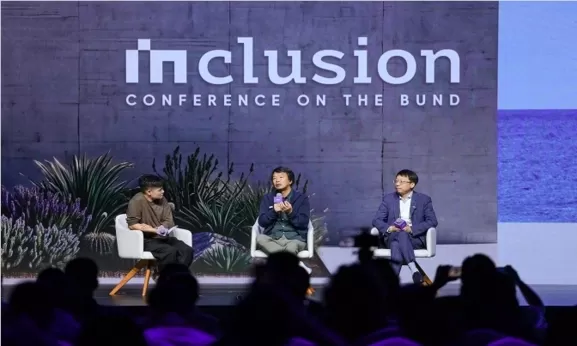 Liu Zhenyun, Ma Yi on AI Era: Machines Handle Commonalities, Humans Guard Individuality
As AI grows increasingly sophisticated, what role remains for humanity? On the morning of September 10, the 2026 Inclusion · Bund Conference kicked off in Shanghai with its opening ceremony and main forum. During a roundtable discussion, acclaimed au
Liu Zhenyun, Ma Yi on AI Era: Machines Handle Commonalities, Humans Guard Individuality
As AI grows increasingly sophisticated, what role remains for humanity? On the morning of September 10, the 2026 Inclusion · Bund Conference kicked off in Shanghai with its opening ceremony and main forum. During a roundtable discussion, acclaimed au
 WeChat Pay launches Smart Glasses SDK; Rokid becomes first compatible brand
WeChat has officially launched the WeChat Pay smart glasses SDK, making it fully accessible. This solution integrates WeChat’s core “scan to pay” functionality into a standard SDK, available to smart glasses manufacturers meeting specific standards.
WeChat Pay launches Smart Glasses SDK; Rokid becomes first compatible brand
WeChat has officially launched the WeChat Pay smart glasses SDK, making it fully accessible. This solution integrates WeChat’s core “scan to pay” functionality into a standard SDK, available to smart glasses manufacturers meeting specific standards.
 OpenAI Enhances Codex Security with Dangerous Operation Blocking and Permission Controls
OpenAI has bolstered the security framework for its AI coding agent, Codex, by introducing multiple safeguards designed to mitigate risks associated with destructive actions, such as accidental file deletion or data overwriting during code execution.
OpenAI Enhances Codex Security with Dangerous Operation Blocking and Permission Controls
OpenAI has bolstered the security framework for its AI coding agent, Codex, by introducing multiple safeguards designed to mitigate risks associated with destructive actions, such as accidental file deletion or data overwriting during code execution.
2026 Latest Best AI Caption Generators page! XIX.AI curated a top-rated list of must-try powerful tools for writing platform-specific social posts quickly. These tools go through rigorous real-world tests, offering free vs paid comparison and clear rankings to help you find the best option that boosts your productivity and unlocks your AI edge. Explore now!
11 tools
xix.ai

2026 Latest Best AI Sleep Coaching Tools for Shift Workers, Jet Lag Recovery, and Better Routines! XIX.AI has curated a top-rated list of powerful game-changing tools that go through real-world tests to deliver accurate guidance. You can find detailed free vs paid comparison info and see how these must-try solutions help boost sleep quality, speed up jet lag recovery, and build healthier routines. Explore now to discover your perfect tool!
7 tools
xix.ai

2026 Latest Best ChatGPT debugging tools for Python errors, API logs, and stack trace triage are here on XIX.AI. This curated list of top-rated solutions offers a free vs paid comparison, real-world tests, and detailed rankings to help you find the most powerful tool that can significantly boost your productivity and help you solve complex technical issues faster. Explore now to discover your perfect solution!
9 tools
xix.ai

2026 Latest Best Top-Rated AI Voiceover Tools for Product Demo Videos are here on XIX.AI! This curated list features powerful, game-changing options that help you create professional-quality audio content fast, boosting your demo efficiency significantly. We conduct real-world tests and provide a free vs paid comparison along with weekly updated rankings to help you find the perfect fit. Explore now to Unlock your AI edge!
10 tools
xix.ai

2026 Latest Best AI Business Plan Tools for Startup Validation! XIX.AI has curated a top-rated list of powerful game-changing tools that go through real-world tests to deliver accurate results. You’ll find a free vs paid comparison, detailed rankings, and easy-to-understand insights to help you choose the perfect solution and boost your startup’s success rate. Explore now to Unlock your AI edge!
9 tools
xix.ai

2026 Latest Best AI Chat Apps for Roleplay and Conversation Practice! XIX.AI curates a top-rated list of powerful must-try tools that go through rigorous real-world tests to deliver exceptional results. You’ll find detailed free vs paid comparison, comprehensive rankings, and insights into how these apps can boost your language skills and communication confidence effectively. Explore now to discover your perfect tool for practice!
10 tools
xix.ai












