


 Home
HomeAmazon Reveals Human-Centric Roles for an AI-Dominated Era
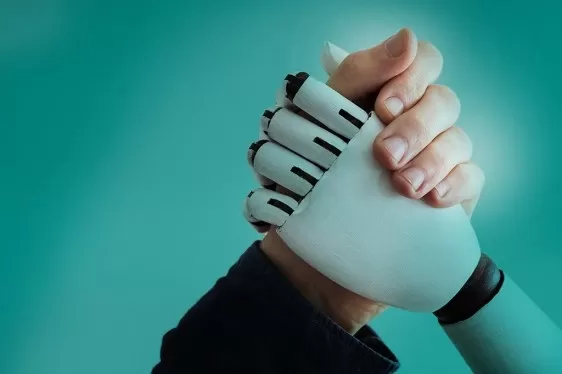
The tech industry holds two competing visions for human workers in the AI-driven future. Some believe nearly all jobs—except perhaps their own—will be automated. (Venture capitalist Marc Andreessen, for example, suggests his work as an investor could never be replicated by machines.)
Others envision bots handling tedious, undesirable tasks, serving as partners while humans take on new roles created by the automation wave. History tends to support this second view. According to the World Economic Forum, while current technological trends may displace 92 million positions, they are also projected to generate 170 million new jobs.
But for individuals without the economic resources or academic inclination to pursue advanced degrees in AI and machine learning—particularly those in current unskilled roles like warehouse labor—what does a bot-saturated future hold?
Amazon hinted at one possible direction with its recent announcement of significant progress in automating warehouses. The company unveiled its new "Vulcan" robot, which possesses a sense of touch.
"Vulcan enhances workplace safety by taking on ergonomically difficult tasks, while opening doors for our employees to develop skills in robotics maintenance," CEO Andy Jassy stated on X.
Amazon's blog post described how the Vulcan robot will collaborate with humans, retrieving items from the highest and lowest shelves to eliminate the need for climbing ladders or constant bending. Human workers would then focus on items stored at middle levels or those the touch-sensitive robot still cannot grasp.
The post also detailed Amazon's initiative to train a select group of warehouse employees to become robot technicians, as the bots assume a greater share of picking duties.
"These robots—involved in fulfilling 75% of customer orders—have established hundreds of new job categories at Amazon, from robotic floor monitors to onsite reliability maintenance engineers," the blog noted, mentioning a retraining program to help some workers acquire these specialized skills.
While not explicitly stated, this transition is obviously not one-for-one. Managing a fleet of robots does not require the same-sized workforce as manually fulfilling orders. Furthermore, not every worker will have the aptitude or interest to become a robotics mechanic.
Nonetheless, the inclusion of retraining information alongside the Vulcan announcement is significant.
To date, there has been scant clarity on what follows widespread automation for the working class. (One AI startup founder even speculated to TechCrunch that in a fully automated world, humans might subsist on government welfare.)
A potential model could see roles shift from, say, grocery cashiers to "automation monitors," similar to the single clerk overseeing several self-checkout lanes today. Instead of fast-food cooks, workers might supervise automated cooking systems. Operating robots could become a fundamental workplace skill, as essential as using a personal computer.
However, this fully automated future may never fully arrive. Advanced robotics might remain feasible only for the largest, best-funded corporations—like Amazon or automotive manufacturers—while the vast majority of retail, food service, and driving jobs continue to be performed by humans for decades to come.
Consider Amazon's attempt to sell its "Just Walk Out" automation technology to the broader retail and grocery industry. Competitors were wary of adopting systems from Amazon, their major rival, and showed little interest. It was later revealed the technology relied heavily on human reviewers in India to analyze video footage, and Amazon itself eventually scaled back its use. Such automation technology, from Amazon or others, remains a rare sight in everyday commerce today.
Related article
 Amazon introduces Alexa for Shopping while pushing Rufus to the background
Amazon has launched Alexa for Shopping, merging its Rufus shopping chatbot with Alexa+ across the app, website, and Echo Show devices.The assistant answers product queries, compares items, tracks prices, and supports shopping reminders. It also handl
Does Mark Zuckerberg Really Believe AI Is for Everyone?
Loading the player…Meta introduced Glimmer this week, an open-weight AI model that anyone can download and run on personal hardware—a sharp contrast to Muse Spark, the company’s more powerful model, which remains locked behind its own APIs. The relea
Khosla-backed Genesis AI Unveils Full-Stack Robotics Solution
Genesis AI, a startup that secured a $105 million seed round to develop foundational AI for robotics, has launched its inaugural model, GENE-26.5, featuring unexpectedly dexterous hands. In a demonstration video, the company highlighted various advan
Related Special Topic Recommendations
chatbot
Amazon introduces Alexa for Shopping while pushing Rufus to the background
Amazon has launched Alexa for Shopping, merging its Rufus shopping chatbot with Alexa+ across the app, website, and Echo Show devices.The assistant answers product queries, compares items, tracks prices, and supports shopping reminders. It also handl
Does Mark Zuckerberg Really Believe AI Is for Everyone?
Loading the player…Meta introduced Glimmer this week, an open-weight AI model that anyone can download and run on personal hardware—a sharp contrast to Muse Spark, the company’s more powerful model, which remains locked behind its own APIs. The relea
Khosla-backed Genesis AI Unveils Full-Stack Robotics Solution
Genesis AI, a startup that secured a $105 million seed round to develop foundational AI for robotics, has launched its inaugural model, GENE-26.5, featuring unexpectedly dexterous hands. In a demonstration video, the company highlighted various advan
Related Special Topic Recommendations
chatbot
 Best AI Roleplay Chat Apps for Language Practice, Interview Prep, and Daily Fluency
2026 Latest Best Top-rated AI Roleplay Chat Apps for Language Practice, Interview Prep, and Daily Fluency! XIX.AI curates a powerful game-changing collection that offers free vs paid comparison, real-world tests, and updated rankings weekly. These must-try tools help you boost writing skills, overcome fluency challenges, and improve communication efficiency across all daily scenarios. Explore now to discover your perfect tool for language growth!
 10 tools
 xix.ai
Music composition
AI Stem Separation Tools for Remix Production, Sampling Prep, and Karaoke Masters
xix.ai
Music composition
AI Stem Separation Tools for Remix Production, Sampling Prep, and Karaoke Masters
2026 Latest Best Top-rated AI Stem Separation Tools Curated for Remix Production, Sampling Prep, and Karaoke Masters. These powerful game-changing tools offer real-world tests to deliver precise audio isolation, boosting productivity significantly. XIX.AI provides a weekly updated free vs paid comparison guide to help you find the must-try solution that suits your needs. Explore now to unlock your AI edge.
8 tools
xix.ai
Data Analysis
AI SQL Copilots for Revenue Dashboards, Funnel Analysis, and Product Metrics
2026 Latest Best AI SQL Copilots Ranked Top-Rated! XIX.AI curates a powerful game-changing collection for weekly updated real-world tests. These must-try tools help you generate accurate revenue dashboards, analyze sales funnels, and track product metrics swiftly, boosting productivity massively. Explore now to Discover your perfect tool for data-driven decision making! 238 characters
9 tools
xix.ai
Music composition
Best AI Melody Writing Tools for Song Drafts
2026 Latest Best Top-Rated AI Melody Writing Tools for Song Drafts! XIX.AI has curated a highly powerful game-changing collection that goes through rigorous real-world tests to deliver the best writing experience. You can find detailed free vs paid comparisons, accurate rankings, and must-try options designed to help you create stunning song drafts effortlessly and boost your creative productivity significantly. Explore now to discover your perfect tool!
8 tools
xix.ai
chatbot
Best AI Conversation Trainer Tools for Interview Practice
2026 Latest Best Top-rated AI Conversation Trainer Tools for Interview Practice are here on XIX.AI! This curated collection features powerful, game-changing tools that go through rigorous real-world tests to deliver accurate feedback. You’ll find a free vs paid comparison and detailed rankings to help you choose the must-try option that boosts your confidence and skills. Explore now to Discover your perfect tool for interview success!
12 tools
xix.ai
Design & Art
Best AI Style Transfer Tools for Creative Experiments
2026 Latest Best Top-rated AI Style Transfer Tools for Creative Experiments! XIX.AI has curated a powerful, game-changing collection of must-try tools that deliver exceptional results through real-world tests and rigorous rankings. These top solutions help creatives boost productivity significantly by accelerating content creation and unlocking endless creative possibilities. Explore now to discover your perfect tool and start creating today!
9 tools
xix.ai

 Comments (1)
0/500
Comments (1)
0/500
![TimothyDavis]()
Interesting take! So VCs think they're irreplaceable? 😂 But honestly, maybe the real human-centric roles are the ones that require empathy and creativity, not just investing. Amazon's approach might be more pragmatic than the doom-and-gloom predictions.
The tech industry holds two competing visions for human workers in the AI-driven future. Some believe nearly all jobs—except perhaps their own—will be automated. (Venture capitalist Marc Andreessen, for example, suggests his work as an investor could never be replicated by machines.)
Others envision bots handling tedious, undesirable tasks, serving as partners while humans take on new roles created by the automation wave. History tends to support this second view. According to the World Economic Forum, while current technological trends may displace 92 million positions, they are also projected to generate 170 million new jobs.
But for individuals without the economic resources or academic inclination to pursue advanced degrees in AI and machine learning—particularly those in current unskilled roles like warehouse labor—what does a bot-saturated future hold?
Amazon hinted at one possible direction with its recent announcement of significant progress in automating warehouses. The company unveiled its new "Vulcan" robot, which possesses a sense of touch.
"Vulcan enhances workplace safety by taking on ergonomically difficult tasks, while opening doors for our employees to develop skills in robotics maintenance," CEO Andy Jassy stated on X.
Amazon's blog post described how the Vulcan robot will collaborate with humans, retrieving items from the highest and lowest shelves to eliminate the need for climbing ladders or constant bending. Human workers would then focus on items stored at middle levels or those the touch-sensitive robot still cannot grasp.
The post also detailed Amazon's initiative to train a select group of warehouse employees to become robot technicians, as the bots assume a greater share of picking duties.
"These robots—involved in fulfilling 75% of customer orders—have established hundreds of new job categories at Amazon, from robotic floor monitors to onsite reliability maintenance engineers," the blog noted, mentioning a retraining program to help some workers acquire these specialized skills.
While not explicitly stated, this transition is obviously not one-for-one. Managing a fleet of robots does not require the same-sized workforce as manually fulfilling orders. Furthermore, not every worker will have the aptitude or interest to become a robotics mechanic.
Nonetheless, the inclusion of retraining information alongside the Vulcan announcement is significant.
To date, there has been scant clarity on what follows widespread automation for the working class. (One AI startup founder even speculated to TechCrunch that in a fully automated world, humans might subsist on government welfare.)
A potential model could see roles shift from, say, grocery cashiers to "automation monitors," similar to the single clerk overseeing several self-checkout lanes today. Instead of fast-food cooks, workers might supervise automated cooking systems. Operating robots could become a fundamental workplace skill, as essential as using a personal computer.
However, this fully automated future may never fully arrive. Advanced robotics might remain feasible only for the largest, best-funded corporations—like Amazon or automotive manufacturers—while the vast majority of retail, food service, and driving jobs continue to be performed by humans for decades to come.
Consider Amazon's attempt to sell its "Just Walk Out" automation technology to the broader retail and grocery industry. Competitors were wary of adopting systems from Amazon, their major rival, and showed little interest. It was later revealed the technology relied heavily on human reviewers in India to analyze video footage, and Amazon itself eventually scaled back its use. Such automation technology, from Amazon or others, remains a rare sight in everyday commerce today.







 Amazon introduces Alexa for Shopping while pushing Rufus to the background
Amazon has launched Alexa for Shopping, merging its Rufus shopping chatbot with Alexa+ across the app, website, and Echo Show devices.The assistant answers product queries, compares items, tracks prices, and supports shopping reminders. It also handl
Amazon introduces Alexa for Shopping while pushing Rufus to the background
Amazon has launched Alexa for Shopping, merging its Rufus shopping chatbot with Alexa+ across the app, website, and Echo Show devices.The assistant answers product queries, compares items, tracks prices, and supports shopping reminders. It also handl
 Does Mark Zuckerberg Really Believe AI Is for Everyone?
Loading the player…Meta introduced Glimmer this week, an open-weight AI model that anyone can download and run on personal hardware—a sharp contrast to Muse Spark, the company’s more powerful model, which remains locked behind its own APIs. The relea
Does Mark Zuckerberg Really Believe AI Is for Everyone?
Loading the player…Meta introduced Glimmer this week, an open-weight AI model that anyone can download and run on personal hardware—a sharp contrast to Muse Spark, the company’s more powerful model, which remains locked behind its own APIs. The relea
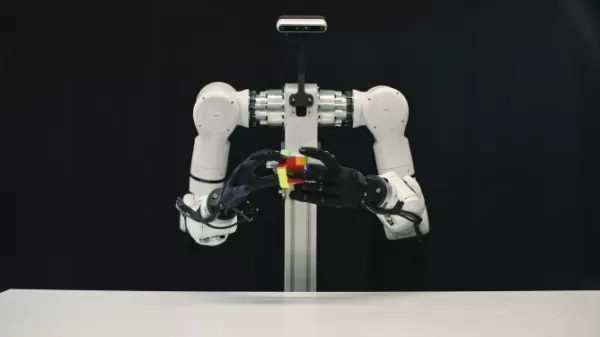 Khosla-backed Genesis AI Unveils Full-Stack Robotics Solution
Genesis AI, a startup that secured a $105 million seed round to develop foundational AI for robotics, has launched its inaugural model, GENE-26.5, featuring unexpectedly dexterous hands. In a demonstration video, the company highlighted various advan
Khosla-backed Genesis AI Unveils Full-Stack Robotics Solution
Genesis AI, a startup that secured a $105 million seed round to develop foundational AI for robotics, has launched its inaugural model, GENE-26.5, featuring unexpectedly dexterous hands. In a demonstration video, the company highlighted various advan

2026 Latest Best Top-rated AI Roleplay Chat Apps for Language Practice, Interview Prep, and Daily Fluency! XIX.AI curates a powerful game-changing collection that offers free vs paid comparison, real-world tests, and updated rankings weekly. These must-try tools help you boost writing skills, overcome fluency challenges, and improve communication efficiency across all daily scenarios. Explore now to discover your perfect tool for language growth!
10 tools
xix.ai

2026 Latest Best Top-rated AI Stem Separation Tools Curated for Remix Production, Sampling Prep, and Karaoke Masters. These powerful game-changing tools offer real-world tests to deliver precise audio isolation, boosting productivity significantly. XIX.AI provides a weekly updated free vs paid comparison guide to help you find the must-try solution that suits your needs. Explore now to unlock your AI edge.
8 tools
xix.ai

2026 Latest Best AI SQL Copilots Ranked Top-Rated! XIX.AI curates a powerful game-changing collection for weekly updated real-world tests. These must-try tools help you generate accurate revenue dashboards, analyze sales funnels, and track product metrics swiftly, boosting productivity massively. Explore now to Discover your perfect tool for data-driven decision making! 238 characters
9 tools
xix.ai

2026 Latest Best Top-Rated AI Melody Writing Tools for Song Drafts! XIX.AI has curated a highly powerful game-changing collection that goes through rigorous real-world tests to deliver the best writing experience. You can find detailed free vs paid comparisons, accurate rankings, and must-try options designed to help you create stunning song drafts effortlessly and boost your creative productivity significantly. Explore now to discover your perfect tool!
8 tools
xix.ai

2026 Latest Best Top-rated AI Conversation Trainer Tools for Interview Practice are here on XIX.AI! This curated collection features powerful, game-changing tools that go through rigorous real-world tests to deliver accurate feedback. You’ll find a free vs paid comparison and detailed rankings to help you choose the must-try option that boosts your confidence and skills. Explore now to Discover your perfect tool for interview success!
12 tools
xix.ai

2026 Latest Best Top-rated AI Style Transfer Tools for Creative Experiments! XIX.AI has curated a powerful, game-changing collection of must-try tools that deliver exceptional results through real-world tests and rigorous rankings. These top solutions help creatives boost productivity significantly by accelerating content creation and unlocking endless creative possibilities. Explore now to discover your perfect tool and start creating today!
9 tools
xix.ai

Interesting take! So VCs think they're irreplaceable? 😂 But honestly, maybe the real human-centric roles are the ones that require empathy and creativity, not just investing. Amazon's approach might be more pragmatic than the doom-and-gloom predictions.












