


 Home
HomeUber latest to embrace Amazon's AI chips
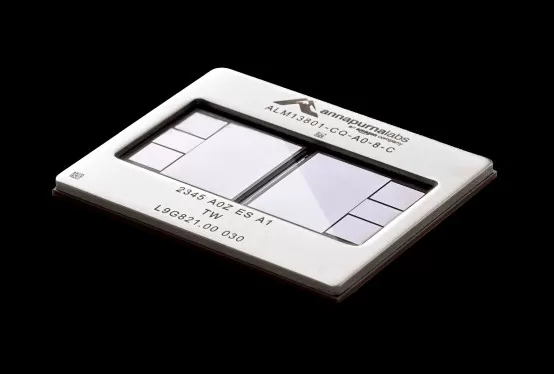
Amazon announced on Tuesday that Uber is expanding its AWS cloud contract to run more of its ride-sharing features on Amazon's own processors. Uber will extend its use of AWS Graviton, a low-power ARM-based server CPU, and begin testing Trainium3, AWS's AI chip that competes with Nvidia.
This agreement is less about posing a long-term threat to Nvidia and more about Amazon snubbing its cloud rivals Google and Oracle.
Uber, which historically managed its own data centers, signed major multi-year cloud deals with Oracle and Google in 2023. The company stated its intention to shift most of its IT infrastructure from its own facilities to these two cloud platforms.
In December, Uber reaffirmed that objective in a blog post:
"In February 2023, Uber started migrating from on-premises data centers to the cloud using OCI and Google Cloud Platform, tackling the twin challenges of moving large workloads and introducing Arm-based compute instances into what was previously an x86-dominated environment."
In that post, Uber specifically highlighted its use of Ampere's ARM chips in Oracle's cloud. This is where the story gets interesting.
For a quick lesson in how interconnected Silicon Valley is, consider the history of Ampere.
Ampere was founded by former Intel executive Renee James after she was passed over for the CEO role at the chipmaker. She leveraged her influence, including her position as an investor at private equity firm Carlyle and her seat on Oracle's board, to secure funding for the startup. Oracle owned roughly one-third of the company, and James had to resign as an independent Oracle director due to that investment.
(James, incidentally, was a key board member who helped approve Oracle's $9.3 billion acquisition of NetSuite in 2016, a company in which Larry Ellison held a large stake. That deal led to an unsuccessful shareholder lawsuit claiming Oracle overpaid.)
In December, Softbank, Ampere's major competitor, acquired the company, and Oracle sold its stake for a substantial pre-tax gain of $2.7 billion. James stepped down from Oracle's board at the end of 2024 and is no longer with Ampere.
Oracle is aggressively raising funds to build data centers for OpenAI and Stargate. Ellison stated that Oracle sold Ampere because in-house chip design for its data centers was no longer seen as a competitive edge. Instead, the company prefers to purchase chips and has inked large deals with Nvidia.
Notably, Oracle, Softbank, and Nvidia are all participants in OpenAI's network of circular deals intended to finance the AI company's massive data center expansion.
Now, AWS announces it has secured a larger contract from one of Oracle's premier customers, Uber, thanks to its in-house chip designs.
Uber joins Anthropic, OpenAI, and Apple among the major tech companies that have adopted or expanded their use of AWS due to these AI chips. In December, Amazon CEO Andy Jassy noted that Trainium had already become a multibillion-dollar business.
(For an inside look at the team and lab behind these chips, see our exclusive facility tour.)
Related article
 Stripe to Acquire OpenRouter as AI Model Routing Gains Momentum
Stripe has agreed to acquire OpenRouter, an AI model-routing platform that gives developers access to hundreds of models through a single interface. The deal adds model selection and routing to Stripe’s existing work around AI usage and token-based b
Google AI Overviews Gain Ground in Search Results
According to Similarweb’s 2026 Generative AI Landscape report, Google’s AI-generated summaries appeared in 43% of US searches, a significant rise from 15% recorded a year prior.While AI Overviews present generated summaries within standard search res
Sequoia-backed Empirik raises $21M to forecast outages before they strike
Before joining Sequoia Capital in 2020 as chief digital and information officer, Avon Puri spent over a decade running infrastructure at Rubrik and VMware. Three years ago, as large language models began showing their true potential, Puri, alongside
Related Special Topic Recommendations
Design & Art
Stripe to Acquire OpenRouter as AI Model Routing Gains Momentum
Stripe has agreed to acquire OpenRouter, an AI model-routing platform that gives developers access to hundreds of models through a single interface. The deal adds model selection and routing to Stripe’s existing work around AI usage and token-based b
Google AI Overviews Gain Ground in Search Results
According to Similarweb’s 2026 Generative AI Landscape report, Google’s AI-generated summaries appeared in 43% of US searches, a significant rise from 15% recorded a year prior.While AI Overviews present generated summaries within standard search res
Sequoia-backed Empirik raises $21M to forecast outages before they strike
Before joining Sequoia Capital in 2020 as chief digital and information officer, Avon Puri spent over a decade running infrastructure at Rubrik and VMware. Three years ago, as large language models began showing their true potential, Puri, alongside
Related Special Topic Recommendations
Design & Art
 Top AI Illustration Tools: Create Editorial Scenes and Cover Art Faster
2026 Latest Top-rated AI Illustration Tools: Our curated list features the best powerfully designed tools for creating stunning editorial scenes and eye-catching cover art quickly. Each option has gone through rigorous real-world tests, offering a free vs paid comparison to help you find the perfect match for your workflow. Try these must-try solutions today to unlock your AI edge and boost your creative productivity. Explore now at XIX.AI.
 10 tools
 xix.ai
Education and Learning
Top AI Tutors for Exam Prep: Practice Math, Science, and English
xix.ai
Education and Learning
Top AI Tutors for Exam Prep: Practice Math, Science, and English
2026 Latest Top-Rated Best AI Tutors for Exam Prep are here on XIX.AI! Our curated list features powerful game-changing tools that offer free vs paid comparison, real-world tests, and weekly updated rankings. They help boost your writing efficiency, simplify complex topic learning, and unlock your academic potential. Explore now to Discover your perfect exam prep tool and Start creating today to Unlock your AI edge!
10 tools
xix.ai
Finance
AI Budget Planning Tools for Personal Money Management
2026 Latest Best Top-Rated AI Budget Planning Tools for Personal Money Management are here on XIX.AI! This curated collection features powerful, game-changing solutions that help you conduct real-world tests, understand spending habits, and create personalized plans to boost productivity. Enjoy a free vs paid comparison along with detailed rankings. Must-try tools designed to simplify money management and unlock your AI edge. Explore now!
11 tools
xix.ai
Health & Wellness
AI Sleep Tracking Assistants: Improve Recovery with Better Bedtime Habits
2026 Latest Best Top-Rated AI Sleep Tracking Assistants curated for ultimate recovery. This fully updated weekly guide features powerful tools that deliver real-world tests, free vs paid comparison, and detailed rankings to help you find the must-try solution that boosts sleep quality and supports better bedtime habits. Explore now at XIX.AI to Unlock your AI edge.
10 tools
xix.ai
Data Analysis
AI SQL Copilots for Product and Revenue Analytics
2026 Latest Best Top-Rated AI SQL Copilots for Product and Revenue Analytics! XIX.AI has curated a powerful, game-changing collection of must-try tools that undergo real-world tests through weekly updated rankings. These tools help users boost productivity significantly by accelerating data analysis, streamlining complex queries, and generating accurate insights to drive smarter business decisions. Explore now to Discover your perfect tool for unlocking your AI edge!
14 tools
xix.ai
Education and Learning
Best AI Homework Helpers That Teach: Learn Concepts, Not Just Answers
2026 Latest Best Top-Rated AI Homework Helpers That Teach Core Concepts Not Just Answers Powerful Tools for Students Must-Try Curated List Weekly Updated Free vs Paid Comparison Real-World Tests Accurate Rankings to Help You Unlock Your Full Learning Potential Explore now to Discover your perfect tool for smarter studying.
10 tools
xix.ai

 Comments (1)
0/500
Comments (1)
0/500
![AlbertAllen]()
So Uber's jumping on the AWS AI chip bandwagon too? I guess when your entire business model relies on someone else's infrastructure, might as well go all in. But Trainium3? Sounds like Amazon's trying to make their own iPhone chip for servers. 🤷♂️
Amazon announced on Tuesday that Uber is expanding its AWS cloud contract to run more of its ride-sharing features on Amazon's own processors. Uber will extend its use of AWS Graviton, a low-power ARM-based server CPU, and begin testing Trainium3, AWS's AI chip that competes with Nvidia.
This agreement is less about posing a long-term threat to Nvidia and more about Amazon snubbing its cloud rivals Google and Oracle.
Uber, which historically managed its own data centers, signed major multi-year cloud deals with Oracle and Google in 2023. The company stated its intention to shift most of its IT infrastructure from its own facilities to these two cloud platforms.
In December, Uber reaffirmed that objective in a blog post:
"In February 2023, Uber started migrating from on-premises data centers to the cloud using OCI and Google Cloud Platform, tackling the twin challenges of moving large workloads and introducing Arm-based compute instances into what was previously an x86-dominated environment."
In that post, Uber specifically highlighted its use of Ampere's ARM chips in Oracle's cloud. This is where the story gets interesting.
For a quick lesson in how interconnected Silicon Valley is, consider the history of Ampere.
Ampere was founded by former Intel executive Renee James after she was passed over for the CEO role at the chipmaker. She leveraged her influence, including her position as an investor at private equity firm Carlyle and her seat on Oracle's board, to secure funding for the startup. Oracle owned roughly one-third of the company, and James had to resign as an independent Oracle director due to that investment.
(James, incidentally, was a key board member who helped approve Oracle's $9.3 billion acquisition of NetSuite in 2016, a company in which Larry Ellison held a large stake. That deal led to an unsuccessful shareholder lawsuit claiming Oracle overpaid.)
In December, Softbank, Ampere's major competitor, acquired the company, and Oracle sold its stake for a substantial pre-tax gain of $2.7 billion. James stepped down from Oracle's board at the end of 2024 and is no longer with Ampere.
Oracle is aggressively raising funds to build data centers for OpenAI and Stargate. Ellison stated that Oracle sold Ampere because in-house chip design for its data centers was no longer seen as a competitive edge. Instead, the company prefers to purchase chips and has inked large deals with Nvidia.
Notably, Oracle, Softbank, and Nvidia are all participants in OpenAI's network of circular deals intended to finance the AI company's massive data center expansion.
Now, AWS announces it has secured a larger contract from one of Oracle's premier customers, Uber, thanks to its in-house chip designs.
Uber joins Anthropic, OpenAI, and Apple among the major tech companies that have adopted or expanded their use of AWS due to these AI chips. In December, Amazon CEO Andy Jassy noted that Trainium had already become a multibillion-dollar business.
(For an inside look at the team and lab behind these chips, see our exclusive facility tour.)








 Stripe to Acquire OpenRouter as AI Model Routing Gains Momentum
Stripe has agreed to acquire OpenRouter, an AI model-routing platform that gives developers access to hundreds of models through a single interface. The deal adds model selection and routing to Stripe’s existing work around AI usage and token-based b
Stripe to Acquire OpenRouter as AI Model Routing Gains Momentum
Stripe has agreed to acquire OpenRouter, an AI model-routing platform that gives developers access to hundreds of models through a single interface. The deal adds model selection and routing to Stripe’s existing work around AI usage and token-based b
 Google AI Overviews Gain Ground in Search Results
According to Similarweb’s 2026 Generative AI Landscape report, Google’s AI-generated summaries appeared in 43% of US searches, a significant rise from 15% recorded a year prior.While AI Overviews present generated summaries within standard search res
Google AI Overviews Gain Ground in Search Results
According to Similarweb’s 2026 Generative AI Landscape report, Google’s AI-generated summaries appeared in 43% of US searches, a significant rise from 15% recorded a year prior.While AI Overviews present generated summaries within standard search res
 Sequoia-backed Empirik raises $21M to forecast outages before they strike
Before joining Sequoia Capital in 2020 as chief digital and information officer, Avon Puri spent over a decade running infrastructure at Rubrik and VMware. Three years ago, as large language models began showing their true potential, Puri, alongside
Sequoia-backed Empirik raises $21M to forecast outages before they strike
Before joining Sequoia Capital in 2020 as chief digital and information officer, Avon Puri spent over a decade running infrastructure at Rubrik and VMware. Three years ago, as large language models began showing their true potential, Puri, alongside

2026 Latest Top-rated AI Illustration Tools: Our curated list features the best powerfully designed tools for creating stunning editorial scenes and eye-catching cover art quickly. Each option has gone through rigorous real-world tests, offering a free vs paid comparison to help you find the perfect match for your workflow. Try these must-try solutions today to unlock your AI edge and boost your creative productivity. Explore now at XIX.AI.
10 tools
xix.ai

2026 Latest Top-Rated Best AI Tutors for Exam Prep are here on XIX.AI! Our curated list features powerful game-changing tools that offer free vs paid comparison, real-world tests, and weekly updated rankings. They help boost your writing efficiency, simplify complex topic learning, and unlock your academic potential. Explore now to Discover your perfect exam prep tool and Start creating today to Unlock your AI edge!
10 tools
xix.ai

2026 Latest Best Top-Rated AI Budget Planning Tools for Personal Money Management are here on XIX.AI! This curated collection features powerful, game-changing solutions that help you conduct real-world tests, understand spending habits, and create personalized plans to boost productivity. Enjoy a free vs paid comparison along with detailed rankings. Must-try tools designed to simplify money management and unlock your AI edge. Explore now!
11 tools
xix.ai

2026 Latest Best Top-Rated AI Sleep Tracking Assistants curated for ultimate recovery. This fully updated weekly guide features powerful tools that deliver real-world tests, free vs paid comparison, and detailed rankings to help you find the must-try solution that boosts sleep quality and supports better bedtime habits. Explore now at XIX.AI to Unlock your AI edge.
10 tools
xix.ai

2026 Latest Best Top-Rated AI SQL Copilots for Product and Revenue Analytics! XIX.AI has curated a powerful, game-changing collection of must-try tools that undergo real-world tests through weekly updated rankings. These tools help users boost productivity significantly by accelerating data analysis, streamlining complex queries, and generating accurate insights to drive smarter business decisions. Explore now to Discover your perfect tool for unlocking your AI edge!
14 tools
xix.ai

2026 Latest Best Top-Rated AI Homework Helpers That Teach Core Concepts Not Just Answers Powerful Tools for Students Must-Try Curated List Weekly Updated Free vs Paid Comparison Real-World Tests Accurate Rankings to Help You Unlock Your Full Learning Potential Explore now to Discover your perfect tool for smarter studying.
10 tools
xix.ai

So Uber's jumping on the AWS AI chip bandwagon too? I guess when your entire business model relies on someone else's infrastructure, might as well go all in. But Trainium3? Sounds like Amazon's trying to make their own iPhone chip for servers. 🤷♂️












