


 Home
HomeMeta signs deal for millions of Amazon AI CPUs

Amazon has secured a significant partnership with Meta, once again relying on its own custom-designed chips. Meta has agreed to deploy millions of AWS Graviton chips to meet its expanding AI demands, Amazon confirmed on Friday.
Note that AWS Graviton is an ARM-based CPU (central processing unit, designed for general computing), not a GPU (graphics processing unit).
While GPUs remain the preferred chip for training large models, once those models are trained, AI agents built on top of them are driving a shift in the type of chip required. These agents generate compute-heavy workloads such as real-time reasoning, code writing, search, and coordinating multi-step tasks. AWS says its latest Graviton version was purpose-built to handle AI-related computing needs.
This agreement redirects more of Meta's spending to AWS rather than to competitors like Google Cloud. In August last year, Meta signed a six-year, $10 billion deal with Google Cloud, though Meta had previously been predominantly an AWS customer that also utilized Microsoft Azure.
We noticed that AWS timed the announcement of this deal to coincide with the conclusion of the Google Cloud Next conference, almost like a veiled jab at its cloud rival. Google, of course, also develops its own custom AI chips and unveiled new versions during the event.
Admittedly, Amazon also manufactures its own AI GPU: the Trainium, which, despite its name, is used for both training and inference — the phase after a model is trained, when it actively processes prompts.
However, Anthropic had already secured a deal announced earlier this month that reserved many of those chips for years ahead. The company behind Claude agreed to spend $100 billion over ten years to run its workloads on AWS, with a particular emphasis on Trainium, while Amazon agreed to invest an additional $5 billion (bringing total investment to $13 billion) into Anthropic in return.
Ultimately, the Meta deal allows Amazon to highlight a major AI customer as a proof point for its own CPUs. These chips compete with Nvidia's new Vera CPU, which is also ARM-based and designed for AI agent workloads. The key difference is that Nvidia sells its chips and AI systems to enterprises and cloud providers, including AWS, while AWS only offers access to its chips through its cloud service.
Earlier this month, Amazon CEO Andy Jassy criticized Nvidia and Intel in his annual shareholder letter, stating that enterprises demand better price-performance ratios for AI and that he plans to win deals on that basis. This also means the pressure on Amazon's internal chip development team to deliver has never been greater. We visited that team last month during an exclusive tour of their lab.
Related article
 Meta's Muse outpaces ChatGPT in early mobile launch
New data suggests Meta’s latest AI app, Muse, could become the social giant’s next major success. According to recent estimates from Appfigures, Muse has been downloaded on mobile devices more times in its first twelve days than ChatGPT did in the tw
Meta’s Muse arrives on Mac, enabling AI to perform actions on your computer
Meta’s latest AI assistant, Muse, is now live on Mac.On macOS, Muse integrates with your files, messages, calendar, notes, and mail, operating directly within their native apps.This desktop release follows Muse’s mobile and web debut earlier this mon
Zuckerberg expands Meta’s enterprise AI vision beyond agents
In June, Meta launched a new AI agent for enterprises, designed to assist with customer service, support, and daily operations. However, CEO Mark Zuckerberg revealed to investors on Wednesday’s second-quarter earnings call that the company’s enterpri
Related Special Topic Recommendations
Design & Art
Meta's Muse outpaces ChatGPT in early mobile launch
New data suggests Meta’s latest AI app, Muse, could become the social giant’s next major success. According to recent estimates from Appfigures, Muse has been downloaded on mobile devices more times in its first twelve days than ChatGPT did in the tw
Meta’s Muse arrives on Mac, enabling AI to perform actions on your computer
Meta’s latest AI assistant, Muse, is now live on Mac.On macOS, Muse integrates with your files, messages, calendar, notes, and mail, operating directly within their native apps.This desktop release follows Muse’s mobile and web debut earlier this mon
Zuckerberg expands Meta’s enterprise AI vision beyond agents
In June, Meta launched a new AI agent for enterprises, designed to assist with customer service, support, and daily operations. However, CEO Mark Zuckerberg revealed to investors on Wednesday’s second-quarter earnings call that the company’s enterpri
Related Special Topic Recommendations
Design & Art
 Top AI Illustration Tools: Create Editorial Scenes and Cover Art Faster
2026 Latest Top-rated AI Illustration Tools: Our curated list features the best powerfully designed tools for creating stunning editorial scenes and eye-catching cover art quickly. Each option has gone through rigorous real-world tests, offering a free vs paid comparison to help you find the perfect match for your workflow. Try these must-try solutions today to unlock your AI edge and boost your creative productivity. Explore now at XIX.AI.
 10 tools
 xix.ai
Education and Learning
Top AI Tutors for Exam Prep: Practice Math, Science, and English
xix.ai
Education and Learning
Top AI Tutors for Exam Prep: Practice Math, Science, and English
2026 Latest Top-Rated Best AI Tutors for Exam Prep are here on XIX.AI! Our curated list features powerful game-changing tools that offer free vs paid comparison, real-world tests, and weekly updated rankings. They help boost your writing efficiency, simplify complex topic learning, and unlock your academic potential. Explore now to Discover your perfect exam prep tool and Start creating today to Unlock your AI edge!
10 tools
xix.ai
Finance
AI Budget Planning Tools for Personal Money Management
2026 Latest Best Top-Rated AI Budget Planning Tools for Personal Money Management are here on XIX.AI! This curated collection features powerful, game-changing solutions that help you conduct real-world tests, understand spending habits, and create personalized plans to boost productivity. Enjoy a free vs paid comparison along with detailed rankings. Must-try tools designed to simplify money management and unlock your AI edge. Explore now!
11 tools
xix.ai
Health & Wellness
AI Sleep Tracking Assistants: Improve Recovery with Better Bedtime Habits
2026 Latest Best Top-Rated AI Sleep Tracking Assistants curated for ultimate recovery. This fully updated weekly guide features powerful tools that deliver real-world tests, free vs paid comparison, and detailed rankings to help you find the must-try solution that boosts sleep quality and supports better bedtime habits. Explore now at XIX.AI to Unlock your AI edge.
10 tools
xix.ai
Data Analysis
AI SQL Copilots for Product and Revenue Analytics
2026 Latest Best Top-Rated AI SQL Copilots for Product and Revenue Analytics! XIX.AI has curated a powerful, game-changing collection of must-try tools that undergo real-world tests through weekly updated rankings. These tools help users boost productivity significantly by accelerating data analysis, streamlining complex queries, and generating accurate insights to drive smarter business decisions. Explore now to Discover your perfect tool for unlocking your AI edge!
14 tools
xix.ai
Education and Learning
Best AI Homework Helpers That Teach: Learn Concepts, Not Just Answers
2026 Latest Best Top-Rated AI Homework Helpers That Teach Core Concepts Not Just Answers Powerful Tools for Students Must-Try Curated List Weekly Updated Free vs Paid Comparison Real-World Tests Accurate Rankings to Help You Unlock Your Full Learning Potential Explore now to Discover your perfect tool for smarter studying.
10 tools
xix.ai

 Comments (0)
0/500
Comments (0)
0/500
Amazon has secured a significant partnership with Meta, once again relying on its own custom-designed chips. Meta has agreed to deploy millions of AWS Graviton chips to meet its expanding AI demands, Amazon confirmed on Friday.
Note that AWS Graviton is an ARM-based CPU (central processing unit, designed for general computing), not a GPU (graphics processing unit).
While GPUs remain the preferred chip for training large models, once those models are trained, AI agents built on top of them are driving a shift in the type of chip required. These agents generate compute-heavy workloads such as real-time reasoning, code writing, search, and coordinating multi-step tasks. AWS says its latest Graviton version was purpose-built to handle AI-related computing needs.
This agreement redirects more of Meta's spending to AWS rather than to competitors like Google Cloud. In August last year, Meta signed a six-year, $10 billion deal with Google Cloud, though Meta had previously been predominantly an AWS customer that also utilized Microsoft Azure.
We noticed that AWS timed the announcement of this deal to coincide with the conclusion of the Google Cloud Next conference, almost like a veiled jab at its cloud rival. Google, of course, also develops its own custom AI chips and unveiled new versions during the event.
Admittedly, Amazon also manufactures its own AI GPU: the Trainium, which, despite its name, is used for both training and inference — the phase after a model is trained, when it actively processes prompts.
However, Anthropic had already secured a deal announced earlier this month that reserved many of those chips for years ahead. The company behind Claude agreed to spend $100 billion over ten years to run its workloads on AWS, with a particular emphasis on Trainium, while Amazon agreed to invest an additional $5 billion (bringing total investment to $13 billion) into Anthropic in return.
Ultimately, the Meta deal allows Amazon to highlight a major AI customer as a proof point for its own CPUs. These chips compete with Nvidia's new Vera CPU, which is also ARM-based and designed for AI agent workloads. The key difference is that Nvidia sells its chips and AI systems to enterprises and cloud providers, including AWS, while AWS only offers access to its chips through its cloud service.
Earlier this month, Amazon CEO Andy Jassy criticized Nvidia and Intel in his annual shareholder letter, stating that enterprises demand better price-performance ratios for AI and that he plans to win deals on that basis. This also means the pressure on Amazon's internal chip development team to deliver has never been greater. We visited that team last month during an exclusive tour of their lab.








 Meta's Muse outpaces ChatGPT in early mobile launch
New data suggests Meta’s latest AI app, Muse, could become the social giant’s next major success. According to recent estimates from Appfigures, Muse has been downloaded on mobile devices more times in its first twelve days than ChatGPT did in the tw
Meta's Muse outpaces ChatGPT in early mobile launch
New data suggests Meta’s latest AI app, Muse, could become the social giant’s next major success. According to recent estimates from Appfigures, Muse has been downloaded on mobile devices more times in its first twelve days than ChatGPT did in the tw
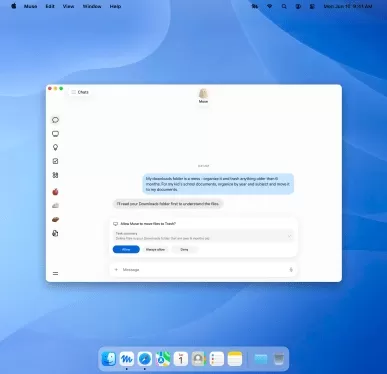 Meta’s Muse arrives on Mac, enabling AI to perform actions on your computer
Meta’s latest AI assistant, Muse, is now live on Mac.On macOS, Muse integrates with your files, messages, calendar, notes, and mail, operating directly within their native apps.This desktop release follows Muse’s mobile and web debut earlier this mon
Meta’s Muse arrives on Mac, enabling AI to perform actions on your computer
Meta’s latest AI assistant, Muse, is now live on Mac.On macOS, Muse integrates with your files, messages, calendar, notes, and mail, operating directly within their native apps.This desktop release follows Muse’s mobile and web debut earlier this mon
 Zuckerberg expands Meta’s enterprise AI vision beyond agents
In June, Meta launched a new AI agent for enterprises, designed to assist with customer service, support, and daily operations. However, CEO Mark Zuckerberg revealed to investors on Wednesday’s second-quarter earnings call that the company’s enterpri
Zuckerberg expands Meta’s enterprise AI vision beyond agents
In June, Meta launched a new AI agent for enterprises, designed to assist with customer service, support, and daily operations. However, CEO Mark Zuckerberg revealed to investors on Wednesday’s second-quarter earnings call that the company’s enterpri

2026 Latest Top-rated AI Illustration Tools: Our curated list features the best powerfully designed tools for creating stunning editorial scenes and eye-catching cover art quickly. Each option has gone through rigorous real-world tests, offering a free vs paid comparison to help you find the perfect match for your workflow. Try these must-try solutions today to unlock your AI edge and boost your creative productivity. Explore now at XIX.AI.
10 tools
xix.ai

2026 Latest Top-Rated Best AI Tutors for Exam Prep are here on XIX.AI! Our curated list features powerful game-changing tools that offer free vs paid comparison, real-world tests, and weekly updated rankings. They help boost your writing efficiency, simplify complex topic learning, and unlock your academic potential. Explore now to Discover your perfect exam prep tool and Start creating today to Unlock your AI edge!
10 tools
xix.ai

2026 Latest Best Top-Rated AI Budget Planning Tools for Personal Money Management are here on XIX.AI! This curated collection features powerful, game-changing solutions that help you conduct real-world tests, understand spending habits, and create personalized plans to boost productivity. Enjoy a free vs paid comparison along with detailed rankings. Must-try tools designed to simplify money management and unlock your AI edge. Explore now!
11 tools
xix.ai

2026 Latest Best Top-Rated AI Sleep Tracking Assistants curated for ultimate recovery. This fully updated weekly guide features powerful tools that deliver real-world tests, free vs paid comparison, and detailed rankings to help you find the must-try solution that boosts sleep quality and supports better bedtime habits. Explore now at XIX.AI to Unlock your AI edge.
10 tools
xix.ai

2026 Latest Best Top-Rated AI SQL Copilots for Product and Revenue Analytics! XIX.AI has curated a powerful, game-changing collection of must-try tools that undergo real-world tests through weekly updated rankings. These tools help users boost productivity significantly by accelerating data analysis, streamlining complex queries, and generating accurate insights to drive smarter business decisions. Explore now to Discover your perfect tool for unlocking your AI edge!
14 tools
xix.ai

2026 Latest Best Top-Rated AI Homework Helpers That Teach Core Concepts Not Just Answers Powerful Tools for Students Must-Try Curated List Weekly Updated Free vs Paid Comparison Real-World Tests Accurate Rankings to Help You Unlock Your Full Learning Potential Explore now to Discover your perfect tool for smarter studying.
10 tools
xix.ai












