


 Home
HomeWhy Doctors Struggle to Return Your Calls
While public discourse on AI in healthcare centers on diagnostics, drug discovery, and clinical consultations, a critical, often overlooked bottleneck determines whether patients ever receive care at all. This challenge stems less from physician shortages and more from the overwhelming administrative burden bridging primary care referrals and specialist scheduling—a manual, persistent gap that is now drawing significant venture capital attention.
Basata was co-founded by Kaled Alhanafi, a former executive at Lyft and Cruise, and Chetan Patel, who spent a decade developing cardiac devices at Medtronic, after both encountered these systemic failures firsthand.
For Patel, the issue became deeply personal when his wife collapsed during a flight with their young children. Despite his extensive cardiology expertise and knowledge of necessary devices, he found that navigating the administrative hurdles to secure appropriate care took far longer than necessary. “We have the best doctors, we have some of the best medicines, but the care gap is just so wide,” he noted.
Alhanafi faced a similar ordeal with his father, who was referred to three cardiology groups following a serious carotid artery diagnosis. According to Alhanafi, only one group responded within weeks; another replied only after surgery had already occurred, while the third never called back.
These are not isolated incidents; nearly anyone attempting to see a specialist recently can confirm this reality. Specialty practices often manage hundreds or thousands of referral documents—mostly delivered via fax—with minimal administrative staff. The company argues that practices lose patients not due to lack of willingness, but because they are overwhelmed by intake backlogs.
Based in Phoenix and founded two years ago, Basata aims to resolve this inefficiency. When a referral arrives—still frequently via fax—the system processes the document, extracts key clinical data, and deploys an AI voice agent to contact the patient directly for scheduling.
Patients can also reach an AI agent at any time to answer questions or manage routine administrative tasks, such as prescription renewals. Alhanafi reports that patients are often audibly surprised by how quickly they are contacted after a referral is submitted. The objective, he explains, is to have an appointment scheduled by the time a patient reaches their car in the parking lot after visiting their primary care physician.
The platform integrates with the electronic medical record systems used by specific specialties, explaining its cautious rollout—starting with cardiology and then urology—rather than attempting to serve the entire market simultaneously. The founders recently declined a major contract in a specialty they had not yet mapped thoroughly enough to ensure high-quality service.
Basata operates on a usage-based revenue model, charging practices per document processed and per call handled, rather than per user seat. The company reports having processed referrals for approximately 500,000 patients to date, with roughly 100,000 of those occurring in the last month alone.
Basata has secured $24.5 million in total funding, including a $21 million Series A round led by Lan Xuezhao of Basis Set Ventures. Xuezhao began her career modeling the human brain as a PhD researcher before moving into corporate strategy at McKinsey and Dropbox, and eventually into venture investing. Cowboy Ventures, founded by Aileen Lee, also participated, along with Victoria Treyger, a former general partner at Felicis Ventures who recently launched her own firm, Sofeon (marking its first investment).
The sector is becoming increasingly competitive. Tennr, a New York-based startup founded in 2021, has raised over $160 million from investors including Andreessen Horowitz, IVP, Lightspeed, and Google Ventures, reaching a valuation of $605 million. Tennr focuses on document intelligence and claims to have built proprietary language models trained on tens of millions of medical records. Assort Health, backed by Lightspeed, automates patient phone communication for specialty practices and last year achieved a $750 million valuation.
Lee emphasized that the founders’ industry experience is a key advantage in a market crowded with well-funded competitors. “There are a lot of [VCs] chasing around high school dropouts and college dropouts, but when you’re selling to medical practices, trust is a really big deal,” she stated. “These doctors want to look you in the eye and know that they can count on you.”
Basata’s founders argue that their competitive edge lies in combining both capabilities into a single, end-to-end workflow tailored to specific specialties, rather than offering tools for isolated process steps. While this may be difficult to maintain against better-funded competitors expanding their offerings, the market signal remains strong.
Like many AI companies automating human labor, Basata will eventually face the complex question of where to draw the line between augmenting workers and displacing them. For now, the founders say administrative staff are less concerned about job loss than about being overwhelmed. Alhanafi notes that administrative teams in specialty practices often have decades of experience and deep familiarity with the work, yet are buried under volumes that no reasonable hiring increase could fully address.
Whether AI simply expands worker capabilities or gradually renders many functions obsolete is a question extending far beyond healthcare. Currently, Basata’s pitch is that by freeing administrators from repetitive tasks, they can perform the remaining aspects of their jobs more effectively. Judging by one statistic shared by Alhanafi—that 70% of the company’s new deals now come through word of mouth—it appears that those closest to the problem find this argument compelling.
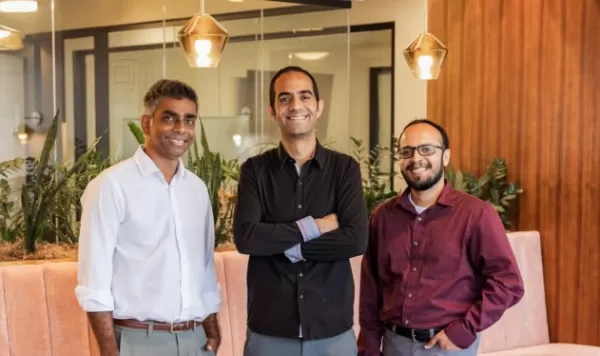
Pictured above, left to right: Chetan Patel, co-founder and president of Basata; Kaled Alhanafi, CEO; and Vivin Paliath, third co-founder and CTO.
Related article
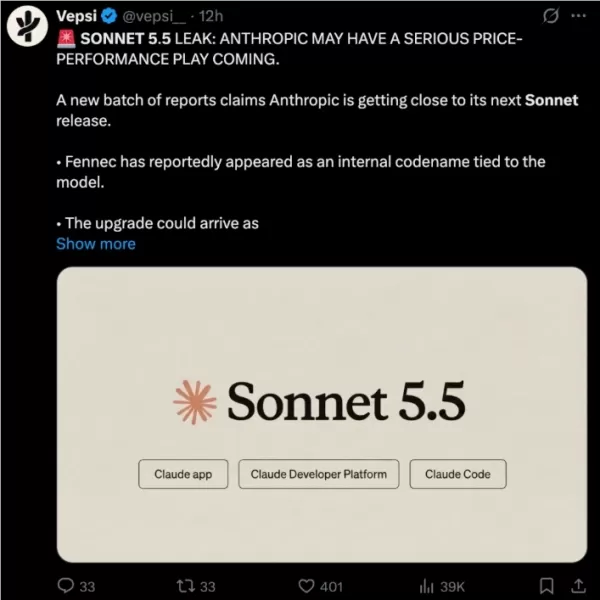
 Anthropic’s Sonnet 5.5 Leak: 2M Token Context Challenges DeepSeek to Reclaim Cost-Effectiveness
Anthropic has unveiled its latest Sonnet 5.5 model, internally known as "Fennec" (after the desert fox), with a release expected next month. Leaked details indicate the model supports a 2 million token context window, offering faster reasoning, lower
Google DeepMind launches institute to widen the AGI debate
Google and Google DeepMind established the DeepMind Institute on Wednesday to foster dialogue on artificial general intelligence. The institute is led by DeepMind co-founder Shane Legg, Google executive James Manyika, and Google DeepMind chair Demis
Chrome Launches Skill Library for Gemini: One-Click Reuse of Prompts, Say Goodbye to Repetitive Input
Google has rolled out an update to the desktop version of Chrome, introducing a new "Skills Library" for its integrated Gemini feature. This enhancement enables users to save complex AI prompts as reusable "skills" for seamless application across web
Related Special Topic Recommendations
Academic Research
Anthropic’s Sonnet 5.5 Leak: 2M Token Context Challenges DeepSeek to Reclaim Cost-Effectiveness
Anthropic has unveiled its latest Sonnet 5.5 model, internally known as "Fennec" (after the desert fox), with a release expected next month. Leaked details indicate the model supports a 2 million token context window, offering faster reasoning, lower
Google DeepMind launches institute to widen the AGI debate
Google and Google DeepMind established the DeepMind Institute on Wednesday to foster dialogue on artificial general intelligence. The institute is led by DeepMind co-founder Shane Legg, Google executive James Manyika, and Google DeepMind chair Demis
Chrome Launches Skill Library for Gemini: One-Click Reuse of Prompts, Say Goodbye to Repetitive Input
Google has rolled out an update to the desktop version of Chrome, introducing a new "Skills Library" for its integrated Gemini feature. This enhancement enables users to save complex AI prompts as reusable "skills" for seamless application across web
Related Special Topic Recommendations
Academic Research
 AI Dataset Discovery Tools for Academic Projects
2026 Latest Best Top-Rated AI Dataset Discovery Tools for Academic Projects! XIX.AI has curated a powerful, game-changing collection of highly reliable options, all going through strict real-world tests and updated weekly. You can find detailed free vs paid comparison info to help you pick the perfect tool that boosts your research efficiency and delivers top-quality results. Explore now to unlock your AI edge!
 16 tools
 xix.ai
Social Media
Best AI Caption Generators: Write Platform-Specific Social Posts Fast
xix.ai
Social Media
Best AI Caption Generators: Write Platform-Specific Social Posts Fast
2026 Latest Best AI Caption Generators page! XIX.AI curated a top-rated list of must-try powerful tools for writing platform-specific social posts quickly. These tools go through rigorous real-world tests, offering free vs paid comparison and clear rankings to help you find the best option that boosts your productivity and unlocks your AI edge. Explore now!
11 tools
xix.ai
Health & Wellness
Best AI Sleep Coaching Tools for Shift Workers, Jet Lag Recovery, and Better Routines
2026 Latest Best AI Sleep Coaching Tools for Shift Workers, Jet Lag Recovery, and Better Routines! XIX.AI has curated a top-rated list of powerful game-changing tools that go through real-world tests to deliver accurate guidance. You can find detailed free vs paid comparison info and see how these must-try solutions help boost sleep quality, speed up jet lag recovery, and build healthier routines. Explore now to discover your perfect tool!
7 tools
xix.ai
code
ChatGPT Debugging Tools for Python Errors, API Logs, and Stack Trace Triage
2026 Latest Best ChatGPT debugging tools for Python errors, API logs, and stack trace triage are here on XIX.AI. This curated list of top-rated solutions offers a free vs paid comparison, real-world tests, and detailed rankings to help you find the most powerful tool that can significantly boost your productivity and help you solve complex technical issues faster. Explore now to discover your perfect solution!
9 tools
xix.ai
Text-to-speech
AI Voiceover Tools for Product Demo Videos
2026 Latest Best Top-Rated AI Voiceover Tools for Product Demo Videos are here on XIX.AI! This curated list features powerful, game-changing options that help you create professional-quality audio content fast, boosting your demo efficiency significantly. We conduct real-world tests and provide a free vs paid comparison along with weekly updated rankings to help you find the perfect fit. Explore now to Unlock your AI edge!
10 tools
xix.ai
Business
AI Business Plan Tools for Startup Validation
2026 Latest Best AI Business Plan Tools for Startup Validation! XIX.AI has curated a top-rated list of powerful game-changing tools that go through real-world tests to deliver accurate results. You’ll find a free vs paid comparison, detailed rankings, and easy-to-understand insights to help you choose the perfect solution and boost your startup’s success rate. Explore now to Unlock your AI edge!
9 tools
xix.ai

 Comments (0)
0/500
Comments (0)
0/500
While public discourse on AI in healthcare centers on diagnostics, drug discovery, and clinical consultations, a critical, often overlooked bottleneck determines whether patients ever receive care at all. This challenge stems less from physician shortages and more from the overwhelming administrative burden bridging primary care referrals and specialist scheduling—a manual, persistent gap that is now drawing significant venture capital attention.
Basata was co-founded by Kaled Alhanafi, a former executive at Lyft and Cruise, and Chetan Patel, who spent a decade developing cardiac devices at Medtronic, after both encountered these systemic failures firsthand.
For Patel, the issue became deeply personal when his wife collapsed during a flight with their young children. Despite his extensive cardiology expertise and knowledge of necessary devices, he found that navigating the administrative hurdles to secure appropriate care took far longer than necessary. “We have the best doctors, we have some of the best medicines, but the care gap is just so wide,” he noted.
Alhanafi faced a similar ordeal with his father, who was referred to three cardiology groups following a serious carotid artery diagnosis. According to Alhanafi, only one group responded within weeks; another replied only after surgery had already occurred, while the third never called back.
These are not isolated incidents; nearly anyone attempting to see a specialist recently can confirm this reality. Specialty practices often manage hundreds or thousands of referral documents—mostly delivered via fax—with minimal administrative staff. The company argues that practices lose patients not due to lack of willingness, but because they are overwhelmed by intake backlogs.
Based in Phoenix and founded two years ago, Basata aims to resolve this inefficiency. When a referral arrives—still frequently via fax—the system processes the document, extracts key clinical data, and deploys an AI voice agent to contact the patient directly for scheduling.
Patients can also reach an AI agent at any time to answer questions or manage routine administrative tasks, such as prescription renewals. Alhanafi reports that patients are often audibly surprised by how quickly they are contacted after a referral is submitted. The objective, he explains, is to have an appointment scheduled by the time a patient reaches their car in the parking lot after visiting their primary care physician.
The platform integrates with the electronic medical record systems used by specific specialties, explaining its cautious rollout—starting with cardiology and then urology—rather than attempting to serve the entire market simultaneously. The founders recently declined a major contract in a specialty they had not yet mapped thoroughly enough to ensure high-quality service.
Basata operates on a usage-based revenue model, charging practices per document processed and per call handled, rather than per user seat. The company reports having processed referrals for approximately 500,000 patients to date, with roughly 100,000 of those occurring in the last month alone.
Basata has secured $24.5 million in total funding, including a $21 million Series A round led by Lan Xuezhao of Basis Set Ventures. Xuezhao began her career modeling the human brain as a PhD researcher before moving into corporate strategy at McKinsey and Dropbox, and eventually into venture investing. Cowboy Ventures, founded by Aileen Lee, also participated, along with Victoria Treyger, a former general partner at Felicis Ventures who recently launched her own firm, Sofeon (marking its first investment).
The sector is becoming increasingly competitive. Tennr, a New York-based startup founded in 2021, has raised over $160 million from investors including Andreessen Horowitz, IVP, Lightspeed, and Google Ventures, reaching a valuation of $605 million. Tennr focuses on document intelligence and claims to have built proprietary language models trained on tens of millions of medical records. Assort Health, backed by Lightspeed, automates patient phone communication for specialty practices and last year achieved a $750 million valuation.
Lee emphasized that the founders’ industry experience is a key advantage in a market crowded with well-funded competitors. “There are a lot of [VCs] chasing around high school dropouts and college dropouts, but when you’re selling to medical practices, trust is a really big deal,” she stated. “These doctors want to look you in the eye and know that they can count on you.”
Basata’s founders argue that their competitive edge lies in combining both capabilities into a single, end-to-end workflow tailored to specific specialties, rather than offering tools for isolated process steps. While this may be difficult to maintain against better-funded competitors expanding their offerings, the market signal remains strong.
Like many AI companies automating human labor, Basata will eventually face the complex question of where to draw the line between augmenting workers and displacing them. For now, the founders say administrative staff are less concerned about job loss than about being overwhelmed. Alhanafi notes that administrative teams in specialty practices often have decades of experience and deep familiarity with the work, yet are buried under volumes that no reasonable hiring increase could fully address.
Whether AI simply expands worker capabilities or gradually renders many functions obsolete is a question extending far beyond healthcare. Currently, Basata’s pitch is that by freeing administrators from repetitive tasks, they can perform the remaining aspects of their jobs more effectively. Judging by one statistic shared by Alhanafi—that 70% of the company’s new deals now come through word of mouth—it appears that those closest to the problem find this argument compelling.
Pictured above, left to right: Chetan Patel, co-founder and president of Basata; Kaled Alhanafi, CEO; and Vivin Paliath, third co-founder and CTO.








 Anthropic’s Sonnet 5.5 Leak: 2M Token Context Challenges DeepSeek to Reclaim Cost-Effectiveness
Anthropic has unveiled its latest Sonnet 5.5 model, internally known as "Fennec" (after the desert fox), with a release expected next month. Leaked details indicate the model supports a 2 million token context window, offering faster reasoning, lower
Anthropic’s Sonnet 5.5 Leak: 2M Token Context Challenges DeepSeek to Reclaim Cost-Effectiveness
Anthropic has unveiled its latest Sonnet 5.5 model, internally known as "Fennec" (after the desert fox), with a release expected next month. Leaked details indicate the model supports a 2 million token context window, offering faster reasoning, lower
 Google DeepMind launches institute to widen the AGI debate
Google and Google DeepMind established the DeepMind Institute on Wednesday to foster dialogue on artificial general intelligence. The institute is led by DeepMind co-founder Shane Legg, Google executive James Manyika, and Google DeepMind chair Demis
Google DeepMind launches institute to widen the AGI debate
Google and Google DeepMind established the DeepMind Institute on Wednesday to foster dialogue on artificial general intelligence. The institute is led by DeepMind co-founder Shane Legg, Google executive James Manyika, and Google DeepMind chair Demis
 Chrome Launches Skill Library for Gemini: One-Click Reuse of Prompts, Say Goodbye to Repetitive Input
Google has rolled out an update to the desktop version of Chrome, introducing a new "Skills Library" for its integrated Gemini feature. This enhancement enables users to save complex AI prompts as reusable "skills" for seamless application across web
Chrome Launches Skill Library for Gemini: One-Click Reuse of Prompts, Say Goodbye to Repetitive Input
Google has rolled out an update to the desktop version of Chrome, introducing a new "Skills Library" for its integrated Gemini feature. This enhancement enables users to save complex AI prompts as reusable "skills" for seamless application across web

2026 Latest Best Top-Rated AI Dataset Discovery Tools for Academic Projects! XIX.AI has curated a powerful, game-changing collection of highly reliable options, all going through strict real-world tests and updated weekly. You can find detailed free vs paid comparison info to help you pick the perfect tool that boosts your research efficiency and delivers top-quality results. Explore now to unlock your AI edge!
16 tools
xix.ai

2026 Latest Best AI Caption Generators page! XIX.AI curated a top-rated list of must-try powerful tools for writing platform-specific social posts quickly. These tools go through rigorous real-world tests, offering free vs paid comparison and clear rankings to help you find the best option that boosts your productivity and unlocks your AI edge. Explore now!
11 tools
xix.ai

2026 Latest Best AI Sleep Coaching Tools for Shift Workers, Jet Lag Recovery, and Better Routines! XIX.AI has curated a top-rated list of powerful game-changing tools that go through real-world tests to deliver accurate guidance. You can find detailed free vs paid comparison info and see how these must-try solutions help boost sleep quality, speed up jet lag recovery, and build healthier routines. Explore now to discover your perfect tool!
7 tools
xix.ai

2026 Latest Best ChatGPT debugging tools for Python errors, API logs, and stack trace triage are here on XIX.AI. This curated list of top-rated solutions offers a free vs paid comparison, real-world tests, and detailed rankings to help you find the most powerful tool that can significantly boost your productivity and help you solve complex technical issues faster. Explore now to discover your perfect solution!
9 tools
xix.ai

2026 Latest Best Top-Rated AI Voiceover Tools for Product Demo Videos are here on XIX.AI! This curated list features powerful, game-changing options that help you create professional-quality audio content fast, boosting your demo efficiency significantly. We conduct real-world tests and provide a free vs paid comparison along with weekly updated rankings to help you find the perfect fit. Explore now to Unlock your AI edge!
10 tools
xix.ai

2026 Latest Best AI Business Plan Tools for Startup Validation! XIX.AI has curated a top-rated list of powerful game-changing tools that go through real-world tests to deliver accurate results. You’ll find a free vs paid comparison, detailed rankings, and easy-to-understand insights to help you choose the perfect solution and boost your startup’s success rate. Explore now to Unlock your AI edge!
9 tools
xix.ai












