Home
HomeDocUnlock wants to solve a customs bottleneck

When goods enter the U.S., they must be declared to U.S. customs so that the importer can be charged the correct taxes. This applies to everything from individual consumers ordering clothes from overseas brands to every item on a massive container ship.
The process of commercial importing involves a lot of manual and tedious paperwork. Large importers often develop their own internal systems or hire customs brokers to handle this. However, DocUnlock is working to automate this process.
DocUnlock is a platform designed to help customs brokers streamline the process of filling out necessary import documents. By integrating with a customs broker's email system, DocUnlock automatically forwards relevant emails and documents to its platform. Here, AI technology aggregates the necessary unstructured data to fill out these forms, making the process more efficient. Customs brokers then take over to finalize the documentation.
“We highlight key details for them, significantly simplifying their work and boosting efficiency,” said Sepehr Fakour, co-founder of DocUnlock. “This allows them to focus on their expertise, ensuring compliance with customs regulations and proper classification, rather than spending hours on manual data entry.”
Ned Cartmell, Fakour’s co-founder, shared with TechCrunch that he faced this issue firsthand while at Flexport. He explained that they tried various solutions, from developing custom software to manual data handling and seeking external help.
“We improved the process at Flexport, but we didn't eliminate the problem as we hoped,” Cartmell said. “That experience really got me hooked on solving this issue.”
With the rise of AI technologies in 2022, Cartmell and Fakour saw a chance to make a difference. They consulted with numerous customs brokers and confirmed that their experiences mirrored Cartmell’s at Flexport.
“The first broker we spoke to was almost pleading with us to do something about it,” Fakour recalled. “It was a clear sign that we were onto something important.”
Founded in 2023, DocUnlock began with a basic version of their product. This was enough to attract initial customers, prompting further development. The company has since experienced significant growth, boasting a 100% customer retention rate and substantial word-of-mouth expansion. While DocUnlock did not disclose specifics about its customer base, the growth speaks volumes.
Recently, the company secured $3 million in pre-seed funding from a mix of venture capitalists, including GTMFund and Barrel Ventures, and angel investors such as Nicolas Dessaigne and Julien Lemoine, co-founders of Algolia—where Fakour previously worked—and early Flexport employees.
In 2024, the U.S. imported goods worth over $4.1 trillion. Fakour noted that the customs broker market is vast and diverse, encompassing thousands of companies in the U.S., from small family businesses to large organizations, as well as international brokers. This presents a significant and varied market for DocUnlock to address.
DocUnlock aims to automate the repetitive parts of a customs broker's job, allowing them to leverage their expertise in navigating the ever-evolving customs landscape.
“Most people are unaware of the customs process,” Cartmell said. “It’s behind-the-scenes work, but it impacts everything. Every time goods cross borders, this process is in play.”
Related article
 OpenAI Secretly Changes Charter to Make Removing Altman Harder
Following the 2023 coup-like incident, OpenAI has further solidified protections for CEO Sam Altman by updating its corporate bylaws. Recently released court documents reveal that Altman's position is now rock-solid, with substantially higher barrier
Meta AI now responds to buyer messages on Facebook Marketplace
Facebook Marketplace introduces new Meta AI features, including automated replies to buyer inquiries, the company announced Thursday. The platform also leverages AI to accelerate item listings, summarize seller profiles, and now lets sellers offer sh
OpenAI outlines AI economy with public wealth funds, robot taxes, and four-day week
As governments struggle to manage the economic impact of superintelligent machines, OpenAI has released a set of policy proposals outlining how wealth and work could be reshaped in an "intelligence age." The ideas blend traditional left-leaning mecha
Related Special Topic Recommendations
Productivity
OpenAI Secretly Changes Charter to Make Removing Altman Harder
Following the 2023 coup-like incident, OpenAI has further solidified protections for CEO Sam Altman by updating its corporate bylaws. Recently released court documents reveal that Altman's position is now rock-solid, with substantially higher barrier
Meta AI now responds to buyer messages on Facebook Marketplace
Facebook Marketplace introduces new Meta AI features, including automated replies to buyer inquiries, the company announced Thursday. The platform also leverages AI to accelerate item listings, summarize seller profiles, and now lets sellers offer sh
OpenAI outlines AI economy with public wealth funds, robot taxes, and four-day week
As governments struggle to manage the economic impact of superintelligent machines, OpenAI has released a set of policy proposals outlining how wealth and work could be reshaped in an "intelligence age." The ideas blend traditional left-leaning mecha
Related Special Topic Recommendations
Productivity
 AI Personal Wellness & Focus Coaches: Manage Burnout & Boost Mental Energy Levels
Discover the 2026 best AI personal wellness and focus coaches on XIX.AI. Our curated rankings feature top-rated, game-changing tools to manage burnout and boost mental energy. Compare free vs paid options with real-world insights. Unlock your path to peak productivity and well-being today.
 10 tools
 xix.ai
chatbot
Top-Rated AI Romantic Chatbots: Build Long-Term Relationships with Consistent Personalities
xix.ai
chatbot
Top-Rated AI Romantic Chatbots: Build Long-Term Relationships with Consistent Personalities
Discover the 2026 latest top-rated AI romantic chatbots for building genuine, long-term connections. Our curated list features powerful, consistent personalities, free vs paid comparisons, and real-world tests. Find your perfect companion and start building today at XIX.AI.
10 tools
xix.ai
Education and Learning
Best AI Data Science Mentors: Master SQL, Pandas & Machine Learning Workflows
Discover the 2026 best AI data science mentors to master SQL, Pandas & ML workflows. Explore our top-rated, curated selection at XIX.AI for powerful, game-changing guidance. Compare free vs paid options with real-world insights. Unlock your data science mastery today.
10 tools
xix.ai
chatbot
Best AI Flirting & Conversation Trainers: Improve Social Charisma and Confidence in Real-Time
Discover the 2026 best AI flirting and conversation trainers on XIX.AI. Our curated, top-rated selection helps you build social charisma and confidence in real-time. Explore must-try, game-changing tools with free vs paid comparisons and weekly updated rankings. Unlock your social edge today.
10 tools
xix.ai
code
Best AI Tools for Automated Unit Testing: Generate Jest, PyTest & JUnit Test Cases in One Click
Discover the 2026 latest top-rated AI tools for automated unit testing. Our curated selection features powerful, game-changing solutions to generate Jest, PyTest & JUnit test cases instantly. Compare free vs paid options with real-world tests and weekly updated rankings on XIX.AI. Unlock your AI edge and boost development productivity today.
10 tools
xix.ai
Data Analysis
Best AI Data Visualization Tools: Auto-Generate Interactive BI Dashboards from Raw Files
Discover the 2026 best AI data visualization tools at XIX.AI. Our curated, top-rated selection helps you auto-generate powerful, interactive BI dashboards from raw files instantly. Compare free vs paid options with real-world tests and weekly updated rankings. Unlock your data's potential today.
10 tools
xix.ai

 Comments (31)
0/500
Comments (31)
0/500
![BruceGonzalez]()
Интересная идея, но насколько она будет эффективна в условиях реальной бюрократии? Таможенные процедуры — это всегда головная боль для импортеров. Если эта технология действительно ускорит декларирование, это станет маленькой революцией. Правда, сомневаюсь, что чиновники захотят отдавать контроль алгоритмам 🤨 Приведут ли автоматизация к сокращению рабочих мест в этой сфере?
![AnthonyJohnson]()
¿Y si la aduana tuviera que lidiar con la misma cantidad de papeles que un académico? 😅 Interesante el enfoque de DocUnlock para desbloquear esa burocracia. Como consumidor que a veces compra cosas de fuera, la idea de agilizar esto suena bien, pero me pregunto qué datos personales de los envíos se procesan y quién los ve. La tecnología debería simplificar, no crear nuevos riesgos de privacidad.
![AlbertGarcía]()
Zollprozesse digitalisieren? Endlich! Hab letztens ein Paket aus UK wochenlang beim Zoll stecken gehabt. Wenn das wirklich den Papierkram beschleunigt, wäre das ein Game-Changer für kleine Händler. Aber die Datenschutzfrage macht mich etwas nervös... 👀
![WilliamMiller]()
Nossa, nunca tinha parado pra pensar na papelada que deve dar pra importar coisas pros EUA 🤯 Será que esse DocUnlock vai mesmo facilitar ou só vai complicar mais? #CargaTributária
![GeorgeMartinez]()
税関での書類手続きがAIで自動化?それって本当にできるの?実際の業務を知ってる人から見たらまだまだ理想論に聞こえるけど、コスト削減になりそうなら試す価値はありそう…輸出入業界は古い体質だからIT化が遅れてるんだよね😅
![DennisGarcia]()
DocUnlock's tackling a real pain point with customs! Streamlining declarations could save so much time for importers. Curious how it handles massive container ships vs. small packages. 🤔
When goods enter the U.S., they must be declared to U.S. customs so that the importer can be charged the correct taxes. This applies to everything from individual consumers ordering clothes from overseas brands to every item on a massive container ship.
The process of commercial importing involves a lot of manual and tedious paperwork. Large importers often develop their own internal systems or hire customs brokers to handle this. However, DocUnlock is working to automate this process.
DocUnlock is a platform designed to help customs brokers streamline the process of filling out necessary import documents. By integrating with a customs broker's email system, DocUnlock automatically forwards relevant emails and documents to its platform. Here, AI technology aggregates the necessary unstructured data to fill out these forms, making the process more efficient. Customs brokers then take over to finalize the documentation.
“We highlight key details for them, significantly simplifying their work and boosting efficiency,” said Sepehr Fakour, co-founder of DocUnlock. “This allows them to focus on their expertise, ensuring compliance with customs regulations and proper classification, rather than spending hours on manual data entry.”
Ned Cartmell, Fakour’s co-founder, shared with TechCrunch that he faced this issue firsthand while at Flexport. He explained that they tried various solutions, from developing custom software to manual data handling and seeking external help.
“We improved the process at Flexport, but we didn't eliminate the problem as we hoped,” Cartmell said. “That experience really got me hooked on solving this issue.”
With the rise of AI technologies in 2022, Cartmell and Fakour saw a chance to make a difference. They consulted with numerous customs brokers and confirmed that their experiences mirrored Cartmell’s at Flexport.
“The first broker we spoke to was almost pleading with us to do something about it,” Fakour recalled. “It was a clear sign that we were onto something important.”
Founded in 2023, DocUnlock began with a basic version of their product. This was enough to attract initial customers, prompting further development. The company has since experienced significant growth, boasting a 100% customer retention rate and substantial word-of-mouth expansion. While DocUnlock did not disclose specifics about its customer base, the growth speaks volumes.
Recently, the company secured $3 million in pre-seed funding from a mix of venture capitalists, including GTMFund and Barrel Ventures, and angel investors such as Nicolas Dessaigne and Julien Lemoine, co-founders of Algolia—where Fakour previously worked—and early Flexport employees.
In 2024, the U.S. imported goods worth over $4.1 trillion. Fakour noted that the customs broker market is vast and diverse, encompassing thousands of companies in the U.S., from small family businesses to large organizations, as well as international brokers. This presents a significant and varied market for DocUnlock to address.
DocUnlock aims to automate the repetitive parts of a customs broker's job, allowing them to leverage their expertise in navigating the ever-evolving customs landscape.
“Most people are unaware of the customs process,” Cartmell said. “It’s behind-the-scenes work, but it impacts everything. Every time goods cross borders, this process is in play.”








 OpenAI Secretly Changes Charter to Make Removing Altman Harder
Following the 2023 coup-like incident, OpenAI has further solidified protections for CEO Sam Altman by updating its corporate bylaws. Recently released court documents reveal that Altman's position is now rock-solid, with substantially higher barrier
OpenAI Secretly Changes Charter to Make Removing Altman Harder
Following the 2023 coup-like incident, OpenAI has further solidified protections for CEO Sam Altman by updating its corporate bylaws. Recently released court documents reveal that Altman's position is now rock-solid, with substantially higher barrier
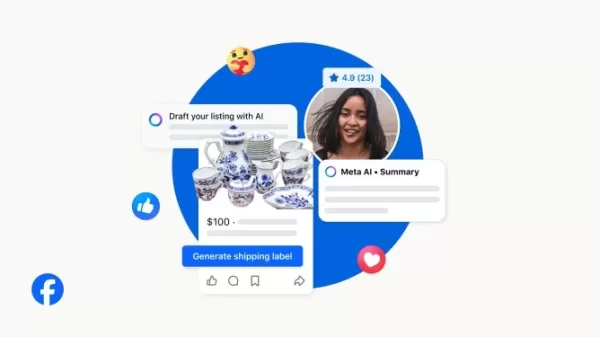 Meta AI now responds to buyer messages on Facebook Marketplace
Facebook Marketplace introduces new Meta AI features, including automated replies to buyer inquiries, the company announced Thursday. The platform also leverages AI to accelerate item listings, summarize seller profiles, and now lets sellers offer sh
Meta AI now responds to buyer messages on Facebook Marketplace
Facebook Marketplace introduces new Meta AI features, including automated replies to buyer inquiries, the company announced Thursday. The platform also leverages AI to accelerate item listings, summarize seller profiles, and now lets sellers offer sh
 OpenAI outlines AI economy with public wealth funds, robot taxes, and four-day week
As governments struggle to manage the economic impact of superintelligent machines, OpenAI has released a set of policy proposals outlining how wealth and work could be reshaped in an "intelligence age." The ideas blend traditional left-leaning mecha
OpenAI outlines AI economy with public wealth funds, robot taxes, and four-day week
As governments struggle to manage the economic impact of superintelligent machines, OpenAI has released a set of policy proposals outlining how wealth and work could be reshaped in an "intelligence age." The ideas blend traditional left-leaning mecha

Discover the 2026 best AI personal wellness and focus coaches on XIX.AI. Our curated rankings feature top-rated, game-changing tools to manage burnout and boost mental energy. Compare free vs paid options with real-world insights. Unlock your path to peak productivity and well-being today.
10 tools
xix.ai

Discover the 2026 latest top-rated AI romantic chatbots for building genuine, long-term connections. Our curated list features powerful, consistent personalities, free vs paid comparisons, and real-world tests. Find your perfect companion and start building today at XIX.AI.
10 tools
xix.ai

Discover the 2026 best AI data science mentors to master SQL, Pandas & ML workflows. Explore our top-rated, curated selection at XIX.AI for powerful, game-changing guidance. Compare free vs paid options with real-world insights. Unlock your data science mastery today.
10 tools
xix.ai

Discover the 2026 best AI flirting and conversation trainers on XIX.AI. Our curated, top-rated selection helps you build social charisma and confidence in real-time. Explore must-try, game-changing tools with free vs paid comparisons and weekly updated rankings. Unlock your social edge today.
10 tools
xix.ai

Discover the 2026 latest top-rated AI tools for automated unit testing. Our curated selection features powerful, game-changing solutions to generate Jest, PyTest & JUnit test cases instantly. Compare free vs paid options with real-world tests and weekly updated rankings on XIX.AI. Unlock your AI edge and boost development productivity today.
10 tools
xix.ai

Discover the 2026 best AI data visualization tools at XIX.AI. Our curated, top-rated selection helps you auto-generate powerful, interactive BI dashboards from raw files instantly. Compare free vs paid options with real-world tests and weekly updated rankings. Unlock your data's potential today.
10 tools
xix.ai

Интересная идея, но насколько она будет эффективна в условиях реальной бюрократии? Таможенные процедуры — это всегда головная боль для импортеров. Если эта технология действительно ускорит декларирование, это станет маленькой революцией. Правда, сомневаюсь, что чиновники захотят отдавать контроль алгоритмам 🤨 Приведут ли автоматизация к сокращению рабочих мест в этой сфере?
¿Y si la aduana tuviera que lidiar con la misma cantidad de papeles que un académico? 😅 Interesante el enfoque de DocUnlock para desbloquear esa burocracia. Como consumidor que a veces compra cosas de fuera, la idea de agilizar esto suena bien, pero me pregunto qué datos personales de los envíos se procesan y quién los ve. La tecnología debería simplificar, no crear nuevos riesgos de privacidad.
Zollprozesse digitalisieren? Endlich! Hab letztens ein Paket aus UK wochenlang beim Zoll stecken gehabt. Wenn das wirklich den Papierkram beschleunigt, wäre das ein Game-Changer für kleine Händler. Aber die Datenschutzfrage macht mich etwas nervös... 👀
Nossa, nunca tinha parado pra pensar na papelada que deve dar pra importar coisas pros EUA 🤯 Será que esse DocUnlock vai mesmo facilitar ou só vai complicar mais? #CargaTributária
税関での書類手続きがAIで自動化?それって本当にできるの?実際の業務を知ってる人から見たらまだまだ理想論に聞こえるけど、コスト削減になりそうなら試す価値はありそう…輸出入業界は古い体質だからIT化が遅れてるんだよね😅
DocUnlock's tackling a real pain point with customs! Streamlining declarations could save so much time for importers. Curious how it handles massive container ships vs. small packages. 🤔