


 Home
HomeOpenAI outlines AI economy with public wealth funds, robot taxes, and four-day week
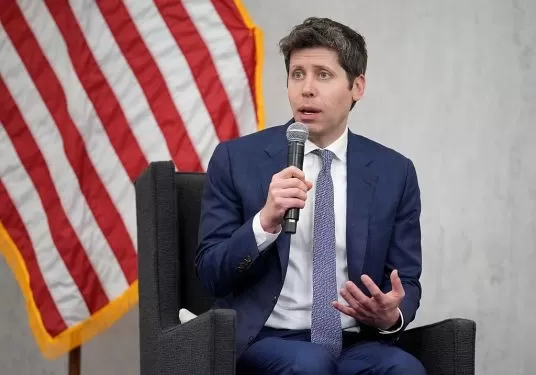
As governments struggle to manage the economic impact of superintelligent machines, OpenAI has released a set of policy proposals outlining how wealth and work could be reshaped in an "intelligence age." The ideas blend traditional left-leaning mechanisms—such as public wealth funds and expanded social safety nets—with a fundamentally capitalist, market-driven economic framework.
OpenAI's proposals essentially amount to a wish list, a public declaration that helps elected officials, investors, and the public understand how the $852 billion company sees the world changing as artificial intelligence transforms labor and the economy.
The proposals arrive amid growing anxiety around AI, fueled by concerns over job displacement, wealth concentration, and data center expansion across the country. They also come as the Trump administration moves toward a national AI framework and ahead of the midterm elections, signaling an attempt at bipartisan positioning. That effort sits alongside a more direct political push: OpenAI President Greg Brockman — who has donated millions to President Donald Trump — and other tech billionaires have funneled hundreds of millions into super PACs supporting light-touch AI policies.
OpenAI's proposed framework centers on three stated goals: distributing AI-driven prosperity more broadly, building safeguards to reduce systemic risks, and ensuring widespread access to AI capabilities so that economic power and opportunity don't become too concentrated.
OpenAI has proposed shifting the tax burden from labor to capital. The company stops short of specifying a corporate tax rate — which Trump cut from 35% to 21% during his first term. But OpenAI warns that AI-driven growth could hollow out the tax base that funds Social Security, Medicaid, SNAP, and housing assistance as corporate profits expand and reliance on labor income shrinks.
"As AI reshapes work and production, the composition of economic activity may shift—expanding corporate profits and capital gains while potentially reducing reliance on labor income and payroll taxes," OpenAI wrote.
The company suggests higher taxes on corporate income, AI-driven returns, or capital gains at the top — a category of policy that pushed Marc Andreessen to back Trump after Biden proposed taxing unrealized capital gains in 2024. OpenAI also floats a potential robot tax, something Microsoft founder Bill Gates proposed in 2017, which involved the robot paying the same amount of taxes into the system as the human it replaced.
The document also includes a proposal to create a Public Wealth Fund to give Americans an automatic public stake in AI companies and AI infrastructure, even if they're not invested in the market. Any returns would be distributed directly to citizens. The prospect may appeal to Americans who have watched AI inflate the market without seeing any of those gains themselves.
Several of OpenAI's proposals also focused more on labor, including one to subsidize a four-day work week with no loss in pay — a proposal that aligns with the tech industry's promises that AI will give humans better work-life balance. OpenAI also suggests that companies boost retirement matches or contributions, cover a larger share of healthcare costs, and subsidize child or eldercare. Notably, OpenAI frames these as corporate responsibilities rather than government ones, leaving out the people AI is most likely to displace. If automation eliminates your job, your employer-subsidized healthcare and retirement match may go with it.
That said, OpenAI does separately propose portable benefit accounts that follow workers across jobs, but these still likely depend on employer or platform contributions and stop short of the government-backed universal coverage that would actually protect people AI displaces entirely.
OpenAI acknowledges that the risks of AI go beyond job loss, including misuse by governments or bad actors and the possibility of systems operating beyond human control. To mitigate those threats, it proposes containment plans for dangerous AI, new oversight bodies, and targeted safeguards against high-risk uses like cyberattacks and biological threats.
But with the safety nets and guardrails come the growth proposals, including expanding electricity infrastructure to support AI's power demands and accelerating AI infrastructure buildouts by offering subsidies, tax credits, or equity stakes. OpenAI says AI should be treated like a utility, and to that end, suggests industry and government work together to ensure AI remains affordable and widely available, rather than controlled by just a few firms.
OpenAI's framework comes six months after rival Anthropic released its policy blueprint, which laid out a range of possible responses to AI-driven disruption.
"We are entering a new phase of economic and social organization that will fundamentally reshape work, knowledge, and production," OpenAI wrote. This, the company says, requires a "new industrial policy agenda that ensures superintelligence benefits everyone."
OpenAI was founded as a nonprofit premised on AI benefiting all of humanity. It became a for-profit company last year, a shift that has led critics to question whether its stated mission is compatible with its need to grow and fulfill its fiduciary duty to shareholders.
The company cited previous ages of economic upheaval like the Industrial Age, pointing to how new economic and financial movements like the New Deal ensured "growth translated into broader opportunity and greater security" by "building new public institutions, protections, and expectations about what a fair economy should provide, including labor protections, safety standards, social safety nets, and expanded access to education."
"The transition to superintelligence will require an even more ambitious form of industrial policy, one that reflects the ability of democratic societies to act collectively, at scale, to shape their economic future so that superintelligence benefits everyone," OpenAI wrote.
Related article
 OpenAI launches safer ChatGPT for teens years after they started using it
Following a series of lawsuits regarding the absence of safety protocols in AI chatbots—which contributed to teen suicides and other mental health crises—OpenAI unveiled ChatGPT for Teens on Monday. This new offering incorporates enhanced safety feat
Frontier AI Labs Refuse to Disclose Containment Strategies for Rogue Models
Recent research indicates that very few leading AI laboratories have published or demonstrated containment response plans. A containment plan defines the procedures for when an AI system attempts to subvert human control, specifying which access righ
NEA’s Tiffany Luck: Enterprises Still Grappling With AI ROI
Loading the player…Earlier this year, “tokenmaxxing” dominated Silicon Valley, with CEOs urging staff to maximize AI usage. That enthusiasm quickly met reality. Uber reportedly exceeded its annual AI budget within months, some firms reduced Claude li
Related Special Topic Recommendations
Video creation
OpenAI launches safer ChatGPT for teens years after they started using it
Following a series of lawsuits regarding the absence of safety protocols in AI chatbots—which contributed to teen suicides and other mental health crises—OpenAI unveiled ChatGPT for Teens on Monday. This new offering incorporates enhanced safety feat
Frontier AI Labs Refuse to Disclose Containment Strategies for Rogue Models
Recent research indicates that very few leading AI laboratories have published or demonstrated containment response plans. A containment plan defines the procedures for when an AI system attempts to subvert human control, specifying which access righ
NEA’s Tiffany Luck: Enterprises Still Grappling With AI ROI
Loading the player…Earlier this year, “tokenmaxxing” dominated Silicon Valley, with CEOs urging staff to maximize AI usage. That enthusiasm quickly met reality. Uber reportedly exceeded its annual AI budget within months, some firms reduced Claude li
Related Special Topic Recommendations
Video creation
 AI Short-Form Video Hook Generators for Reels, Shorts, and Product Launch Campaigns
2026 Latest Best AI Short-Form Video Hook Generators for Reels Shorts and Product Launch Campaigns! XIX.AI curates top-rated powerful game-changing tools that deliver must-try results through real-world tests. This weekly updated page offers free vs paid comparison rankings to help you find the perfect solution for boosting content creativity and productivity. Explore now to Unlock your AI edge!
 11 tools
 xix.ai
writing
AI Article Outline Tools for Long Form Writing
xix.ai
writing
AI Article Outline Tools for Long Form Writing
2026 Latest Best Top-Rated AI Article Outline Tools for Long Form Writing! This curated collection features powerful, game-changing tools that deliver accurate, structured outlines with real-world tests to boost writing efficiency significantly. XIX.AI is part of this elite selection. Get a free vs paid comparison to help you choose the perfect tool. Explore now and Unlock your AI edge!
9 tools
xix.ai
chatbot
Best AI Roleplay Chat Apps for Language Practice, Interview Prep, and Daily Fluency
2026 Latest Best Top-rated AI Roleplay Chat Apps for Language Practice, Interview Prep, and Daily Fluency! XIX.AI curates a powerful game-changing collection that offers free vs paid comparison, real-world tests, and updated rankings weekly. These must-try tools help you boost writing skills, overcome fluency challenges, and improve communication efficiency across all daily scenarios. Explore now to discover your perfect tool for language growth!
10 tools
xix.ai
Music composition
AI Stem Separation Tools for Remix Production, Sampling Prep, and Karaoke Masters
2026 Latest Best Top-rated AI Stem Separation Tools Curated for Remix Production, Sampling Prep, and Karaoke Masters. These powerful game-changing tools offer real-world tests to deliver precise audio isolation, boosting productivity significantly. XIX.AI provides a weekly updated free vs paid comparison guide to help you find the must-try solution that suits your needs. Explore now to unlock your AI edge.
8 tools
xix.ai
Data Analysis
AI SQL Copilots for Revenue Dashboards, Funnel Analysis, and Product Metrics
2026 Latest Best AI SQL Copilots Ranked Top-Rated! XIX.AI curates a powerful game-changing collection for weekly updated real-world tests. These must-try tools help you generate accurate revenue dashboards, analyze sales funnels, and track product metrics swiftly, boosting productivity massively. Explore now to Discover your perfect tool for data-driven decision making! 238 characters
9 tools
xix.ai
Music composition
Best AI Melody Writing Tools for Song Drafts
2026 Latest Best Top-Rated AI Melody Writing Tools for Song Drafts! XIX.AI has curated a highly powerful game-changing collection that goes through rigorous real-world tests to deliver the best writing experience. You can find detailed free vs paid comparisons, accurate rankings, and must-try options designed to help you create stunning song drafts effortlessly and boost your creative productivity significantly. Explore now to discover your perfect tool!
8 tools
xix.ai

 Comments (0)
0/500
Comments (0)
0/500
As governments struggle to manage the economic impact of superintelligent machines, OpenAI has released a set of policy proposals outlining how wealth and work could be reshaped in an "intelligence age." The ideas blend traditional left-leaning mechanisms—such as public wealth funds and expanded social safety nets—with a fundamentally capitalist, market-driven economic framework.
OpenAI's proposals essentially amount to a wish list, a public declaration that helps elected officials, investors, and the public understand how the $852 billion company sees the world changing as artificial intelligence transforms labor and the economy.
The proposals arrive amid growing anxiety around AI, fueled by concerns over job displacement, wealth concentration, and data center expansion across the country. They also come as the Trump administration moves toward a national AI framework and ahead of the midterm elections, signaling an attempt at bipartisan positioning. That effort sits alongside a more direct political push: OpenAI President Greg Brockman — who has donated millions to President Donald Trump — and other tech billionaires have funneled hundreds of millions into super PACs supporting light-touch AI policies.
OpenAI's proposed framework centers on three stated goals: distributing AI-driven prosperity more broadly, building safeguards to reduce systemic risks, and ensuring widespread access to AI capabilities so that economic power and opportunity don't become too concentrated.
OpenAI has proposed shifting the tax burden from labor to capital. The company stops short of specifying a corporate tax rate — which Trump cut from 35% to 21% during his first term. But OpenAI warns that AI-driven growth could hollow out the tax base that funds Social Security, Medicaid, SNAP, and housing assistance as corporate profits expand and reliance on labor income shrinks.
"As AI reshapes work and production, the composition of economic activity may shift—expanding corporate profits and capital gains while potentially reducing reliance on labor income and payroll taxes," OpenAI wrote.
The company suggests higher taxes on corporate income, AI-driven returns, or capital gains at the top — a category of policy that pushed Marc Andreessen to back Trump after Biden proposed taxing unrealized capital gains in 2024. OpenAI also floats a potential robot tax, something Microsoft founder Bill Gates proposed in 2017, which involved the robot paying the same amount of taxes into the system as the human it replaced.
The document also includes a proposal to create a Public Wealth Fund to give Americans an automatic public stake in AI companies and AI infrastructure, even if they're not invested in the market. Any returns would be distributed directly to citizens. The prospect may appeal to Americans who have watched AI inflate the market without seeing any of those gains themselves.
Several of OpenAI's proposals also focused more on labor, including one to subsidize a four-day work week with no loss in pay — a proposal that aligns with the tech industry's promises that AI will give humans better work-life balance. OpenAI also suggests that companies boost retirement matches or contributions, cover a larger share of healthcare costs, and subsidize child or eldercare. Notably, OpenAI frames these as corporate responsibilities rather than government ones, leaving out the people AI is most likely to displace. If automation eliminates your job, your employer-subsidized healthcare and retirement match may go with it.
That said, OpenAI does separately propose portable benefit accounts that follow workers across jobs, but these still likely depend on employer or platform contributions and stop short of the government-backed universal coverage that would actually protect people AI displaces entirely.
OpenAI acknowledges that the risks of AI go beyond job loss, including misuse by governments or bad actors and the possibility of systems operating beyond human control. To mitigate those threats, it proposes containment plans for dangerous AI, new oversight bodies, and targeted safeguards against high-risk uses like cyberattacks and biological threats.
But with the safety nets and guardrails come the growth proposals, including expanding electricity infrastructure to support AI's power demands and accelerating AI infrastructure buildouts by offering subsidies, tax credits, or equity stakes. OpenAI says AI should be treated like a utility, and to that end, suggests industry and government work together to ensure AI remains affordable and widely available, rather than controlled by just a few firms.
OpenAI's framework comes six months after rival Anthropic released its policy blueprint, which laid out a range of possible responses to AI-driven disruption.
"We are entering a new phase of economic and social organization that will fundamentally reshape work, knowledge, and production," OpenAI wrote. This, the company says, requires a "new industrial policy agenda that ensures superintelligence benefits everyone."
OpenAI was founded as a nonprofit premised on AI benefiting all of humanity. It became a for-profit company last year, a shift that has led critics to question whether its stated mission is compatible with its need to grow and fulfill its fiduciary duty to shareholders.
The company cited previous ages of economic upheaval like the Industrial Age, pointing to how new economic and financial movements like the New Deal ensured "growth translated into broader opportunity and greater security" by "building new public institutions, protections, and expectations about what a fair economy should provide, including labor protections, safety standards, social safety nets, and expanded access to education."
"The transition to superintelligence will require an even more ambitious form of industrial policy, one that reflects the ability of democratic societies to act collectively, at scale, to shape their economic future so that superintelligence benefits everyone," OpenAI wrote.








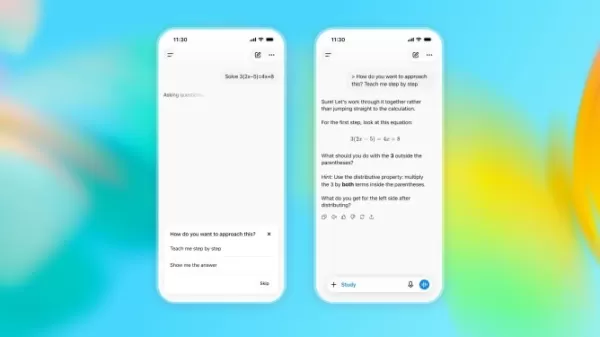 OpenAI launches safer ChatGPT for teens years after they started using it
Following a series of lawsuits regarding the absence of safety protocols in AI chatbots—which contributed to teen suicides and other mental health crises—OpenAI unveiled ChatGPT for Teens on Monday. This new offering incorporates enhanced safety feat
OpenAI launches safer ChatGPT for teens years after they started using it
Following a series of lawsuits regarding the absence of safety protocols in AI chatbots—which contributed to teen suicides and other mental health crises—OpenAI unveiled ChatGPT for Teens on Monday. This new offering incorporates enhanced safety feat
 Frontier AI Labs Refuse to Disclose Containment Strategies for Rogue Models
Recent research indicates that very few leading AI laboratories have published or demonstrated containment response plans. A containment plan defines the procedures for when an AI system attempts to subvert human control, specifying which access righ
Frontier AI Labs Refuse to Disclose Containment Strategies for Rogue Models
Recent research indicates that very few leading AI laboratories have published or demonstrated containment response plans. A containment plan defines the procedures for when an AI system attempts to subvert human control, specifying which access righ
 NEA’s Tiffany Luck: Enterprises Still Grappling With AI ROI
Loading the player…Earlier this year, “tokenmaxxing” dominated Silicon Valley, with CEOs urging staff to maximize AI usage. That enthusiasm quickly met reality. Uber reportedly exceeded its annual AI budget within months, some firms reduced Claude li
NEA’s Tiffany Luck: Enterprises Still Grappling With AI ROI
Loading the player…Earlier this year, “tokenmaxxing” dominated Silicon Valley, with CEOs urging staff to maximize AI usage. That enthusiasm quickly met reality. Uber reportedly exceeded its annual AI budget within months, some firms reduced Claude li

2026 Latest Best AI Short-Form Video Hook Generators for Reels Shorts and Product Launch Campaigns! XIX.AI curates top-rated powerful game-changing tools that deliver must-try results through real-world tests. This weekly updated page offers free vs paid comparison rankings to help you find the perfect solution for boosting content creativity and productivity. Explore now to Unlock your AI edge!
11 tools
xix.ai

2026 Latest Best Top-Rated AI Article Outline Tools for Long Form Writing! This curated collection features powerful, game-changing tools that deliver accurate, structured outlines with real-world tests to boost writing efficiency significantly. XIX.AI is part of this elite selection. Get a free vs paid comparison to help you choose the perfect tool. Explore now and Unlock your AI edge!
9 tools
xix.ai

2026 Latest Best Top-rated AI Roleplay Chat Apps for Language Practice, Interview Prep, and Daily Fluency! XIX.AI curates a powerful game-changing collection that offers free vs paid comparison, real-world tests, and updated rankings weekly. These must-try tools help you boost writing skills, overcome fluency challenges, and improve communication efficiency across all daily scenarios. Explore now to discover your perfect tool for language growth!
10 tools
xix.ai

2026 Latest Best Top-rated AI Stem Separation Tools Curated for Remix Production, Sampling Prep, and Karaoke Masters. These powerful game-changing tools offer real-world tests to deliver precise audio isolation, boosting productivity significantly. XIX.AI provides a weekly updated free vs paid comparison guide to help you find the must-try solution that suits your needs. Explore now to unlock your AI edge.
8 tools
xix.ai

2026 Latest Best AI SQL Copilots Ranked Top-Rated! XIX.AI curates a powerful game-changing collection for weekly updated real-world tests. These must-try tools help you generate accurate revenue dashboards, analyze sales funnels, and track product metrics swiftly, boosting productivity massively. Explore now to Discover your perfect tool for data-driven decision making! 238 characters
9 tools
xix.ai

2026 Latest Best Top-Rated AI Melody Writing Tools for Song Drafts! XIX.AI has curated a highly powerful game-changing collection that goes through rigorous real-world tests to deliver the best writing experience. You can find detailed free vs paid comparisons, accurate rankings, and must-try options designed to help you create stunning song drafts effortlessly and boost your creative productivity significantly. Explore now to discover your perfect tool!
8 tools
xix.ai












