


 Home
TechCrunch Disrupt 2026: Clay’s Kareem Amin on the rise of the GTM engineer
Two years ago, GTM engineers were virtually nonexistent in most organizations. Today, the role is emerging across the tech sector, with professionals leveraging AI and automation to construct revenue engines that previously demanded multiple hires, disparate tools, and labor-intensive manual workflows.
What triggered this shift, and what are the implications for how businesses acquire customers and scale?
At TechCrunch Disrupt 2026, Clay co-founder and CEO Kareem Amin will present on the AI Stage, titled “The GTM Engineer: How AI Created Tech’s Next Big Job Category.” He will examine how AI has transformed the traditional go-to-market stack, fostering a new discipline in its stead. Attendees will gain practical insights into AI-native GTM strategies and observe how these approaches are reshaping corporate growth.
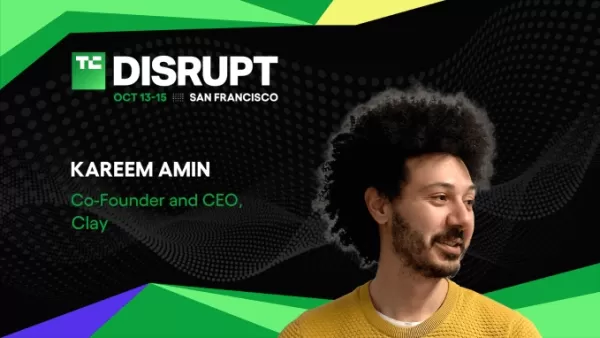
Image Credits:TechCrunch
AI empowers go-to-market teams with innovative methods for prospect research, data management, personalized outreach, and workflow automation—replacing fragmented tools and siloed teams. As these capabilities converge, organizations are reevaluating not just their GTM technology stack, but also the talent responsible for building and maintaining growth infrastructure.
If you are launching a startup or reimagining your sales, marketing, and growth strategies, this emerging role warrants close attention. Secure your Disrupt pass to explore where GTM engineering fits into the next evolution of go-to-market operations. Get a second pass at a 50% discount, with additional savings available for groups of four or more.
What does a GTM engineer actually do?
Traditional go-to-market operations often consume hours on account research, data cleaning, lead qualification, outreach preparation, and cross-system data migration. GTM engineering utilizes AI, data integration, and automation to convert these tasks into scalable, repeatable systems.
Clay introduced the term in 2023. According to its GTM engineering guide, GTM engineers are practitioners who design automated revenue workflows rather than manually executing individual GTM tasks. The company reports approximately 100 monthly job listings for GTM engineers, including positions at Cursor, Lovable, and Webflow.
For founders and GTM leaders deciding whether to allocate budget toward additional headcount or system optimization, this session offers a fresh perspective on growth. Should you hire more people to execute existing processes, or build systems that enable your current team to operate differently?
At Disrupt, Amin will contextualize this shift and demonstrate what AI-native GTM looks like in action. Get your ticket to Disrupt to understand a role that was nearly absent a few years ago but may fundamentally alter how your sales, marketing, or growth teams function.
Clay puts AI to work across the GTM stack
Founded in Brooklyn in 2017, Clay’s mission was to democratize programming. Its initial spreadsheet product allowed users to connect data and automate tasks without coding. As sales teams, growth marketers, and agencies began using the platform to identify and engage customers, Clay expanded into the go-to-market space.
Today, Clay provides infrastructure for GTM teams to access data, execute agentic workflows, and launch campaigns. Its AI-driven agent, Claygent, automates research and outreach for sales, marketing, and recruiting teams.
This evolution has been accompanied by significant financial growth. In February, TechCrunch reported that Clay tripled its annual recurring revenue to $100 million within a year, announcing an employee tender offer at a $5 billion valuation. Clay has continued to expand, closing a $115 million Series D in September at a $7.1 billion valuation.
Clay is also investing directly in the job category central to Amin’s Disrupt session, launching a $1 million scholarship fund in September to train GTM engineers.
For companies seeking to identify where AI can meaningfully impact revenue operations, adding Amin’s session to your Disrupt agenda provides a real-world example of this model in action.
From product leader to a new GTM approach
Kareem Amin co-founded Clay in 2017 and currently serves as its CEO. Prior to Clay, he was VP of Product at The Wall Street Journal and co-founded Frame, a collaboration startup acquired by Sailthru in 2012.
Amin launched Clay with the vision of making programming accessible to more people. AI has since provided a new application for this idea: enabling GTM teams to build systems that automate research, data enrichment, and outreach without relying on traditional engineering resources for every workflow.
Curious about how a GTM engineer could impact your growth strategy? Secure your Disrupt pass to hear directly from one of the founders defining this emerging category.
See what AI-native GTM looks like in practice at Disrupt
“The GTM Engineer: How AI Created Tech’s Next Big Job Category” is one of over 200 sessions across six industry stages, roundtables, and breakout discussions at Disrupt, taking place October 13–15 at Moscone West in San Francisco. The event expects more than 10,000 founders, investors, operators, and tech leaders, along with over 250 speakers and 300 exhibiting startups.
Beyond the sessions, matchmaking, dealmaking, and networking opportunities allow attendees to connect with potential customers, investors, partners, and fellow founders facing similar growth challenges.
GTM engineering may be a new job category, but the problem it solves is not: how do you reach the right customers without simply adding more people and tools? At Disrupt, you can observe how AI is changing this equation and meet the innovators building the future.
Secure your pass to TechCrunch Disrupt 2026 and add “The GTM Engineer” to your agenda. Bring a colleague, partner, or peer to receive a 50% discount, or enjoy additional savings with groups of four or more.

Image Credits:Eric Slomonson, The Photo Group
Related article
 TechCrunch Disrupt 2026 breakout session agenda unveiled
TechCrunch Disrupt 2026 arrives at Moscone West in San Francisco, October 13–15, uniting 10,000+ founders, investors, operators, and tech leaders for three days of insight, networking, and forward-looking dialogue. Register now to save up to $100 on
Flock CEO claims mics detect only gunshots despite website claims
Flock CEO Garrett Langley stated that the company’s gunshot-detection microphones capture “only gunshots,” yet Flock’s website presents a much wider scope of the ambient audio it records.Speaking at TechCrunch Disrupt, the surveillance firm’s co-foun
TechCrunch Disrupt 2026 kicks off tomorrow: Final chance to save up to $100 on tickets
Tomorrow at 8 a.m. PT, the countdown ends. Over 10,000 founders, investors, and tech leaders will converge at San Francisco’s Moscone West for TechCrunch Disrupt 2026, a three-day immersion in the ideas, connections, and startups defining our future.
Related Special Topic Recommendations
Design & Art
 Top AI Illustration Tools: Create Editorial Scenes and Cover Art Faster
2026 Latest Top-rated AI Illustration Tools: Our curated list features the best powerfully designed tools for creating stunning editorial scenes and eye-catching cover art quickly. Each option has gone through rigorous real-world tests, offering a free vs paid comparison to help you find the perfect match for your workflow. Try these must-try solutions today to unlock your AI edge and boost your creative productivity. Explore now at XIX.AI.
 10 tools
 xix.ai
Education and Learning
Top AI Tutors for Exam Prep: Practice Math, Science, and English
2026 Latest Top-Rated Best AI Tutors for Exam Prep are here on XIX.AI! Our curated list features powerful game-changing tools that offer free vs paid comparison, real-world tests, and weekly updated rankings. They help boost your writing efficiency, simplify complex topic learning, and unlock your academic potential. Explore now to Discover your perfect exam prep tool and Start creating today to Unlock your AI edge!
10 tools
xix.ai
Finance
AI Budget Planning Tools for Personal Money Management
2026 Latest Best Top-Rated AI Budget Planning Tools for Personal Money Management are here on XIX.AI! This curated collection features powerful, game-changing solutions that help you conduct real-world tests, understand spending habits, and create personalized plans to boost productivity. Enjoy a free vs paid comparison along with detailed rankings. Must-try tools designed to simplify money management and unlock your AI edge. Explore now!
11 tools
xix.ai
Health & Wellness
AI Sleep Tracking Assistants: Improve Recovery with Better Bedtime Habits
2026 Latest Best Top-Rated AI Sleep Tracking Assistants curated for ultimate recovery. This fully updated weekly guide features powerful tools that deliver real-world tests, free vs paid comparison, and detailed rankings to help you find the must-try solution that boosts sleep quality and supports better bedtime habits. Explore now at XIX.AI to Unlock your AI edge.
10 tools
xix.ai
Data Analysis
AI SQL Copilots for Product and Revenue Analytics
2026 Latest Best Top-Rated AI SQL Copilots for Product and Revenue Analytics! XIX.AI has curated a powerful, game-changing collection of must-try tools that undergo real-world tests through weekly updated rankings. These tools help users boost productivity significantly by accelerating data analysis, streamlining complex queries, and generating accurate insights to drive smarter business decisions. Explore now to Discover your perfect tool for unlocking your AI edge!
14 tools
xix.ai
Education and Learning
Best AI Homework Helpers That Teach: Learn Concepts, Not Just Answers
2026 Latest Best Top-Rated AI Homework Helpers That Teach Core Concepts Not Just Answers Powerful Tools for Students Must-Try Curated List Weekly Updated Free vs Paid Comparison Real-World Tests Accurate Rankings to Help You Unlock Your Full Learning Potential Explore now to Discover your perfect tool for smarter studying.
10 tools
xix.ai

 Comments (0)
0/500
Two years ago, GTM engineers were virtually nonexistent in most organizations. Today, the role is emerging across the tech sector, with professionals leveraging AI and automation to construct revenue engines that previously demanded multiple hires, disparate tools, and labor-intensive manual workflows.
What triggered this shift, and what are the implications for how businesses acquire customers and scale?
At TechCrunch Disrupt 2026, Clay co-founder and CEO Kareem Amin will present on the AI Stage, titled “The GTM Engineer: How AI Created Tech’s Next Big Job Category.” He will examine how AI has transformed the traditional go-to-market stack, fostering a new discipline in its stead. Attendees will gain practical insights into AI-native GTM strategies and observe how these approaches are reshaping corporate growth.
Image Credits:TechCrunch
AI empowers go-to-market teams with innovative methods for prospect research, data management, personalized outreach, and workflow automation—replacing fragmented tools and siloed teams. As these capabilities converge, organizations are reevaluating not just their GTM technology stack, but also the talent responsible for building and maintaining growth infrastructure.
If you are launching a startup or reimagining your sales, marketing, and growth strategies, this emerging role warrants close attention. Secure your Disrupt pass to explore where GTM engineering fits into the next evolution of go-to-market operations. Get a second pass at a 50% discount, with additional savings available for groups of four or more.
What does a GTM engineer actually do?
Traditional go-to-market operations often consume hours on account research, data cleaning, lead qualification, outreach preparation, and cross-system data migration. GTM engineering utilizes AI, data integration, and automation to convert these tasks into scalable, repeatable systems.
Clay introduced the term in 2023. According to its GTM engineering guide, GTM engineers are practitioners who design automated revenue workflows rather than manually executing individual GTM tasks. The company reports approximately 100 monthly job listings for GTM engineers, including positions at Cursor, Lovable, and Webflow.
For founders and GTM leaders deciding whether to allocate budget toward additional headcount or system optimization, this session offers a fresh perspective on growth. Should you hire more people to execute existing processes, or build systems that enable your current team to operate differently?
At Disrupt, Amin will contextualize this shift and demonstrate what AI-native GTM looks like in action. Get your ticket to Disrupt to understand a role that was nearly absent a few years ago but may fundamentally alter how your sales, marketing, or growth teams function.
Clay puts AI to work across the GTM stack
Founded in Brooklyn in 2017, Clay’s mission was to democratize programming. Its initial spreadsheet product allowed users to connect data and automate tasks without coding. As sales teams, growth marketers, and agencies began using the platform to identify and engage customers, Clay expanded into the go-to-market space.
Today, Clay provides infrastructure for GTM teams to access data, execute agentic workflows, and launch campaigns. Its AI-driven agent, Claygent, automates research and outreach for sales, marketing, and recruiting teams.
This evolution has been accompanied by significant financial growth. In February, TechCrunch reported that Clay tripled its annual recurring revenue to $100 million within a year, announcing an employee tender offer at a $5 billion valuation. Clay has continued to expand, closing a $115 million Series D in September at a $7.1 billion valuation.
Clay is also investing directly in the job category central to Amin’s Disrupt session, launching a $1 million scholarship fund in September to train GTM engineers.
For companies seeking to identify where AI can meaningfully impact revenue operations, adding Amin’s session to your Disrupt agenda provides a real-world example of this model in action.
From product leader to a new GTM approach
Kareem Amin co-founded Clay in 2017 and currently serves as its CEO. Prior to Clay, he was VP of Product at The Wall Street Journal and co-founded Frame, a collaboration startup acquired by Sailthru in 2012.
Amin launched Clay with the vision of making programming accessible to more people. AI has since provided a new application for this idea: enabling GTM teams to build systems that automate research, data enrichment, and outreach without relying on traditional engineering resources for every workflow.
Curious about how a GTM engineer could impact your growth strategy? Secure your Disrupt pass to hear directly from one of the founders defining this emerging category.
See what AI-native GTM looks like in practice at Disrupt
“The GTM Engineer: How AI Created Tech’s Next Big Job Category” is one of over 200 sessions across six industry stages, roundtables, and breakout discussions at Disrupt, taking place October 13–15 at Moscone West in San Francisco. The event expects more than 10,000 founders, investors, operators, and tech leaders, along with over 250 speakers and 300 exhibiting startups.
Beyond the sessions, matchmaking, dealmaking, and networking opportunities allow attendees to connect with potential customers, investors, partners, and fellow founders facing similar growth challenges.
GTM engineering may be a new job category, but the problem it solves is not: how do you reach the right customers without simply adding more people and tools? At Disrupt, you can observe how AI is changing this equation and meet the innovators building the future.
Secure your pass to TechCrunch Disrupt 2026 and add “The GTM Engineer” to your agenda. Bring a colleague, partner, or peer to receive a 50% discount, or enjoy additional savings with groups of four or more.
Image Credits:Eric Slomonson, The Photo Group








 TechCrunch Disrupt 2026 breakout session agenda unveiled
TechCrunch Disrupt 2026 arrives at Moscone West in San Francisco, October 13–15, uniting 10,000+ founders, investors, operators, and tech leaders for three days of insight, networking, and forward-looking dialogue. Register now to save up to $100 on
 Flock CEO claims mics detect only gunshots despite website claims
Flock CEO Garrett Langley stated that the company’s gunshot-detection microphones capture “only gunshots,” yet Flock’s website presents a much wider scope of the ambient audio it records.Speaking at TechCrunch Disrupt, the surveillance firm’s co-foun
 TechCrunch Disrupt 2026 kicks off tomorrow: Final chance to save up to $100 on tickets
Tomorrow at 8 a.m. PT, the countdown ends. Over 10,000 founders, investors, and tech leaders will converge at San Francisco’s Moscone West for TechCrunch Disrupt 2026, a three-day immersion in the ideas, connections, and startups defining our future.

2026 Latest Top-rated AI Illustration Tools: Our curated list features the best powerfully designed tools for creating stunning editorial scenes and eye-catching cover art quickly. Each option has gone through rigorous real-world tests, offering a free vs paid comparison to help you find the perfect match for your workflow. Try these must-try solutions today to unlock your AI edge and boost your creative productivity. Explore now at XIX.AI.
10 tools
xix.ai

2026 Latest Top-Rated Best AI Tutors for Exam Prep are here on XIX.AI! Our curated list features powerful game-changing tools that offer free vs paid comparison, real-world tests, and weekly updated rankings. They help boost your writing efficiency, simplify complex topic learning, and unlock your academic potential. Explore now to Discover your perfect exam prep tool and Start creating today to Unlock your AI edge!
10 tools
xix.ai

2026 Latest Best Top-Rated AI Budget Planning Tools for Personal Money Management are here on XIX.AI! This curated collection features powerful, game-changing solutions that help you conduct real-world tests, understand spending habits, and create personalized plans to boost productivity. Enjoy a free vs paid comparison along with detailed rankings. Must-try tools designed to simplify money management and unlock your AI edge. Explore now!
11 tools
xix.ai

2026 Latest Best Top-Rated AI Sleep Tracking Assistants curated for ultimate recovery. This fully updated weekly guide features powerful tools that deliver real-world tests, free vs paid comparison, and detailed rankings to help you find the must-try solution that boosts sleep quality and supports better bedtime habits. Explore now at XIX.AI to Unlock your AI edge.
10 tools
xix.ai

2026 Latest Best Top-Rated AI SQL Copilots for Product and Revenue Analytics! XIX.AI has curated a powerful, game-changing collection of must-try tools that undergo real-world tests through weekly updated rankings. These tools help users boost productivity significantly by accelerating data analysis, streamlining complex queries, and generating accurate insights to drive smarter business decisions. Explore now to Discover your perfect tool for unlocking your AI edge!
14 tools
xix.ai

2026 Latest Best Top-Rated AI Homework Helpers That Teach Core Concepts Not Just Answers Powerful Tools for Students Must-Try Curated List Weekly Updated Free vs Paid Comparison Real-World Tests Accurate Rankings to Help You Unlock Your Full Learning Potential Explore now to Discover your perfect tool for smarter studying.
10 tools
xix.ai












