


 Home
HomeSmart Money Places AI Bets on Energy Technology
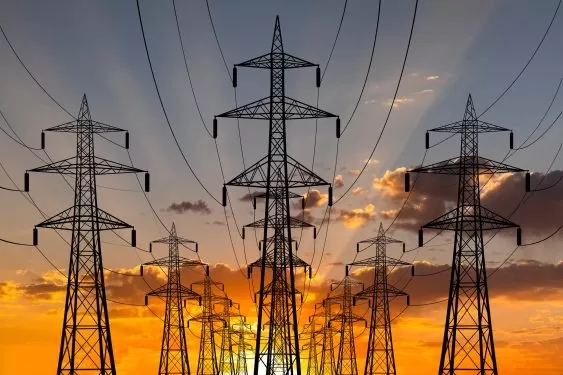
Venture capitalists are placing increasingly large bets on AI startups, having poured over half a trillion dollars into the sector in the past five years.
However, a recent report from Sightline Climate suggests the most strategic investment opportunity today may lie in energy. Their research indicates that up to 50% of announced data center projects could face delays, with power access being a primary bottleneck.
Out of the 190 gigawatts of data center capacity the firm is monitoring, only 5 gigawatts are currently under construction. Last year, roughly 6 gigawatts of projects from Sightline's database went live. Meanwhile, a much larger portion—approximately 36%—experienced schedule slips in 2025. These delays could ultimately impact large enterprises and other businesses reliant on AI.
This supply-demand imbalance presents a clear opportunity for investors. Here's a closer look.
Tech giants like Google and Meta are dedicating significant capital to develop solar, wind, and nuclear projects. They are also backing emerging technologies, such as Form Energy's 100-hour battery, through direct investments and partnerships with utilities to speed up deployment.
Numerous startups are developing solutions to the power challenge. Companies like Amperesand, DG Matrix, and Heron Power are innovating in power conversion, while firms such as Camus, GridBeyond, and Texture are creating software to optimize electricity management.
Power availability remains a critical constraint for data centers, a limitation unlikely to ease soon. Goldman Sachs projects AI will drive a 175% increase in data center power consumption by 2030.
These grid shortages are unprecedented in modern times and are pushing electricity prices higher nationwide. Consequently, many tech firms are exploring alternative ways to power their facilities. (The Trump administration, anticipating a political crisis, is urging tech companies to build their own power sources, pay premium rates, or both. Most, of course, had already planned to do so.)
Grid Alternatives
Amazon, Google, Oracle, and other major tech companies are actively working to reduce their reliance on the traditional grid. Several new data centers are being planned with on-site power generation or a hybrid model combining on-site sources with grid connections.
The largest data center operators are leading this shift. While less than a quarter of projects with a defined power source plan to use on-site or hybrid systems, those projects collectively account for 44% of total planned capacity.
This trend is driven partly by shortages of key power generation equipment, like gas turbines, and an aging electrical grid. These challenges are creating openings for alternative energy solutions.
Google's recent agreement to power a new Minnesota data center exemplifies one approach. The plan combines wind and solar energy with a massive 30-gigawatt-hour battery from Form Energy. Google also collaborated with utility Xcel Energy to design a new rate structure aimed at encouraging the integration of new technologies into the grid.
Form Energy's battery is just one example. Grid-scale energy storage is poised to capture a significant share of the power market. The U.S. Energy Information Administration estimates the country will have nearly 65 gigawatts of battery storage capacity by year's end. Following the industry trend, Form Energy is seeking to raise $500 million ahead of a potential IPO to capitalize on this momentum.
Underrated Technology
Energy supply is only part of the equation. Once electricity reaches the grid or a data center, it must be managed—a task that largely falls to the humble transformer.
Most current transformers use bulky iron cores wrapped in copper wire, technology dating back about 140 years. While reliable, this design becomes impractical as data center power densities increase. One expert told TechCrunch that by the time server racks reach a power density of 1 megawatt, the supporting power equipment could occupy twice the space of the racks themselves.
This is why investors are increasingly funding solid-state transformer startups. These companies aim to replace the old iron-and-copper technology with silicon-based power electronics. Although more expensive upfront, solid-state transformers are versatile enough to consolidate multiple pieces of data center equipment, which could make them cost-competitive overall.
Overall, investment rounds for battery and transformer companies have been notably smaller than the blockbuster funding seen in the AI sector.
This isn't necessarily a drawback—these rounds are more manageable for investors. Furthermore, as the world electrifies everything from transport to heavy industry, the demand for power will only grow, offering investors a hedge against a potential downturn in AI. Perhaps the best AI investment isn't in AI at all.
Related article
 Crypto exchange OKX aims to empower AI agents to hire and pay each other
As AI agents start serving individuals and collaborating with each other, they require mechanisms to locate tasks, compensate for services, and establish credibility. Crypto exchange OKX anticipates this future is arriving sooner than anticipated, in
Thiel-backed startup claims AI can judge journalism, despite risks to whistleblowers
Following his role in the lawsuit that led to Gawker’s bankruptcy, Aron D’Souza identified a critical flaw in the American media landscape: individuals harmed by coverage lacked effective means to respond.His answer is technology. D’Souza’s new ventu
Prentis, New AI Lab Co-Founded by Reid Hoffman and Marc Pincus, in Talks to Raise $100M
Prentis, an emerging AI research lab specializing in computer-use models, is co-founded by serial entrepreneur Ritankar Das alongside tech industry leaders Reid Hoffman and Marc Pincus. According to two individuals familiar with the matter, the compa
Related Special Topic Recommendations
Design & Art
Crypto exchange OKX aims to empower AI agents to hire and pay each other
As AI agents start serving individuals and collaborating with each other, they require mechanisms to locate tasks, compensate for services, and establish credibility. Crypto exchange OKX anticipates this future is arriving sooner than anticipated, in
Thiel-backed startup claims AI can judge journalism, despite risks to whistleblowers
Following his role in the lawsuit that led to Gawker’s bankruptcy, Aron D’Souza identified a critical flaw in the American media landscape: individuals harmed by coverage lacked effective means to respond.His answer is technology. D’Souza’s new ventu
Prentis, New AI Lab Co-Founded by Reid Hoffman and Marc Pincus, in Talks to Raise $100M
Prentis, an emerging AI research lab specializing in computer-use models, is co-founded by serial entrepreneur Ritankar Das alongside tech industry leaders Reid Hoffman and Marc Pincus. According to two individuals familiar with the matter, the compa
Related Special Topic Recommendations
Design & Art
 Best AI Style Transfer Tools for Creative Experiments
2026 Latest Best Top-rated AI Style Transfer Tools for Creative Experiments! XIX.AI has curated a powerful, game-changing collection of must-try tools that deliver exceptional results through real-world tests and rigorous rankings. These top solutions help creatives boost productivity significantly by accelerating content creation and unlocking endless creative possibilities. Explore now to discover your perfect tool and start creating today!
 9 tools
 xix.ai
Comic Creation
Best AI Dialogue Bubble Tools for Visual Storytelling
xix.ai
Comic Creation
Best AI Dialogue Bubble Tools for Visual Storytelling
2026 Latest Best Top-Rated AI Dialogue Bubble Tools for Visual Storytelling are here on XIX.AI! This curated collection features powerful, game-changing tools that help creators boost productivity and overcome creative bottlenecks. Get a free vs paid comparison, see real-world tests, and check the latest rankings to find the must-try solutions perfect for crafting engaging visual narratives. Explore now to discover your ideal tool!
10 tools
xix.ai
Meeting Assistant
Top AI Meeting Summary Tools: Track Decisions and Follow-Ups Clearly
2026 Latest Top-Rated Best AI Meeting Summary Tools for Clear Decision Tracking and Effortless Follow-Ups. This curated list showcases powerful, game-changing solutions that boost productivity dramatically by automating meeting notes, identifying key action items, and streamlining team coordination across all projects. Get a free vs paid comparison along with real-world tests and weekly updated rankings to help you find the perfect tool. Explore now to unlock your AI edge!
9 tools
xix.ai
Data Analysis
Best AI Data Cleaning Tools: Fix Missing Values and Duplicates Fast
2026 Latest Best Top-rated AI Data Cleaning Tools for quick fixing of missing values and duplicates. This curated list showcases powerful, game-changing solutions that boost productivity significantly. Each option has undergone rigorous real-world tests to ensure reliability. Get a free vs paid comparison and discover the must-try tool that fits your needs best. Explore now at XIX.AI to Unlock your AI edge.
11 tools
xix.ai
Design & Art
Best AI Creative Ideation Tools for Artists: Break Through Visual Blocks
2026 Latest Best Top-Rated AI Creative Ideation Tools for Artists are curated by XIX.AI to help creators break through visual blocks and boost creativity instantly. These powerful game-changing tools offer real-world tests, detailed free vs paid comparison, and weekly updated rankings. Discover your perfect tool to accelerate content creation and unlock your AI edge today. Explore now!
14 tools
xix.ai
Music composition
AI Beat Makers for TikTok Background Tracks, Reels Audio, and Creator Promo Music
2026 Latest Best AI Beat Makers for TikTok Background Tracks, Reels Audio, and Creator Promo Music! XIX.AI has curated a top-rated list of powerful game-changing tools that go through real-world tests to deliver flawless music for every content need. You’ll find detailed free vs paid comparison data, weekly updated rankings, and must-try options to help you boost creativity and productivity. Explore now to discover your perfect tool!
11 tools
xix.ai

 Comments (1)
0/500
Comments (1)
0/500
![JackHernández]()
Wait, so all that AI hype money is now pivoting to energy? Sounds like VCs are chasing the next shiny object again. But if it actually helps grid stability or clean tech, maybe it's not all hot air. 🤷♂️
Venture capitalists are placing increasingly large bets on AI startups, having poured over half a trillion dollars into the sector in the past five years.
However, a recent report from Sightline Climate suggests the most strategic investment opportunity today may lie in energy. Their research indicates that up to 50% of announced data center projects could face delays, with power access being a primary bottleneck.
Out of the 190 gigawatts of data center capacity the firm is monitoring, only 5 gigawatts are currently under construction. Last year, roughly 6 gigawatts of projects from Sightline's database went live. Meanwhile, a much larger portion—approximately 36%—experienced schedule slips in 2025. These delays could ultimately impact large enterprises and other businesses reliant on AI.
This supply-demand imbalance presents a clear opportunity for investors. Here's a closer look.
Tech giants like Google and Meta are dedicating significant capital to develop solar, wind, and nuclear projects. They are also backing emerging technologies, such as Form Energy's 100-hour battery, through direct investments and partnerships with utilities to speed up deployment.
Numerous startups are developing solutions to the power challenge. Companies like Amperesand, DG Matrix, and Heron Power are innovating in power conversion, while firms such as Camus, GridBeyond, and Texture are creating software to optimize electricity management.
Power availability remains a critical constraint for data centers, a limitation unlikely to ease soon. Goldman Sachs projects AI will drive a 175% increase in data center power consumption by 2030.
These grid shortages are unprecedented in modern times and are pushing electricity prices higher nationwide. Consequently, many tech firms are exploring alternative ways to power their facilities. (The Trump administration, anticipating a political crisis, is urging tech companies to build their own power sources, pay premium rates, or both. Most, of course, had already planned to do so.)
Grid Alternatives
Amazon, Google, Oracle, and other major tech companies are actively working to reduce their reliance on the traditional grid. Several new data centers are being planned with on-site power generation or a hybrid model combining on-site sources with grid connections.
The largest data center operators are leading this shift. While less than a quarter of projects with a defined power source plan to use on-site or hybrid systems, those projects collectively account for 44% of total planned capacity.
This trend is driven partly by shortages of key power generation equipment, like gas turbines, and an aging electrical grid. These challenges are creating openings for alternative energy solutions.
Google's recent agreement to power a new Minnesota data center exemplifies one approach. The plan combines wind and solar energy with a massive 30-gigawatt-hour battery from Form Energy. Google also collaborated with utility Xcel Energy to design a new rate structure aimed at encouraging the integration of new technologies into the grid.
Form Energy's battery is just one example. Grid-scale energy storage is poised to capture a significant share of the power market. The U.S. Energy Information Administration estimates the country will have nearly 65 gigawatts of battery storage capacity by year's end. Following the industry trend, Form Energy is seeking to raise $500 million ahead of a potential IPO to capitalize on this momentum.
Underrated Technology
Energy supply is only part of the equation. Once electricity reaches the grid or a data center, it must be managed—a task that largely falls to the humble transformer.
Most current transformers use bulky iron cores wrapped in copper wire, technology dating back about 140 years. While reliable, this design becomes impractical as data center power densities increase. One expert told TechCrunch that by the time server racks reach a power density of 1 megawatt, the supporting power equipment could occupy twice the space of the racks themselves.
This is why investors are increasingly funding solid-state transformer startups. These companies aim to replace the old iron-and-copper technology with silicon-based power electronics. Although more expensive upfront, solid-state transformers are versatile enough to consolidate multiple pieces of data center equipment, which could make them cost-competitive overall.
Overall, investment rounds for battery and transformer companies have been notably smaller than the blockbuster funding seen in the AI sector.
This isn't necessarily a drawback—these rounds are more manageable for investors. Furthermore, as the world electrifies everything from transport to heavy industry, the demand for power will only grow, offering investors a hedge against a potential downturn in AI. Perhaps the best AI investment isn't in AI at all.








 Crypto exchange OKX aims to empower AI agents to hire and pay each other
As AI agents start serving individuals and collaborating with each other, they require mechanisms to locate tasks, compensate for services, and establish credibility. Crypto exchange OKX anticipates this future is arriving sooner than anticipated, in
Crypto exchange OKX aims to empower AI agents to hire and pay each other
As AI agents start serving individuals and collaborating with each other, they require mechanisms to locate tasks, compensate for services, and establish credibility. Crypto exchange OKX anticipates this future is arriving sooner than anticipated, in
 Thiel-backed startup claims AI can judge journalism, despite risks to whistleblowers
Following his role in the lawsuit that led to Gawker’s bankruptcy, Aron D’Souza identified a critical flaw in the American media landscape: individuals harmed by coverage lacked effective means to respond.His answer is technology. D’Souza’s new ventu
Thiel-backed startup claims AI can judge journalism, despite risks to whistleblowers
Following his role in the lawsuit that led to Gawker’s bankruptcy, Aron D’Souza identified a critical flaw in the American media landscape: individuals harmed by coverage lacked effective means to respond.His answer is technology. D’Souza’s new ventu
 Prentis, New AI Lab Co-Founded by Reid Hoffman and Marc Pincus, in Talks to Raise $100M
Prentis, an emerging AI research lab specializing in computer-use models, is co-founded by serial entrepreneur Ritankar Das alongside tech industry leaders Reid Hoffman and Marc Pincus. According to two individuals familiar with the matter, the compa
Prentis, New AI Lab Co-Founded by Reid Hoffman and Marc Pincus, in Talks to Raise $100M
Prentis, an emerging AI research lab specializing in computer-use models, is co-founded by serial entrepreneur Ritankar Das alongside tech industry leaders Reid Hoffman and Marc Pincus. According to two individuals familiar with the matter, the compa

2026 Latest Best Top-rated AI Style Transfer Tools for Creative Experiments! XIX.AI has curated a powerful, game-changing collection of must-try tools that deliver exceptional results through real-world tests and rigorous rankings. These top solutions help creatives boost productivity significantly by accelerating content creation and unlocking endless creative possibilities. Explore now to discover your perfect tool and start creating today!
9 tools
xix.ai

2026 Latest Best Top-Rated AI Dialogue Bubble Tools for Visual Storytelling are here on XIX.AI! This curated collection features powerful, game-changing tools that help creators boost productivity and overcome creative bottlenecks. Get a free vs paid comparison, see real-world tests, and check the latest rankings to find the must-try solutions perfect for crafting engaging visual narratives. Explore now to discover your ideal tool!
10 tools
xix.ai

2026 Latest Top-Rated Best AI Meeting Summary Tools for Clear Decision Tracking and Effortless Follow-Ups. This curated list showcases powerful, game-changing solutions that boost productivity dramatically by automating meeting notes, identifying key action items, and streamlining team coordination across all projects. Get a free vs paid comparison along with real-world tests and weekly updated rankings to help you find the perfect tool. Explore now to unlock your AI edge!
9 tools
xix.ai

2026 Latest Best Top-rated AI Data Cleaning Tools for quick fixing of missing values and duplicates. This curated list showcases powerful, game-changing solutions that boost productivity significantly. Each option has undergone rigorous real-world tests to ensure reliability. Get a free vs paid comparison and discover the must-try tool that fits your needs best. Explore now at XIX.AI to Unlock your AI edge.
11 tools
xix.ai

2026 Latest Best Top-Rated AI Creative Ideation Tools for Artists are curated by XIX.AI to help creators break through visual blocks and boost creativity instantly. These powerful game-changing tools offer real-world tests, detailed free vs paid comparison, and weekly updated rankings. Discover your perfect tool to accelerate content creation and unlock your AI edge today. Explore now!
14 tools
xix.ai

2026 Latest Best AI Beat Makers for TikTok Background Tracks, Reels Audio, and Creator Promo Music! XIX.AI has curated a top-rated list of powerful game-changing tools that go through real-world tests to deliver flawless music for every content need. You’ll find detailed free vs paid comparison data, weekly updated rankings, and must-try options to help you boost creativity and productivity. Explore now to discover your perfect tool!
11 tools
xix.ai

Wait, so all that AI hype money is now pivoting to energy? Sounds like VCs are chasing the next shiny object again. But if it actually helps grid stability or clean tech, maybe it's not all hot air. 🤷♂️












