


 Home
HomeMeta's natural gas surge may fuel South Dakota's power grid
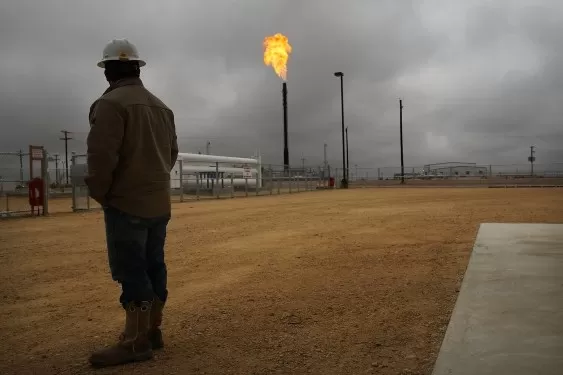
Data centers have grown so massive that their electricity consumption now matches that of entire U.S. states. Consider Meta's Hyperion AI data center: once finished, it will consume as much power as South Dakota.
Meta recently announced funding for seven additional natural gas power plants, beyond the three already planned, to support its $27 billion data center. Together, these ten plants in Louisiana will produce about 7.5 gigawatts of electricity — slightly more than the entire capacity of South Dakota.
Like many tech firms, Meta has long promoted its climate and environmental credentials. It routinely publishes sustainability reports and often boasts about its renewable energy purchases. It even effectively secured a nuclear power plant for two decades.
Meta's Hyperion data center in Louisiana will put the company's commitments to the test.
Natural gas has often been described as a "bridge fuel" — build a few gas plants now while renewables, batteries, and nuclear become more viable. That's likely how Meta is justifying this decision internally.
But the bridge fuel argument has been around for decades, and it's starting to feel stale. The cost of renewables and batteries has dropped sharply, while gas turbine prices have soared. Meta has been a major buyer of solar, batteries, and nuclear in recent years, making its heavy bet on natural gas all the more puzzling.
TechCrunch contacted Meta for comment, but the company did not respond to multiple inquiries.
According to TechCrunch's calculations based on Department of Energy data, the massive turbines in Louisiana will release 12.4 million metric tons of CO2 into the atmosphere each year. That's 50% more than Meta's total carbon footprint in 2024, the most recent year for which data is available.
That figure actually underestimates the climate impact, as it does not account for leaks in the natural gas supply chain.
Methane, the primary component of natural gas, traps heat 84 times more effectively than carbon dioxide. Even a leakage rate of 0.2% along the supply chain can make natural gas worse for the climate than coal. In the U.S., methane leakage from natural gas production and pipelines is closer to 3%. That's far from clean energy.
Meta's most recent sustainability report does not mention methane leaks. In fact, it says nothing about methane or natural gas at all. Yet this fuel is set to become one of the biggest contributors to Meta's carbon footprint in the years ahead.
The company might still honor its climate pledge by offsetting these emissions with carbon removal credits. But it will now need far more credits, plus a transparent accounting of exactly how much methane will leak into the atmosphere to fuel its new power plants.
Related article
 QueryStory urges caution on AI-generated content
In 2009, Shapor Naghibzadeh discovered the power of compelling storytelling while working as a Google sysops engineer. During Operation Aurora, when state-sponsored hackers targeted the tech giant, he was summoned to a crisis room to clarify server a
French Startup ZML Unveils Free Tool to Accelerate AI Inference Across Multiple Chips
Nvidia’s era of unchecked market supremacy may be winding down, yet competitors and alternatives are emerging from every angle.ZML, a prominent French AI startup backed by Turing Award laureate Yann LeCun, has unveiled inference-performance software
Anthropic Unveils Opus 4.6, a Controversial Content Generator
Anthropic’s universal usage standards for Claude prohibit the model from generating sexually explicit content, including depicting or requesting sexual intercourse or sex acts, generating content related to sexual fetishes or fantasies, or engaging i
Related Special Topic Recommendations
Design & Art
QueryStory urges caution on AI-generated content
In 2009, Shapor Naghibzadeh discovered the power of compelling storytelling while working as a Google sysops engineer. During Operation Aurora, when state-sponsored hackers targeted the tech giant, he was summoned to a crisis room to clarify server a
French Startup ZML Unveils Free Tool to Accelerate AI Inference Across Multiple Chips
Nvidia’s era of unchecked market supremacy may be winding down, yet competitors and alternatives are emerging from every angle.ZML, a prominent French AI startup backed by Turing Award laureate Yann LeCun, has unveiled inference-performance software
Anthropic Unveils Opus 4.6, a Controversial Content Generator
Anthropic’s universal usage standards for Claude prohibit the model from generating sexually explicit content, including depicting or requesting sexual intercourse or sex acts, generating content related to sexual fetishes or fantasies, or engaging i
Related Special Topic Recommendations
Design & Art
 Top AI Illustration Tools: Create Editorial Scenes and Cover Art Faster
2026 Latest Top-rated AI Illustration Tools: Our curated list features the best powerfully designed tools for creating stunning editorial scenes and eye-catching cover art quickly. Each option has gone through rigorous real-world tests, offering a free vs paid comparison to help you find the perfect match for your workflow. Try these must-try solutions today to unlock your AI edge and boost your creative productivity. Explore now at XIX.AI.
 10 tools
 xix.ai
Education and Learning
Top AI Tutors for Exam Prep: Practice Math, Science, and English
xix.ai
Education and Learning
Top AI Tutors for Exam Prep: Practice Math, Science, and English
2026 Latest Top-Rated Best AI Tutors for Exam Prep are here on XIX.AI! Our curated list features powerful game-changing tools that offer free vs paid comparison, real-world tests, and weekly updated rankings. They help boost your writing efficiency, simplify complex topic learning, and unlock your academic potential. Explore now to Discover your perfect exam prep tool and Start creating today to Unlock your AI edge!
10 tools
xix.ai
Finance
AI Budget Planning Tools for Personal Money Management
2026 Latest Best Top-Rated AI Budget Planning Tools for Personal Money Management are here on XIX.AI! This curated collection features powerful, game-changing solutions that help you conduct real-world tests, understand spending habits, and create personalized plans to boost productivity. Enjoy a free vs paid comparison along with detailed rankings. Must-try tools designed to simplify money management and unlock your AI edge. Explore now!
11 tools
xix.ai
Health & Wellness
AI Sleep Tracking Assistants: Improve Recovery with Better Bedtime Habits
2026 Latest Best Top-Rated AI Sleep Tracking Assistants curated for ultimate recovery. This fully updated weekly guide features powerful tools that deliver real-world tests, free vs paid comparison, and detailed rankings to help you find the must-try solution that boosts sleep quality and supports better bedtime habits. Explore now at XIX.AI to Unlock your AI edge.
10 tools
xix.ai
Data Analysis
AI SQL Copilots for Product and Revenue Analytics
2026 Latest Best Top-Rated AI SQL Copilots for Product and Revenue Analytics! XIX.AI has curated a powerful, game-changing collection of must-try tools that undergo real-world tests through weekly updated rankings. These tools help users boost productivity significantly by accelerating data analysis, streamlining complex queries, and generating accurate insights to drive smarter business decisions. Explore now to Discover your perfect tool for unlocking your AI edge!
14 tools
xix.ai
Education and Learning
Best AI Homework Helpers That Teach: Learn Concepts, Not Just Answers
2026 Latest Best Top-Rated AI Homework Helpers That Teach Core Concepts Not Just Answers Powerful Tools for Students Must-Try Curated List Weekly Updated Free vs Paid Comparison Real-World Tests Accurate Rankings to Help You Unlock Your Full Learning Potential Explore now to Discover your perfect tool for smarter studying.
10 tools
xix.ai

 Comments (1)
0/500
Comments (1)
0/500
![WalterWilliams]()
Wait, Meta is burning natural gas to power AI? 🤔 I thought they were all about renewables. If Hyperion eats as much power as South Dakota, isn't that just shifting the carbon footprint? 🌍🔥 #Greenwashing
Data centers have grown so massive that their electricity consumption now matches that of entire U.S. states. Consider Meta's Hyperion AI data center: once finished, it will consume as much power as South Dakota.
Meta recently announced funding for seven additional natural gas power plants, beyond the three already planned, to support its $27 billion data center. Together, these ten plants in Louisiana will produce about 7.5 gigawatts of electricity — slightly more than the entire capacity of South Dakota.
Like many tech firms, Meta has long promoted its climate and environmental credentials. It routinely publishes sustainability reports and often boasts about its renewable energy purchases. It even effectively secured a nuclear power plant for two decades.
Meta's Hyperion data center in Louisiana will put the company's commitments to the test.
Natural gas has often been described as a "bridge fuel" — build a few gas plants now while renewables, batteries, and nuclear become more viable. That's likely how Meta is justifying this decision internally.
But the bridge fuel argument has been around for decades, and it's starting to feel stale. The cost of renewables and batteries has dropped sharply, while gas turbine prices have soared. Meta has been a major buyer of solar, batteries, and nuclear in recent years, making its heavy bet on natural gas all the more puzzling.
TechCrunch contacted Meta for comment, but the company did not respond to multiple inquiries.
According to TechCrunch's calculations based on Department of Energy data, the massive turbines in Louisiana will release 12.4 million metric tons of CO2 into the atmosphere each year. That's 50% more than Meta's total carbon footprint in 2024, the most recent year for which data is available.
That figure actually underestimates the climate impact, as it does not account for leaks in the natural gas supply chain.
Methane, the primary component of natural gas, traps heat 84 times more effectively than carbon dioxide. Even a leakage rate of 0.2% along the supply chain can make natural gas worse for the climate than coal. In the U.S., methane leakage from natural gas production and pipelines is closer to 3%. That's far from clean energy.
Meta's most recent sustainability report does not mention methane leaks. In fact, it says nothing about methane or natural gas at all. Yet this fuel is set to become one of the biggest contributors to Meta's carbon footprint in the years ahead.
The company might still honor its climate pledge by offsetting these emissions with carbon removal credits. But it will now need far more credits, plus a transparent accounting of exactly how much methane will leak into the atmosphere to fuel its new power plants.








 QueryStory urges caution on AI-generated content
In 2009, Shapor Naghibzadeh discovered the power of compelling storytelling while working as a Google sysops engineer. During Operation Aurora, when state-sponsored hackers targeted the tech giant, he was summoned to a crisis room to clarify server a
QueryStory urges caution on AI-generated content
In 2009, Shapor Naghibzadeh discovered the power of compelling storytelling while working as a Google sysops engineer. During Operation Aurora, when state-sponsored hackers targeted the tech giant, he was summoned to a crisis room to clarify server a
 French Startup ZML Unveils Free Tool to Accelerate AI Inference Across Multiple Chips
Nvidia’s era of unchecked market supremacy may be winding down, yet competitors and alternatives are emerging from every angle.ZML, a prominent French AI startup backed by Turing Award laureate Yann LeCun, has unveiled inference-performance software
French Startup ZML Unveils Free Tool to Accelerate AI Inference Across Multiple Chips
Nvidia’s era of unchecked market supremacy may be winding down, yet competitors and alternatives are emerging from every angle.ZML, a prominent French AI startup backed by Turing Award laureate Yann LeCun, has unveiled inference-performance software
 Anthropic Unveils Opus 4.6, a Controversial Content Generator
Anthropic’s universal usage standards for Claude prohibit the model from generating sexually explicit content, including depicting or requesting sexual intercourse or sex acts, generating content related to sexual fetishes or fantasies, or engaging i
Anthropic Unveils Opus 4.6, a Controversial Content Generator
Anthropic’s universal usage standards for Claude prohibit the model from generating sexually explicit content, including depicting or requesting sexual intercourse or sex acts, generating content related to sexual fetishes or fantasies, or engaging i

2026 Latest Top-rated AI Illustration Tools: Our curated list features the best powerfully designed tools for creating stunning editorial scenes and eye-catching cover art quickly. Each option has gone through rigorous real-world tests, offering a free vs paid comparison to help you find the perfect match for your workflow. Try these must-try solutions today to unlock your AI edge and boost your creative productivity. Explore now at XIX.AI.
10 tools
xix.ai

2026 Latest Top-Rated Best AI Tutors for Exam Prep are here on XIX.AI! Our curated list features powerful game-changing tools that offer free vs paid comparison, real-world tests, and weekly updated rankings. They help boost your writing efficiency, simplify complex topic learning, and unlock your academic potential. Explore now to Discover your perfect exam prep tool and Start creating today to Unlock your AI edge!
10 tools
xix.ai

2026 Latest Best Top-Rated AI Budget Planning Tools for Personal Money Management are here on XIX.AI! This curated collection features powerful, game-changing solutions that help you conduct real-world tests, understand spending habits, and create personalized plans to boost productivity. Enjoy a free vs paid comparison along with detailed rankings. Must-try tools designed to simplify money management and unlock your AI edge. Explore now!
11 tools
xix.ai

2026 Latest Best Top-Rated AI Sleep Tracking Assistants curated for ultimate recovery. This fully updated weekly guide features powerful tools that deliver real-world tests, free vs paid comparison, and detailed rankings to help you find the must-try solution that boosts sleep quality and supports better bedtime habits. Explore now at XIX.AI to Unlock your AI edge.
10 tools
xix.ai

2026 Latest Best Top-Rated AI SQL Copilots for Product and Revenue Analytics! XIX.AI has curated a powerful, game-changing collection of must-try tools that undergo real-world tests through weekly updated rankings. These tools help users boost productivity significantly by accelerating data analysis, streamlining complex queries, and generating accurate insights to drive smarter business decisions. Explore now to Discover your perfect tool for unlocking your AI edge!
14 tools
xix.ai

2026 Latest Best Top-Rated AI Homework Helpers That Teach Core Concepts Not Just Answers Powerful Tools for Students Must-Try Curated List Weekly Updated Free vs Paid Comparison Real-World Tests Accurate Rankings to Help You Unlock Your Full Learning Potential Explore now to Discover your perfect tool for smarter studying.
10 tools
xix.ai

Wait, Meta is burning natural gas to power AI? 🤔 I thought they were all about renewables. If Hyperion eats as much power as South Dakota, isn't that just shifting the carbon footprint? 🌍🔥 #Greenwashing












