


 Home
HomeTrace raises $3M to tackle enterprise AI agent adoption hurdles

Despite their potential, AI agents have struggled to gain traction in the enterprise. One emerging startup believes the core issue is a lack of context.
Launched as part of Y Combinator’s 2025 summer cohort, Trace is a workflow orchestration startup designed to bridge that gap. The company maps complex corporate environments and processes, providing agents with the context they need to scale quickly.
“OpenAI and Anthropic are building brilliant interns that companies can leverage,” explains Trace CEO Tim Cherkasov, referring to the AI labs’ tools. “We’re building the manager who knows where to place them.”
On Thursday, the London-based company announced it had secured $3 million in seed funding from Y Combinator, Zeno Ventures, Transpose Platform Management, Goodwater Capital, Formosa Capital, and WeFunder. Angel investors Benjamin Bryant and Kevin Moore also participated.
Trace’s system begins by constructing a knowledge graph from a company’s existing tools — platforms like email, Slack, and Airtable that shape daily operations. With that context established, users can input a high-level task — such as “We need to design a new microsite” or “Let’s develop our 2027 sales plan” — and Trace responds with a step-by-step workflow, delegating some tasks to AI agents and assigning others to human team members. When the system activates an AI agent, it supplies the specific data needed for that subtask.
The goal is to automate the delicate process of onboarding AI agents, one of the biggest obstacles to real enterprise deployment.
Given the intense focus on agentic AI, Trace faces substantial competition. Earlier this week, Anthropic launched its own enterprise agent solution, centered on pre-built plug-ins for specific departmental functions. Meanwhile, many workplace productivity tools Trace relies on — like Atlassian’s Jira — are introducing their own agents, potentially competing with Trace’s system.
Techcrunch eventSave up to $300 or 30% on TechCrunch Founder Summit
1,000+ founders and investors gather at TechCrunch Founder Summit 2026 for a full day of growth, execution, and real-world scaling. Learn from founders and investors who have shaped the industry. Connect with peers navigating similar growth stages. Walk away with actionable tactics you can apply right away.
Offer ends March 13.
Save up to $300 or 30% on TechCrunch Founder Summit
1,000+ founders and investors gather at TechCrunch Founder Summit 2026 for a full day of growth, execution, and real-world scaling. Learn from founders and investors who have shaped the industry. Connect with peers navigating similar growth stages. Walk away with actionable tactics you can apply right away.
Offer ends March 13.
Boston, MA|June 9, 2026REGISTER NOWHowever, Trace’s founders believe their knowledge-graph approach will be decisive, as they embed context engineering deeply into the structure of agentic deployment.
“2024 and 2025 were still about prompt engineering. Now we’ve moved from prompt engineering to context engineering,” says CTO Artur Romanov. “Whoever delivers the best context at the right time will become the infrastructure on which AI-first companies are built. We hope to be that infrastructure.”
Related article
 Crypto exchange OKX aims to empower AI agents to hire and pay each other
As AI agents start serving individuals and collaborating with each other, they require mechanisms to locate tasks, compensate for services, and establish credibility. Crypto exchange OKX anticipates this future is arriving sooner than anticipated, in
Thiel-backed startup claims AI can judge journalism, despite risks to whistleblowers
Following his role in the lawsuit that led to Gawker’s bankruptcy, Aron D’Souza identified a critical flaw in the American media landscape: individuals harmed by coverage lacked effective means to respond.His answer is technology. D’Souza’s new ventu
Prentis, New AI Lab Co-Founded by Reid Hoffman and Marc Pincus, in Talks to Raise $100M
Prentis, an emerging AI research lab specializing in computer-use models, is co-founded by serial entrepreneur Ritankar Das alongside tech industry leaders Reid Hoffman and Marc Pincus. According to two individuals familiar with the matter, the compa
Related Special Topic Recommendations
Design & Art
Crypto exchange OKX aims to empower AI agents to hire and pay each other
As AI agents start serving individuals and collaborating with each other, they require mechanisms to locate tasks, compensate for services, and establish credibility. Crypto exchange OKX anticipates this future is arriving sooner than anticipated, in
Thiel-backed startup claims AI can judge journalism, despite risks to whistleblowers
Following his role in the lawsuit that led to Gawker’s bankruptcy, Aron D’Souza identified a critical flaw in the American media landscape: individuals harmed by coverage lacked effective means to respond.His answer is technology. D’Souza’s new ventu
Prentis, New AI Lab Co-Founded by Reid Hoffman and Marc Pincus, in Talks to Raise $100M
Prentis, an emerging AI research lab specializing in computer-use models, is co-founded by serial entrepreneur Ritankar Das alongside tech industry leaders Reid Hoffman and Marc Pincus. According to two individuals familiar with the matter, the compa
Related Special Topic Recommendations
Design & Art
 Best AI Style Transfer Tools for Creative Experiments
2026 Latest Best Top-rated AI Style Transfer Tools for Creative Experiments! XIX.AI has curated a powerful, game-changing collection of must-try tools that deliver exceptional results through real-world tests and rigorous rankings. These top solutions help creatives boost productivity significantly by accelerating content creation and unlocking endless creative possibilities. Explore now to discover your perfect tool and start creating today!
 9 tools
 xix.ai
Comic Creation
Best AI Dialogue Bubble Tools for Visual Storytelling
xix.ai
Comic Creation
Best AI Dialogue Bubble Tools for Visual Storytelling
2026 Latest Best Top-Rated AI Dialogue Bubble Tools for Visual Storytelling are here on XIX.AI! This curated collection features powerful, game-changing tools that help creators boost productivity and overcome creative bottlenecks. Get a free vs paid comparison, see real-world tests, and check the latest rankings to find the must-try solutions perfect for crafting engaging visual narratives. Explore now to discover your ideal tool!
10 tools
xix.ai
Meeting Assistant
Top AI Meeting Summary Tools: Track Decisions and Follow-Ups Clearly
2026 Latest Top-Rated Best AI Meeting Summary Tools for Clear Decision Tracking and Effortless Follow-Ups. This curated list showcases powerful, game-changing solutions that boost productivity dramatically by automating meeting notes, identifying key action items, and streamlining team coordination across all projects. Get a free vs paid comparison along with real-world tests and weekly updated rankings to help you find the perfect tool. Explore now to unlock your AI edge!
9 tools
xix.ai
Data Analysis
Best AI Data Cleaning Tools: Fix Missing Values and Duplicates Fast
2026 Latest Best Top-rated AI Data Cleaning Tools for quick fixing of missing values and duplicates. This curated list showcases powerful, game-changing solutions that boost productivity significantly. Each option has undergone rigorous real-world tests to ensure reliability. Get a free vs paid comparison and discover the must-try tool that fits your needs best. Explore now at XIX.AI to Unlock your AI edge.
11 tools
xix.ai
Design & Art
Best AI Creative Ideation Tools for Artists: Break Through Visual Blocks
2026 Latest Best Top-Rated AI Creative Ideation Tools for Artists are curated by XIX.AI to help creators break through visual blocks and boost creativity instantly. These powerful game-changing tools offer real-world tests, detailed free vs paid comparison, and weekly updated rankings. Discover your perfect tool to accelerate content creation and unlock your AI edge today. Explore now!
14 tools
xix.ai
Music composition
AI Beat Makers for TikTok Background Tracks, Reels Audio, and Creator Promo Music
2026 Latest Best AI Beat Makers for TikTok Background Tracks, Reels Audio, and Creator Promo Music! XIX.AI has curated a top-rated list of powerful game-changing tools that go through real-world tests to deliver flawless music for every content need. You’ll find detailed free vs paid comparison data, weekly updated rankings, and must-try options to help you boost creativity and productivity. Explore now to discover your perfect tool!
11 tools
xix.ai

 Comments (0)
0/500
Comments (0)
0/500
Despite their potential, AI agents have struggled to gain traction in the enterprise. One emerging startup believes the core issue is a lack of context.
Launched as part of Y Combinator’s 2025 summer cohort, Trace is a workflow orchestration startup designed to bridge that gap. The company maps complex corporate environments and processes, providing agents with the context they need to scale quickly.
“OpenAI and Anthropic are building brilliant interns that companies can leverage,” explains Trace CEO Tim Cherkasov, referring to the AI labs’ tools. “We’re building the manager who knows where to place them.”
On Thursday, the London-based company announced it had secured $3 million in seed funding from Y Combinator, Zeno Ventures, Transpose Platform Management, Goodwater Capital, Formosa Capital, and WeFunder. Angel investors Benjamin Bryant and Kevin Moore also participated.
Trace’s system begins by constructing a knowledge graph from a company’s existing tools — platforms like email, Slack, and Airtable that shape daily operations. With that context established, users can input a high-level task — such as “We need to design a new microsite” or “Let’s develop our 2027 sales plan” — and Trace responds with a step-by-step workflow, delegating some tasks to AI agents and assigning others to human team members. When the system activates an AI agent, it supplies the specific data needed for that subtask.
The goal is to automate the delicate process of onboarding AI agents, one of the biggest obstacles to real enterprise deployment.
Given the intense focus on agentic AI, Trace faces substantial competition. Earlier this week, Anthropic launched its own enterprise agent solution, centered on pre-built plug-ins for specific departmental functions. Meanwhile, many workplace productivity tools Trace relies on — like Atlassian’s Jira — are introducing their own agents, potentially competing with Trace’s system.
Techcrunch eventSave up to $300 or 30% on TechCrunch Founder Summit
1,000+ founders and investors gather at TechCrunch Founder Summit 2026 for a full day of growth, execution, and real-world scaling. Learn from founders and investors who have shaped the industry. Connect with peers navigating similar growth stages. Walk away with actionable tactics you can apply right away.
Offer ends March 13.
Save up to $300 or 30% on TechCrunch Founder Summit
1,000+ founders and investors gather at TechCrunch Founder Summit 2026 for a full day of growth, execution, and real-world scaling. Learn from founders and investors who have shaped the industry. Connect with peers navigating similar growth stages. Walk away with actionable tactics you can apply right away.
Offer ends March 13.
Boston, MA|June 9, 2026REGISTER NOWHowever, Trace’s founders believe their knowledge-graph approach will be decisive, as they embed context engineering deeply into the structure of agentic deployment.
“2024 and 2025 were still about prompt engineering. Now we’ve moved from prompt engineering to context engineering,” says CTO Artur Romanov. “Whoever delivers the best context at the right time will become the infrastructure on which AI-first companies are built. We hope to be that infrastructure.”








 Crypto exchange OKX aims to empower AI agents to hire and pay each other
As AI agents start serving individuals and collaborating with each other, they require mechanisms to locate tasks, compensate for services, and establish credibility. Crypto exchange OKX anticipates this future is arriving sooner than anticipated, in
Crypto exchange OKX aims to empower AI agents to hire and pay each other
As AI agents start serving individuals and collaborating with each other, they require mechanisms to locate tasks, compensate for services, and establish credibility. Crypto exchange OKX anticipates this future is arriving sooner than anticipated, in
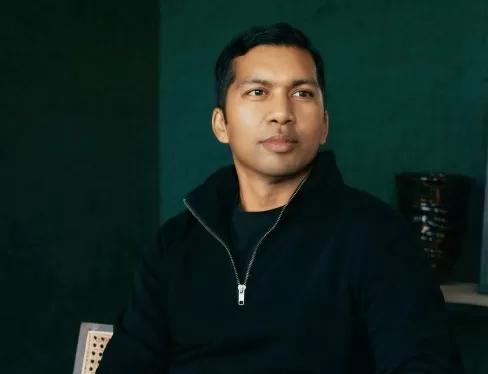 Thiel-backed startup claims AI can judge journalism, despite risks to whistleblowers
Following his role in the lawsuit that led to Gawker’s bankruptcy, Aron D’Souza identified a critical flaw in the American media landscape: individuals harmed by coverage lacked effective means to respond.His answer is technology. D’Souza’s new ventu
Thiel-backed startup claims AI can judge journalism, despite risks to whistleblowers
Following his role in the lawsuit that led to Gawker’s bankruptcy, Aron D’Souza identified a critical flaw in the American media landscape: individuals harmed by coverage lacked effective means to respond.His answer is technology. D’Souza’s new ventu
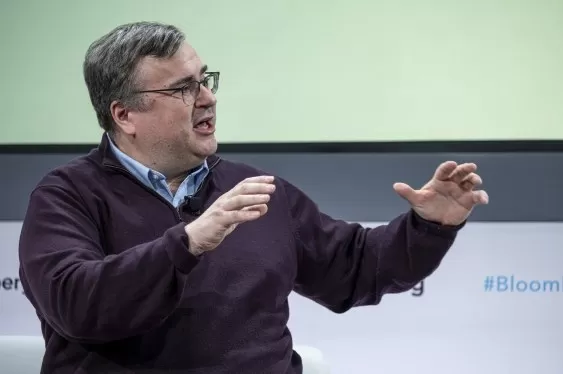 Prentis, New AI Lab Co-Founded by Reid Hoffman and Marc Pincus, in Talks to Raise $100M
Prentis, an emerging AI research lab specializing in computer-use models, is co-founded by serial entrepreneur Ritankar Das alongside tech industry leaders Reid Hoffman and Marc Pincus. According to two individuals familiar with the matter, the compa
Prentis, New AI Lab Co-Founded by Reid Hoffman and Marc Pincus, in Talks to Raise $100M
Prentis, an emerging AI research lab specializing in computer-use models, is co-founded by serial entrepreneur Ritankar Das alongside tech industry leaders Reid Hoffman and Marc Pincus. According to two individuals familiar with the matter, the compa

2026 Latest Best Top-rated AI Style Transfer Tools for Creative Experiments! XIX.AI has curated a powerful, game-changing collection of must-try tools that deliver exceptional results through real-world tests and rigorous rankings. These top solutions help creatives boost productivity significantly by accelerating content creation and unlocking endless creative possibilities. Explore now to discover your perfect tool and start creating today!
9 tools
xix.ai

2026 Latest Best Top-Rated AI Dialogue Bubble Tools for Visual Storytelling are here on XIX.AI! This curated collection features powerful, game-changing tools that help creators boost productivity and overcome creative bottlenecks. Get a free vs paid comparison, see real-world tests, and check the latest rankings to find the must-try solutions perfect for crafting engaging visual narratives. Explore now to discover your ideal tool!
10 tools
xix.ai
2026 Latest Top-Rated Best AI Meeting Summary Tools for Clear Decision Tracking and Effortless Follow-Ups. This curated list showcases powerful, game-changing solutions that boost productivity dramatically by automating meeting notes, identifying key action items, and streamlining team coordination across all projects. Get a free vs paid comparison along with real-world tests and weekly updated rankings to help you find the perfect tool. Explore now to unlock your AI edge!
9 tools
xix.ai

2026 Latest Best Top-rated AI Data Cleaning Tools for quick fixing of missing values and duplicates. This curated list showcases powerful, game-changing solutions that boost productivity significantly. Each option has undergone rigorous real-world tests to ensure reliability. Get a free vs paid comparison and discover the must-try tool that fits your needs best. Explore now at XIX.AI to Unlock your AI edge.
11 tools
xix.ai

2026 Latest Best Top-Rated AI Creative Ideation Tools for Artists are curated by XIX.AI to help creators break through visual blocks and boost creativity instantly. These powerful game-changing tools offer real-world tests, detailed free vs paid comparison, and weekly updated rankings. Discover your perfect tool to accelerate content creation and unlock your AI edge today. Explore now!
14 tools
xix.ai

2026 Latest Best AI Beat Makers for TikTok Background Tracks, Reels Audio, and Creator Promo Music! XIX.AI has curated a top-rated list of powerful game-changing tools that go through real-world tests to deliver flawless music for every content need. You’ll find detailed free vs paid comparison data, weekly updated rankings, and must-try options to help you boost creativity and productivity. Explore now to discover your perfect tool!
11 tools
xix.ai












