


 Home
HomeGoogle Translate Adds 110 Languages with AI Assistance, Now Supports 243
Google Translate Expands to Support 110 New Languages
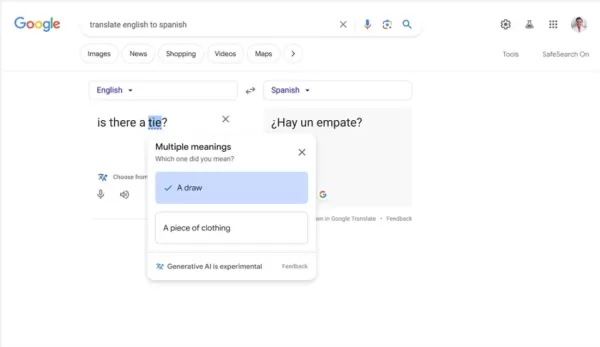
In an exciting update shared through a recent blog post, Google has announced its most ambitious language expansion to date for Google Translate. The service, which previously supported 133 languages, has now nearly doubled its capabilities, bringing the total to an impressive 243 languages.
This expansion targets a wide audience, reaching over 614 million speakers worldwide, which accounts for about 8% of the global population. The languages added range from those spoken by millions to those used by smaller indigenous communities, and even include languages that are being actively revitalized despite having no native speakers left.
African Languages Take Center Stage
A significant portion of the new additions, about 25%, are from Africa. This marks Google's largest ever expansion into African languages, including Fon, Kikongo, Luo, Ga, Swati, Venda, and Wolof. This move not only enhances accessibility but also celebrates linguistic diversity on the continent.
Highlighting Notable New Languages
Google highlighted several languages that have been added to the platform. Cantonese, one of the most requested languages, was a challenging addition due to its written characters overlapping with Mandarin. Manx, a Celtic language from the Isle of Man, once nearly extinct, has seen a revival with thousands now fluent in it. Punjabi (Shahmukhi), used in Pakistan and written in the Perso-Arabic script, also joins the list.
Challenges in Language Translation
Translating languages isn't straightforward, especially with regional variations, dialects, and differing spelling standards. For instance, Romani, spoken across Europe, has numerous dialects, making it difficult to standardize. To tackle these challenges, Google has employed its AI-powered PaLM 2 LLM, which has been instrumental in enhancing translation accuracy, particularly among closely related languages like French creole languages.
Google's Broader Language Goals
Despite the vast number of languages spoken globally—around 7,000—Google Translate still covers only a small fraction. However, the company is steadily working to change this. In 2022, they added 24 new languages using a machine learning model that can learn a language without direct examples. Additionally, the 1,000 Languages Initiative was launched to develop AI models capable of translating among the world's most spoken languages.
Google Translate is accessible on the web, through the Chrome browser, and as a mobile app for both iOS and Android devices, making it easier than ever for users to connect across linguistic boundaries.
Related article
 DeepMind CEO Hassabis: I sleep six hours a day, usually feel energetic around 1 a.m.
Fortune recently featured an interview with Demis Hassabis, CEO of Google DeepMind, revealing his unconventional approach to rest and productivity. Hassabis disclosed that he sleeps very little, structuring his waking hours into two distinct work blo
OpenAI, Anthropic Vie for Market Share Despite Revenue Shortfalls
Despite recent reports suggesting OpenAI missed revenue targets, creating pressure on tech stocks this Tuesday, private AI lab investors remain resilient. Seasoned backers have confirmed they will not reduce investment despite negative media coverage
California AV Compliance: A New Era of Tickets, Geofences, and 1M Miles
Guident operates an AuveTech shuttle in South Florida, managing a four-mile route in West Palm Beach and a one-mile route in Boca Raton using its remote monitoring technology. | Credit: GuidentCalifornia is redefining the regulatory landscape for dri
Related Special Topic Recommendations
chatbot
DeepMind CEO Hassabis: I sleep six hours a day, usually feel energetic around 1 a.m.
Fortune recently featured an interview with Demis Hassabis, CEO of Google DeepMind, revealing his unconventional approach to rest and productivity. Hassabis disclosed that he sleeps very little, structuring his waking hours into two distinct work blo
OpenAI, Anthropic Vie for Market Share Despite Revenue Shortfalls
Despite recent reports suggesting OpenAI missed revenue targets, creating pressure on tech stocks this Tuesday, private AI lab investors remain resilient. Seasoned backers have confirmed they will not reduce investment despite negative media coverage
California AV Compliance: A New Era of Tickets, Geofences, and 1M Miles
Guident operates an AuveTech shuttle in South Florida, managing a four-mile route in West Palm Beach and a one-mile route in Boca Raton using its remote monitoring technology. | Credit: GuidentCalifornia is redefining the regulatory landscape for dri
Related Special Topic Recommendations
chatbot
 Best AI Roleplay Chat Apps for Language Practice, Interview Prep, and Daily Fluency
2026 Latest Best Top-rated AI Roleplay Chat Apps for Language Practice, Interview Prep, and Daily Fluency! XIX.AI curates a powerful game-changing collection that offers free vs paid comparison, real-world tests, and updated rankings weekly. These must-try tools help you boost writing skills, overcome fluency challenges, and improve communication efficiency across all daily scenarios. Explore now to discover your perfect tool for language growth!
 10 tools
 xix.ai
Music composition
AI Stem Separation Tools for Remix Production, Sampling Prep, and Karaoke Masters
xix.ai
Music composition
AI Stem Separation Tools for Remix Production, Sampling Prep, and Karaoke Masters
2026 Latest Best Top-rated AI Stem Separation Tools Curated for Remix Production, Sampling Prep, and Karaoke Masters. These powerful game-changing tools offer real-world tests to deliver precise audio isolation, boosting productivity significantly. XIX.AI provides a weekly updated free vs paid comparison guide to help you find the must-try solution that suits your needs. Explore now to unlock your AI edge.
8 tools
xix.ai
Data Analysis
AI SQL Copilots for Revenue Dashboards, Funnel Analysis, and Product Metrics
2026 Latest Best AI SQL Copilots Ranked Top-Rated! XIX.AI curates a powerful game-changing collection for weekly updated real-world tests. These must-try tools help you generate accurate revenue dashboards, analyze sales funnels, and track product metrics swiftly, boosting productivity massively. Explore now to Discover your perfect tool for data-driven decision making! 238 characters
9 tools
xix.ai
Music composition
Best AI Melody Writing Tools for Song Drafts
2026 Latest Best Top-Rated AI Melody Writing Tools for Song Drafts! XIX.AI has curated a highly powerful game-changing collection that goes through rigorous real-world tests to deliver the best writing experience. You can find detailed free vs paid comparisons, accurate rankings, and must-try options designed to help you create stunning song drafts effortlessly and boost your creative productivity significantly. Explore now to discover your perfect tool!
8 tools
xix.ai
chatbot
Best AI Conversation Trainer Tools for Interview Practice
2026 Latest Best Top-rated AI Conversation Trainer Tools for Interview Practice are here on XIX.AI! This curated collection features powerful, game-changing tools that go through rigorous real-world tests to deliver accurate feedback. You’ll find a free vs paid comparison and detailed rankings to help you choose the must-try option that boosts your confidence and skills. Explore now to Discover your perfect tool for interview success!
12 tools
xix.ai
Design & Art
Best AI Style Transfer Tools for Creative Experiments
2026 Latest Best Top-rated AI Style Transfer Tools for Creative Experiments! XIX.AI has curated a powerful, game-changing collection of must-try tools that deliver exceptional results through real-world tests and rigorous rankings. These top solutions help creatives boost productivity significantly by accelerating content creation and unlocking endless creative possibilities. Explore now to discover your perfect tool and start creating today!
9 tools
xix.ai

 Comments (23)
0/500
Comments (23)
0/500
![FredLee]()
That's an insane jump in coverage! As someone who's tried to use it for obscure dialects before, this is game-changing for global communication. Makes you wonder if we're getting closer to that universal translator sci-fi dream... or if it'll be a Google/Apple/OpenAI language war first 😅
![RogerJackson]()
110개 언어 추가라니 혁신적이네요! 🇰🇷 구글 번역이 이런 속도로 발전할 줄이야. 한국어 번역 품질도 향상되길 바랍니다.
![WalterWilliams]()
Wow, 243 languages on Google Translate? That's wild! AI's really flexing its muscles here. Wonder how accurate it is for niche dialects though? 🤔
![BruceClark]()
Google翻訳が243言語に対応して本当に驚きました!😲 珍しい言語も試してみましたが、翻訳の精度は意外と高いです。ただ、時々おかしな翻訳もありますが、旅行者には必須のアプリですね。🌍✨
![NicholasSanchez]()
구글 번역의 새로운 언어는 멋지지만, 때때로 번역이 조금 어긋날 때가 있어요. 빠른 확인에는 유용하지만 중요한 일에는 의존하지 마세요. 그래도 지금 지원하는 언어의 수는 정말 놀랍네요! 🌍
![RalphGarcia]()
Google翻訳の新しい言語はクールですが、時々翻訳が少しずれることがあります。素早い確認には便利ですが、重要なものには頼らないでください。それでも、今サポートしている言語の数は驚くべきものです!🌍
Google Translate Expands to Support 110 New Languages
In an exciting update shared through a recent blog post, Google has announced its most ambitious language expansion to date for Google Translate. The service, which previously supported 133 languages, has now nearly doubled its capabilities, bringing the total to an impressive 243 languages.
This expansion targets a wide audience, reaching over 614 million speakers worldwide, which accounts for about 8% of the global population. The languages added range from those spoken by millions to those used by smaller indigenous communities, and even include languages that are being actively revitalized despite having no native speakers left.
African Languages Take Center Stage
A significant portion of the new additions, about 25%, are from Africa. This marks Google's largest ever expansion into African languages, including Fon, Kikongo, Luo, Ga, Swati, Venda, and Wolof. This move not only enhances accessibility but also celebrates linguistic diversity on the continent.
Highlighting Notable New Languages
Google highlighted several languages that have been added to the platform. Cantonese, one of the most requested languages, was a challenging addition due to its written characters overlapping with Mandarin. Manx, a Celtic language from the Isle of Man, once nearly extinct, has seen a revival with thousands now fluent in it. Punjabi (Shahmukhi), used in Pakistan and written in the Perso-Arabic script, also joins the list.
Challenges in Language Translation
Translating languages isn't straightforward, especially with regional variations, dialects, and differing spelling standards. For instance, Romani, spoken across Europe, has numerous dialects, making it difficult to standardize. To tackle these challenges, Google has employed its AI-powered PaLM 2 LLM, which has been instrumental in enhancing translation accuracy, particularly among closely related languages like French creole languages.
Google's Broader Language Goals
Despite the vast number of languages spoken globally—around 7,000—Google Translate still covers only a small fraction. However, the company is steadily working to change this. In 2022, they added 24 new languages using a machine learning model that can learn a language without direct examples. Additionally, the 1,000 Languages Initiative was launched to develop AI models capable of translating among the world's most spoken languages.
Google Translate is accessible on the web, through the Chrome browser, and as a mobile app for both iOS and Android devices, making it easier than ever for users to connect across linguistic boundaries.








 DeepMind CEO Hassabis: I sleep six hours a day, usually feel energetic around 1 a.m.
Fortune recently featured an interview with Demis Hassabis, CEO of Google DeepMind, revealing his unconventional approach to rest and productivity. Hassabis disclosed that he sleeps very little, structuring his waking hours into two distinct work blo
DeepMind CEO Hassabis: I sleep six hours a day, usually feel energetic around 1 a.m.
Fortune recently featured an interview with Demis Hassabis, CEO of Google DeepMind, revealing his unconventional approach to rest and productivity. Hassabis disclosed that he sleeps very little, structuring his waking hours into two distinct work blo
 OpenAI, Anthropic Vie for Market Share Despite Revenue Shortfalls
Despite recent reports suggesting OpenAI missed revenue targets, creating pressure on tech stocks this Tuesday, private AI lab investors remain resilient. Seasoned backers have confirmed they will not reduce investment despite negative media coverage
California AV Compliance: A New Era of Tickets, Geofences, and 1M Miles
Guident operates an AuveTech shuttle in South Florida, managing a four-mile route in West Palm Beach and a one-mile route in Boca Raton using its remote monitoring technology. | Credit: GuidentCalifornia is redefining the regulatory landscape for dri
OpenAI, Anthropic Vie for Market Share Despite Revenue Shortfalls
Despite recent reports suggesting OpenAI missed revenue targets, creating pressure on tech stocks this Tuesday, private AI lab investors remain resilient. Seasoned backers have confirmed they will not reduce investment despite negative media coverage
California AV Compliance: A New Era of Tickets, Geofences, and 1M Miles
Guident operates an AuveTech shuttle in South Florida, managing a four-mile route in West Palm Beach and a one-mile route in Boca Raton using its remote monitoring technology. | Credit: GuidentCalifornia is redefining the regulatory landscape for dri

2026 Latest Best Top-rated AI Roleplay Chat Apps for Language Practice, Interview Prep, and Daily Fluency! XIX.AI curates a powerful game-changing collection that offers free vs paid comparison, real-world tests, and updated rankings weekly. These must-try tools help you boost writing skills, overcome fluency challenges, and improve communication efficiency across all daily scenarios. Explore now to discover your perfect tool for language growth!
10 tools
xix.ai

2026 Latest Best Top-rated AI Stem Separation Tools Curated for Remix Production, Sampling Prep, and Karaoke Masters. These powerful game-changing tools offer real-world tests to deliver precise audio isolation, boosting productivity significantly. XIX.AI provides a weekly updated free vs paid comparison guide to help you find the must-try solution that suits your needs. Explore now to unlock your AI edge.
8 tools
xix.ai

2026 Latest Best AI SQL Copilots Ranked Top-Rated! XIX.AI curates a powerful game-changing collection for weekly updated real-world tests. These must-try tools help you generate accurate revenue dashboards, analyze sales funnels, and track product metrics swiftly, boosting productivity massively. Explore now to Discover your perfect tool for data-driven decision making! 238 characters
9 tools
xix.ai

2026 Latest Best Top-Rated AI Melody Writing Tools for Song Drafts! XIX.AI has curated a highly powerful game-changing collection that goes through rigorous real-world tests to deliver the best writing experience. You can find detailed free vs paid comparisons, accurate rankings, and must-try options designed to help you create stunning song drafts effortlessly and boost your creative productivity significantly. Explore now to discover your perfect tool!
8 tools
xix.ai

2026 Latest Best Top-rated AI Conversation Trainer Tools for Interview Practice are here on XIX.AI! This curated collection features powerful, game-changing tools that go through rigorous real-world tests to deliver accurate feedback. You’ll find a free vs paid comparison and detailed rankings to help you choose the must-try option that boosts your confidence and skills. Explore now to Discover your perfect tool for interview success!
12 tools
xix.ai

2026 Latest Best Top-rated AI Style Transfer Tools for Creative Experiments! XIX.AI has curated a powerful, game-changing collection of must-try tools that deliver exceptional results through real-world tests and rigorous rankings. These top solutions help creatives boost productivity significantly by accelerating content creation and unlocking endless creative possibilities. Explore now to discover your perfect tool and start creating today!
9 tools
xix.ai

That's an insane jump in coverage! As someone who's tried to use it for obscure dialects before, this is game-changing for global communication. Makes you wonder if we're getting closer to that universal translator sci-fi dream... or if it'll be a Google/Apple/OpenAI language war first 😅
110개 언어 추가라니 혁신적이네요! 🇰🇷 구글 번역이 이런 속도로 발전할 줄이야. 한국어 번역 품질도 향상되길 바랍니다.
Wow, 243 languages on Google Translate? That's wild! AI's really flexing its muscles here. Wonder how accurate it is for niche dialects though? 🤔
Google翻訳が243言語に対応して本当に驚きました!😲 珍しい言語も試してみましたが、翻訳の精度は意外と高いです。ただ、時々おかしな翻訳もありますが、旅行者には必須のアプリですね。🌍✨
구글 번역의 새로운 언어는 멋지지만, 때때로 번역이 조금 어긋날 때가 있어요. 빠른 확인에는 유용하지만 중요한 일에는 의존하지 마세요. 그래도 지금 지원하는 언어의 수는 정말 놀랍네요! 🌍
Google翻訳の新しい言語はクールですが、時々翻訳が少しずれることがあります。素早い確認には便利ですが、重要なものには頼らないでください。それでも、今サポートしている言語の数は驚くべきものです!🌍












