


 Home
HomeCrewline Raises $7.1M to Automate Repetitive Construction Tasks
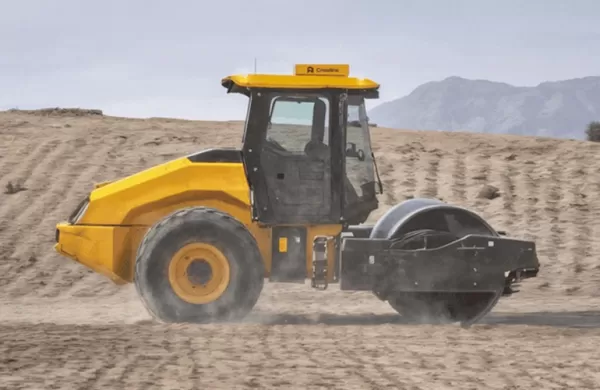
Crewline has created an autonomy solution for soil compactors that can be installed in under an hour, adding self-driving capabilities. | Source: Crewline
To tackle a severe labor shortage that causes contractors to cancel nearly two-thirds of their projects, San Francisco-based startup Crewline has raised $7.1 million in seed funding. The investment will support the deployment of an autonomous retrofit kit for construction rollers. By automating the jobsite's most repetitive and least desirable task, the company is using a "wedge" strategy to address an industry shortfall of nearly 500,000 workers. It has already built a $26 million waitlist of contractors looking to boost productivity without hiring more staff.
CEO and co-founder Frederik Filz-Reiterdank leads a compact four-person team, which includes co-founder and CTO Mohamed Sadek. The team is focused on developing this new construction automation solution. Currently on its sixth version, the company ships an updated kit revision approximately every three weeks.
Filz-Reiterdank explained to The Robot Report: "Labor availability is the industry's biggest constraint. According to AGC's 2025 workforce survey, 92% of contractors report they cannot fill open positions. Forty-five percent have delayed projects specifically due to worker shortages. AGC estimates the industry will need roughly 499,000 net new workers in 2026 and about 1.9 million over the next decade. This is a structural issue, not a temporary one—the construction unemployment rate sits at 3.5%, meaning virtually no experienced workers are looking for jobs. Contractors already see automation as part of the solution: 45% expect robotics and AI to positively impact construction jobs, up from 41% in 2024."
Low-hanging fruit in road construction
Compaction is essential for every earth-moving project, yet operating a compactor is considered the lowest-skilled role on site. Similar to tillage in agriculture, compaction is repetitive and follows a set pattern. There's nothing to replenish besides fuel, and no loading or unloading is involved. Unlike excavation, there's no risk of hitting underground utilities with a compactor. The main technical challenge is avoiding obstacles like vehicles and crew; otherwise, it's essentially a line-following operation.
Crewline's core philosophy is that most robotics companies fail by trying to develop hardware and software at the same time. "We avoided that pitfall by retrofitting existing machines instead of building new ones. Our kit installs on a standard roller in about an hour—no wire cutting, fully reversible," said Filz-Reiterdank. "Secondly, soil compaction is the most automatable earthwork task. It's pattern-based, forgiving of errors, and doesn't require the sub-centimeter precision needed for grading."
Filz-Reiterdank added: "ROI is central to our economic model. The roller operates fully autonomously. A single operator—whether on a dozer, motor grader, or acting as site foreman—can set the roller's mission from an iPad in under a minute: just draw the zone on a map and hit 'go.' The roller then runs independently for hours, using onboard sensors to detect obstacles and crew. This means one operator who previously managed a single machine can now oversee that machine plus one or more autonomous rollers. It's labor multiplication, not replacement, which makes the ROI viable at current wage levels. Watts Services is already scaling from one of our rollers to three based on this logic."
A pragmatic approach to autonomy
While compaction is the first construction workflow on its roadmap, Crewline is already developing solutions for excavation and grading.
According to Filz-Reiterdank, the plan is clear: first, retrofit existing equipment rather than designing new machines from the ground up. This approach is already used by most heavy equipment automation companies and is well-proven.
Next, the company is deploying its technology directly on active job sites. Through partnerships with firms like Watts Services and DSS, and having generated a list of over 200 prospects since ConExpo, Crewline has been able to generate revenue from day one while continuously gathering real-world data.
The outcome is rapid iteration and a more robust, field-tested solution.
The tech stack
Crewline's technology stack integrates several industry-leading systems for autonomous vehicles and heavy equipment automation.
Compute: Rugged NVIDIA Jetson onboard.Perception: Stereo cameras providing 360° coverage, used for detecting crew, vehicles, and obstacles. Utilizes vision language AI models.Positioning: Dual RTK-GPS for centimeter-accurate positioning.Connectivity: Starlink for reliable coverage in remote areas.Safety: Dedicated safety controller with two wireless emergency stop buttons.Actuation: Drive-by-wire integration with the machine's existing controls. No permanent modifications required; reversible in under an hour.
Related article
 Nvidia H200 China deal survives Trump-Xi summit, but not as expected
President Trump traveled to Beijing with Jensen Huang joining the delegation at the eleventh hour, departing two days later with vague remarks about potential chip export developments. No deal materialized. Since Trump first authorized sales in Decem
Nvidia to Derive 25% of Next Year’s Revenue from Funded Labs
Nvidia has deployed nearly US$50 billion into AI labs purchasing its chips, securing commitments for over $500 billion in total.On August 26, CFO Colette Kress informed analysts that these labs, backed by Nvidia’s balance sheet, will account for roug
ElevenLabs brings on BlackRock, Jamie Foxx and Longoria as new investors
ElevenLabs, a leader in Voice AI, has announced new participants in its $500 million Series D funding round, initially revealed in February. The investor roster now features major institutions like BlackRock, Wellington, D.E. Shaw, and Schroders, alo
Related Special Topic Recommendations
Design & Art
Nvidia H200 China deal survives Trump-Xi summit, but not as expected
President Trump traveled to Beijing with Jensen Huang joining the delegation at the eleventh hour, departing two days later with vague remarks about potential chip export developments. No deal materialized. Since Trump first authorized sales in Decem
Nvidia to Derive 25% of Next Year’s Revenue from Funded Labs
Nvidia has deployed nearly US$50 billion into AI labs purchasing its chips, securing commitments for over $500 billion in total.On August 26, CFO Colette Kress informed analysts that these labs, backed by Nvidia’s balance sheet, will account for roug
ElevenLabs brings on BlackRock, Jamie Foxx and Longoria as new investors
ElevenLabs, a leader in Voice AI, has announced new participants in its $500 million Series D funding round, initially revealed in February. The investor roster now features major institutions like BlackRock, Wellington, D.E. Shaw, and Schroders, alo
Related Special Topic Recommendations
Design & Art
 Top AI Illustration Tools: Create Editorial Scenes and Cover Art Faster
2026 Latest Top-rated AI Illustration Tools: Our curated list features the best powerfully designed tools for creating stunning editorial scenes and eye-catching cover art quickly. Each option has gone through rigorous real-world tests, offering a free vs paid comparison to help you find the perfect match for your workflow. Try these must-try solutions today to unlock your AI edge and boost your creative productivity. Explore now at XIX.AI.
 10 tools
 xix.ai
Education and Learning
Top AI Tutors for Exam Prep: Practice Math, Science, and English
xix.ai
Education and Learning
Top AI Tutors for Exam Prep: Practice Math, Science, and English
2026 Latest Top-Rated Best AI Tutors for Exam Prep are here on XIX.AI! Our curated list features powerful game-changing tools that offer free vs paid comparison, real-world tests, and weekly updated rankings. They help boost your writing efficiency, simplify complex topic learning, and unlock your academic potential. Explore now to Discover your perfect exam prep tool and Start creating today to Unlock your AI edge!
10 tools
xix.ai
Finance
AI Budget Planning Tools for Personal Money Management
2026 Latest Best Top-Rated AI Budget Planning Tools for Personal Money Management are here on XIX.AI! This curated collection features powerful, game-changing solutions that help you conduct real-world tests, understand spending habits, and create personalized plans to boost productivity. Enjoy a free vs paid comparison along with detailed rankings. Must-try tools designed to simplify money management and unlock your AI edge. Explore now!
11 tools
xix.ai
Health & Wellness
AI Sleep Tracking Assistants: Improve Recovery with Better Bedtime Habits
2026 Latest Best Top-Rated AI Sleep Tracking Assistants curated for ultimate recovery. This fully updated weekly guide features powerful tools that deliver real-world tests, free vs paid comparison, and detailed rankings to help you find the must-try solution that boosts sleep quality and supports better bedtime habits. Explore now at XIX.AI to Unlock your AI edge.
10 tools
xix.ai
Data Analysis
AI SQL Copilots for Product and Revenue Analytics
2026 Latest Best Top-Rated AI SQL Copilots for Product and Revenue Analytics! XIX.AI has curated a powerful, game-changing collection of must-try tools that undergo real-world tests through weekly updated rankings. These tools help users boost productivity significantly by accelerating data analysis, streamlining complex queries, and generating accurate insights to drive smarter business decisions. Explore now to Discover your perfect tool for unlocking your AI edge!
14 tools
xix.ai
Education and Learning
Best AI Homework Helpers That Teach: Learn Concepts, Not Just Answers
2026 Latest Best Top-Rated AI Homework Helpers That Teach Core Concepts Not Just Answers Powerful Tools for Students Must-Try Curated List Weekly Updated Free vs Paid Comparison Real-World Tests Accurate Rankings to Help You Unlock Your Full Learning Potential Explore now to Discover your perfect tool for smarter studying.
10 tools
xix.ai

 Comments (2)
0/500
Comments (2)
0/500
![StevenAdams]()
Oh great, another startup automating jobs... but honestly, if it takes under an hour to install self-driving on a soil compactor, that's actually impressive. Hope it doesn't break down on site 😂
![FrankLewis]()
I love how they're turning construction sites into parking lots for robot dump trucks 😂 But seriously, $7.1M for a quick-install autonomy kit? That's pocket change compared to what a single delayed project costs. Hope they scale fast before the next housing crash.
Crewline has created an autonomy solution for soil compactors that can be installed in under an hour, adding self-driving capabilities. | Source: Crewline
To tackle a severe labor shortage that causes contractors to cancel nearly two-thirds of their projects, San Francisco-based startup Crewline has raised $7.1 million in seed funding. The investment will support the deployment of an autonomous retrofit kit for construction rollers. By automating the jobsite's most repetitive and least desirable task, the company is using a "wedge" strategy to address an industry shortfall of nearly 500,000 workers. It has already built a $26 million waitlist of contractors looking to boost productivity without hiring more staff.
CEO and co-founder Frederik Filz-Reiterdank leads a compact four-person team, which includes co-founder and CTO Mohamed Sadek. The team is focused on developing this new construction automation solution. Currently on its sixth version, the company ships an updated kit revision approximately every three weeks.
Filz-Reiterdank explained to The Robot Report: "Labor availability is the industry's biggest constraint. According to AGC's 2025 workforce survey, 92% of contractors report they cannot fill open positions. Forty-five percent have delayed projects specifically due to worker shortages. AGC estimates the industry will need roughly 499,000 net new workers in 2026 and about 1.9 million over the next decade. This is a structural issue, not a temporary one—the construction unemployment rate sits at 3.5%, meaning virtually no experienced workers are looking for jobs. Contractors already see automation as part of the solution: 45% expect robotics and AI to positively impact construction jobs, up from 41% in 2024."
Low-hanging fruit in road construction
Compaction is essential for every earth-moving project, yet operating a compactor is considered the lowest-skilled role on site. Similar to tillage in agriculture, compaction is repetitive and follows a set pattern. There's nothing to replenish besides fuel, and no loading or unloading is involved. Unlike excavation, there's no risk of hitting underground utilities with a compactor. The main technical challenge is avoiding obstacles like vehicles and crew; otherwise, it's essentially a line-following operation.
Crewline's core philosophy is that most robotics companies fail by trying to develop hardware and software at the same time. "We avoided that pitfall by retrofitting existing machines instead of building new ones. Our kit installs on a standard roller in about an hour—no wire cutting, fully reversible," said Filz-Reiterdank. "Secondly, soil compaction is the most automatable earthwork task. It's pattern-based, forgiving of errors, and doesn't require the sub-centimeter precision needed for grading."
Filz-Reiterdank added: "ROI is central to our economic model. The roller operates fully autonomously. A single operator—whether on a dozer, motor grader, or acting as site foreman—can set the roller's mission from an iPad in under a minute: just draw the zone on a map and hit 'go.' The roller then runs independently for hours, using onboard sensors to detect obstacles and crew. This means one operator who previously managed a single machine can now oversee that machine plus one or more autonomous rollers. It's labor multiplication, not replacement, which makes the ROI viable at current wage levels. Watts Services is already scaling from one of our rollers to three based on this logic."
A pragmatic approach to autonomy
While compaction is the first construction workflow on its roadmap, Crewline is already developing solutions for excavation and grading.
According to Filz-Reiterdank, the plan is clear: first, retrofit existing equipment rather than designing new machines from the ground up. This approach is already used by most heavy equipment automation companies and is well-proven.
Next, the company is deploying its technology directly on active job sites. Through partnerships with firms like Watts Services and DSS, and having generated a list of over 200 prospects since ConExpo, Crewline has been able to generate revenue from day one while continuously gathering real-world data.
The outcome is rapid iteration and a more robust, field-tested solution.
The tech stack
Crewline's technology stack integrates several industry-leading systems for autonomous vehicles and heavy equipment automation.
Compute: Rugged NVIDIA Jetson onboard.Perception: Stereo cameras providing 360° coverage, used for detecting crew, vehicles, and obstacles. Utilizes vision language AI models.Positioning: Dual RTK-GPS for centimeter-accurate positioning.Connectivity: Starlink for reliable coverage in remote areas.Safety: Dedicated safety controller with two wireless emergency stop buttons.Actuation: Drive-by-wire integration with the machine's existing controls. No permanent modifications required; reversible in under an hour.








 Nvidia H200 China deal survives Trump-Xi summit, but not as expected
President Trump traveled to Beijing with Jensen Huang joining the delegation at the eleventh hour, departing two days later with vague remarks about potential chip export developments. No deal materialized. Since Trump first authorized sales in Decem
Nvidia H200 China deal survives Trump-Xi summit, but not as expected
President Trump traveled to Beijing with Jensen Huang joining the delegation at the eleventh hour, departing two days later with vague remarks about potential chip export developments. No deal materialized. Since Trump first authorized sales in Decem
 Nvidia to Derive 25% of Next Year’s Revenue from Funded Labs
Nvidia has deployed nearly US$50 billion into AI labs purchasing its chips, securing commitments for over $500 billion in total.On August 26, CFO Colette Kress informed analysts that these labs, backed by Nvidia’s balance sheet, will account for roug
Nvidia to Derive 25% of Next Year’s Revenue from Funded Labs
Nvidia has deployed nearly US$50 billion into AI labs purchasing its chips, securing commitments for over $500 billion in total.On August 26, CFO Colette Kress informed analysts that these labs, backed by Nvidia’s balance sheet, will account for roug
 ElevenLabs brings on BlackRock, Jamie Foxx and Longoria as new investors
ElevenLabs, a leader in Voice AI, has announced new participants in its $500 million Series D funding round, initially revealed in February. The investor roster now features major institutions like BlackRock, Wellington, D.E. Shaw, and Schroders, alo
ElevenLabs brings on BlackRock, Jamie Foxx and Longoria as new investors
ElevenLabs, a leader in Voice AI, has announced new participants in its $500 million Series D funding round, initially revealed in February. The investor roster now features major institutions like BlackRock, Wellington, D.E. Shaw, and Schroders, alo

2026 Latest Top-rated AI Illustration Tools: Our curated list features the best powerfully designed tools for creating stunning editorial scenes and eye-catching cover art quickly. Each option has gone through rigorous real-world tests, offering a free vs paid comparison to help you find the perfect match for your workflow. Try these must-try solutions today to unlock your AI edge and boost your creative productivity. Explore now at XIX.AI.
10 tools
xix.ai

2026 Latest Top-Rated Best AI Tutors for Exam Prep are here on XIX.AI! Our curated list features powerful game-changing tools that offer free vs paid comparison, real-world tests, and weekly updated rankings. They help boost your writing efficiency, simplify complex topic learning, and unlock your academic potential. Explore now to Discover your perfect exam prep tool and Start creating today to Unlock your AI edge!
10 tools
xix.ai

2026 Latest Best Top-Rated AI Budget Planning Tools for Personal Money Management are here on XIX.AI! This curated collection features powerful, game-changing solutions that help you conduct real-world tests, understand spending habits, and create personalized plans to boost productivity. Enjoy a free vs paid comparison along with detailed rankings. Must-try tools designed to simplify money management and unlock your AI edge. Explore now!
11 tools
xix.ai

2026 Latest Best Top-Rated AI Sleep Tracking Assistants curated for ultimate recovery. This fully updated weekly guide features powerful tools that deliver real-world tests, free vs paid comparison, and detailed rankings to help you find the must-try solution that boosts sleep quality and supports better bedtime habits. Explore now at XIX.AI to Unlock your AI edge.
10 tools
xix.ai

2026 Latest Best Top-Rated AI SQL Copilots for Product and Revenue Analytics! XIX.AI has curated a powerful, game-changing collection of must-try tools that undergo real-world tests through weekly updated rankings. These tools help users boost productivity significantly by accelerating data analysis, streamlining complex queries, and generating accurate insights to drive smarter business decisions. Explore now to Discover your perfect tool for unlocking your AI edge!
14 tools
xix.ai

2026 Latest Best Top-Rated AI Homework Helpers That Teach Core Concepts Not Just Answers Powerful Tools for Students Must-Try Curated List Weekly Updated Free vs Paid Comparison Real-World Tests Accurate Rankings to Help You Unlock Your Full Learning Potential Explore now to Discover your perfect tool for smarter studying.
10 tools
xix.ai

Oh great, another startup automating jobs... but honestly, if it takes under an hour to install self-driving on a soil compactor, that's actually impressive. Hope it doesn't break down on site 😂
I love how they're turning construction sites into parking lots for robot dump trucks 😂 But seriously, $7.1M for a quick-install autonomy kit? That's pocket change compared to what a single delayed project costs. Hope they scale fast before the next housing crash.












