


 Home
Home
Bolna secures $6.3M investment from General Catalyst for its Indian voice orchestration platform
Industry analysis and the rise of voice AI firms in India point to a surging demand for voice-based artificial intelligence solutions across the country. Voice serves as a primary communication channel for both individuals and businesses in India, which is why enterprises and startups alike are keen to leverage voice AI to boost efficiency in customer support, sales, lead generation, hiring, and training.
However, identifying market demand is just the first step; demonstrating that businesses are willing to pay for it is another challenge entirely. Y Combinator rejected the application from Bolna, a voice orchestration startup founded by Maitreya Wagh and Prateek Sachan, on five separate occasions before finally accepting it into the fall 2025 batch. Initially, there was skepticism that the founders could convert interest into tangible revenue.
"During our Y Combinator applications, the consistent feedback was, 'It's impressive that you've built a product capable of creating realistic voice agents, but Indian enterprises won't pay for it, and you won't generate significant income,'" Wagh shared with TechCrunch.
The startup applied with the same core concept for the fall batch but was able to demonstrate a crucial new metric: consistent monthly revenue exceeding $25,000 over the preceding months. At that stage, the company was operating $100 pilot programs to help users build voice agents. It has since increased the price of those pilots to $500.
This momentum has continued to build. On Tuesday, the startup announced it has secured a $6.3 million seed funding round led by General Catalyst. The round saw participation from Y Combinator, Blume Ventures, Orange Collective, Pioneer Fund, Transpose Capital, and Eight Capital. Several individual investors also contributed, including Aarthi Ramamurthy, Arpan Sheth, Sriwatsan Krishnan, Ravi Iyer, and Taro Fukuyama.
The Product and Its Clientele
Bolna is developing an orchestration layer—a platform designed to connect and manage various AI voice technologies. Similar to companies like Vapi, LiveKit, and VoiceRun, Bolna's platform is tailored to address the unique characteristics of communication in India. This includes robust noise cancellation, integration with caller ID platform Truecaller for verification, and sophisticated handling of mixed-language conversations.
The platform incorporates specific features for Indian users, such as speaking numbers in English regardless of the primary conversation language, and accepting keypad input for longer pieces of information.
Techcrunch event Join the Disrupt 2026 Waitlist
Secure your spot on the Disrupt 2026 waitlist for priority access when Early Bird tickets are released. Previous Disrupt conferences have featured industry giants like Google Cloud, Netflix, Microsoft, Box, Phia, a16z, ElevenLabs, Wayve, Hugging Face, Elad Gil, and Vinod Khosla on stage. They are part of a network of over 250 industry leaders driving 200+ sessions designed to accelerate your growth and refine your competitive edge. Additionally, connect with hundreds of startups pioneering innovation across all sectors.
Join the Disrupt 2026 Waitlist
Secure your spot on the Disrupt 2026 waitlist for priority access when Early Bird tickets are released. Previous Disrupt conferences have featured industry giants like Google Cloud, Netflix, Microsoft, Box, Phia, a16z, ElevenLabs, Wayve, Hugging Face, Elad Gil, and Vinod Khosla on stage. They are part of a network of over 250 industry leaders driving 200+ sessions designed to accelerate your growth and refine your competitive edge. Additionally, connect with hundreds of startups pioneering innovation across all sectors.
San Francisco | October 13-15, 2026 WAITLIST NOW 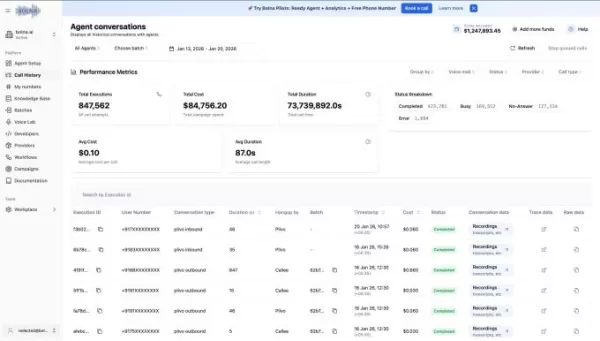
Image Credits: Bolna Wagh emphasized that Bolna's key differentiator is its simplicity: users can build functional voice agents simply by describing their needs, without deep technical knowledge, and deploy them for calls almost immediately. The company reports that 75% of its revenue comes from these self-serve customers.
He also highlighted that as an orchestration layer, Bolna isn't tied to a single AI model. This allows enterprise clients to seamlessly switch to newer, better-performing models as they become available.
"Our platform enables customers to switch models with ease, or even employ different models for different regions to optimize performance. An orchestration layer is essential for enterprises to ensure they are always using the best available technology, as the leading model today might not be the leader tomorrow," Wagh explained.
Bolna's client portfolio is diverse, including car resale platform Spinny, on-demand home services startup Snabbit, beverage companies, and dating apps. The majority are small to midsize businesses utilizing the self-serve platform.
In parallel, Bolna is actively pursuing larger enterprise contracts. For these major clients and custom implementations, Bolna utilizes a team of forward-deployed engineers—specialists who work directly and closely with the client's team on-site. The startup has already onboarded two large enterprises as paying customers and has four more in the pilot phase. Currently, Bolna has nine forward-deployed engineers and is expanding this team by two to three members each month to support its enterprise growth strategy.
The company has experienced steady growth in both call volume and revenue. It now handles over 200,000 calls daily and is approaching $700,000 in Annual Recurring Revenue (ARR). While 60% to 70% of calls are in English or Hindi, the company notes a consistent rise in the use of other regional languages.
Akarsh Shrivastava, a member of General Catalyst's investment team, stated that the firm was impressed with Bolna because its orchestration layer offers exceptional flexibility for a wide range of customers.
"Bolna provides the freedom to select any underlying AI model, supported by a technical stack that can be molded to specific requirements. It's an excellent solution for organizations that want to own part of their tech stack, require flexibility in model selection, and wish to maintain greater control over their voice AI products," Shrivastava told TechCrunch during a call.
Related article
 Stripe to Acquire OpenRouter as AI Model Routing Gains Momentum
Stripe has agreed to acquire OpenRouter, an AI model-routing platform that gives developers access to hundreds of models through a single interface. The deal adds model selection and routing to Stripe’s existing work around AI usage and token-based b
Former OpenAI Researcher Barrett Zoph Returns to Google to Support Gemini Development
Barret Zoph, who previously abruptly left and joined OpenAI due to a disagreement with Thinking Machines Lab CEO Miriam Mularati, has once again changed employers. Alphabet's Google announced that Zoph will return as Vice President of Research, bring
How Recursive Intelligence Raised $335M at $4B Valuation in 4 Months
The co-founders of startup Ricursive Intelligence seemed destined to be co-founders.Anna Goldie, CEO, and Azalia Mirhoseini, CTO, are so well-known in the AI community that they were among those AI engineers who “got those weird emails from Zuckerber
Related Special Topic Recommendations
Design & Art
Stripe to Acquire OpenRouter as AI Model Routing Gains Momentum
Stripe has agreed to acquire OpenRouter, an AI model-routing platform that gives developers access to hundreds of models through a single interface. The deal adds model selection and routing to Stripe’s existing work around AI usage and token-based b
Former OpenAI Researcher Barrett Zoph Returns to Google to Support Gemini Development
Barret Zoph, who previously abruptly left and joined OpenAI due to a disagreement with Thinking Machines Lab CEO Miriam Mularati, has once again changed employers. Alphabet's Google announced that Zoph will return as Vice President of Research, bring
How Recursive Intelligence Raised $335M at $4B Valuation in 4 Months
The co-founders of startup Ricursive Intelligence seemed destined to be co-founders.Anna Goldie, CEO, and Azalia Mirhoseini, CTO, are so well-known in the AI community that they were among those AI engineers who “got those weird emails from Zuckerber
Related Special Topic Recommendations
Design & Art
 Top AI Illustration Tools: Create Editorial Scenes and Cover Art Faster
2026 Latest Top-rated AI Illustration Tools: Our curated list features the best powerfully designed tools for creating stunning editorial scenes and eye-catching cover art quickly. Each option has gone through rigorous real-world tests, offering a free vs paid comparison to help you find the perfect match for your workflow. Try these must-try solutions today to unlock your AI edge and boost your creative productivity. Explore now at XIX.AI.
 10 tools
 xix.ai
Education and Learning
Top AI Tutors for Exam Prep: Practice Math, Science, and English
xix.ai
Education and Learning
Top AI Tutors for Exam Prep: Practice Math, Science, and English
2026 Latest Top-Rated Best AI Tutors for Exam Prep are here on XIX.AI! Our curated list features powerful game-changing tools that offer free vs paid comparison, real-world tests, and weekly updated rankings. They help boost your writing efficiency, simplify complex topic learning, and unlock your academic potential. Explore now to Discover your perfect exam prep tool and Start creating today to Unlock your AI edge!
10 tools
xix.ai
Finance
AI Budget Planning Tools for Personal Money Management
2026 Latest Best Top-Rated AI Budget Planning Tools for Personal Money Management are here on XIX.AI! This curated collection features powerful, game-changing solutions that help you conduct real-world tests, understand spending habits, and create personalized plans to boost productivity. Enjoy a free vs paid comparison along with detailed rankings. Must-try tools designed to simplify money management and unlock your AI edge. Explore now!
11 tools
xix.ai
Health & Wellness
AI Sleep Tracking Assistants: Improve Recovery with Better Bedtime Habits
2026 Latest Best Top-Rated AI Sleep Tracking Assistants curated for ultimate recovery. This fully updated weekly guide features powerful tools that deliver real-world tests, free vs paid comparison, and detailed rankings to help you find the must-try solution that boosts sleep quality and supports better bedtime habits. Explore now at XIX.AI to Unlock your AI edge.
10 tools
xix.ai
Data Analysis
AI SQL Copilots for Product and Revenue Analytics
2026 Latest Best Top-Rated AI SQL Copilots for Product and Revenue Analytics! XIX.AI has curated a powerful, game-changing collection of must-try tools that undergo real-world tests through weekly updated rankings. These tools help users boost productivity significantly by accelerating data analysis, streamlining complex queries, and generating accurate insights to drive smarter business decisions. Explore now to Discover your perfect tool for unlocking your AI edge!
14 tools
xix.ai
Education and Learning
Best AI Homework Helpers That Teach: Learn Concepts, Not Just Answers
2026 Latest Best Top-Rated AI Homework Helpers That Teach Core Concepts Not Just Answers Powerful Tools for Students Must-Try Curated List Weekly Updated Free vs Paid Comparison Real-World Tests Accurate Rankings to Help You Unlock Your Full Learning Potential Explore now to Discover your perfect tool for smarter studying.
10 tools
xix.ai

 Comments (1)
0/500
Comments (1)
0/500
![WilliamAnderson]()
Interesting to see voice AI getting such traction in India! With so many languages and dialects, it's a huge market but also a technical challenge. Hope this investment helps make tech more accessible beyond just English speakers. The focus on voice as a primary channel makes total sense there. 🗣️
Industry analysis and the rise of voice AI firms in India point to a surging demand for voice-based artificial intelligence solutions across the country. Voice serves as a primary communication channel for both individuals and businesses in India, which is why enterprises and startups alike are keen to leverage voice AI to boost efficiency in customer support, sales, lead generation, hiring, and training.
However, identifying market demand is just the first step; demonstrating that businesses are willing to pay for it is another challenge entirely. Y Combinator rejected the application from Bolna, a voice orchestration startup founded by Maitreya Wagh and Prateek Sachan, on five separate occasions before finally accepting it into the fall 2025 batch. Initially, there was skepticism that the founders could convert interest into tangible revenue.
"During our Y Combinator applications, the consistent feedback was, 'It's impressive that you've built a product capable of creating realistic voice agents, but Indian enterprises won't pay for it, and you won't generate significant income,'" Wagh shared with TechCrunch.
The startup applied with the same core concept for the fall batch but was able to demonstrate a crucial new metric: consistent monthly revenue exceeding $25,000 over the preceding months. At that stage, the company was operating $100 pilot programs to help users build voice agents. It has since increased the price of those pilots to $500.
This momentum has continued to build. On Tuesday, the startup announced it has secured a $6.3 million seed funding round led by General Catalyst. The round saw participation from Y Combinator, Blume Ventures, Orange Collective, Pioneer Fund, Transpose Capital, and Eight Capital. Several individual investors also contributed, including Aarthi Ramamurthy, Arpan Sheth, Sriwatsan Krishnan, Ravi Iyer, and Taro Fukuyama.
The Product and Its Clientele
Bolna is developing an orchestration layer—a platform designed to connect and manage various AI voice technologies. Similar to companies like Vapi, LiveKit, and VoiceRun, Bolna's platform is tailored to address the unique characteristics of communication in India. This includes robust noise cancellation, integration with caller ID platform Truecaller for verification, and sophisticated handling of mixed-language conversations.
The platform incorporates specific features for Indian users, such as speaking numbers in English regardless of the primary conversation language, and accepting keypad input for longer pieces of information.
Techcrunch eventJoin the Disrupt 2026 Waitlist
Secure your spot on the Disrupt 2026 waitlist for priority access when Early Bird tickets are released. Previous Disrupt conferences have featured industry giants like Google Cloud, Netflix, Microsoft, Box, Phia, a16z, ElevenLabs, Wayve, Hugging Face, Elad Gil, and Vinod Khosla on stage. They are part of a network of over 250 industry leaders driving 200+ sessions designed to accelerate your growth and refine your competitive edge. Additionally, connect with hundreds of startups pioneering innovation across all sectors.
Join the Disrupt 2026 Waitlist
Secure your spot on the Disrupt 2026 waitlist for priority access when Early Bird tickets are released. Previous Disrupt conferences have featured industry giants like Google Cloud, Netflix, Microsoft, Box, Phia, a16z, ElevenLabs, Wayve, Hugging Face, Elad Gil, and Vinod Khosla on stage. They are part of a network of over 250 industry leaders driving 200+ sessions designed to accelerate your growth and refine your competitive edge. Additionally, connect with hundreds of startups pioneering innovation across all sectors.
San Francisco | October 13-15, 2026 WAITLIST NOWWagh emphasized that Bolna's key differentiator is its simplicity: users can build functional voice agents simply by describing their needs, without deep technical knowledge, and deploy them for calls almost immediately. The company reports that 75% of its revenue comes from these self-serve customers.
He also highlighted that as an orchestration layer, Bolna isn't tied to a single AI model. This allows enterprise clients to seamlessly switch to newer, better-performing models as they become available.
"Our platform enables customers to switch models with ease, or even employ different models for different regions to optimize performance. An orchestration layer is essential for enterprises to ensure they are always using the best available technology, as the leading model today might not be the leader tomorrow," Wagh explained.
Bolna's client portfolio is diverse, including car resale platform Spinny, on-demand home services startup Snabbit, beverage companies, and dating apps. The majority are small to midsize businesses utilizing the self-serve platform.
In parallel, Bolna is actively pursuing larger enterprise contracts. For these major clients and custom implementations, Bolna utilizes a team of forward-deployed engineers—specialists who work directly and closely with the client's team on-site. The startup has already onboarded two large enterprises as paying customers and has four more in the pilot phase. Currently, Bolna has nine forward-deployed engineers and is expanding this team by two to three members each month to support its enterprise growth strategy.
The company has experienced steady growth in both call volume and revenue. It now handles over 200,000 calls daily and is approaching $700,000 in Annual Recurring Revenue (ARR). While 60% to 70% of calls are in English or Hindi, the company notes a consistent rise in the use of other regional languages.
Akarsh Shrivastava, a member of General Catalyst's investment team, stated that the firm was impressed with Bolna because its orchestration layer offers exceptional flexibility for a wide range of customers.
"Bolna provides the freedom to select any underlying AI model, supported by a technical stack that can be molded to specific requirements. It's an excellent solution for organizations that want to own part of their tech stack, require flexibility in model selection, and wish to maintain greater control over their voice AI products," Shrivastava told TechCrunch during a call.








 Stripe to Acquire OpenRouter as AI Model Routing Gains Momentum
Stripe has agreed to acquire OpenRouter, an AI model-routing platform that gives developers access to hundreds of models through a single interface. The deal adds model selection and routing to Stripe’s existing work around AI usage and token-based b
Stripe to Acquire OpenRouter as AI Model Routing Gains Momentum
Stripe has agreed to acquire OpenRouter, an AI model-routing platform that gives developers access to hundreds of models through a single interface. The deal adds model selection and routing to Stripe’s existing work around AI usage and token-based b
 Former OpenAI Researcher Barrett Zoph Returns to Google to Support Gemini Development
Barret Zoph, who previously abruptly left and joined OpenAI due to a disagreement with Thinking Machines Lab CEO Miriam Mularati, has once again changed employers. Alphabet's Google announced that Zoph will return as Vice President of Research, bring
Former OpenAI Researcher Barrett Zoph Returns to Google to Support Gemini Development
Barret Zoph, who previously abruptly left and joined OpenAI due to a disagreement with Thinking Machines Lab CEO Miriam Mularati, has once again changed employers. Alphabet's Google announced that Zoph will return as Vice President of Research, bring
 How Recursive Intelligence Raised $335M at $4B Valuation in 4 Months
The co-founders of startup Ricursive Intelligence seemed destined to be co-founders.Anna Goldie, CEO, and Azalia Mirhoseini, CTO, are so well-known in the AI community that they were among those AI engineers who “got those weird emails from Zuckerber
How Recursive Intelligence Raised $335M at $4B Valuation in 4 Months
The co-founders of startup Ricursive Intelligence seemed destined to be co-founders.Anna Goldie, CEO, and Azalia Mirhoseini, CTO, are so well-known in the AI community that they were among those AI engineers who “got those weird emails from Zuckerber

2026 Latest Top-rated AI Illustration Tools: Our curated list features the best powerfully designed tools for creating stunning editorial scenes and eye-catching cover art quickly. Each option has gone through rigorous real-world tests, offering a free vs paid comparison to help you find the perfect match for your workflow. Try these must-try solutions today to unlock your AI edge and boost your creative productivity. Explore now at XIX.AI.
10 tools
xix.ai

2026 Latest Top-Rated Best AI Tutors for Exam Prep are here on XIX.AI! Our curated list features powerful game-changing tools that offer free vs paid comparison, real-world tests, and weekly updated rankings. They help boost your writing efficiency, simplify complex topic learning, and unlock your academic potential. Explore now to Discover your perfect exam prep tool and Start creating today to Unlock your AI edge!
10 tools
xix.ai

2026 Latest Best Top-Rated AI Budget Planning Tools for Personal Money Management are here on XIX.AI! This curated collection features powerful, game-changing solutions that help you conduct real-world tests, understand spending habits, and create personalized plans to boost productivity. Enjoy a free vs paid comparison along with detailed rankings. Must-try tools designed to simplify money management and unlock your AI edge. Explore now!
11 tools
xix.ai

2026 Latest Best Top-Rated AI Sleep Tracking Assistants curated for ultimate recovery. This fully updated weekly guide features powerful tools that deliver real-world tests, free vs paid comparison, and detailed rankings to help you find the must-try solution that boosts sleep quality and supports better bedtime habits. Explore now at XIX.AI to Unlock your AI edge.
10 tools
xix.ai

2026 Latest Best Top-Rated AI SQL Copilots for Product and Revenue Analytics! XIX.AI has curated a powerful, game-changing collection of must-try tools that undergo real-world tests through weekly updated rankings. These tools help users boost productivity significantly by accelerating data analysis, streamlining complex queries, and generating accurate insights to drive smarter business decisions. Explore now to Discover your perfect tool for unlocking your AI edge!
14 tools
xix.ai

2026 Latest Best Top-Rated AI Homework Helpers That Teach Core Concepts Not Just Answers Powerful Tools for Students Must-Try Curated List Weekly Updated Free vs Paid Comparison Real-World Tests Accurate Rankings to Help You Unlock Your Full Learning Potential Explore now to Discover your perfect tool for smarter studying.
10 tools
xix.ai

Interesting to see voice AI getting such traction in India! With so many languages and dialects, it's a huge market but also a technical challenge. Hope this investment helps make tech more accessible beyond just English speakers. The focus on voice as a primary channel makes total sense there. 🗣️












