


 Home
HomeAmazon CEO Touts Robotics as Key to Faster Delivery and Lower Costs
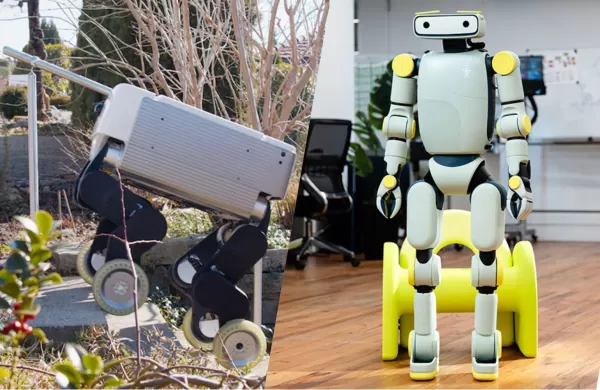
On the left is the RIVR TWO robot, and on the right is Fauna Robotics' Sprout. | Sources: RIVR, Fauna Robotics
In his 2026 letter to shareholders, Amazon.com Inc. CEO Andy Jassy outlined the company's strategic focus on robotics. He emphasized that Amazon is continuously seeking ways to reduce costs and accelerate delivery times, viewing robotics as a pivotal component in achieving these objectives.
“While we remain focused on improving productivity and optimizing inventory, robotics represents a transformative leap forward,” Jassy wrote. “It enables us to deliver faster, lower the costs associated with a wider product selection, and automate tasks that can lead to strain or injury for our employees.”
Amazon currently operates over one million robots across its fulfillment centers, where they assist with stowing, picking, sorting, and internal transportation. Despite this significant deployment, Jassy believes the company is only at the beginning of realizing robotics' full potential.
Amazon plans to invest in rural and rapid deliveries
Last month, Amazon acquired RIVR, a developer of wheeled quadruped robots designed for last-step doorstep delivery.
RIVR first attracted Amazon's attention in 2024 when Jeff Bezos led a $22 million seed investment round through Bezos Expeditions and HongShan. Following the discontinuation of its own Scout delivery robot program in 2022, Amazon appears to be seeking a new robotic solution for final-yard deliveries.
The company is significantly increasing its investment in delivery infrastructure, with a particular focus on expanding its rural network. Jassy announced that Amazon will allocate $4 billion to this expansion. Upon completion, the e-commerce giant aims to deliver an additional one billion packages annually to customers across more than 13,000 ZIP codes, covering an area of 1.2 million square miles (3.1 million square kilometers).
Amazon also plans to launch its "Amazon Now" service—which promises delivery of thousands of items within 20 minutes—in the United States and Europe. The service has already gained traction in markets like India and the United Arab Emirates.
As Amazon accelerates its delivery capabilities on multiple fronts, it is creating opportunities to integrate more robots into its growing logistics network.
The company continues to develop Prime Air, its drone delivery service. Jassy stated that Amazon “aims to serve communities with 30 million customers by the end of this year and projects delivering 500 million packages by the decade's end,” with a target delivery time of 30 minutes.
Will Amazon take another bet on consumer robots?
Jassy noted that Amazon will continue to innovate in robot design, diverse applications, agility, grasping capabilities, and intelligence. The company also plans to leverage its extensive scale and the real-world data from its fulfillment network robots to develop robotics systems for other industrial and consumer clients.
While Jassy did not elaborate on specific designs, Amazon recently acquired humanoid robot developer Fauna Robotics. Fauna's Sprout platform is intended for research, not direct consumer use, but Amazon stated it is taking a “deliberate and measured approach to genuinely understand the potential of personal robots.”
Historically, Amazon has faced challenges in the consumer robotics space. In 2021, it launched Astro, a small robot designed for home security, remote care, and as a virtual assistant. However, Astro has yet to achieve widespread adoption.
Furthermore, Amazon abandoned its acquisition of robotic vacuum maker iRobot in 2024 due to antitrust regulatory concerns.
Editor’s note: Aaron Parness, Director of Applied Science at Amazon Robotics, will deliver the opening keynote on “Building Reliable Robots at Scale” and attend the RBR50 Robotics Innovation Awards Dinner at next month's Robotics Summit & Expo in Boston. Registration is now open.
Related article
 Amazon introduces Alexa for Shopping while pushing Rufus to the background
Amazon has launched Alexa for Shopping, merging its Rufus shopping chatbot with Alexa+ across the app, website, and Echo Show devices.The assistant answers product queries, compares items, tracks prices, and supports shopping reminders. It also handl
Does Mark Zuckerberg Really Believe AI Is for Everyone?
Loading the player…Meta introduced Glimmer this week, an open-weight AI model that anyone can download and run on personal hardware—a sharp contrast to Muse Spark, the company’s more powerful model, which remains locked behind its own APIs. The relea
TechCrunch Disrupt 2026 to showcase leaders from Amazon, Replit and Tether
TechCrunch Disrupt has long been the epicenter of technology’s most critical dialogues, with a legacy spanning over a decade. The speakers who have graced this stage are icons of both the startup era and the current AI revolution, including Zuckerber
Related Special Topic Recommendations
Video creation
Amazon introduces Alexa for Shopping while pushing Rufus to the background
Amazon has launched Alexa for Shopping, merging its Rufus shopping chatbot with Alexa+ across the app, website, and Echo Show devices.The assistant answers product queries, compares items, tracks prices, and supports shopping reminders. It also handl
Does Mark Zuckerberg Really Believe AI Is for Everyone?
Loading the player…Meta introduced Glimmer this week, an open-weight AI model that anyone can download and run on personal hardware—a sharp contrast to Muse Spark, the company’s more powerful model, which remains locked behind its own APIs. The relea
TechCrunch Disrupt 2026 to showcase leaders from Amazon, Replit and Tether
TechCrunch Disrupt has long been the epicenter of technology’s most critical dialogues, with a legacy spanning over a decade. The speakers who have graced this stage are icons of both the startup era and the current AI revolution, including Zuckerber
Related Special Topic Recommendations
Video creation
 AI Short-Form Video Hook Generators for Reels, Shorts, and Product Launch Campaigns
2026 Latest Best AI Short-Form Video Hook Generators for Reels Shorts and Product Launch Campaigns! XIX.AI curates top-rated powerful game-changing tools that deliver must-try results through real-world tests. This weekly updated page offers free vs paid comparison rankings to help you find the perfect solution for boosting content creativity and productivity. Explore now to Unlock your AI edge!
 11 tools
 xix.ai
writing
AI Article Outline Tools for Long Form Writing
xix.ai
writing
AI Article Outline Tools for Long Form Writing
2026 Latest Best Top-Rated AI Article Outline Tools for Long Form Writing! This curated collection features powerful, game-changing tools that deliver accurate, structured outlines with real-world tests to boost writing efficiency significantly. XIX.AI is part of this elite selection. Get a free vs paid comparison to help you choose the perfect tool. Explore now and Unlock your AI edge!
9 tools
xix.ai
chatbot
Best AI Roleplay Chat Apps for Language Practice, Interview Prep, and Daily Fluency
2026 Latest Best Top-rated AI Roleplay Chat Apps for Language Practice, Interview Prep, and Daily Fluency! XIX.AI curates a powerful game-changing collection that offers free vs paid comparison, real-world tests, and updated rankings weekly. These must-try tools help you boost writing skills, overcome fluency challenges, and improve communication efficiency across all daily scenarios. Explore now to discover your perfect tool for language growth!
10 tools
xix.ai
Music composition
AI Stem Separation Tools for Remix Production, Sampling Prep, and Karaoke Masters
2026 Latest Best Top-rated AI Stem Separation Tools Curated for Remix Production, Sampling Prep, and Karaoke Masters. These powerful game-changing tools offer real-world tests to deliver precise audio isolation, boosting productivity significantly. XIX.AI provides a weekly updated free vs paid comparison guide to help you find the must-try solution that suits your needs. Explore now to unlock your AI edge.
8 tools
xix.ai
Data Analysis
AI SQL Copilots for Revenue Dashboards, Funnel Analysis, and Product Metrics
2026 Latest Best AI SQL Copilots Ranked Top-Rated! XIX.AI curates a powerful game-changing collection for weekly updated real-world tests. These must-try tools help you generate accurate revenue dashboards, analyze sales funnels, and track product metrics swiftly, boosting productivity massively. Explore now to Discover your perfect tool for data-driven decision making! 238 characters
9 tools
xix.ai
Music composition
Best AI Melody Writing Tools for Song Drafts
2026 Latest Best Top-Rated AI Melody Writing Tools for Song Drafts! XIX.AI has curated a highly powerful game-changing collection that goes through rigorous real-world tests to deliver the best writing experience. You can find detailed free vs paid comparisons, accurate rankings, and must-try options designed to help you create stunning song drafts effortlessly and boost your creative productivity significantly. Explore now to discover your perfect tool!
8 tools
xix.ai

 Comments (1)
0/500
Comments (1)
0/500
![BenRoberts]()
So Bezos leaves and Jassy immediately goes all-in on robots? 🤖 I guess the next step is fully automated warehouses with zero human workers. Efficiency is great, but what about the jobs? Amazon's track record on worker treatment isn't stellar, so I'm skeptical. Still, the RIVR TWO robot looks kinda cute though 😅
On the left is the RIVR TWO robot, and on the right is Fauna Robotics' Sprout. | Sources: RIVR, Fauna Robotics
In his 2026 letter to shareholders, Amazon.com Inc. CEO Andy Jassy outlined the company's strategic focus on robotics. He emphasized that Amazon is continuously seeking ways to reduce costs and accelerate delivery times, viewing robotics as a pivotal component in achieving these objectives.
“While we remain focused on improving productivity and optimizing inventory, robotics represents a transformative leap forward,” Jassy wrote. “It enables us to deliver faster, lower the costs associated with a wider product selection, and automate tasks that can lead to strain or injury for our employees.”
Amazon currently operates over one million robots across its fulfillment centers, where they assist with stowing, picking, sorting, and internal transportation. Despite this significant deployment, Jassy believes the company is only at the beginning of realizing robotics' full potential.
Amazon plans to invest in rural and rapid deliveries
Last month, Amazon acquired RIVR, a developer of wheeled quadruped robots designed for last-step doorstep delivery.
RIVR first attracted Amazon's attention in 2024 when Jeff Bezos led a $22 million seed investment round through Bezos Expeditions and HongShan. Following the discontinuation of its own Scout delivery robot program in 2022, Amazon appears to be seeking a new robotic solution for final-yard deliveries.
The company is significantly increasing its investment in delivery infrastructure, with a particular focus on expanding its rural network. Jassy announced that Amazon will allocate $4 billion to this expansion. Upon completion, the e-commerce giant aims to deliver an additional one billion packages annually to customers across more than 13,000 ZIP codes, covering an area of 1.2 million square miles (3.1 million square kilometers).
Amazon also plans to launch its "Amazon Now" service—which promises delivery of thousands of items within 20 minutes—in the United States and Europe. The service has already gained traction in markets like India and the United Arab Emirates.
As Amazon accelerates its delivery capabilities on multiple fronts, it is creating opportunities to integrate more robots into its growing logistics network.
The company continues to develop Prime Air, its drone delivery service. Jassy stated that Amazon “aims to serve communities with 30 million customers by the end of this year and projects delivering 500 million packages by the decade's end,” with a target delivery time of 30 minutes.
Will Amazon take another bet on consumer robots?
Jassy noted that Amazon will continue to innovate in robot design, diverse applications, agility, grasping capabilities, and intelligence. The company also plans to leverage its extensive scale and the real-world data from its fulfillment network robots to develop robotics systems for other industrial and consumer clients.
While Jassy did not elaborate on specific designs, Amazon recently acquired humanoid robot developer Fauna Robotics. Fauna's Sprout platform is intended for research, not direct consumer use, but Amazon stated it is taking a “deliberate and measured approach to genuinely understand the potential of personal robots.”
Historically, Amazon has faced challenges in the consumer robotics space. In 2021, it launched Astro, a small robot designed for home security, remote care, and as a virtual assistant. However, Astro has yet to achieve widespread adoption.
Furthermore, Amazon abandoned its acquisition of robotic vacuum maker iRobot in 2024 due to antitrust regulatory concerns.
Editor’s note: Aaron Parness, Director of Applied Science at Amazon Robotics, will deliver the opening keynote on “Building Reliable Robots at Scale” and attend the RBR50 Robotics Innovation Awards Dinner at next month's Robotics Summit & Expo in Boston. Registration is now open.







 Amazon introduces Alexa for Shopping while pushing Rufus to the background
Amazon has launched Alexa for Shopping, merging its Rufus shopping chatbot with Alexa+ across the app, website, and Echo Show devices.The assistant answers product queries, compares items, tracks prices, and supports shopping reminders. It also handl
Amazon introduces Alexa for Shopping while pushing Rufus to the background
Amazon has launched Alexa for Shopping, merging its Rufus shopping chatbot with Alexa+ across the app, website, and Echo Show devices.The assistant answers product queries, compares items, tracks prices, and supports shopping reminders. It also handl
 Does Mark Zuckerberg Really Believe AI Is for Everyone?
Loading the player…Meta introduced Glimmer this week, an open-weight AI model that anyone can download and run on personal hardware—a sharp contrast to Muse Spark, the company’s more powerful model, which remains locked behind its own APIs. The relea
Does Mark Zuckerberg Really Believe AI Is for Everyone?
Loading the player…Meta introduced Glimmer this week, an open-weight AI model that anyone can download and run on personal hardware—a sharp contrast to Muse Spark, the company’s more powerful model, which remains locked behind its own APIs. The relea
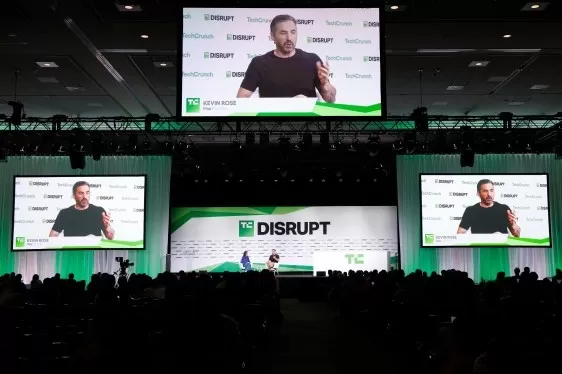 TechCrunch Disrupt 2026 to showcase leaders from Amazon, Replit and Tether
TechCrunch Disrupt has long been the epicenter of technology’s most critical dialogues, with a legacy spanning over a decade. The speakers who have graced this stage are icons of both the startup era and the current AI revolution, including Zuckerber
TechCrunch Disrupt 2026 to showcase leaders from Amazon, Replit and Tether
TechCrunch Disrupt has long been the epicenter of technology’s most critical dialogues, with a legacy spanning over a decade. The speakers who have graced this stage are icons of both the startup era and the current AI revolution, including Zuckerber

2026 Latest Best AI Short-Form Video Hook Generators for Reels Shorts and Product Launch Campaigns! XIX.AI curates top-rated powerful game-changing tools that deliver must-try results through real-world tests. This weekly updated page offers free vs paid comparison rankings to help you find the perfect solution for boosting content creativity and productivity. Explore now to Unlock your AI edge!
11 tools
xix.ai

2026 Latest Best Top-Rated AI Article Outline Tools for Long Form Writing! This curated collection features powerful, game-changing tools that deliver accurate, structured outlines with real-world tests to boost writing efficiency significantly. XIX.AI is part of this elite selection. Get a free vs paid comparison to help you choose the perfect tool. Explore now and Unlock your AI edge!
9 tools
xix.ai

2026 Latest Best Top-rated AI Roleplay Chat Apps for Language Practice, Interview Prep, and Daily Fluency! XIX.AI curates a powerful game-changing collection that offers free vs paid comparison, real-world tests, and updated rankings weekly. These must-try tools help you boost writing skills, overcome fluency challenges, and improve communication efficiency across all daily scenarios. Explore now to discover your perfect tool for language growth!
10 tools
xix.ai

2026 Latest Best Top-rated AI Stem Separation Tools Curated for Remix Production, Sampling Prep, and Karaoke Masters. These powerful game-changing tools offer real-world tests to deliver precise audio isolation, boosting productivity significantly. XIX.AI provides a weekly updated free vs paid comparison guide to help you find the must-try solution that suits your needs. Explore now to unlock your AI edge.
8 tools
xix.ai

2026 Latest Best AI SQL Copilots Ranked Top-Rated! XIX.AI curates a powerful game-changing collection for weekly updated real-world tests. These must-try tools help you generate accurate revenue dashboards, analyze sales funnels, and track product metrics swiftly, boosting productivity massively. Explore now to Discover your perfect tool for data-driven decision making! 238 characters
9 tools
xix.ai

2026 Latest Best Top-Rated AI Melody Writing Tools for Song Drafts! XIX.AI has curated a highly powerful game-changing collection that goes through rigorous real-world tests to deliver the best writing experience. You can find detailed free vs paid comparisons, accurate rankings, and must-try options designed to help you create stunning song drafts effortlessly and boost your creative productivity significantly. Explore now to discover your perfect tool!
8 tools
xix.ai

So Bezos leaves and Jassy immediately goes all-in on robots? 🤖 I guess the next step is fully automated warehouses with zero human workers. Efficiency is great, but what about the jobs? Amazon's track record on worker treatment isn't stellar, so I'm skeptical. Still, the RIVR TWO robot looks kinda cute though 😅












