


 Home
HomeTrace.Space Secures Seed Funding to Boost AI-Driven Product Design

In the world of modern product engineering, creating super accurate digital simulations is a big deal. It lets engineers whip up prototypes and get a feel for how materials will perform in the real world. Usually, you'd see big names like IBM and Dassault with their legacy software doing the heavy lifting. But now, startups are stepping up their game, and they're using generative AI to shake things up.
Take Trace.Space, for instance, a fresh face from Riga, Latvia. This AI-powered platform is all about helping engineers craft industrial products. With Western manufacturing feeling the heat from its speedy Asian rivals, there's a mad dash to build these platforms and speed up product development. We've seen new players like Luminary and Dessia Technologies jump into the fray, both using AI to automate engineering processes.
Trace.Space zeroes in on the development of electric and autonomous vehicles, satellites, robots, semiconductors, and medical devices. While traditional solutions often stick to "on premise" setups, Trace.Space goes the modern route with cloud computing. It's also great for letting manufacturers and suppliers work together on shared product requirements, cutting down on response times.
Janis Vavere, the co-founder and CEO of Trace.Space, chatted with TechCrunch about it: “Every company out there building complex, regulated products in automotive, medical, aerospace, and more, is dealing with the headache of these products getting more and more complicated to design. The old tools and processes are just not cutting it anymore. IBM’s tools, which were designed back in the late '80s, are still around. They're a desktop client that you need to install on every computer.”
After working on Jama Software, a newer design platform, Vavere saw the need for something more advanced: “It’s the perfect time to mix modern software architectures and UIs with AI, and use them in these industries. Companies are hungry for something better right now.”
And Trace.Space isn't just slapping an AI label on things, Vavere explained: “We use AI models like Llama and some deterministic AI libraries, plus bits of OpenAI’s LLM.”
Before Trace.Space, Vavere was a sales leader at Jama Software and spent two years leading sales at Lokalise, a translation management software company. His co-founder Mikus Krams worked in operations at Lokalise and the software development startup Chili Piper. The third co-founder, Karlis Broders, had experience implementing Jama and Polarion in large-scale projects.
Trace.Space has just nabbed $4 million in seed funding, with Cherry Ventures leading the charge. They were joined by Riga-based Outlast Fund, and earlier investors Nebular, Fiedler, and Change Ventures.
Related article
 Figma adds AI assistant to collaborative canvas
In recent months, Figma partnered with OpenAI and Anthropic to integrate support for AI CLI tools such as Claude Code and Codex, enabling users to use those coding environments alongside its design software. Now, Figma is embedding its own AI capabil
Dessn secures $6M for its production-focused design tool
In recent years, AI has boosted the popularity of new design tools like Visual Electric (owned by Perplexity), Weavy (owned by Figma), Flora, and Krea. These tools promise that product teams with designers can quickly iterate through variations using
Teenage Engineering Unveils Plastic PC Case at No Cost
Teenage Engineering is renowned for its electronic instruments and sleek audio gear. Now, the company has unveiled a new computer case, the Computer-2. It follows the 2021 release of the $149 Computer-1 and is being offered for free, which Teenage En
Related Special Topic Recommendations
Design & Art
Figma adds AI assistant to collaborative canvas
In recent months, Figma partnered with OpenAI and Anthropic to integrate support for AI CLI tools such as Claude Code and Codex, enabling users to use those coding environments alongside its design software. Now, Figma is embedding its own AI capabil
Dessn secures $6M for its production-focused design tool
In recent years, AI has boosted the popularity of new design tools like Visual Electric (owned by Perplexity), Weavy (owned by Figma), Flora, and Krea. These tools promise that product teams with designers can quickly iterate through variations using
Teenage Engineering Unveils Plastic PC Case at No Cost
Teenage Engineering is renowned for its electronic instruments and sleek audio gear. Now, the company has unveiled a new computer case, the Computer-2. It follows the 2021 release of the $149 Computer-1 and is being offered for free, which Teenage En
Related Special Topic Recommendations
Design & Art
 Top AI Illustration Tools: Create Editorial Scenes and Cover Art Faster
2026 Latest Top-rated AI Illustration Tools: Our curated list features the best powerfully designed tools for creating stunning editorial scenes and eye-catching cover art quickly. Each option has gone through rigorous real-world tests, offering a free vs paid comparison to help you find the perfect match for your workflow. Try these must-try solutions today to unlock your AI edge and boost your creative productivity. Explore now at XIX.AI.
 10 tools
 xix.ai
Education and Learning
Top AI Tutors for Exam Prep: Practice Math, Science, and English
xix.ai
Education and Learning
Top AI Tutors for Exam Prep: Practice Math, Science, and English
2026 Latest Top-Rated Best AI Tutors for Exam Prep are here on XIX.AI! Our curated list features powerful game-changing tools that offer free vs paid comparison, real-world tests, and weekly updated rankings. They help boost your writing efficiency, simplify complex topic learning, and unlock your academic potential. Explore now to Discover your perfect exam prep tool and Start creating today to Unlock your AI edge!
10 tools
xix.ai
Finance
AI Budget Planning Tools for Personal Money Management
2026 Latest Best Top-Rated AI Budget Planning Tools for Personal Money Management are here on XIX.AI! This curated collection features powerful, game-changing solutions that help you conduct real-world tests, understand spending habits, and create personalized plans to boost productivity. Enjoy a free vs paid comparison along with detailed rankings. Must-try tools designed to simplify money management and unlock your AI edge. Explore now!
11 tools
xix.ai
Health & Wellness
AI Sleep Tracking Assistants: Improve Recovery with Better Bedtime Habits
2026 Latest Best Top-Rated AI Sleep Tracking Assistants curated for ultimate recovery. This fully updated weekly guide features powerful tools that deliver real-world tests, free vs paid comparison, and detailed rankings to help you find the must-try solution that boosts sleep quality and supports better bedtime habits. Explore now at XIX.AI to Unlock your AI edge.
10 tools
xix.ai
Data Analysis
AI SQL Copilots for Product and Revenue Analytics
2026 Latest Best Top-Rated AI SQL Copilots for Product and Revenue Analytics! XIX.AI has curated a powerful, game-changing collection of must-try tools that undergo real-world tests through weekly updated rankings. These tools help users boost productivity significantly by accelerating data analysis, streamlining complex queries, and generating accurate insights to drive smarter business decisions. Explore now to Discover your perfect tool for unlocking your AI edge!
14 tools
xix.ai
Education and Learning
Best AI Homework Helpers That Teach: Learn Concepts, Not Just Answers
2026 Latest Best Top-Rated AI Homework Helpers That Teach Core Concepts Not Just Answers Powerful Tools for Students Must-Try Curated List Weekly Updated Free vs Paid Comparison Real-World Tests Accurate Rankings to Help You Unlock Your Full Learning Potential Explore now to Discover your perfect tool for smarter studying.
10 tools
xix.ai

 Comments (34)
0/500
Comments (34)
0/500
![WalterHarris]()
Interessant, wie Startups jetzt auch in die Simulationssoftware einsteigen. Die etablierten Anbieter wie Dassault haben ja oft so komplexe und teure Tools. Wenn Trace.Space das mit KI wirklich vereinfachen und günstiger machen kann, könnte das für viele kleinere Ingenieurbüros ein Gamechanger sein. Bin gespannt, ob sie ihr Versprechen halten können. 🧐
![WillieRodriguez]()
Trace.Space a l'air de vouloir bousculer les géants comme Dassault avec des simulations basées sur l'IA 😮. C'est super intéressant de voir une approche nouvelle dans un domaine traditionnellement dominé par des solutions très chères et complexes. J'espère que cela rendra ces outils de conception plus accessibles aux petites équipes !
![HarperJones]()
AI로 제품 디자인을 혁신한다는 발상은 정말 멋지네요! 🎨 하지만 스타트업이 IBM 같은 대기업들과 경쟁할 수 있을지 궁굼해요. 시드 펀딩은 좋은 시작이지만, 정말 혁신적인 기술이 필요할 것 같아요!
![SamuelAdams]()
Super cool to see Trace.Space pushing AI in product design! 🛠️ Digital simulations are game-changers, but I wonder if smaller players like them can really take on giants like IBM. Exciting times!
![RalphGarcia]()
Trace.Spaceの資金調達のニュースはエキサイティングですね!AIが製品設計を強化するために使われるのは素晴らしいです。デジタルシミュレーションはプロトタイプ作成に非常に役立ちそうです。次に何が出てくるのか楽しみです!🚀
![DavidCarter]()
Trace.Space's funding news is exciting! It's great to see AI being used to enhance product design. The digital simulations sound super helpful for prototyping. Can't wait to see what they come up with next! 🚀
In the world of modern product engineering, creating super accurate digital simulations is a big deal. It lets engineers whip up prototypes and get a feel for how materials will perform in the real world. Usually, you'd see big names like IBM and Dassault with their legacy software doing the heavy lifting. But now, startups are stepping up their game, and they're using generative AI to shake things up.
Take Trace.Space, for instance, a fresh face from Riga, Latvia. This AI-powered platform is all about helping engineers craft industrial products. With Western manufacturing feeling the heat from its speedy Asian rivals, there's a mad dash to build these platforms and speed up product development. We've seen new players like Luminary and Dessia Technologies jump into the fray, both using AI to automate engineering processes.
Trace.Space zeroes in on the development of electric and autonomous vehicles, satellites, robots, semiconductors, and medical devices. While traditional solutions often stick to "on premise" setups, Trace.Space goes the modern route with cloud computing. It's also great for letting manufacturers and suppliers work together on shared product requirements, cutting down on response times.
Janis Vavere, the co-founder and CEO of Trace.Space, chatted with TechCrunch about it: “Every company out there building complex, regulated products in automotive, medical, aerospace, and more, is dealing with the headache of these products getting more and more complicated to design. The old tools and processes are just not cutting it anymore. IBM’s tools, which were designed back in the late '80s, are still around. They're a desktop client that you need to install on every computer.”
After working on Jama Software, a newer design platform, Vavere saw the need for something more advanced: “It’s the perfect time to mix modern software architectures and UIs with AI, and use them in these industries. Companies are hungry for something better right now.”
And Trace.Space isn't just slapping an AI label on things, Vavere explained: “We use AI models like Llama and some deterministic AI libraries, plus bits of OpenAI’s LLM.”
Before Trace.Space, Vavere was a sales leader at Jama Software and spent two years leading sales at Lokalise, a translation management software company. His co-founder Mikus Krams worked in operations at Lokalise and the software development startup Chili Piper. The third co-founder, Karlis Broders, had experience implementing Jama and Polarion in large-scale projects.
Trace.Space has just nabbed $4 million in seed funding, with Cherry Ventures leading the charge. They were joined by Riga-based Outlast Fund, and earlier investors Nebular, Fiedler, and Change Ventures.








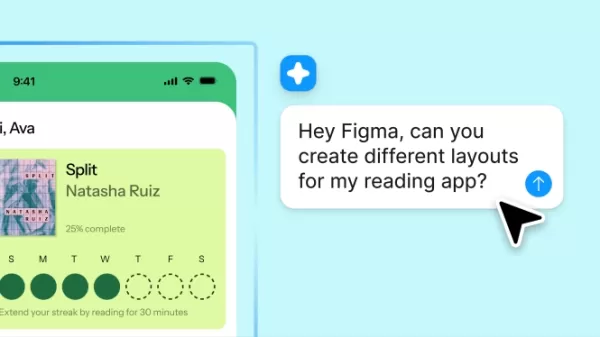 Figma adds AI assistant to collaborative canvas
In recent months, Figma partnered with OpenAI and Anthropic to integrate support for AI CLI tools such as Claude Code and Codex, enabling users to use those coding environments alongside its design software. Now, Figma is embedding its own AI capabil
Figma adds AI assistant to collaborative canvas
In recent months, Figma partnered with OpenAI and Anthropic to integrate support for AI CLI tools such as Claude Code and Codex, enabling users to use those coding environments alongside its design software. Now, Figma is embedding its own AI capabil
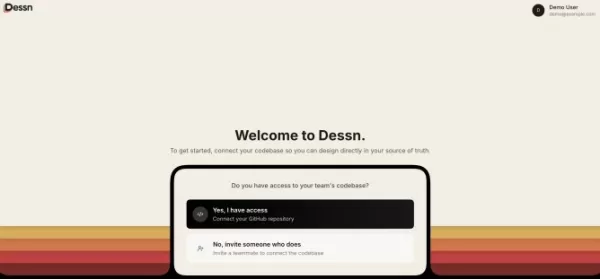 Dessn secures $6M for its production-focused design tool
In recent years, AI has boosted the popularity of new design tools like Visual Electric (owned by Perplexity), Weavy (owned by Figma), Flora, and Krea. These tools promise that product teams with designers can quickly iterate through variations using
Dessn secures $6M for its production-focused design tool
In recent years, AI has boosted the popularity of new design tools like Visual Electric (owned by Perplexity), Weavy (owned by Figma), Flora, and Krea. These tools promise that product teams with designers can quickly iterate through variations using
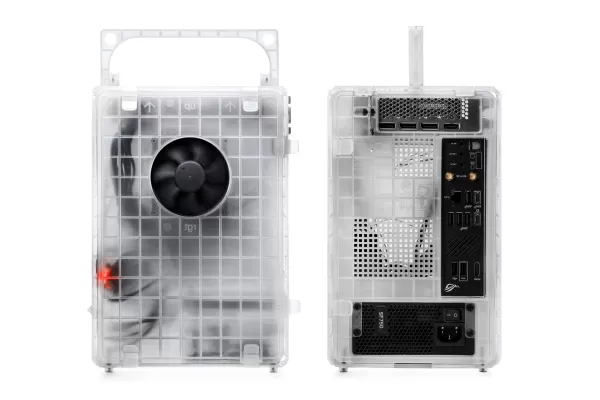 Teenage Engineering Unveils Plastic PC Case at No Cost
Teenage Engineering is renowned for its electronic instruments and sleek audio gear. Now, the company has unveiled a new computer case, the Computer-2. It follows the 2021 release of the $149 Computer-1 and is being offered for free, which Teenage En
Teenage Engineering Unveils Plastic PC Case at No Cost
Teenage Engineering is renowned for its electronic instruments and sleek audio gear. Now, the company has unveiled a new computer case, the Computer-2. It follows the 2021 release of the $149 Computer-1 and is being offered for free, which Teenage En

2026 Latest Top-rated AI Illustration Tools: Our curated list features the best powerfully designed tools for creating stunning editorial scenes and eye-catching cover art quickly. Each option has gone through rigorous real-world tests, offering a free vs paid comparison to help you find the perfect match for your workflow. Try these must-try solutions today to unlock your AI edge and boost your creative productivity. Explore now at XIX.AI.
10 tools
xix.ai

2026 Latest Top-Rated Best AI Tutors for Exam Prep are here on XIX.AI! Our curated list features powerful game-changing tools that offer free vs paid comparison, real-world tests, and weekly updated rankings. They help boost your writing efficiency, simplify complex topic learning, and unlock your academic potential. Explore now to Discover your perfect exam prep tool and Start creating today to Unlock your AI edge!
10 tools
xix.ai

2026 Latest Best Top-Rated AI Budget Planning Tools for Personal Money Management are here on XIX.AI! This curated collection features powerful, game-changing solutions that help you conduct real-world tests, understand spending habits, and create personalized plans to boost productivity. Enjoy a free vs paid comparison along with detailed rankings. Must-try tools designed to simplify money management and unlock your AI edge. Explore now!
11 tools
xix.ai

2026 Latest Best Top-Rated AI Sleep Tracking Assistants curated for ultimate recovery. This fully updated weekly guide features powerful tools that deliver real-world tests, free vs paid comparison, and detailed rankings to help you find the must-try solution that boosts sleep quality and supports better bedtime habits. Explore now at XIX.AI to Unlock your AI edge.
10 tools
xix.ai

2026 Latest Best Top-Rated AI SQL Copilots for Product and Revenue Analytics! XIX.AI has curated a powerful, game-changing collection of must-try tools that undergo real-world tests through weekly updated rankings. These tools help users boost productivity significantly by accelerating data analysis, streamlining complex queries, and generating accurate insights to drive smarter business decisions. Explore now to Discover your perfect tool for unlocking your AI edge!
14 tools
xix.ai

2026 Latest Best Top-Rated AI Homework Helpers That Teach Core Concepts Not Just Answers Powerful Tools for Students Must-Try Curated List Weekly Updated Free vs Paid Comparison Real-World Tests Accurate Rankings to Help You Unlock Your Full Learning Potential Explore now to Discover your perfect tool for smarter studying.
10 tools
xix.ai

Interessant, wie Startups jetzt auch in die Simulationssoftware einsteigen. Die etablierten Anbieter wie Dassault haben ja oft so komplexe und teure Tools. Wenn Trace.Space das mit KI wirklich vereinfachen und günstiger machen kann, könnte das für viele kleinere Ingenieurbüros ein Gamechanger sein. Bin gespannt, ob sie ihr Versprechen halten können. 🧐
Trace.Space a l'air de vouloir bousculer les géants comme Dassault avec des simulations basées sur l'IA 😮. C'est super intéressant de voir une approche nouvelle dans un domaine traditionnellement dominé par des solutions très chères et complexes. J'espère que cela rendra ces outils de conception plus accessibles aux petites équipes !
AI로 제품 디자인을 혁신한다는 발상은 정말 멋지네요! 🎨 하지만 스타트업이 IBM 같은 대기업들과 경쟁할 수 있을지 궁굼해요. 시드 펀딩은 좋은 시작이지만, 정말 혁신적인 기술이 필요할 것 같아요!
Super cool to see Trace.Space pushing AI in product design! 🛠️ Digital simulations are game-changers, but I wonder if smaller players like them can really take on giants like IBM. Exciting times!
Trace.Spaceの資金調達のニュースはエキサイティングですね!AIが製品設計を強化するために使われるのは素晴らしいです。デジタルシミュレーションはプロトタイプ作成に非常に役立ちそうです。次に何が出てくるのか楽しみです!🚀
Trace.Space's funding news is exciting! It's great to see AI being used to enhance product design. The digital simulations sound super helpful for prototyping. Can't wait to see what they come up with next! 🚀












