


 Home
HomeDessn secures $6M for its production-focused design tool
In recent years, AI has boosted the popularity of new design tools like Visual Electric (owned by Perplexity), Weavy (owned by Figma), Flora, and Krea. These tools promise that product teams with designers can quickly iterate through variations using AI.
A fresh design startup called Dessn, now backed by $6 million in funding, argues that design tools which don’t let you work directly on your codebase can limit your ability to imagine new workflows and features.
That’s why Dessn built technology that lets startups run their codebases in the cloud with zero setup cost. It achieves this by abstracting away the dependencies that normally require a codebase to run locally. Because Dessn operates in a production environment, designers can hand off their work to developers more easily, the startup says.
Current customers include teams at health company Color, voice AI company Wispr, and fintech Mercury.
Founded by Gabriella Hachem and Nim Cheema, the company today announced its $6 million funding round was led by Connect Ventures, with participation from Betaworks and N49P.
“When we started the company two years ago, our whole thesis was that code will become commoditized — and in a world where code is incredibly cheap, you’ll get much more software, making design a key differentiator,” Cheema told TechCrunch over a call.
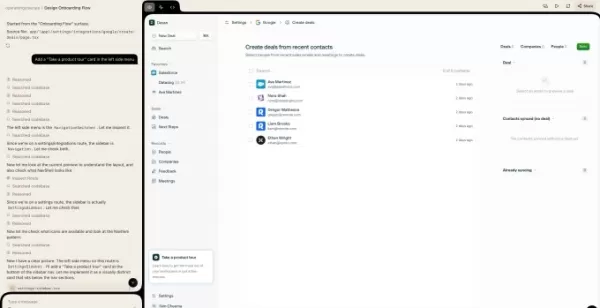
Image Credits: DessnImage Credits:Dessn
The design tool isn’t built for ground‑up ideation like Lovable or v0 by Vercel, where you can explore new ideas from scratch. Instead, Dessn says it’s only useful for teams that already have a codebase and want to iterate on it.
Cheema noted that the hardest part for Dessn was building infrastructure capable of running codebases with different backend architectures without requiring a developer to get started.
Because of the low setup cost, companies that adopt Dessn don’t have to abandon their current design tool right away.
“What’s great about Dessn is that we don’t create switching costs. You don’t have to drop everything in Figma and move to Dessn for everything. You can come in, use it for one project, then another. That’s what we’re seeing happen. And it’s really easy to share a Dessn link, which isn’t possible with Cursor or Claude Code,” Hachem said.
Like other AI tools, Dessn lets you prompt your way into creating new designs. However, some designers might prefer old‑school toolbars for moving elements around. But the startup doesn’t think that’s necessary.
Hachem said she and her co‑founder are token maximalists — people who would spend more tokens to reach a result even if it costs more — and would rather generate a toolbar for a specific context than keep a static one.
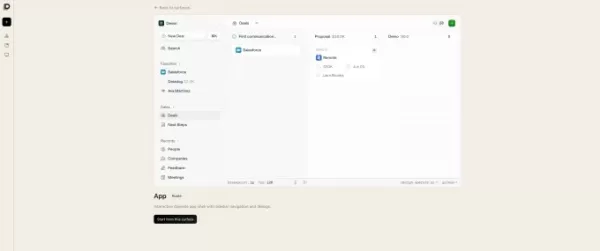
Image Credits: DessnImage Credits:Dessn
In the age of AI, tools often try to work together to move data from one place to another easily as part of task automation.
Currently, Dessn has no integrations. But it plans to integrate tools like Slack, where you can call up Dessn and ask it to create prototypes based on ongoing discussions. Another integration it sees as potentially useful is a meeting notetaker like Granola, which can feed discussions from a meeting into Dessn to generate designs. However, the company says the one integration it doesn’t want is Figma, because that would pull teams away from production and goes against Dessn’s ethos.
Dessn lets you compile one repository for free and try five prompts per week so clients can get a taste. It plans to start at $39 per user per month, which unlocks more prompt limits, and depending on the tier, public links and the option to opt out of AI training.
Betaworks partner (and former TechCrunch editor) Jordan Crook said that Dessn is the tool Figma would have built if it started today.
“Dessn is the only product that offers perfect fidelity within the code base/production — rather than trying to design and then turn it into code, or prompt via a design system. Plus, Dessn is built to be a truly delightful and almost emotional experience for users, not just a utility,” Crook told TechCrunch over email.
The company currently has four people. While it intends to stay small, it plans to add a few more to the team.
Related article
 Era raises $11M to develop a software platform for AI gadgets
In early April, Era hosted a meetup in New York for artists who had received its developer kit. These artists showcased the mini gadgets they had built, such as a souvenir that shares facts and jokes about France, a phone-like device that monitors yo
Figma adds AI assistant to collaborative canvas
In recent months, Figma partnered with OpenAI and Anthropic to integrate support for AI CLI tools such as Claude Code and Codex, enabling users to use those coding environments alongside its design software. Now, Figma is embedding its own AI capabil
Teenage Engineering Unveils Plastic PC Case at No Cost
Teenage Engineering is renowned for its electronic instruments and sleek audio gear. Now, the company has unveiled a new computer case, the Computer-2. It follows the 2021 release of the $149 Computer-1 and is being offered for free, which Teenage En
Related Special Topic Recommendations
writing
Era raises $11M to develop a software platform for AI gadgets
In early April, Era hosted a meetup in New York for artists who had received its developer kit. These artists showcased the mini gadgets they had built, such as a souvenir that shares facts and jokes about France, a phone-like device that monitors yo
Figma adds AI assistant to collaborative canvas
In recent months, Figma partnered with OpenAI and Anthropic to integrate support for AI CLI tools such as Claude Code and Codex, enabling users to use those coding environments alongside its design software. Now, Figma is embedding its own AI capabil
Teenage Engineering Unveils Plastic PC Case at No Cost
Teenage Engineering is renowned for its electronic instruments and sleek audio gear. Now, the company has unveiled a new computer case, the Computer-2. It follows the 2021 release of the $149 Computer-1 and is being offered for free, which Teenage En
Related Special Topic Recommendations
writing
 AI Article Outline Tools for Long Form Writing
2026 Latest Best Top-Rated AI Article Outline Tools for Long Form Writing! This curated collection features powerful, game-changing tools that deliver accurate, structured outlines with real-world tests to boost writing efficiency significantly. XIX.AI is part of this elite selection. Get a free vs paid comparison to help you choose the perfect tool. Explore now and Unlock your AI edge!
 9 tools
 xix.ai
chatbot
Best AI Roleplay Chat Apps for Language Practice, Interview Prep, and Daily Fluency
xix.ai
chatbot
Best AI Roleplay Chat Apps for Language Practice, Interview Prep, and Daily Fluency
2026 Latest Best Top-rated AI Roleplay Chat Apps for Language Practice, Interview Prep, and Daily Fluency! XIX.AI curates a powerful game-changing collection that offers free vs paid comparison, real-world tests, and updated rankings weekly. These must-try tools help you boost writing skills, overcome fluency challenges, and improve communication efficiency across all daily scenarios. Explore now to discover your perfect tool for language growth!
10 tools
xix.ai
Music composition
AI Stem Separation Tools for Remix Production, Sampling Prep, and Karaoke Masters
2026 Latest Best Top-rated AI Stem Separation Tools Curated for Remix Production, Sampling Prep, and Karaoke Masters. These powerful game-changing tools offer real-world tests to deliver precise audio isolation, boosting productivity significantly. XIX.AI provides a weekly updated free vs paid comparison guide to help you find the must-try solution that suits your needs. Explore now to unlock your AI edge.
8 tools
xix.ai
Data Analysis
AI SQL Copilots for Revenue Dashboards, Funnel Analysis, and Product Metrics
2026 Latest Best AI SQL Copilots Ranked Top-Rated! XIX.AI curates a powerful game-changing collection for weekly updated real-world tests. These must-try tools help you generate accurate revenue dashboards, analyze sales funnels, and track product metrics swiftly, boosting productivity massively. Explore now to Discover your perfect tool for data-driven decision making! 238 characters
9 tools
xix.ai
Music composition
Best AI Melody Writing Tools for Song Drafts
2026 Latest Best Top-Rated AI Melody Writing Tools for Song Drafts! XIX.AI has curated a highly powerful game-changing collection that goes through rigorous real-world tests to deliver the best writing experience. You can find detailed free vs paid comparisons, accurate rankings, and must-try options designed to help you create stunning song drafts effortlessly and boost your creative productivity significantly. Explore now to discover your perfect tool!
8 tools
xix.ai
chatbot
Best AI Conversation Trainer Tools for Interview Practice
2026 Latest Best Top-rated AI Conversation Trainer Tools for Interview Practice are here on XIX.AI! This curated collection features powerful, game-changing tools that go through rigorous real-world tests to deliver accurate feedback. You’ll find a free vs paid comparison and detailed rankings to help you choose the must-try option that boosts your confidence and skills. Explore now to Discover your perfect tool for interview success!
12 tools
xix.ai

 Comments (0)
0/500
Comments (0)
0/500
In recent years, AI has boosted the popularity of new design tools like Visual Electric (owned by Perplexity), Weavy (owned by Figma), Flora, and Krea. These tools promise that product teams with designers can quickly iterate through variations using AI.
A fresh design startup called Dessn, now backed by $6 million in funding, argues that design tools which don’t let you work directly on your codebase can limit your ability to imagine new workflows and features.
That’s why Dessn built technology that lets startups run their codebases in the cloud with zero setup cost. It achieves this by abstracting away the dependencies that normally require a codebase to run locally. Because Dessn operates in a production environment, designers can hand off their work to developers more easily, the startup says.
Current customers include teams at health company Color, voice AI company Wispr, and fintech Mercury.
Founded by Gabriella Hachem and Nim Cheema, the company today announced its $6 million funding round was led by Connect Ventures, with participation from Betaworks and N49P.
“When we started the company two years ago, our whole thesis was that code will become commoditized — and in a world where code is incredibly cheap, you’ll get much more software, making design a key differentiator,” Cheema told TechCrunch over a call.
Image Credits: DessnImage Credits:Dessn
The design tool isn’t built for ground‑up ideation like Lovable or v0 by Vercel, where you can explore new ideas from scratch. Instead, Dessn says it’s only useful for teams that already have a codebase and want to iterate on it.
Cheema noted that the hardest part for Dessn was building infrastructure capable of running codebases with different backend architectures without requiring a developer to get started.
Because of the low setup cost, companies that adopt Dessn don’t have to abandon their current design tool right away.
“What’s great about Dessn is that we don’t create switching costs. You don’t have to drop everything in Figma and move to Dessn for everything. You can come in, use it for one project, then another. That’s what we’re seeing happen. And it’s really easy to share a Dessn link, which isn’t possible with Cursor or Claude Code,” Hachem said.
Like other AI tools, Dessn lets you prompt your way into creating new designs. However, some designers might prefer old‑school toolbars for moving elements around. But the startup doesn’t think that’s necessary.
Hachem said she and her co‑founder are token maximalists — people who would spend more tokens to reach a result even if it costs more — and would rather generate a toolbar for a specific context than keep a static one.
Image Credits: DessnImage Credits:Dessn
In the age of AI, tools often try to work together to move data from one place to another easily as part of task automation.
Currently, Dessn has no integrations. But it plans to integrate tools like Slack, where you can call up Dessn and ask it to create prototypes based on ongoing discussions. Another integration it sees as potentially useful is a meeting notetaker like Granola, which can feed discussions from a meeting into Dessn to generate designs. However, the company says the one integration it doesn’t want is Figma, because that would pull teams away from production and goes against Dessn’s ethos.
Dessn lets you compile one repository for free and try five prompts per week so clients can get a taste. It plans to start at $39 per user per month, which unlocks more prompt limits, and depending on the tier, public links and the option to opt out of AI training.
Betaworks partner (and former TechCrunch editor) Jordan Crook said that Dessn is the tool Figma would have built if it started today.
“Dessn is the only product that offers perfect fidelity within the code base/production — rather than trying to design and then turn it into code, or prompt via a design system. Plus, Dessn is built to be a truly delightful and almost emotional experience for users, not just a utility,” Crook told TechCrunch over email.
The company currently has four people. While it intends to stay small, it plans to add a few more to the team.








 Era raises $11M to develop a software platform for AI gadgets
In early April, Era hosted a meetup in New York for artists who had received its developer kit. These artists showcased the mini gadgets they had built, such as a souvenir that shares facts and jokes about France, a phone-like device that monitors yo
Era raises $11M to develop a software platform for AI gadgets
In early April, Era hosted a meetup in New York for artists who had received its developer kit. These artists showcased the mini gadgets they had built, such as a souvenir that shares facts and jokes about France, a phone-like device that monitors yo
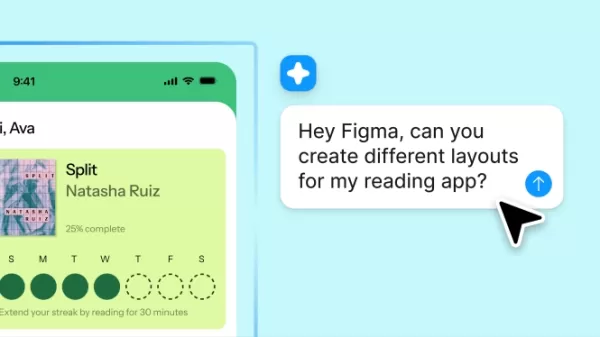 Figma adds AI assistant to collaborative canvas
In recent months, Figma partnered with OpenAI and Anthropic to integrate support for AI CLI tools such as Claude Code and Codex, enabling users to use those coding environments alongside its design software. Now, Figma is embedding its own AI capabil
Figma adds AI assistant to collaborative canvas
In recent months, Figma partnered with OpenAI and Anthropic to integrate support for AI CLI tools such as Claude Code and Codex, enabling users to use those coding environments alongside its design software. Now, Figma is embedding its own AI capabil
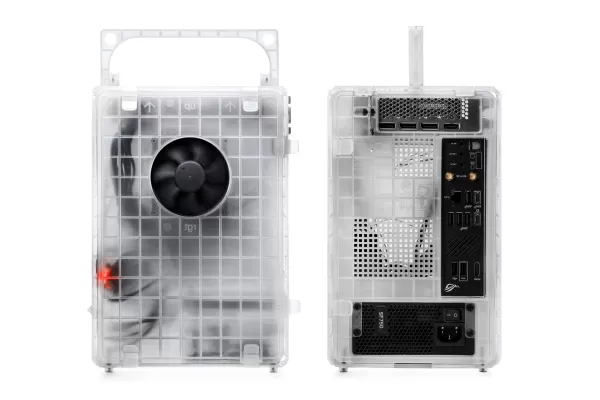 Teenage Engineering Unveils Plastic PC Case at No Cost
Teenage Engineering is renowned for its electronic instruments and sleek audio gear. Now, the company has unveiled a new computer case, the Computer-2. It follows the 2021 release of the $149 Computer-1 and is being offered for free, which Teenage En
Teenage Engineering Unveils Plastic PC Case at No Cost
Teenage Engineering is renowned for its electronic instruments and sleek audio gear. Now, the company has unveiled a new computer case, the Computer-2. It follows the 2021 release of the $149 Computer-1 and is being offered for free, which Teenage En

2026 Latest Best Top-Rated AI Article Outline Tools for Long Form Writing! This curated collection features powerful, game-changing tools that deliver accurate, structured outlines with real-world tests to boost writing efficiency significantly. XIX.AI is part of this elite selection. Get a free vs paid comparison to help you choose the perfect tool. Explore now and Unlock your AI edge!
9 tools
xix.ai

2026 Latest Best Top-rated AI Roleplay Chat Apps for Language Practice, Interview Prep, and Daily Fluency! XIX.AI curates a powerful game-changing collection that offers free vs paid comparison, real-world tests, and updated rankings weekly. These must-try tools help you boost writing skills, overcome fluency challenges, and improve communication efficiency across all daily scenarios. Explore now to discover your perfect tool for language growth!
10 tools
xix.ai

2026 Latest Best Top-rated AI Stem Separation Tools Curated for Remix Production, Sampling Prep, and Karaoke Masters. These powerful game-changing tools offer real-world tests to deliver precise audio isolation, boosting productivity significantly. XIX.AI provides a weekly updated free vs paid comparison guide to help you find the must-try solution that suits your needs. Explore now to unlock your AI edge.
8 tools
xix.ai

2026 Latest Best AI SQL Copilots Ranked Top-Rated! XIX.AI curates a powerful game-changing collection for weekly updated real-world tests. These must-try tools help you generate accurate revenue dashboards, analyze sales funnels, and track product metrics swiftly, boosting productivity massively. Explore now to Discover your perfect tool for data-driven decision making! 238 characters
9 tools
xix.ai

2026 Latest Best Top-Rated AI Melody Writing Tools for Song Drafts! XIX.AI has curated a highly powerful game-changing collection that goes through rigorous real-world tests to deliver the best writing experience. You can find detailed free vs paid comparisons, accurate rankings, and must-try options designed to help you create stunning song drafts effortlessly and boost your creative productivity significantly. Explore now to discover your perfect tool!
8 tools
xix.ai

2026 Latest Best Top-rated AI Conversation Trainer Tools for Interview Practice are here on XIX.AI! This curated collection features powerful, game-changing tools that go through rigorous real-world tests to deliver accurate feedback. You’ll find a free vs paid comparison and detailed rankings to help you choose the must-try option that boosts your confidence and skills. Explore now to Discover your perfect tool for interview success!
12 tools
xix.ai












