


 Home
HomeOpenAI's Sam Altman 'Born for This Moment,' Biographer Keach Hagey Says

In "The Optimist: Sam Altman, OpenAI, and the Race to Invent the Future," Wall Street Journal reporter Keach Hagey explores today's AI fixation through one of its central characters: Sam Altman, co-founder and CEO of OpenAI.
Hagey traces Altman's journey from his Midwestern upbringing through his early work at startup Loopt, his leadership at accelerator Y Combinator, and his current role at OpenAI. She also provides new insights into the dramatic firing and swift reinstatement of Altman as the company's CEO.
Reflecting on what OpenAI staff now refer to as "the Blip," Hagey noted the failed ouster exposed a critical flaw: OpenAI's unique hybrid structure—a for-profit company governed by a nonprofit board—is inherently unstable. With OpenAI scaling back plans to grant the for-profit side greater control, Hagey predicts this "fundamentally unstable arrangement" will continue to give potential investors serious pause.
Could this hinder OpenAI's ability to raise the immense capital it requires? Hagey believes it "absolutely" could become a significant obstacle.
"My research on Sam suggests he may well be capable of meeting that challenge," she said. "But success is far from guaranteed."
Furthermore, Hagey's biography—also available as an audiobook on Spotify—delves into Altman's politics, which she describes as "fairly traditionally progressive." This makes his success in securing massive infrastructure deals with backing from the Trump administration somewhat unexpected.
"But in this area, I feel Sam Altman was made for this moment," Hagey remarked. "He is a dealmaker, and Trump is a dealmaker. Trump respects nothing more than a large-scale deal with a massive price tag, and that is precisely what Sam Altman excels at."
Techcrunch event Save Now Through June 4 for TechCrunch Sessions: AI
Save $300 on your pass to TC Sessions: AI, and receive 50% off a second ticket. Join leaders from OpenAI, Anthropic, Khosla Ventures, and more for a full day of expert panels, interactive workshops, and high-impact networking. These special rates end when the event begins on June 5.
Exhibit at TechCrunch Sessions: AI
Secure your exhibitor booth at TC Sessions: AI and present your innovations to 1,200+ key decision-makers without the premium cost. This offer is available through May 9 or while tables last.
Berkeley, CA | June 5 REGISTER NOW In her TechCrunch interview, Hagey also discussed Altman's reaction to the book, questions about his trustworthiness, and the broader AI "hype cycle."
This interview has been edited for length and clarity.
You begin the book by acknowledging Sam Altman's reservations about the project—the focus on individuals over organizations or movements, and the idea that it's too early to judge OpenAI's impact. Did you share those concerns?
Not really, because this is a biography. The goal was to examine a person, not an organization. I also believe Sam Altman has positioned himself in a way where his moral choices and formation matter deeply, as the AI project is fundamentally a moral one. That's the core of OpenAI's mission. So, these are valid questions to ask about the individual leading it.
As for timing, sure, it's early to assess AI's total impact. But OpenAI's story is already extraordinary. It has influenced markets and reshaped business narratives. As a business journalist, AI is the constant topic of conversation. From that perspective, it's not too early at all.
Despite his initial hesitation, Altman did cooperate. What was your working relationship like during your research?
He was certainly not pleased when he learned about the book. There was a lengthy period of negotiation. Initially, I planned to write it without his involvement—a 'write-around' profile, which I've done before. But as I made more inquiries, he gradually became more open. He was eventually generous with his time, granting me several lengthy interviews.
Has he responded to the published book?
No. He tweeted about his decision to participate but was clear he would never read it. It's similar to how I avoid watching my own TV appearances or listening to podcasts I'm on.
The book portrays him as an emblematic Silicon Valley figure. What key traits make him representative of the tech industry?
First, his youth. The Valley glorifies youth, and he founded his first startup at 19. He'd walk into meetings with people twice his age, striking deals with telecom operators, and everyone was astounded by his intelligence.
Second, he's a once-in-a-generation fundraising talent, which is essentially about storytelling. It's no coincidence that a master salesman and fundraiser leads today's most prominent AI company.
This ties into a recurring theme in the book: questions about Altman's trustworthiness. Can you elaborate on those concerns? How trustworthy is he?
As a salesman, he excels at convincing people he shares their vision and can foresee the future—a rare skill. However, some who've witnessed this repeatedly feel his words don't always align with reality, leading to eroded trust. This pattern emerged at his first startup, Y Combinator, and famously at OpenAI. It's a common critique of those with his particular skill set.
So, it's not that he's uniquely untrustworthy, but rather an inherent aspect of being a salesman at the helm of major companies.
The book also details management issues; he avoids conflict and sometimes tells people what they want to hear. This creates significant turmoil internally. A similar situation occurred at Loopt, where executives asked the board to replace him as CEO, and it happened again at OpenAI.
You cover Altman's firing in detail. Looking past the complex factions and shifting allegiances, what is the broader significance of that event?
The big picture is that the nonprofit governance model is unstable. You cannot accept massive investment from Microsoft and others while granting them zero governance influence. They tried, but the firing revealed how power truly operates. Stakeholders hold power regardless of contractual rights. When it became clear the entire company might depart for Microsoft, Altman was reinstated.
The book concludes around late 2024. Given subsequent developments, like the decision not to fully convert to a for-profit, how will this affect OpenAI's future?
It will complicate fundraising. They had to reverse course. The new public benefit corporation structure is somewhat more investor-friendly, but the core issue remains: a nonprofit board controls a for-profit company. That fundamental instability caused the Blip and will continue to concern investors who have minimal control over their capital.
OpenAI remains incredibly capital-intensive. If raising funds becomes difficult, is that an existential threat?
It absolutely could be. My research suggests Sam might be up to the challenge. But success is not a given.
The book offers a dual perspective on Sam Altman the individual and what his story reveals about AI's trajectory. How did researching him shape your view of the broader AI and society debate?
I explored his father, Jerry Altman's, history early on, partly because he was conspicuously absent from previous profiles. I discovered a deeply idealistic man fascinated by public-private partnerships and government policy's power, who influenced affordable housing financing. Tracing Sam's development, I found a long-held belief that government should fund and guide AI research. OpenAI initially sought government investment. He points to models like Xerox PARC and Bell Labs—private labs sustained by government support—as the ideal.
Now, I watch as the U.S. appears to mobilize state-capitalist forces behind Altman's data center projects domestically and abroad, like the recent Abu Dhabi announcement. This has been his vision for a very long time.
Originally, his vision seemed twofold: government funding infrastructure while also regulating for safety. The current path seems to downplay safety while doubling down on seeking government investment.
Absolutely. It's fascinating.
You discuss Sam as a political figure with traditionally liberal views, yet he navigates relationships with figures like Musk and Thiel and has worked effectively with the Trump administration. What are his politics today?
I'm not sure his core politics have changed; they remain fairly traditionally progressive. He's been critical of things like cancel culture, but generally believes government should use taxation to solve problems.
His success with the Trump administration is fascinating. He found their one area of overlap—the desire to build data centers—and focused entirely on that, avoiding other topics. In this sense, Sam Altman was made for this moment: he's a dealmaker, and Trump is a dealmaker. Trump reveres grand, expensive deals, and that is Sam's great talent.
You bookend the story with his family. How did his upbringing and family shape him?
You see his father's idealism combined with his mother's formidable ambition—a dermatologist who raised four children while maintaining her career. Both forces shaped him. Their marriage was more troubled than I initially knew, contributing to an anxiety Sam openly discusses, which he managed through meditation and other experiences.
His current family is also key—he recently married and had a child. Growing up gay in the Midwest presented challenges that forged his bravery as a public speaker and likely reinforced his optimistic worldview. The scene of his wedding, unimaginable decades ago, symbolizes the tangible social progress he's witnessed, solidifying his faith in forward movement.
Covering AI often involves diametrically opposed visions, from utopian to apocalyptic, creating a sense of different realities. Was this a challenge in writing the book?
I see those extreme visions as two sides of the same coin: both agree AI is supremely important and will transform everything. The true opposite view—that it might just be a useful tool or another internet distraction—is rarely discussed. The doomers and the boomers feed off each other within the same hype ecosystem.
As a journalist and biographer, you don't necessarily take a side—but where do you personally land on this spectrum?
I will say I find myself using AI much more lately because it has improved significantly. During the early research stages, I was far more skeptical of its transformative economic power. I'm less skeptical now simply due to my increased daily use.
Related article
 PHP Armageddon: OpenAI, Google’s Wiz uncover ancient holes, sparking internet panic
The U.S. National Security Agency issued a critical alert on Wednesday regarding two severe vulnerabilities in PHP, for which patches have already been released by the PHP Foundation.As a server-side scripting language, PHP powers approximately 70% o
OpenAI launches GPT-5.5 Instant as ChatGPT’s new default model
OpenAI launched GPT-5.5 Instant on Monday, replacing GPT-5.3 Instant as the default ChatGPT model. The company states that this update minimizes hallucinations in high-stakes fields like law, medicine, and finance, while preserving the fast response
Nvidia to Derive 25% of Next Year’s Revenue from Funded Labs
Nvidia has deployed nearly US$50 billion into AI labs purchasing its chips, securing commitments for over $500 billion in total.On August 26, CFO Colette Kress informed analysts that these labs, backed by Nvidia’s balance sheet, will account for roug
Related Special Topic Recommendations
Design & Art
PHP Armageddon: OpenAI, Google’s Wiz uncover ancient holes, sparking internet panic
The U.S. National Security Agency issued a critical alert on Wednesday regarding two severe vulnerabilities in PHP, for which patches have already been released by the PHP Foundation.As a server-side scripting language, PHP powers approximately 70% o
OpenAI launches GPT-5.5 Instant as ChatGPT’s new default model
OpenAI launched GPT-5.5 Instant on Monday, replacing GPT-5.3 Instant as the default ChatGPT model. The company states that this update minimizes hallucinations in high-stakes fields like law, medicine, and finance, while preserving the fast response
Nvidia to Derive 25% of Next Year’s Revenue from Funded Labs
Nvidia has deployed nearly US$50 billion into AI labs purchasing its chips, securing commitments for over $500 billion in total.On August 26, CFO Colette Kress informed analysts that these labs, backed by Nvidia’s balance sheet, will account for roug
Related Special Topic Recommendations
Design & Art
 Top AI Illustration Tools: Create Editorial Scenes and Cover Art Faster
2026 Latest Top-rated AI Illustration Tools: Our curated list features the best powerfully designed tools for creating stunning editorial scenes and eye-catching cover art quickly. Each option has gone through rigorous real-world tests, offering a free vs paid comparison to help you find the perfect match for your workflow. Try these must-try solutions today to unlock your AI edge and boost your creative productivity. Explore now at XIX.AI.
 10 tools
 xix.ai
Education and Learning
Top AI Tutors for Exam Prep: Practice Math, Science, and English
xix.ai
Education and Learning
Top AI Tutors for Exam Prep: Practice Math, Science, and English
2026 Latest Top-Rated Best AI Tutors for Exam Prep are here on XIX.AI! Our curated list features powerful game-changing tools that offer free vs paid comparison, real-world tests, and weekly updated rankings. They help boost your writing efficiency, simplify complex topic learning, and unlock your academic potential. Explore now to Discover your perfect exam prep tool and Start creating today to Unlock your AI edge!
10 tools
xix.ai
Finance
AI Budget Planning Tools for Personal Money Management
2026 Latest Best Top-Rated AI Budget Planning Tools for Personal Money Management are here on XIX.AI! This curated collection features powerful, game-changing solutions that help you conduct real-world tests, understand spending habits, and create personalized plans to boost productivity. Enjoy a free vs paid comparison along with detailed rankings. Must-try tools designed to simplify money management and unlock your AI edge. Explore now!
11 tools
xix.ai
Health & Wellness
AI Sleep Tracking Assistants: Improve Recovery with Better Bedtime Habits
2026 Latest Best Top-Rated AI Sleep Tracking Assistants curated for ultimate recovery. This fully updated weekly guide features powerful tools that deliver real-world tests, free vs paid comparison, and detailed rankings to help you find the must-try solution that boosts sleep quality and supports better bedtime habits. Explore now at XIX.AI to Unlock your AI edge.
10 tools
xix.ai
Data Analysis
AI SQL Copilots for Product and Revenue Analytics
2026 Latest Best Top-Rated AI SQL Copilots for Product and Revenue Analytics! XIX.AI has curated a powerful, game-changing collection of must-try tools that undergo real-world tests through weekly updated rankings. These tools help users boost productivity significantly by accelerating data analysis, streamlining complex queries, and generating accurate insights to drive smarter business decisions. Explore now to Discover your perfect tool for unlocking your AI edge!
14 tools
xix.ai
Education and Learning
Best AI Homework Helpers That Teach: Learn Concepts, Not Just Answers
2026 Latest Best Top-Rated AI Homework Helpers That Teach Core Concepts Not Just Answers Powerful Tools for Students Must-Try Curated List Weekly Updated Free vs Paid Comparison Real-World Tests Accurate Rankings to Help You Unlock Your Full Learning Potential Explore now to Discover your perfect tool for smarter studying.
10 tools
xix.ai

 Comments (0)
0/500
Comments (0)
0/500
In "The Optimist: Sam Altman, OpenAI, and the Race to Invent the Future," Wall Street Journal reporter Keach Hagey explores today's AI fixation through one of its central characters: Sam Altman, co-founder and CEO of OpenAI.
Hagey traces Altman's journey from his Midwestern upbringing through his early work at startup Loopt, his leadership at accelerator Y Combinator, and his current role at OpenAI. She also provides new insights into the dramatic firing and swift reinstatement of Altman as the company's CEO.
Reflecting on what OpenAI staff now refer to as "the Blip," Hagey noted the failed ouster exposed a critical flaw: OpenAI's unique hybrid structure—a for-profit company governed by a nonprofit board—is inherently unstable. With OpenAI scaling back plans to grant the for-profit side greater control, Hagey predicts this "fundamentally unstable arrangement" will continue to give potential investors serious pause.
Could this hinder OpenAI's ability to raise the immense capital it requires? Hagey believes it "absolutely" could become a significant obstacle.
"My research on Sam suggests he may well be capable of meeting that challenge," she said. "But success is far from guaranteed."
Furthermore, Hagey's biography—also available as an audiobook on Spotify—delves into Altman's politics, which she describes as "fairly traditionally progressive." This makes his success in securing massive infrastructure deals with backing from the Trump administration somewhat unexpected.
"But in this area, I feel Sam Altman was made for this moment," Hagey remarked. "He is a dealmaker, and Trump is a dealmaker. Trump respects nothing more than a large-scale deal with a massive price tag, and that is precisely what Sam Altman excels at."
Techcrunch eventSave Now Through June 4 for TechCrunch Sessions: AI
Save $300 on your pass to TC Sessions: AI, and receive 50% off a second ticket. Join leaders from OpenAI, Anthropic, Khosla Ventures, and more for a full day of expert panels, interactive workshops, and high-impact networking. These special rates end when the event begins on June 5.
Exhibit at TechCrunch Sessions: AI
Secure your exhibitor booth at TC Sessions: AI and present your innovations to 1,200+ key decision-makers without the premium cost. This offer is available through May 9 or while tables last.
Berkeley, CA | June 5 REGISTER NOWIn her TechCrunch interview, Hagey also discussed Altman's reaction to the book, questions about his trustworthiness, and the broader AI "hype cycle."
This interview has been edited for length and clarity.
You begin the book by acknowledging Sam Altman's reservations about the project—the focus on individuals over organizations or movements, and the idea that it's too early to judge OpenAI's impact. Did you share those concerns?
Not really, because this is a biography. The goal was to examine a person, not an organization. I also believe Sam Altman has positioned himself in a way where his moral choices and formation matter deeply, as the AI project is fundamentally a moral one. That's the core of OpenAI's mission. So, these are valid questions to ask about the individual leading it.
As for timing, sure, it's early to assess AI's total impact. But OpenAI's story is already extraordinary. It has influenced markets and reshaped business narratives. As a business journalist, AI is the constant topic of conversation. From that perspective, it's not too early at all.
Despite his initial hesitation, Altman did cooperate. What was your working relationship like during your research?
He was certainly not pleased when he learned about the book. There was a lengthy period of negotiation. Initially, I planned to write it without his involvement—a 'write-around' profile, which I've done before. But as I made more inquiries, he gradually became more open. He was eventually generous with his time, granting me several lengthy interviews.
Has he responded to the published book?
No. He tweeted about his decision to participate but was clear he would never read it. It's similar to how I avoid watching my own TV appearances or listening to podcasts I'm on.
The book portrays him as an emblematic Silicon Valley figure. What key traits make him representative of the tech industry?
First, his youth. The Valley glorifies youth, and he founded his first startup at 19. He'd walk into meetings with people twice his age, striking deals with telecom operators, and everyone was astounded by his intelligence.
Second, he's a once-in-a-generation fundraising talent, which is essentially about storytelling. It's no coincidence that a master salesman and fundraiser leads today's most prominent AI company.
This ties into a recurring theme in the book: questions about Altman's trustworthiness. Can you elaborate on those concerns? How trustworthy is he?
As a salesman, he excels at convincing people he shares their vision and can foresee the future—a rare skill. However, some who've witnessed this repeatedly feel his words don't always align with reality, leading to eroded trust. This pattern emerged at his first startup, Y Combinator, and famously at OpenAI. It's a common critique of those with his particular skill set.
So, it's not that he's uniquely untrustworthy, but rather an inherent aspect of being a salesman at the helm of major companies.
The book also details management issues; he avoids conflict and sometimes tells people what they want to hear. This creates significant turmoil internally. A similar situation occurred at Loopt, where executives asked the board to replace him as CEO, and it happened again at OpenAI.
You cover Altman's firing in detail. Looking past the complex factions and shifting allegiances, what is the broader significance of that event?
The big picture is that the nonprofit governance model is unstable. You cannot accept massive investment from Microsoft and others while granting them zero governance influence. They tried, but the firing revealed how power truly operates. Stakeholders hold power regardless of contractual rights. When it became clear the entire company might depart for Microsoft, Altman was reinstated.
The book concludes around late 2024. Given subsequent developments, like the decision not to fully convert to a for-profit, how will this affect OpenAI's future?
It will complicate fundraising. They had to reverse course. The new public benefit corporation structure is somewhat more investor-friendly, but the core issue remains: a nonprofit board controls a for-profit company. That fundamental instability caused the Blip and will continue to concern investors who have minimal control over their capital.
OpenAI remains incredibly capital-intensive. If raising funds becomes difficult, is that an existential threat?
It absolutely could be. My research suggests Sam might be up to the challenge. But success is not a given.
The book offers a dual perspective on Sam Altman the individual and what his story reveals about AI's trajectory. How did researching him shape your view of the broader AI and society debate?
I explored his father, Jerry Altman's, history early on, partly because he was conspicuously absent from previous profiles. I discovered a deeply idealistic man fascinated by public-private partnerships and government policy's power, who influenced affordable housing financing. Tracing Sam's development, I found a long-held belief that government should fund and guide AI research. OpenAI initially sought government investment. He points to models like Xerox PARC and Bell Labs—private labs sustained by government support—as the ideal.
Now, I watch as the U.S. appears to mobilize state-capitalist forces behind Altman's data center projects domestically and abroad, like the recent Abu Dhabi announcement. This has been his vision for a very long time.
Originally, his vision seemed twofold: government funding infrastructure while also regulating for safety. The current path seems to downplay safety while doubling down on seeking government investment.
Absolutely. It's fascinating.
You discuss Sam as a political figure with traditionally liberal views, yet he navigates relationships with figures like Musk and Thiel and has worked effectively with the Trump administration. What are his politics today?
I'm not sure his core politics have changed; they remain fairly traditionally progressive. He's been critical of things like cancel culture, but generally believes government should use taxation to solve problems.
His success with the Trump administration is fascinating. He found their one area of overlap—the desire to build data centers—and focused entirely on that, avoiding other topics. In this sense, Sam Altman was made for this moment: he's a dealmaker, and Trump is a dealmaker. Trump reveres grand, expensive deals, and that is Sam's great talent.
You bookend the story with his family. How did his upbringing and family shape him?
You see his father's idealism combined with his mother's formidable ambition—a dermatologist who raised four children while maintaining her career. Both forces shaped him. Their marriage was more troubled than I initially knew, contributing to an anxiety Sam openly discusses, which he managed through meditation and other experiences.
His current family is also key—he recently married and had a child. Growing up gay in the Midwest presented challenges that forged his bravery as a public speaker and likely reinforced his optimistic worldview. The scene of his wedding, unimaginable decades ago, symbolizes the tangible social progress he's witnessed, solidifying his faith in forward movement.
Covering AI often involves diametrically opposed visions, from utopian to apocalyptic, creating a sense of different realities. Was this a challenge in writing the book?
I see those extreme visions as two sides of the same coin: both agree AI is supremely important and will transform everything. The true opposite view—that it might just be a useful tool or another internet distraction—is rarely discussed. The doomers and the boomers feed off each other within the same hype ecosystem.
As a journalist and biographer, you don't necessarily take a side—but where do you personally land on this spectrum?
I will say I find myself using AI much more lately because it has improved significantly. During the early research stages, I was far more skeptical of its transformative economic power. I'm less skeptical now simply due to my increased daily use.








 PHP Armageddon: OpenAI, Google’s Wiz uncover ancient holes, sparking internet panic
The U.S. National Security Agency issued a critical alert on Wednesday regarding two severe vulnerabilities in PHP, for which patches have already been released by the PHP Foundation.As a server-side scripting language, PHP powers approximately 70% o
PHP Armageddon: OpenAI, Google’s Wiz uncover ancient holes, sparking internet panic
The U.S. National Security Agency issued a critical alert on Wednesday regarding two severe vulnerabilities in PHP, for which patches have already been released by the PHP Foundation.As a server-side scripting language, PHP powers approximately 70% o
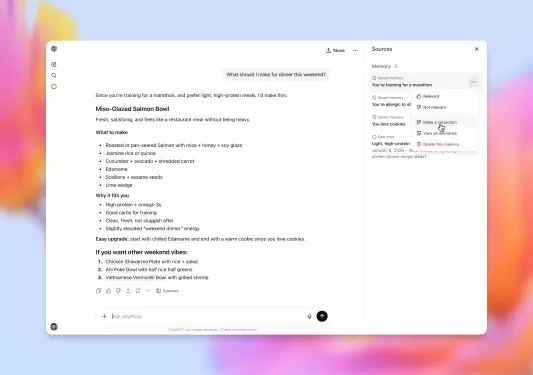 OpenAI launches GPT-5.5 Instant as ChatGPT’s new default model
OpenAI launched GPT-5.5 Instant on Monday, replacing GPT-5.3 Instant as the default ChatGPT model. The company states that this update minimizes hallucinations in high-stakes fields like law, medicine, and finance, while preserving the fast response
OpenAI launches GPT-5.5 Instant as ChatGPT’s new default model
OpenAI launched GPT-5.5 Instant on Monday, replacing GPT-5.3 Instant as the default ChatGPT model. The company states that this update minimizes hallucinations in high-stakes fields like law, medicine, and finance, while preserving the fast response
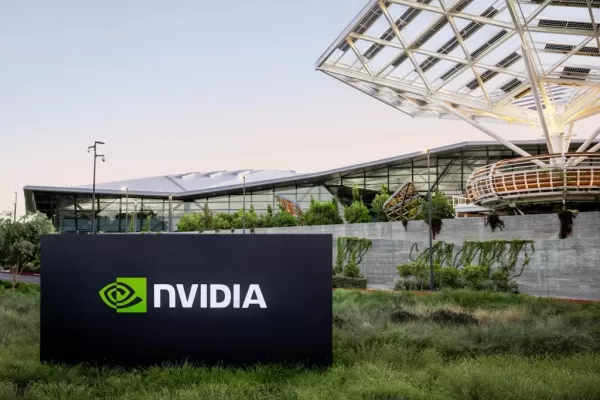 Nvidia to Derive 25% of Next Year’s Revenue from Funded Labs
Nvidia has deployed nearly US$50 billion into AI labs purchasing its chips, securing commitments for over $500 billion in total.On August 26, CFO Colette Kress informed analysts that these labs, backed by Nvidia’s balance sheet, will account for roug
Nvidia to Derive 25% of Next Year’s Revenue from Funded Labs
Nvidia has deployed nearly US$50 billion into AI labs purchasing its chips, securing commitments for over $500 billion in total.On August 26, CFO Colette Kress informed analysts that these labs, backed by Nvidia’s balance sheet, will account for roug

2026 Latest Top-rated AI Illustration Tools: Our curated list features the best powerfully designed tools for creating stunning editorial scenes and eye-catching cover art quickly. Each option has gone through rigorous real-world tests, offering a free vs paid comparison to help you find the perfect match for your workflow. Try these must-try solutions today to unlock your AI edge and boost your creative productivity. Explore now at XIX.AI.
10 tools
xix.ai

2026 Latest Top-Rated Best AI Tutors for Exam Prep are here on XIX.AI! Our curated list features powerful game-changing tools that offer free vs paid comparison, real-world tests, and weekly updated rankings. They help boost your writing efficiency, simplify complex topic learning, and unlock your academic potential. Explore now to Discover your perfect exam prep tool and Start creating today to Unlock your AI edge!
10 tools
xix.ai

2026 Latest Best Top-Rated AI Budget Planning Tools for Personal Money Management are here on XIX.AI! This curated collection features powerful, game-changing solutions that help you conduct real-world tests, understand spending habits, and create personalized plans to boost productivity. Enjoy a free vs paid comparison along with detailed rankings. Must-try tools designed to simplify money management and unlock your AI edge. Explore now!
11 tools
xix.ai
2026 Latest Best Top-Rated AI Sleep Tracking Assistants curated for ultimate recovery. This fully updated weekly guide features powerful tools that deliver real-world tests, free vs paid comparison, and detailed rankings to help you find the must-try solution that boosts sleep quality and supports better bedtime habits. Explore now at XIX.AI to Unlock your AI edge.
10 tools
xix.ai

2026 Latest Best Top-Rated AI SQL Copilots for Product and Revenue Analytics! XIX.AI has curated a powerful, game-changing collection of must-try tools that undergo real-world tests through weekly updated rankings. These tools help users boost productivity significantly by accelerating data analysis, streamlining complex queries, and generating accurate insights to drive smarter business decisions. Explore now to Discover your perfect tool for unlocking your AI edge!
14 tools
xix.ai

2026 Latest Best Top-Rated AI Homework Helpers That Teach Core Concepts Not Just Answers Powerful Tools for Students Must-Try Curated List Weekly Updated Free vs Paid Comparison Real-World Tests Accurate Rankings to Help You Unlock Your Full Learning Potential Explore now to Discover your perfect tool for smarter studying.
10 tools
xix.ai












