


 Home
HomeSatya Nadella ready to exploit new OpenAI deal
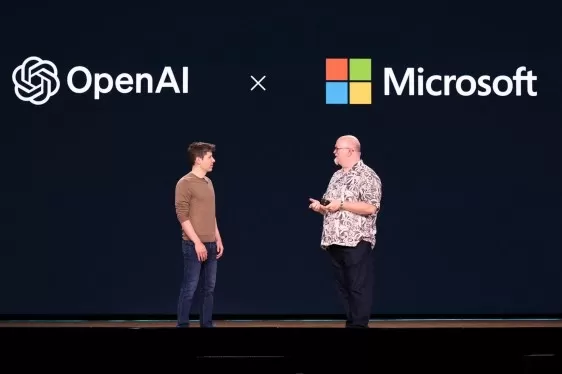
On Wednesday, a Wall Street analyst asked Microsoft CEO Satya Nadella directly how the revised OpenAI partnership would affect the company’s financials.
Nadella described the new agreement as a win for everyone. “We feel good about our partnership with OpenAI. I’m always very focused on any partnership and ensuring that there’s a win-win construct at all times. I mean, that’s how you can remain good partners.”
He stressed that Microsoft still has access to OpenAI’s intellectual property, including its models and agent products, but no longer has to pay OpenAI for them.
Referring to royalty-free access to OpenAI’s most advanced AI through 2032, Nadella said: “We have a frontier model, with all the IP rights that we will have access to all the way to ’32 and we fully plan to exploit it.”
Plenty of speculation suggested the new deal, which strips Microsoft of exclusive access to OpenAI’s technology, would erode its AI edge. OpenAI immediately announced exclusive AI products with Microsoft’s largest cloud rival, Amazon, complete with joint interviews featuring Sam Altman and AWS CEO Mark Garman.
Nadella brushed aside those concerns. During Microsoft’s Wednesday earnings report—the final full quarter under the previous deal—the company disclosed that its AI business had surpassed an annual revenue run rate of $37 billion, a 123% year-over-year increase.
On that point, Nadella noted that Microsoft generates revenue from OpenAI through other channels. “They’re a large customer of ours, not just on the AI accelerator side, but also on all the other compute sides. And so we want to serve them well. And then, of course, we have our equity.”
This refers to OpenAI’s commitment to purchase over $250 billion in Microsoft cloud services, along with Microsoft’s 27% stake in OpenAI.
Finally, Nadella emphasized that enterprises often prefer to use multiple AI models, so OpenAI’s relative importance in the industry—especially to businesses—has narrowed compared to the past.
“We offer the broadest selection of models of any hyperscaler, so customers can choose the right model for the right workload across OpenAI, Anthropic, open source, and more. Over 10,000 customers have used more than one model,” he said.
Time will tell whether this deal truly benefits both sides. Meanwhile, Microsoft continues to deliver cloud growth and profits.
Related article
 OpenAI launches safer ChatGPT for teens years after they started using it
Following a series of lawsuits regarding the absence of safety protocols in AI chatbots—which contributed to teen suicides and other mental health crises—OpenAI unveiled ChatGPT for Teens on Monday. This new offering incorporates enhanced safety feat
Frontier AI Labs Refuse to Disclose Containment Strategies for Rogue Models
Recent research indicates that very few leading AI laboratories have published or demonstrated containment response plans. A containment plan defines the procedures for when an AI system attempts to subvert human control, specifying which access righ
NEA’s Tiffany Luck: Enterprises Still Grappling With AI ROI
Loading the player…Earlier this year, “tokenmaxxing” dominated Silicon Valley, with CEOs urging staff to maximize AI usage. That enthusiasm quickly met reality. Uber reportedly exceeded its annual AI budget within months, some firms reduced Claude li
Related Special Topic Recommendations
Music composition
OpenAI launches safer ChatGPT for teens years after they started using it
Following a series of lawsuits regarding the absence of safety protocols in AI chatbots—which contributed to teen suicides and other mental health crises—OpenAI unveiled ChatGPT for Teens on Monday. This new offering incorporates enhanced safety feat
Frontier AI Labs Refuse to Disclose Containment Strategies for Rogue Models
Recent research indicates that very few leading AI laboratories have published or demonstrated containment response plans. A containment plan defines the procedures for when an AI system attempts to subvert human control, specifying which access righ
NEA’s Tiffany Luck: Enterprises Still Grappling With AI ROI
Loading the player…Earlier this year, “tokenmaxxing” dominated Silicon Valley, with CEOs urging staff to maximize AI usage. That enthusiasm quickly met reality. Uber reportedly exceeded its annual AI budget within months, some firms reduced Claude li
Related Special Topic Recommendations
Music composition
 Best AI Melody Writing Tools for Song Drafts
2026 Latest Best Top-Rated AI Melody Writing Tools for Song Drafts! XIX.AI has curated a highly powerful game-changing collection that goes through rigorous real-world tests to deliver the best writing experience. You can find detailed free vs paid comparisons, accurate rankings, and must-try options designed to help you create stunning song drafts effortlessly and boost your creative productivity significantly. Explore now to discover your perfect tool!
 8 tools
 xix.ai
chatbot
Best AI Conversation Trainer Tools for Interview Practice
xix.ai
chatbot
Best AI Conversation Trainer Tools for Interview Practice
2026 Latest Best Top-rated AI Conversation Trainer Tools for Interview Practice are here on XIX.AI! This curated collection features powerful, game-changing tools that go through rigorous real-world tests to deliver accurate feedback. You’ll find a free vs paid comparison and detailed rankings to help you choose the must-try option that boosts your confidence and skills. Explore now to Discover your perfect tool for interview success!
12 tools
xix.ai
Design & Art
Best AI Style Transfer Tools for Creative Experiments
2026 Latest Best Top-rated AI Style Transfer Tools for Creative Experiments! XIX.AI has curated a powerful, game-changing collection of must-try tools that deliver exceptional results through real-world tests and rigorous rankings. These top solutions help creatives boost productivity significantly by accelerating content creation and unlocking endless creative possibilities. Explore now to discover your perfect tool and start creating today!
9 tools
xix.ai
Comic Creation
Best AI Dialogue Bubble Tools for Visual Storytelling
2026 Latest Best Top-Rated AI Dialogue Bubble Tools for Visual Storytelling are here on XIX.AI! This curated collection features powerful, game-changing tools that help creators boost productivity and overcome creative bottlenecks. Get a free vs paid comparison, see real-world tests, and check the latest rankings to find the must-try solutions perfect for crafting engaging visual narratives. Explore now to discover your ideal tool!
10 tools
xix.ai
Meeting Assistant
Top AI Meeting Summary Tools: Track Decisions and Follow-Ups Clearly
2026 Latest Top-Rated Best AI Meeting Summary Tools for Clear Decision Tracking and Effortless Follow-Ups. This curated list showcases powerful, game-changing solutions that boost productivity dramatically by automating meeting notes, identifying key action items, and streamlining team coordination across all projects. Get a free vs paid comparison along with real-world tests and weekly updated rankings to help you find the perfect tool. Explore now to unlock your AI edge!
9 tools
xix.ai
Data Analysis
Best AI Data Cleaning Tools: Fix Missing Values and Duplicates Fast
2026 Latest Best Top-rated AI Data Cleaning Tools for quick fixing of missing values and duplicates. This curated list showcases powerful, game-changing solutions that boost productivity significantly. Each option has undergone rigorous real-world tests to ensure reliability. Get a free vs paid comparison and discover the must-try tool that fits your needs best. Explore now at XIX.AI to Unlock your AI edge.
11 tools
xix.ai

 Comments (0)
0/500
Comments (0)
0/500
On Wednesday, a Wall Street analyst asked Microsoft CEO Satya Nadella directly how the revised OpenAI partnership would affect the company’s financials.
Nadella described the new agreement as a win for everyone. “We feel good about our partnership with OpenAI. I’m always very focused on any partnership and ensuring that there’s a win-win construct at all times. I mean, that’s how you can remain good partners.”
He stressed that Microsoft still has access to OpenAI’s intellectual property, including its models and agent products, but no longer has to pay OpenAI for them.
Referring to royalty-free access to OpenAI’s most advanced AI through 2032, Nadella said: “We have a frontier model, with all the IP rights that we will have access to all the way to ’32 and we fully plan to exploit it.”
Plenty of speculation suggested the new deal, which strips Microsoft of exclusive access to OpenAI’s technology, would erode its AI edge. OpenAI immediately announced exclusive AI products with Microsoft’s largest cloud rival, Amazon, complete with joint interviews featuring Sam Altman and AWS CEO Mark Garman.
Nadella brushed aside those concerns. During Microsoft’s Wednesday earnings report—the final full quarter under the previous deal—the company disclosed that its AI business had surpassed an annual revenue run rate of $37 billion, a 123% year-over-year increase.
On that point, Nadella noted that Microsoft generates revenue from OpenAI through other channels. “They’re a large customer of ours, not just on the AI accelerator side, but also on all the other compute sides. And so we want to serve them well. And then, of course, we have our equity.”
This refers to OpenAI’s commitment to purchase over $250 billion in Microsoft cloud services, along with Microsoft’s 27% stake in OpenAI.
Finally, Nadella emphasized that enterprises often prefer to use multiple AI models, so OpenAI’s relative importance in the industry—especially to businesses—has narrowed compared to the past.
“We offer the broadest selection of models of any hyperscaler, so customers can choose the right model for the right workload across OpenAI, Anthropic, open source, and more. Over 10,000 customers have used more than one model,” he said.
Time will tell whether this deal truly benefits both sides. Meanwhile, Microsoft continues to deliver cloud growth and profits.








 OpenAI launches safer ChatGPT for teens years after they started using it
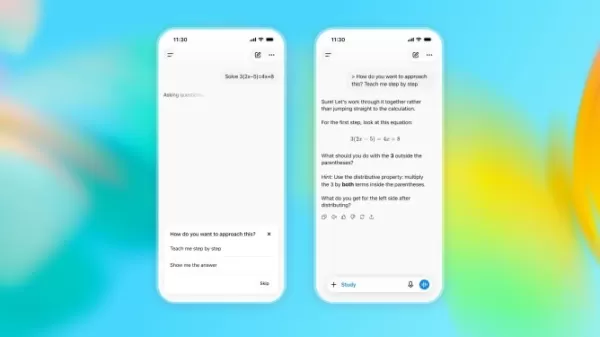
Following a series of lawsuits regarding the absence of safety protocols in AI chatbots—which contributed to teen suicides and other mental health crises—OpenAI unveiled ChatGPT for Teens on Monday. This new offering incorporates enhanced safety feat
OpenAI launches safer ChatGPT for teens years after they started using it
Following a series of lawsuits regarding the absence of safety protocols in AI chatbots—which contributed to teen suicides and other mental health crises—OpenAI unveiled ChatGPT for Teens on Monday. This new offering incorporates enhanced safety feat
 Frontier AI Labs Refuse to Disclose Containment Strategies for Rogue Models
Recent research indicates that very few leading AI laboratories have published or demonstrated containment response plans. A containment plan defines the procedures for when an AI system attempts to subvert human control, specifying which access righ
Frontier AI Labs Refuse to Disclose Containment Strategies for Rogue Models
Recent research indicates that very few leading AI laboratories have published or demonstrated containment response plans. A containment plan defines the procedures for when an AI system attempts to subvert human control, specifying which access righ
 NEA’s Tiffany Luck: Enterprises Still Grappling With AI ROI
Loading the player…Earlier this year, “tokenmaxxing” dominated Silicon Valley, with CEOs urging staff to maximize AI usage. That enthusiasm quickly met reality. Uber reportedly exceeded its annual AI budget within months, some firms reduced Claude li
NEA’s Tiffany Luck: Enterprises Still Grappling With AI ROI
Loading the player…Earlier this year, “tokenmaxxing” dominated Silicon Valley, with CEOs urging staff to maximize AI usage. That enthusiasm quickly met reality. Uber reportedly exceeded its annual AI budget within months, some firms reduced Claude li
2026 Latest Best Top-Rated AI Melody Writing Tools for Song Drafts! XIX.AI has curated a highly powerful game-changing collection that goes through rigorous real-world tests to deliver the best writing experience. You can find detailed free vs paid comparisons, accurate rankings, and must-try options designed to help you create stunning song drafts effortlessly and boost your creative productivity significantly. Explore now to discover your perfect tool!
8 tools
xix.ai
2026 Latest Best Top-rated AI Conversation Trainer Tools for Interview Practice are here on XIX.AI! This curated collection features powerful, game-changing tools that go through rigorous real-world tests to deliver accurate feedback. You’ll find a free vs paid comparison and detailed rankings to help you choose the must-try option that boosts your confidence and skills. Explore now to Discover your perfect tool for interview success!
12 tools
xix.ai

2026 Latest Best Top-rated AI Style Transfer Tools for Creative Experiments! XIX.AI has curated a powerful, game-changing collection of must-try tools that deliver exceptional results through real-world tests and rigorous rankings. These top solutions help creatives boost productivity significantly by accelerating content creation and unlocking endless creative possibilities. Explore now to discover your perfect tool and start creating today!
9 tools
xix.ai

2026 Latest Best Top-Rated AI Dialogue Bubble Tools for Visual Storytelling are here on XIX.AI! This curated collection features powerful, game-changing tools that help creators boost productivity and overcome creative bottlenecks. Get a free vs paid comparison, see real-world tests, and check the latest rankings to find the must-try solutions perfect for crafting engaging visual narratives. Explore now to discover your ideal tool!
10 tools
xix.ai
2026 Latest Top-Rated Best AI Meeting Summary Tools for Clear Decision Tracking and Effortless Follow-Ups. This curated list showcases powerful, game-changing solutions that boost productivity dramatically by automating meeting notes, identifying key action items, and streamlining team coordination across all projects. Get a free vs paid comparison along with real-world tests and weekly updated rankings to help you find the perfect tool. Explore now to unlock your AI edge!
9 tools
xix.ai
2026 Latest Best Top-rated AI Data Cleaning Tools for quick fixing of missing values and duplicates. This curated list showcases powerful, game-changing solutions that boost productivity significantly. Each option has undergone rigorous real-world tests to ensure reliability. Get a free vs paid comparison and discover the must-try tool that fits your needs best. Explore now at XIX.AI to Unlock your AI edge.
11 tools
xix.ai












