


 Home
HomeQueue secures funding to develop fully autonomous pharmacy
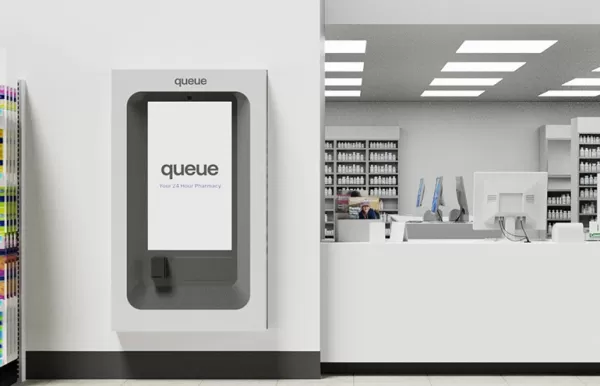
Queue leverages automation to streamline prescription processing. Source: Queue
Queue has officially launched from stealth, unveiling an autonomous pharmacy system alongside a $12.6 million seed funding round. The company states its technology is engineered to accelerate prescription fulfillment, enhance accessibility, and reduce costs while maintaining strict safety and verification standards.
“The current U.S. pharmacy system is fundamentally flawed,” said Josh Liu, co-founder and CTO of Queue. “Queue represents a complete overhaul of medication dispensing, verification, and delivery. We’ve built the solution the industry has waited decades for, and the market response confirms its necessity.”
According to Drugstore News, pharmacies are currently grappling with “excessive workloads and widespread job dissatisfaction.” The publication notes that pharmacy schools are producing 3,000 to 4,000 fewer graduates than required over the next five to six years.
The American Society of Health-System Pharmacists reports pharmacy technician vacancy rates exceeding 40%. As one industry expert pointed out, staffing shortages significantly increase the risk of human error.
Furthermore, pharmacies are losing revenue on an increasing number of prescriptions due to “negative reimbursements,” adding financial strain to the sector. Researchers from USC and UC Berkeley found that nearly one in three pharmacies has closed since 2010, creating “pharmacy deserts.” These structural challenges leave the $670.6 billion U.S. retail pharmacy market with limited viable strategies for growth.
Queue’s system addresses prescription fulfillment challenges
Queue was co-founded by CEO Nick Desai, a serial entrepreneur with six venture-backed ventures, including Heal, a home healthcare company that raised over $200 million, and Liu, who brings experience from Tesla and Zipline.
“We believe robotics and AI should be deployed to enhance human well-being,” Liu told The Robot Report. “For us, this means fostering greater human connection and improving service and health outcomes for the public.”
Palo Alto-based Queue’s robotic system fills and verifies prescriptions from sealed wholesale pill bottles without requiring an on-site pharmacist. The company claims this approach enables lower-cost fulfillment and broader access across retail, healthcare, and other environments.
Liu explained that each cell in the system can store thousands of pills, filling a 60-pill vial every 30 seconds. Queue has developed secure, user-friendly software, initially designed for pharmacists and eventually for direct customer use.
The platform currently supports 280 of the most commonly prescribed medications in the U.S., according to the company.
“Dispensing accuracy must be 100% from start to finish,” Liu emphasized. “We track the entire lifecycle, from drug manufacturing and importation into the U.S., to storage in our machine, and finally to the filled vial delivered to the patient. This end-to-end chain of custody is critical for safety.”
Queue states its system can deliver medications at up to 96% lower cost than traditional pharmacies, making it suitable for rural communities and other settings with limited access. The company positions autonomous fulfillment as “a new infrastructure layer for American healthcare, bringing pharmacy services closer to patients while improving economic efficiency.”
Queue has already secured a major national pharmacy chain as a client and deployed a working prototype for early commercial validation in markets facing urgent labor, cost, and access issues.
“We believe the real test happens in the field, not in the lab,” Liu said. “We’re eager to deploy these machines into the real world, fulfill actual prescriptions, and learn from the process. The coming year is focused on scaling.”
AlleyCorp leads the seed investment
Queue closed an oversubscribed $12.6 million round led by AlleyCorp, following a $6 million pre-seed round led by Riot Ventures less than a year ago, bringing total funding to $18.6 million. Additional investors include House Capital, Ubiquity Ventures, Grep Ventures, and Banter Capital.
“What the Queue team has achieved is rare in healthcare hardware development,” said Abe Murray, general partner at AlleyCorp. “We believe Queue is building critical infrastructure that improves patient access to prescriptions while using robotics and automation to address labor constraints across the industry.”
“Pharmacy faces an infrastructure crisis. While the industry has tried to work around labor shortages, store closures, and poor unit economics, Nick and Josh have taken a different approach: automating the physical fulfillment layer itself,” added Will Coffield, partner at Riot Ventures. “Queue is exactly the type of company Riot invests in early. It features exceptional founders solving a massive, urgent problem with technology that can deliver significant impact.”
Queue plans to use the funding to accelerate product development, expand deployments with enterprise pharmacy clients, and grow its engineering team. The company currently employs 20 engineers in Silicon Valley, with backgrounds from Rivian, Waymo, and aerospace firms, and is actively hiring across robotics, hardware, software, and pharmacy operations.
“It’s not just about capital; it’s about the relationships we’re building and our shared vision to bring this future to life faster,” Liu said. “People may not see pharmacies as the most exciting sector, but what attracts our talent and investors is the recognition of a systemic issue. It’s a problem our nation hasn’t resolved, and it’s worsening. We’re addressing a foundational challenge that will have a lasting impact for years to come.”
Related article
 Robotics demand surges across sectors in Q2 2026, A3 reports
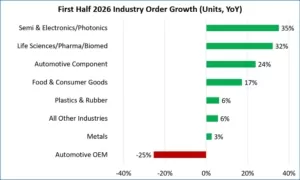
Automotive component makers increased robot orders, while OEMs did not in Q2. Source: A3While progress in artificial intelligence and humanoid robots continues to capture public and investor interest, industrial automation is still the leading segmen
Apple Names Tim Cook CEO, Prioritizes AI and Siri Overhaul
John Trenor, Apple’s head of hardware engineering, is set to assume the CEO role on September 1, with artificial intelligence designated as his primary focus. The company previously announced that current CEO Tim Cook will transition to Executive Cha
NVIDIA Boosts Jetson Orin Nano 2 Inference Speed for Edge Robotics
Jetson Orin Nano 2 consumes less power at the same performance level of its predecessor. Source: NVIDIAAs AI models become more efficient, more devices can become autonomous, but developers need compact, energy-efficient computers built for edge AI,
Related Special Topic Recommendations
Animation Creation
Robotics demand surges across sectors in Q2 2026, A3 reports
Automotive component makers increased robot orders, while OEMs did not in Q2. Source: A3While progress in artificial intelligence and humanoid robots continues to capture public and investor interest, industrial automation is still the leading segmen
Apple Names Tim Cook CEO, Prioritizes AI and Siri Overhaul
John Trenor, Apple’s head of hardware engineering, is set to assume the CEO role on September 1, with artificial intelligence designated as his primary focus. The company previously announced that current CEO Tim Cook will transition to Executive Cha
NVIDIA Boosts Jetson Orin Nano 2 Inference Speed for Edge Robotics
Jetson Orin Nano 2 consumes less power at the same performance level of its predecessor. Source: NVIDIAAs AI models become more efficient, more devices can become autonomous, but developers need compact, energy-efficient computers built for edge AI,
Related Special Topic Recommendations
Animation Creation
 Best AI Animation Generators: Turn Ideas into Motion Clips Fast
2026 Latest Best Top-Rated AI Animation Generators! XIX.AI curates a powerful game-changing collection of must-try tools for turning creative ideas into high-quality motion clips swiftly. Each option has undergone rigorous real-world tests, featuring detailed free vs paid comparison and updated weekly rankings to help you find the perfect fit for boosting your animation productivity. Explore now to unlock your AI edge!
 11 tools
 xix.ai
Text-to-speech
Top Multilingual AI Voice Generators: Localize Audio at Scale
xix.ai
Text-to-speech
Top Multilingual AI Voice Generators: Localize Audio at Scale
2026 Latest Top-Rated Best Multilingual AI Voice Generators for Large-Scale Audio Localization. This curated list features powerful, game-changing tools that deliver high-quality localized audio fast. Each option has undergone rigorous real-world tests to ensure reliability. Get a free vs paid comparison and discover the perfect fit for your projects. Explore now at XIX.AI to unlock your AI edge.
18 tools
xix.ai
writing
Best AI Outline Generators for Long-Form SEO Articles, Briefs, and Pillar Pages
2026 Latest Best Top-rated AI Outline Generators for Long-Form SEO Articles, Briefs, and Pillar Pages. XIX.AI curates a powerful game-changing collection that undergoes weekly updated real-world tests to deliver must-try tools perfect for boosting writing efficiency, streamlining content creation, and unlocking your AI edge. Explore now to discover your perfect tool for top SEO results.
11 tools
xix.ai
Meeting Assistant
AI Voice-to-Minutes Assistants: Convert Team Talks into Clean Notes
2026 Latest Best Top-Rated AI Voice-to-Minutes Assistants Guide! XIX.AI has curated a highly powerful, game-changing collection of tools designed to transform every team conversation into flawless, organized notes instantly. Our weekly updated rankings cover free vs paid options, along with real-world tests showing their effectiveness for boosting productivity across all work scenarios. Must-try for anyone looking to unlock their AI edge. Explore now!
9 tools
xix.ai
Animation Creation
Best AI Lip-Sync Generators for Dialogue Scenes
2026 Latest Best Top-Rated AI Lip-Sync Generators for Dialogue Scenes are here on XIX.AI! This curated collection features powerful, game-changing tools that deliver flawless synchronized lip movements for any script, boosting your video editing efficiency significantly. Enjoy a free vs paid comparison along with real-world tests and weekly updated rankings to help you find the must-try perfect fit. Explore now to unlock your AI edge!
8 tools
xix.ai
Prompt
AI Prompt Optimizers: Refine Instructions for Better Output Quality
2026 Latest Best Top-Rated AI Prompt Optimizers Curated for Maximum Output Quality! XIX.AI delivers powerful game-changing solutions that help you refine instructions effortlessly, boost writing efficiency, and unlock higher-quality results every time. Get a free vs paid comparison along with real-world tests and weekly updated rankings. Explore now to Discover your perfect tool and Unlock your AI edge!
16 tools
xix.ai

 Comments (0)
0/500
Comments (0)
0/500
Queue leverages automation to streamline prescription processing. Source: Queue
Queue has officially launched from stealth, unveiling an autonomous pharmacy system alongside a $12.6 million seed funding round. The company states its technology is engineered to accelerate prescription fulfillment, enhance accessibility, and reduce costs while maintaining strict safety and verification standards.
“The current U.S. pharmacy system is fundamentally flawed,” said Josh Liu, co-founder and CTO of Queue. “Queue represents a complete overhaul of medication dispensing, verification, and delivery. We’ve built the solution the industry has waited decades for, and the market response confirms its necessity.”
According to Drugstore News, pharmacies are currently grappling with “excessive workloads and widespread job dissatisfaction.” The publication notes that pharmacy schools are producing 3,000 to 4,000 fewer graduates than required over the next five to six years.
The American Society of Health-System Pharmacists reports pharmacy technician vacancy rates exceeding 40%. As one industry expert pointed out, staffing shortages significantly increase the risk of human error.
Furthermore, pharmacies are losing revenue on an increasing number of prescriptions due to “negative reimbursements,” adding financial strain to the sector. Researchers from USC and UC Berkeley found that nearly one in three pharmacies has closed since 2010, creating “pharmacy deserts.” These structural challenges leave the $670.6 billion U.S. retail pharmacy market with limited viable strategies for growth.
Queue’s system addresses prescription fulfillment challenges
Queue was co-founded by CEO Nick Desai, a serial entrepreneur with six venture-backed ventures, including Heal, a home healthcare company that raised over $200 million, and Liu, who brings experience from Tesla and Zipline.
“We believe robotics and AI should be deployed to enhance human well-being,” Liu told The Robot Report. “For us, this means fostering greater human connection and improving service and health outcomes for the public.”
Palo Alto-based Queue’s robotic system fills and verifies prescriptions from sealed wholesale pill bottles without requiring an on-site pharmacist. The company claims this approach enables lower-cost fulfillment and broader access across retail, healthcare, and other environments.
Liu explained that each cell in the system can store thousands of pills, filling a 60-pill vial every 30 seconds. Queue has developed secure, user-friendly software, initially designed for pharmacists and eventually for direct customer use.
The platform currently supports 280 of the most commonly prescribed medications in the U.S., according to the company.
“Dispensing accuracy must be 100% from start to finish,” Liu emphasized. “We track the entire lifecycle, from drug manufacturing and importation into the U.S., to storage in our machine, and finally to the filled vial delivered to the patient. This end-to-end chain of custody is critical for safety.”
Queue states its system can deliver medications at up to 96% lower cost than traditional pharmacies, making it suitable for rural communities and other settings with limited access. The company positions autonomous fulfillment as “a new infrastructure layer for American healthcare, bringing pharmacy services closer to patients while improving economic efficiency.”
Queue has already secured a major national pharmacy chain as a client and deployed a working prototype for early commercial validation in markets facing urgent labor, cost, and access issues.
“We believe the real test happens in the field, not in the lab,” Liu said. “We’re eager to deploy these machines into the real world, fulfill actual prescriptions, and learn from the process. The coming year is focused on scaling.”
AlleyCorp leads the seed investment
Queue closed an oversubscribed $12.6 million round led by AlleyCorp, following a $6 million pre-seed round led by Riot Ventures less than a year ago, bringing total funding to $18.6 million. Additional investors include House Capital, Ubiquity Ventures, Grep Ventures, and Banter Capital.
“What the Queue team has achieved is rare in healthcare hardware development,” said Abe Murray, general partner at AlleyCorp. “We believe Queue is building critical infrastructure that improves patient access to prescriptions while using robotics and automation to address labor constraints across the industry.”
“Pharmacy faces an infrastructure crisis. While the industry has tried to work around labor shortages, store closures, and poor unit economics, Nick and Josh have taken a different approach: automating the physical fulfillment layer itself,” added Will Coffield, partner at Riot Ventures. “Queue is exactly the type of company Riot invests in early. It features exceptional founders solving a massive, urgent problem with technology that can deliver significant impact.”
Queue plans to use the funding to accelerate product development, expand deployments with enterprise pharmacy clients, and grow its engineering team. The company currently employs 20 engineers in Silicon Valley, with backgrounds from Rivian, Waymo, and aerospace firms, and is actively hiring across robotics, hardware, software, and pharmacy operations.
“It’s not just about capital; it’s about the relationships we’re building and our shared vision to bring this future to life faster,” Liu said. “People may not see pharmacies as the most exciting sector, but what attracts our talent and investors is the recognition of a systemic issue. It’s a problem our nation hasn’t resolved, and it’s worsening. We’re addressing a foundational challenge that will have a lasting impact for years to come.”








 Robotics demand surges across sectors in Q2 2026, A3 reports
Automotive component makers increased robot orders, while OEMs did not in Q2. Source: A3While progress in artificial intelligence and humanoid robots continues to capture public and investor interest, industrial automation is still the leading segmen
Robotics demand surges across sectors in Q2 2026, A3 reports
Automotive component makers increased robot orders, while OEMs did not in Q2. Source: A3While progress in artificial intelligence and humanoid robots continues to capture public and investor interest, industrial automation is still the leading segmen
 Apple Names Tim Cook CEO, Prioritizes AI and Siri Overhaul
John Trenor, Apple’s head of hardware engineering, is set to assume the CEO role on September 1, with artificial intelligence designated as his primary focus. The company previously announced that current CEO Tim Cook will transition to Executive Cha
Apple Names Tim Cook CEO, Prioritizes AI and Siri Overhaul
John Trenor, Apple’s head of hardware engineering, is set to assume the CEO role on September 1, with artificial intelligence designated as his primary focus. The company previously announced that current CEO Tim Cook will transition to Executive Cha
 NVIDIA Boosts Jetson Orin Nano 2 Inference Speed for Edge Robotics
Jetson Orin Nano 2 consumes less power at the same performance level of its predecessor. Source: NVIDIAAs AI models become more efficient, more devices can become autonomous, but developers need compact, energy-efficient computers built for edge AI,
NVIDIA Boosts Jetson Orin Nano 2 Inference Speed for Edge Robotics
Jetson Orin Nano 2 consumes less power at the same performance level of its predecessor. Source: NVIDIAAs AI models become more efficient, more devices can become autonomous, but developers need compact, energy-efficient computers built for edge AI,

2026 Latest Best Top-Rated AI Animation Generators! XIX.AI curates a powerful game-changing collection of must-try tools for turning creative ideas into high-quality motion clips swiftly. Each option has undergone rigorous real-world tests, featuring detailed free vs paid comparison and updated weekly rankings to help you find the perfect fit for boosting your animation productivity. Explore now to unlock your AI edge!
11 tools
xix.ai

2026 Latest Top-Rated Best Multilingual AI Voice Generators for Large-Scale Audio Localization. This curated list features powerful, game-changing tools that deliver high-quality localized audio fast. Each option has undergone rigorous real-world tests to ensure reliability. Get a free vs paid comparison and discover the perfect fit for your projects. Explore now at XIX.AI to unlock your AI edge.
18 tools
xix.ai

2026 Latest Best Top-rated AI Outline Generators for Long-Form SEO Articles, Briefs, and Pillar Pages. XIX.AI curates a powerful game-changing collection that undergoes weekly updated real-world tests to deliver must-try tools perfect for boosting writing efficiency, streamlining content creation, and unlocking your AI edge. Explore now to discover your perfect tool for top SEO results.
11 tools
xix.ai

2026 Latest Best Top-Rated AI Voice-to-Minutes Assistants Guide! XIX.AI has curated a highly powerful, game-changing collection of tools designed to transform every team conversation into flawless, organized notes instantly. Our weekly updated rankings cover free vs paid options, along with real-world tests showing their effectiveness for boosting productivity across all work scenarios. Must-try for anyone looking to unlock their AI edge. Explore now!
9 tools
xix.ai

2026 Latest Best Top-Rated AI Lip-Sync Generators for Dialogue Scenes are here on XIX.AI! This curated collection features powerful, game-changing tools that deliver flawless synchronized lip movements for any script, boosting your video editing efficiency significantly. Enjoy a free vs paid comparison along with real-world tests and weekly updated rankings to help you find the must-try perfect fit. Explore now to unlock your AI edge!
8 tools
xix.ai

2026 Latest Best Top-Rated AI Prompt Optimizers Curated for Maximum Output Quality! XIX.AI delivers powerful game-changing solutions that help you refine instructions effortlessly, boost writing efficiency, and unlock higher-quality results every time. Get a free vs paid comparison along with real-world tests and weekly updated rankings. Explore now to Discover your perfect tool and Unlock your AI edge!
16 tools
xix.ai












