


 Home
HomeTrump's Budget Proposal: Key Stances on AI, Environmental Policy, and Surveillance
The "One Big Beautiful Bill Act," narrowly passed by House Republicans early Thursday, would remove AI oversight authority from state legislatures. It would also scale back consumer protection measures and climate initiatives, while allocating funds for border surveillance among numerous other provisions.
This budget reconciliation bill must still be approved by the Senate, where some Republicans have expressed concerns about certain aspects of the text. However, with President Donald Trump advocating for its passage, securing changes could prove difficult.
Here are some key technology and science provisions included in the House version of the bill:
Moratorium on state AI laws
The budget package would prevent states from enforcing laws that regulate artificial intelligence models and "automated decision systems" for a decade. This would likely preempt hundreds of AI-related bills under consideration for 2025, as well as dozens already enacted into law. Furthermore, the broad "automated decision" language could restrict regulation of various computer systems not typically classified as AI.
Republican supporters argue the rule is essential for allowing U.S. companies to innovate and compete with rivals in China—a view promoted by OpenAI. According to the National Conference of State Legislatures (NCSL), over 60 AI-related state bills have been enacted so far, many of which could be affected by the proposed moratorium. These laws address issues ranging from algorithmic discrimination to regulating AI use by government agencies.
Critics fear the definition could also hinder regulations covering various systems that use automation or machine learning. This might include rules backed by state-level Republicans, who have passed numerous social media regulations in recent years.
“Until we pass something that is federally preemptive, we can’t call for a moratorium”
A few Republican senators have raised concerns about the moratorium. Sen. Marsha Blackburn (R-TN), who is considering a gubernatorial run, recently spoke at a congressional hearing about her state's AI law, which aims to protect musicians' rights to their vocal likeness. “We certainly know that in Tennessee we need those protections,” Blackburn stated, according to The Washington Post. “And until we pass something that is federally preemptive, we can’t call for a moratorium.”
Sen. Josh Hawley (R-MO), who publicly opposed Medicaid cuts in the House bill, also objected to the state law pause. “I would think that, just as a matter of federalism, we’d want states to be able to try out different regimes that they think will work for their state,” Hawley told Business Insider. “And I think in general, on AI, I do think we need some sensible oversight that will protect people’s liberties.”
The provision may also face challenges under the "Byrd rule," which prohibits "extraneous" additions in reconciliation bills.
Cuts to green energy tax credits
If the House package becomes law, Biden-era tax credits for electric vehicles would end within two years. Renewable energy credits would be phased out early and subject to restrictions that disqualify many projects. The eliminated incentives include a $7,500 credit for purchasing eligible EVs, a $4,000 credit for eligible used vehicles, and credits for home refueling infrastructure.
Last-minute updates before the vote further rolled back key climate programs from the 2022 Inflation Reduction Act, beyond the bill's original scope, though they also scaled back efforts to repeal credits for nuclear reactors.
Scaling back funding for consumer financial protection
The Consumer Financial Protection Bureau (CFPB), already significantly impacted by Elon Musk’s Department of Government Efficiency (DOGE), would face additional funding caps under the bill. House Republicans aim to limit the CFPB's funding from the Federal Reserve to 5 percent of the system’s total operating expenses, down from the current 12 percent. This reduction would limit the agency's ability to address consumer complaints about issues like imminent foreclosures and credit card fraud, and to regulate digital payment services.
Border tech funding
The bill allocates billions of dollars to secure U.S. borders, including $12 billion to reimburse states for border security efforts. In addition to $46 billion designated for building and modernizing the wall along the U.S.-Mexico border, the legislation provides $1 billion for technology to detect drugs and other contraband. Another $2.7 billion would fund surveillance systems described by House Homeland Security Republicans as including "ground detection sensors, integrated surveillance towers, tunnel detection capability, unmanned aircraft systems (UAS), and enhanced communications equipment."
Limiting gender-affirming care
Starting in 2027, health care plans purchased through the Affordable Care Act marketplace would be prohibited from covering gender-affirming care, including hormone therapy and surgery. Similarly, the bill would bar Medicaid from covering "gender transition procedures" for minors and adults, while requiring coverage for detransition care.
Related article
 Duolingo Faces New Competition as Google Integrates Language Learning into Translate
Google is introducing AI-driven language learning tools directly into its Translate application. This new beta feature personalizes language lessons to match your proficiency and specific goals, like preparing for an international trip.Initially, the
EcoFlow Launches Plug-In Solar Power Systems for US Households
The United States is now introducing EcoFlow's DIY balcony solar system, which I previously reviewed in Europe. EcoFlow states that its Stream Series will be the first plug-and-play solar products available domestically, enabling homeowners and rente
Google Launches Gemini CLI for Developers
Google has launched a new open-source AI agent that brings the coding, content generation, and research power of Gemini directly into developer terminals. Dubbed Gemini CLI, Google describes it as a "fundamental upgrade to your command-line experienc
Related Special Topic Recommendations
Video creation
Duolingo Faces New Competition as Google Integrates Language Learning into Translate
Google is introducing AI-driven language learning tools directly into its Translate application. This new beta feature personalizes language lessons to match your proficiency and specific goals, like preparing for an international trip.Initially, the
EcoFlow Launches Plug-In Solar Power Systems for US Households
The United States is now introducing EcoFlow's DIY balcony solar system, which I previously reviewed in Europe. EcoFlow states that its Stream Series will be the first plug-and-play solar products available domestically, enabling homeowners and rente
Google Launches Gemini CLI for Developers
Google has launched a new open-source AI agent that brings the coding, content generation, and research power of Gemini directly into developer terminals. Dubbed Gemini CLI, Google describes it as a "fundamental upgrade to your command-line experienc
Related Special Topic Recommendations
Video creation
 AI Short-Form Video Hook Generators for Reels, Shorts, and Product Launch Campaigns
2026 Latest Best AI Short-Form Video Hook Generators for Reels Shorts and Product Launch Campaigns! XIX.AI curates top-rated powerful game-changing tools that deliver must-try results through real-world tests. This weekly updated page offers free vs paid comparison rankings to help you find the perfect solution for boosting content creativity and productivity. Explore now to Unlock your AI edge!
 11 tools
 xix.ai
writing
AI Article Outline Tools for Long Form Writing
xix.ai
writing
AI Article Outline Tools for Long Form Writing
2026 Latest Best Top-Rated AI Article Outline Tools for Long Form Writing! This curated collection features powerful, game-changing tools that deliver accurate, structured outlines with real-world tests to boost writing efficiency significantly. XIX.AI is part of this elite selection. Get a free vs paid comparison to help you choose the perfect tool. Explore now and Unlock your AI edge!
9 tools
xix.ai
chatbot
Best AI Roleplay Chat Apps for Language Practice, Interview Prep, and Daily Fluency
2026 Latest Best Top-rated AI Roleplay Chat Apps for Language Practice, Interview Prep, and Daily Fluency! XIX.AI curates a powerful game-changing collection that offers free vs paid comparison, real-world tests, and updated rankings weekly. These must-try tools help you boost writing skills, overcome fluency challenges, and improve communication efficiency across all daily scenarios. Explore now to discover your perfect tool for language growth!
10 tools
xix.ai
Music composition
AI Stem Separation Tools for Remix Production, Sampling Prep, and Karaoke Masters
2026 Latest Best Top-rated AI Stem Separation Tools Curated for Remix Production, Sampling Prep, and Karaoke Masters. These powerful game-changing tools offer real-world tests to deliver precise audio isolation, boosting productivity significantly. XIX.AI provides a weekly updated free vs paid comparison guide to help you find the must-try solution that suits your needs. Explore now to unlock your AI edge.
8 tools
xix.ai
Data Analysis
AI SQL Copilots for Revenue Dashboards, Funnel Analysis, and Product Metrics
2026 Latest Best AI SQL Copilots Ranked Top-Rated! XIX.AI curates a powerful game-changing collection for weekly updated real-world tests. These must-try tools help you generate accurate revenue dashboards, analyze sales funnels, and track product metrics swiftly, boosting productivity massively. Explore now to Discover your perfect tool for data-driven decision making! 238 characters
9 tools
xix.ai
Music composition
Best AI Melody Writing Tools for Song Drafts
2026 Latest Best Top-Rated AI Melody Writing Tools for Song Drafts! XIX.AI has curated a highly powerful game-changing collection that goes through rigorous real-world tests to deliver the best writing experience. You can find detailed free vs paid comparisons, accurate rankings, and must-try options designed to help you create stunning song drafts effortlessly and boost your creative productivity significantly. Explore now to discover your perfect tool!
8 tools
xix.ai

 Comments (2)
0/500
Comments (2)
0/500
![ScottRoberts]()
Не могу поверить, что они сокращают защиту потребителей ради ИИ-экспериментов! Это как разрешить детям играть с огнём в лесу 🔥 Нам точно нужны эти риски ради технологического превосходства?
![NicholasLewis]()
Этот бюджет вызывает тревогу... Урезание мер защиты потребителей и климатических инициатив ради развития ИИ без надзора? 🚨 Нам действительно нужен ИИ без регулирования, когда технологии уже влияют на всё?
The "One Big Beautiful Bill Act," narrowly passed by House Republicans early Thursday, would remove AI oversight authority from state legislatures. It would also scale back consumer protection measures and climate initiatives, while allocating funds for border surveillance among numerous other provisions.
This budget reconciliation bill must still be approved by the Senate, where some Republicans have expressed concerns about certain aspects of the text. However, with President Donald Trump advocating for its passage, securing changes could prove difficult.
Here are some key technology and science provisions included in the House version of the bill:
Moratorium on state AI laws
The budget package would prevent states from enforcing laws that regulate artificial intelligence models and "automated decision systems" for a decade. This would likely preempt hundreds of AI-related bills under consideration for 2025, as well as dozens already enacted into law. Furthermore, the broad "automated decision" language could restrict regulation of various computer systems not typically classified as AI.
Republican supporters argue the rule is essential for allowing U.S. companies to innovate and compete with rivals in China—a view promoted by OpenAI. According to the National Conference of State Legislatures (NCSL), over 60 AI-related state bills have been enacted so far, many of which could be affected by the proposed moratorium. These laws address issues ranging from algorithmic discrimination to regulating AI use by government agencies.
Critics fear the definition could also hinder regulations covering various systems that use automation or machine learning. This might include rules backed by state-level Republicans, who have passed numerous social media regulations in recent years.
“Until we pass something that is federally preemptive, we can’t call for a moratorium”
A few Republican senators have raised concerns about the moratorium. Sen. Marsha Blackburn (R-TN), who is considering a gubernatorial run, recently spoke at a congressional hearing about her state's AI law, which aims to protect musicians' rights to their vocal likeness. “We certainly know that in Tennessee we need those protections,” Blackburn stated, according to The Washington Post. “And until we pass something that is federally preemptive, we can’t call for a moratorium.”
Sen. Josh Hawley (R-MO), who publicly opposed Medicaid cuts in the House bill, also objected to the state law pause. “I would think that, just as a matter of federalism, we’d want states to be able to try out different regimes that they think will work for their state,” Hawley told Business Insider. “And I think in general, on AI, I do think we need some sensible oversight that will protect people’s liberties.”
The provision may also face challenges under the "Byrd rule," which prohibits "extraneous" additions in reconciliation bills.
Cuts to green energy tax credits
If the House package becomes law, Biden-era tax credits for electric vehicles would end within two years. Renewable energy credits would be phased out early and subject to restrictions that disqualify many projects. The eliminated incentives include a $7,500 credit for purchasing eligible EVs, a $4,000 credit for eligible used vehicles, and credits for home refueling infrastructure.
Last-minute updates before the vote further rolled back key climate programs from the 2022 Inflation Reduction Act, beyond the bill's original scope, though they also scaled back efforts to repeal credits for nuclear reactors.
Scaling back funding for consumer financial protection
The Consumer Financial Protection Bureau (CFPB), already significantly impacted by Elon Musk’s Department of Government Efficiency (DOGE), would face additional funding caps under the bill. House Republicans aim to limit the CFPB's funding from the Federal Reserve to 5 percent of the system’s total operating expenses, down from the current 12 percent. This reduction would limit the agency's ability to address consumer complaints about issues like imminent foreclosures and credit card fraud, and to regulate digital payment services.
Border tech funding
The bill allocates billions of dollars to secure U.S. borders, including $12 billion to reimburse states for border security efforts. In addition to $46 billion designated for building and modernizing the wall along the U.S.-Mexico border, the legislation provides $1 billion for technology to detect drugs and other contraband. Another $2.7 billion would fund surveillance systems described by House Homeland Security Republicans as including "ground detection sensors, integrated surveillance towers, tunnel detection capability, unmanned aircraft systems (UAS), and enhanced communications equipment."
Limiting gender-affirming care
Starting in 2027, health care plans purchased through the Affordable Care Act marketplace would be prohibited from covering gender-affirming care, including hormone therapy and surgery. Similarly, the bill would bar Medicaid from covering "gender transition procedures" for minors and adults, while requiring coverage for detransition care.








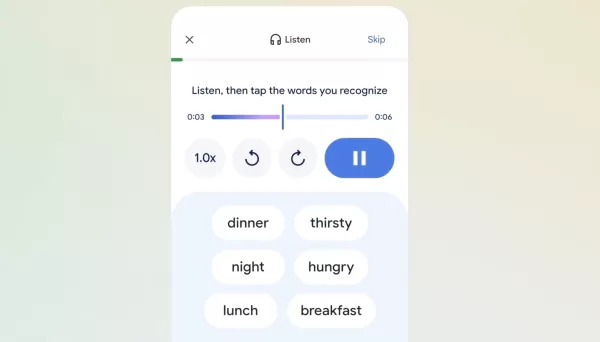 Duolingo Faces New Competition as Google Integrates Language Learning into Translate
Google is introducing AI-driven language learning tools directly into its Translate application. This new beta feature personalizes language lessons to match your proficiency and specific goals, like preparing for an international trip.Initially, the
Duolingo Faces New Competition as Google Integrates Language Learning into Translate
Google is introducing AI-driven language learning tools directly into its Translate application. This new beta feature personalizes language lessons to match your proficiency and specific goals, like preparing for an international trip.Initially, the
 EcoFlow Launches Plug-In Solar Power Systems for US Households
The United States is now introducing EcoFlow's DIY balcony solar system, which I previously reviewed in Europe. EcoFlow states that its Stream Series will be the first plug-and-play solar products available domestically, enabling homeowners and rente
EcoFlow Launches Plug-In Solar Power Systems for US Households
The United States is now introducing EcoFlow's DIY balcony solar system, which I previously reviewed in Europe. EcoFlow states that its Stream Series will be the first plug-and-play solar products available domestically, enabling homeowners and rente
 Google Launches Gemini CLI for Developers
Google has launched a new open-source AI agent that brings the coding, content generation, and research power of Gemini directly into developer terminals. Dubbed Gemini CLI, Google describes it as a "fundamental upgrade to your command-line experienc
Google Launches Gemini CLI for Developers
Google has launched a new open-source AI agent that brings the coding, content generation, and research power of Gemini directly into developer terminals. Dubbed Gemini CLI, Google describes it as a "fundamental upgrade to your command-line experienc

2026 Latest Best AI Short-Form Video Hook Generators for Reels Shorts and Product Launch Campaigns! XIX.AI curates top-rated powerful game-changing tools that deliver must-try results through real-world tests. This weekly updated page offers free vs paid comparison rankings to help you find the perfect solution for boosting content creativity and productivity. Explore now to Unlock your AI edge!
11 tools
xix.ai

2026 Latest Best Top-Rated AI Article Outline Tools for Long Form Writing! This curated collection features powerful, game-changing tools that deliver accurate, structured outlines with real-world tests to boost writing efficiency significantly. XIX.AI is part of this elite selection. Get a free vs paid comparison to help you choose the perfect tool. Explore now and Unlock your AI edge!
9 tools
xix.ai

2026 Latest Best Top-rated AI Roleplay Chat Apps for Language Practice, Interview Prep, and Daily Fluency! XIX.AI curates a powerful game-changing collection that offers free vs paid comparison, real-world tests, and updated rankings weekly. These must-try tools help you boost writing skills, overcome fluency challenges, and improve communication efficiency across all daily scenarios. Explore now to discover your perfect tool for language growth!
10 tools
xix.ai

2026 Latest Best Top-rated AI Stem Separation Tools Curated for Remix Production, Sampling Prep, and Karaoke Masters. These powerful game-changing tools offer real-world tests to deliver precise audio isolation, boosting productivity significantly. XIX.AI provides a weekly updated free vs paid comparison guide to help you find the must-try solution that suits your needs. Explore now to unlock your AI edge.
8 tools
xix.ai

2026 Latest Best AI SQL Copilots Ranked Top-Rated! XIX.AI curates a powerful game-changing collection for weekly updated real-world tests. These must-try tools help you generate accurate revenue dashboards, analyze sales funnels, and track product metrics swiftly, boosting productivity massively. Explore now to Discover your perfect tool for data-driven decision making! 238 characters
9 tools
xix.ai

2026 Latest Best Top-Rated AI Melody Writing Tools for Song Drafts! XIX.AI has curated a highly powerful game-changing collection that goes through rigorous real-world tests to deliver the best writing experience. You can find detailed free vs paid comparisons, accurate rankings, and must-try options designed to help you create stunning song drafts effortlessly and boost your creative productivity significantly. Explore now to discover your perfect tool!
8 tools
xix.ai

Не могу поверить, что они сокращают защиту потребителей ради ИИ-экспериментов! Это как разрешить детям играть с огнём в лесу 🔥 Нам точно нужны эти риски ради технологического превосходства?
Этот бюджет вызывает тревогу... Урезание мер защиты потребителей и климатических инициатив ради развития ИИ без надзора? 🚨 Нам действительно нужен ИИ без регулирования, когда технологии уже влияют на всё?












