


 Home
HomeDuolingo Faces New Competition as Google Integrates Language Learning into Translate
Google is introducing AI-driven language learning tools directly into its Translate application. This new beta feature personalizes language lessons to match your proficiency and specific goals, like preparing for an international trip.
Initially, the tool assists English speakers with Spanish and French, and helps Spanish, French, and Portuguese speakers practice English. By clicking the new 'Practice' button in the app, you can set your skill level and define your learning objective. You may also pick from common scenarios, including professional settings, daily life, social conversations with friends and family, and others.
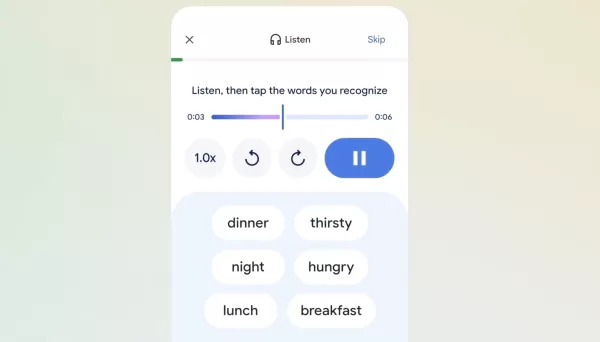
Based on your input, Google's Gemini AI models will craft a custom lesson. For example, if you indicate an intermediate level in Spanish for studying abroad and interacting with a host family, Translate might generate a practice scenario about meal routines. You can then speak about the topic for practice or listen to dialogues, tapping on familiar words as you hear them.
"These activities monitor your daily improvement and develop the skills necessary for confident communication in another language," explained Google product manager Matt Sheets in a briefing. The approach shares similarities with platforms like Duolingo, which also customizes lessons according to a user's level and aims.
Google has also added a live conversation feature to Translate, enabling real-time dialogue between people speaking different languages. It provides AI-generated transcriptions and audio translations for both sides of the conversation. While this version doesn't mimic your own voice like some Pixel features, Sheets noted the team is "testing various possibilities" for future enhancements.
The live translation capability is now accessible to users in the United States, India, and Mexico, supporting over 70 languages such as Arabic, French, Hindi, Korean, Spanish, and Tamil.
Related article
 Warner Music acquires AI attribution startup Sureel AI
Warner Music Group (WMG) confirmed on Wednesday that it is acquiring Sureel AI, an artificial intelligence attribution startup. Sureel’s proprietary technology generates “AI DNA” for musical tracks, deconstructing them into constituent elements to tr
Amazon introduces Alexa for Shopping while pushing Rufus to the background
Amazon has launched Alexa for Shopping, merging its Rufus shopping chatbot with Alexa+ across the app, website, and Echo Show devices.The assistant answers product queries, compares items, tracks prices, and supports shopping reminders. It also handl
Microsoft, Azure and AI Tech Combat California Wildfire Risks
Microsoft invests in AI-driven wildfire detection, with Juan Lavista Ferres, CVP and Chief Data Scientist, discussing strategies to mitigate environmental damage.According to NASA, climate change impacts everyone on Earth, manifesting as rising tempe
Related Special Topic Recommendations
chatbot
Warner Music acquires AI attribution startup Sureel AI
Warner Music Group (WMG) confirmed on Wednesday that it is acquiring Sureel AI, an artificial intelligence attribution startup. Sureel’s proprietary technology generates “AI DNA” for musical tracks, deconstructing them into constituent elements to tr
Amazon introduces Alexa for Shopping while pushing Rufus to the background
Amazon has launched Alexa for Shopping, merging its Rufus shopping chatbot with Alexa+ across the app, website, and Echo Show devices.The assistant answers product queries, compares items, tracks prices, and supports shopping reminders. It also handl
Microsoft, Azure and AI Tech Combat California Wildfire Risks
Microsoft invests in AI-driven wildfire detection, with Juan Lavista Ferres, CVP and Chief Data Scientist, discussing strategies to mitigate environmental damage.According to NASA, climate change impacts everyone on Earth, manifesting as rising tempe
Related Special Topic Recommendations
chatbot
 Best AI Conversation Trainer Tools for Interview Practice
2026 Latest Best Top-rated AI Conversation Trainer Tools for Interview Practice are here on XIX.AI! This curated collection features powerful, game-changing tools that go through rigorous real-world tests to deliver accurate feedback. You’ll find a free vs paid comparison and detailed rankings to help you choose the must-try option that boosts your confidence and skills. Explore now to Discover your perfect tool for interview success!
 12 tools
 xix.ai
Design & Art
Best AI Style Transfer Tools for Creative Experiments
xix.ai
Design & Art
Best AI Style Transfer Tools for Creative Experiments
2026 Latest Best Top-rated AI Style Transfer Tools for Creative Experiments! XIX.AI has curated a powerful, game-changing collection of must-try tools that deliver exceptional results through real-world tests and rigorous rankings. These top solutions help creatives boost productivity significantly by accelerating content creation and unlocking endless creative possibilities. Explore now to discover your perfect tool and start creating today!
9 tools
xix.ai
Comic Creation
Best AI Dialogue Bubble Tools for Visual Storytelling
2026 Latest Best Top-Rated AI Dialogue Bubble Tools for Visual Storytelling are here on XIX.AI! This curated collection features powerful, game-changing tools that help creators boost productivity and overcome creative bottlenecks. Get a free vs paid comparison, see real-world tests, and check the latest rankings to find the must-try solutions perfect for crafting engaging visual narratives. Explore now to discover your ideal tool!
10 tools
xix.ai
Meeting Assistant
Top AI Meeting Summary Tools: Track Decisions and Follow-Ups Clearly
2026 Latest Top-Rated Best AI Meeting Summary Tools for Clear Decision Tracking and Effortless Follow-Ups. This curated list showcases powerful, game-changing solutions that boost productivity dramatically by automating meeting notes, identifying key action items, and streamlining team coordination across all projects. Get a free vs paid comparison along with real-world tests and weekly updated rankings to help you find the perfect tool. Explore now to unlock your AI edge!
9 tools
xix.ai
Data Analysis
Best AI Data Cleaning Tools: Fix Missing Values and Duplicates Fast
2026 Latest Best Top-rated AI Data Cleaning Tools for quick fixing of missing values and duplicates. This curated list showcases powerful, game-changing solutions that boost productivity significantly. Each option has undergone rigorous real-world tests to ensure reliability. Get a free vs paid comparison and discover the must-try tool that fits your needs best. Explore now at XIX.AI to Unlock your AI edge.
11 tools
xix.ai
Design & Art
Best AI Creative Ideation Tools for Artists: Break Through Visual Blocks
2026 Latest Best Top-Rated AI Creative Ideation Tools for Artists are curated by XIX.AI to help creators break through visual blocks and boost creativity instantly. These powerful game-changing tools offer real-world tests, detailed free vs paid comparison, and weekly updated rankings. Discover your perfect tool to accelerate content creation and unlock your AI edge today. Explore now!
14 tools
xix.ai

 Comments (2)
0/500
Comments (2)
0/500
![BrianWilliams]()
Interesting move by Google! But can it really compete with Duolingo's gamified approach? I'm skeptical. 🤔
![JoseJackson]()
Interesting move by Google! Integrating language learning into Translate makes so much sense, especially for casual learners. Duolingo's gamified approach is fun, but having it right in a tool I already use daily could be a game-changer for my Spanish practice. Wonder how this will affect the subscription models in the language app market. 🤔
Google is introducing AI-driven language learning tools directly into its Translate application. This new beta feature personalizes language lessons to match your proficiency and specific goals, like preparing for an international trip.
Initially, the tool assists English speakers with Spanish and French, and helps Spanish, French, and Portuguese speakers practice English. By clicking the new 'Practice' button in the app, you can set your skill level and define your learning objective. You may also pick from common scenarios, including professional settings, daily life, social conversations with friends and family, and others.
Based on your input, Google's Gemini AI models will craft a custom lesson. For example, if you indicate an intermediate level in Spanish for studying abroad and interacting with a host family, Translate might generate a practice scenario about meal routines. You can then speak about the topic for practice or listen to dialogues, tapping on familiar words as you hear them.
"These activities monitor your daily improvement and develop the skills necessary for confident communication in another language," explained Google product manager Matt Sheets in a briefing. The approach shares similarities with platforms like Duolingo, which also customizes lessons according to a user's level and aims.
Google has also added a live conversation feature to Translate, enabling real-time dialogue between people speaking different languages. It provides AI-generated transcriptions and audio translations for both sides of the conversation. While this version doesn't mimic your own voice like some Pixel features, Sheets noted the team is "testing various possibilities" for future enhancements.
The live translation capability is now accessible to users in the United States, India, and Mexico, supporting over 70 languages such as Arabic, French, Hindi, Korean, Spanish, and Tamil.








 Warner Music acquires AI attribution startup Sureel AI
Warner Music Group (WMG) confirmed on Wednesday that it is acquiring Sureel AI, an artificial intelligence attribution startup. Sureel’s proprietary technology generates “AI DNA” for musical tracks, deconstructing them into constituent elements to tr
Amazon introduces Alexa for Shopping while pushing Rufus to the background
Amazon has launched Alexa for Shopping, merging its Rufus shopping chatbot with Alexa+ across the app, website, and Echo Show devices.The assistant answers product queries, compares items, tracks prices, and supports shopping reminders. It also handl
Warner Music acquires AI attribution startup Sureel AI
Warner Music Group (WMG) confirmed on Wednesday that it is acquiring Sureel AI, an artificial intelligence attribution startup. Sureel’s proprietary technology generates “AI DNA” for musical tracks, deconstructing them into constituent elements to tr
Amazon introduces Alexa for Shopping while pushing Rufus to the background
Amazon has launched Alexa for Shopping, merging its Rufus shopping chatbot with Alexa+ across the app, website, and Echo Show devices.The assistant answers product queries, compares items, tracks prices, and supports shopping reminders. It also handl
 Microsoft, Azure and AI Tech Combat California Wildfire Risks
Microsoft invests in AI-driven wildfire detection, with Juan Lavista Ferres, CVP and Chief Data Scientist, discussing strategies to mitigate environmental damage.According to NASA, climate change impacts everyone on Earth, manifesting as rising tempe
Microsoft, Azure and AI Tech Combat California Wildfire Risks
Microsoft invests in AI-driven wildfire detection, with Juan Lavista Ferres, CVP and Chief Data Scientist, discussing strategies to mitigate environmental damage.According to NASA, climate change impacts everyone on Earth, manifesting as rising tempe
2026 Latest Best Top-rated AI Conversation Trainer Tools for Interview Practice are here on XIX.AI! This curated collection features powerful, game-changing tools that go through rigorous real-world tests to deliver accurate feedback. You’ll find a free vs paid comparison and detailed rankings to help you choose the must-try option that boosts your confidence and skills. Explore now to Discover your perfect tool for interview success!
12 tools
xix.ai

2026 Latest Best Top-rated AI Style Transfer Tools for Creative Experiments! XIX.AI has curated a powerful, game-changing collection of must-try tools that deliver exceptional results through real-world tests and rigorous rankings. These top solutions help creatives boost productivity significantly by accelerating content creation and unlocking endless creative possibilities. Explore now to discover your perfect tool and start creating today!
9 tools
xix.ai

2026 Latest Best Top-Rated AI Dialogue Bubble Tools for Visual Storytelling are here on XIX.AI! This curated collection features powerful, game-changing tools that help creators boost productivity and overcome creative bottlenecks. Get a free vs paid comparison, see real-world tests, and check the latest rankings to find the must-try solutions perfect for crafting engaging visual narratives. Explore now to discover your ideal tool!
10 tools
xix.ai
2026 Latest Top-Rated Best AI Meeting Summary Tools for Clear Decision Tracking and Effortless Follow-Ups. This curated list showcases powerful, game-changing solutions that boost productivity dramatically by automating meeting notes, identifying key action items, and streamlining team coordination across all projects. Get a free vs paid comparison along with real-world tests and weekly updated rankings to help you find the perfect tool. Explore now to unlock your AI edge!
9 tools
xix.ai

2026 Latest Best Top-rated AI Data Cleaning Tools for quick fixing of missing values and duplicates. This curated list showcases powerful, game-changing solutions that boost productivity significantly. Each option has undergone rigorous real-world tests to ensure reliability. Get a free vs paid comparison and discover the must-try tool that fits your needs best. Explore now at XIX.AI to Unlock your AI edge.
11 tools
xix.ai

2026 Latest Best Top-Rated AI Creative Ideation Tools for Artists are curated by XIX.AI to help creators break through visual blocks and boost creativity instantly. These powerful game-changing tools offer real-world tests, detailed free vs paid comparison, and weekly updated rankings. Discover your perfect tool to accelerate content creation and unlock your AI edge today. Explore now!
14 tools
xix.ai

Interesting move by Google! But can it really compete with Duolingo's gamified approach? I'm skeptical. 🤔
Interesting move by Google! Integrating language learning into Translate makes so much sense, especially for casual learners. Duolingo's gamified approach is fun, but having it right in a tool I already use daily could be a game-changer for my Spanish practice. Wonder how this will affect the subscription models in the language app market. 🤔












