


 Home
HomeOpenAI Wrestles with Existential Questions
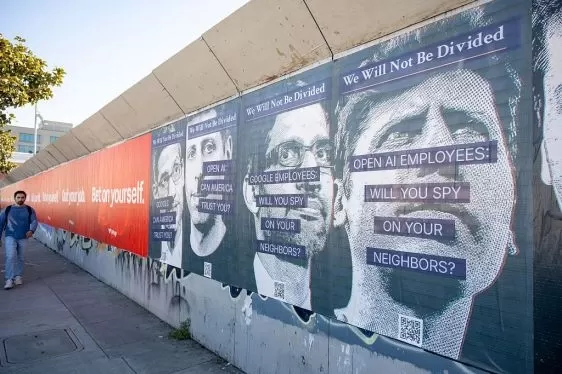
Listen onApple PodcastsListen onSpotifyOpenAI has been dominating headlines lately, covering everything from acquisitions and competition with Anthropic to broader debates about AI's societal impact.
In the latest episode of TechCrunch's Equity podcast, Kirsten Korosec, Sean O'Kane, and I wrapped up the most recent OpenAI news. The company's latest acquisitions appear to be typical acqui-hires, but Sean noted they also tackle "two big existential problems OpenAI is trying to solve right now."
First, by bringing in the team from personal finance startup Hiro, OpenAI may be aiming to develop a product with "more hooks than a simple chatbot—something people would be willing to pay more for." Meanwhile, acquiring new media startup TBPN could help OpenAI "polish its public image, which has taken a hit lately."
Below is a preview of our conversation, edited for brevity and clarity.
Anthony: There are two deals worth highlighting. First, OpenAI bought the personal finance startup Hiro. That follows another deal announced right as we were recording our last Equity episode, so we didn't discuss it then: OpenAI also acquired TBPN, a business talk show and new media company.
Both deals are relatively small for OpenAI. They're not expected to significantly shift the company's direction, but they're intriguing because they hint at a mindset of "Let's experiment with different things."
Especially the TBPN deal comes at a time when, based on what we've seen, OpenAI seems to be doubling down on making ChatGPT and its GPT models more competitive for enterprise developers.
Should running a tech talk show really be on the to-do list?
Kirsten: Absolutely not. That's all.
I want to highlight Hiro because I find it interesting. Julie Bort, our talented venture editor, was likely the first to cover it. She looked into it, and it appears to be an acqui-hire. The company is shutting down. They told users, "After this date, you won't have access anymore."
It's a personal finance startup that launched just two years ago. So this is clearly about hiring talent. I'm curious whether OpenAI will absorb them into its broader operations or if they're genuinely interested in building a personal finance product. To me, it's ambiguous.
Sean: I'd say both are essentially acqui-hires. For TBPN, they supposedly retain editorial independence on their daily show. I respect how quickly the team launched and grew it into what it is today.
Anyone following media should be skeptical. When you acquire a show and place its creators under the public policy, communications, or marketing teams at the acquiring company, saying "editorial independence" isn't a magic spell.
What I find interesting is that despite both being acqui-hires, they each highlight a key problem OpenAI is facing.
The first is Hiro. ChatGPT is a hit, but whether it can generate enough revenue to make OpenAI a sustainable business—without relying on record-breaking private funding rounds—is a major question. They also appear to be struggling in the enterprise space where the real money lies. So bringing in a team like this is a bet on "What else can we do?"
Hiro's founder has a track record of building consumer apps, so this looks like a bet that they can create something with more depth than a chatbot—something people would pay more for.
TBPN is meant to help OpenAI present itself better and improve its public image, which has been suffering. The timing is notable: Ronan Farrow's New Yorker report dropped right around the same time as these announcements last week.
Those are two existential problems OpenAI is currently trying to address.
Kirsten: What you didn't mention is Anthropic looming large. Not in the shadows—they're very visible—and they're finding significant success in the enterprise.
They seem like competitors but also very different companies in many ways. Anthony, do you see them as direct rivals, or are they just finding their footing in enterprise? Could they coexist without directly competing—maybe on talent, but not in the way we initially imagined?
Anthony: I think they're direct competitors. If the AI industry lives up to its promise, both could be huge—number one and two. Success for one doesn't mean the other fades away.
None of this is official, but reporting suggests OpenAI is more obsessed and rattled by Anthropic's rise than anyone else.
Our reporter Lucas Ropek wrote a great piece about the HumanX conference over the weekend. People there said, "ChatGPT is fine, too," but they were all about Claude Code. That's exactly what OpenAI fears.
In theory, generative AI has many opportunities, but the biggest growth area—where the money is and where a sustainable business path exists—is enterprise and coding tools.
Loading the player…
Related article
 Anthropic launches Opus 4.8 featuring new dynamic workflow tool
Anthropic unveiled Opus 4.8 on Thursday, marking the latest iteration of its premier public model. Priced identically to its predecessor, this update is now accessible across all platforms.Releasing just 41 days after Opus 4.7, Anthropic has accelera
OpenAI launches safer ChatGPT for teens years after they started using it
Following a series of lawsuits regarding the absence of safety protocols in AI chatbots—which contributed to teen suicides and other mental health crises—OpenAI unveiled ChatGPT for Teens on Monday. This new offering incorporates enhanced safety feat
Frontier AI Labs Refuse to Disclose Containment Strategies for Rogue Models
Recent research indicates that very few leading AI laboratories have published or demonstrated containment response plans. A containment plan defines the procedures for when an AI system attempts to subvert human control, specifying which access righ
Related Special Topic Recommendations
chatbot
Anthropic launches Opus 4.8 featuring new dynamic workflow tool
Anthropic unveiled Opus 4.8 on Thursday, marking the latest iteration of its premier public model. Priced identically to its predecessor, this update is now accessible across all platforms.Releasing just 41 days after Opus 4.7, Anthropic has accelera
OpenAI launches safer ChatGPT for teens years after they started using it
Following a series of lawsuits regarding the absence of safety protocols in AI chatbots—which contributed to teen suicides and other mental health crises—OpenAI unveiled ChatGPT for Teens on Monday. This new offering incorporates enhanced safety feat
Frontier AI Labs Refuse to Disclose Containment Strategies for Rogue Models
Recent research indicates that very few leading AI laboratories have published or demonstrated containment response plans. A containment plan defines the procedures for when an AI system attempts to subvert human control, specifying which access righ
Related Special Topic Recommendations
chatbot
 Best AI Roleplay Chat Apps for Language Practice, Interview Prep, and Daily Fluency
2026 Latest Best Top-rated AI Roleplay Chat Apps for Language Practice, Interview Prep, and Daily Fluency! XIX.AI curates a powerful game-changing collection that offers free vs paid comparison, real-world tests, and updated rankings weekly. These must-try tools help you boost writing skills, overcome fluency challenges, and improve communication efficiency across all daily scenarios. Explore now to discover your perfect tool for language growth!
 10 tools
 xix.ai
Music composition
AI Stem Separation Tools for Remix Production, Sampling Prep, and Karaoke Masters
xix.ai
Music composition
AI Stem Separation Tools for Remix Production, Sampling Prep, and Karaoke Masters
2026 Latest Best Top-rated AI Stem Separation Tools Curated for Remix Production, Sampling Prep, and Karaoke Masters. These powerful game-changing tools offer real-world tests to deliver precise audio isolation, boosting productivity significantly. XIX.AI provides a weekly updated free vs paid comparison guide to help you find the must-try solution that suits your needs. Explore now to unlock your AI edge.
8 tools
xix.ai
Data Analysis
AI SQL Copilots for Revenue Dashboards, Funnel Analysis, and Product Metrics
2026 Latest Best AI SQL Copilots Ranked Top-Rated! XIX.AI curates a powerful game-changing collection for weekly updated real-world tests. These must-try tools help you generate accurate revenue dashboards, analyze sales funnels, and track product metrics swiftly, boosting productivity massively. Explore now to Discover your perfect tool for data-driven decision making! 238 characters
9 tools
xix.ai
Music composition
Best AI Melody Writing Tools for Song Drafts
2026 Latest Best Top-Rated AI Melody Writing Tools for Song Drafts! XIX.AI has curated a highly powerful game-changing collection that goes through rigorous real-world tests to deliver the best writing experience. You can find detailed free vs paid comparisons, accurate rankings, and must-try options designed to help you create stunning song drafts effortlessly and boost your creative productivity significantly. Explore now to discover your perfect tool!
8 tools
xix.ai
chatbot
Best AI Conversation Trainer Tools for Interview Practice
2026 Latest Best Top-rated AI Conversation Trainer Tools for Interview Practice are here on XIX.AI! This curated collection features powerful, game-changing tools that go through rigorous real-world tests to deliver accurate feedback. You’ll find a free vs paid comparison and detailed rankings to help you choose the must-try option that boosts your confidence and skills. Explore now to Discover your perfect tool for interview success!
12 tools
xix.ai
Design & Art
Best AI Style Transfer Tools for Creative Experiments
2026 Latest Best Top-rated AI Style Transfer Tools for Creative Experiments! XIX.AI has curated a powerful, game-changing collection of must-try tools that deliver exceptional results through real-world tests and rigorous rankings. These top solutions help creatives boost productivity significantly by accelerating content creation and unlocking endless creative possibilities. Explore now to discover your perfect tool and start creating today!
9 tools
xix.ai

 Comments (0)
0/500
Comments (0)
0/500
OpenAI has been dominating headlines lately, covering everything from acquisitions and competition with Anthropic to broader debates about AI's societal impact.
In the latest episode of TechCrunch's Equity podcast, Kirsten Korosec, Sean O'Kane, and I wrapped up the most recent OpenAI news. The company's latest acquisitions appear to be typical acqui-hires, but Sean noted they also tackle "two big existential problems OpenAI is trying to solve right now."
First, by bringing in the team from personal finance startup Hiro, OpenAI may be aiming to develop a product with "more hooks than a simple chatbot—something people would be willing to pay more for." Meanwhile, acquiring new media startup TBPN could help OpenAI "polish its public image, which has taken a hit lately."
Below is a preview of our conversation, edited for brevity and clarity.
Anthony: There are two deals worth highlighting. First, OpenAI bought the personal finance startup Hiro. That follows another deal announced right as we were recording our last Equity episode, so we didn't discuss it then: OpenAI also acquired TBPN, a business talk show and new media company.
Both deals are relatively small for OpenAI. They're not expected to significantly shift the company's direction, but they're intriguing because they hint at a mindset of "Let's experiment with different things."
Especially the TBPN deal comes at a time when, based on what we've seen, OpenAI seems to be doubling down on making ChatGPT and its GPT models more competitive for enterprise developers.
Should running a tech talk show really be on the to-do list?
Kirsten: Absolutely not. That's all.
I want to highlight Hiro because I find it interesting. Julie Bort, our talented venture editor, was likely the first to cover it. She looked into it, and it appears to be an acqui-hire. The company is shutting down. They told users, "After this date, you won't have access anymore."
It's a personal finance startup that launched just two years ago. So this is clearly about hiring talent. I'm curious whether OpenAI will absorb them into its broader operations or if they're genuinely interested in building a personal finance product. To me, it's ambiguous.
Sean: I'd say both are essentially acqui-hires. For TBPN, they supposedly retain editorial independence on their daily show. I respect how quickly the team launched and grew it into what it is today.
Anyone following media should be skeptical. When you acquire a show and place its creators under the public policy, communications, or marketing teams at the acquiring company, saying "editorial independence" isn't a magic spell.
What I find interesting is that despite both being acqui-hires, they each highlight a key problem OpenAI is facing.
The first is Hiro. ChatGPT is a hit, but whether it can generate enough revenue to make OpenAI a sustainable business—without relying on record-breaking private funding rounds—is a major question. They also appear to be struggling in the enterprise space where the real money lies. So bringing in a team like this is a bet on "What else can we do?"
Hiro's founder has a track record of building consumer apps, so this looks like a bet that they can create something with more depth than a chatbot—something people would pay more for.
TBPN is meant to help OpenAI present itself better and improve its public image, which has been suffering. The timing is notable: Ronan Farrow's New Yorker report dropped right around the same time as these announcements last week.
Those are two existential problems OpenAI is currently trying to address.
Kirsten: What you didn't mention is Anthropic looming large. Not in the shadows—they're very visible—and they're finding significant success in the enterprise.
They seem like competitors but also very different companies in many ways. Anthony, do you see them as direct rivals, or are they just finding their footing in enterprise? Could they coexist without directly competing—maybe on talent, but not in the way we initially imagined?
Anthony: I think they're direct competitors. If the AI industry lives up to its promise, both could be huge—number one and two. Success for one doesn't mean the other fades away.
None of this is official, but reporting suggests OpenAI is more obsessed and rattled by Anthropic's rise than anyone else.
Our reporter Lucas Ropek wrote a great piece about the HumanX conference over the weekend. People there said, "ChatGPT is fine, too," but they were all about Claude Code. That's exactly what OpenAI fears.
In theory, generative AI has many opportunities, but the biggest growth area—where the money is and where a sustainable business path exists—is enterprise and coding tools.
Loading the player…








 Anthropic launches Opus 4.8 featuring new dynamic workflow tool
Anthropic unveiled Opus 4.8 on Thursday, marking the latest iteration of its premier public model. Priced identically to its predecessor, this update is now accessible across all platforms.Releasing just 41 days after Opus 4.7, Anthropic has accelera
Anthropic launches Opus 4.8 featuring new dynamic workflow tool
Anthropic unveiled Opus 4.8 on Thursday, marking the latest iteration of its premier public model. Priced identically to its predecessor, this update is now accessible across all platforms.Releasing just 41 days after Opus 4.7, Anthropic has accelera
 OpenAI launches safer ChatGPT for teens years after they started using it
Following a series of lawsuits regarding the absence of safety protocols in AI chatbots—which contributed to teen suicides and other mental health crises—OpenAI unveiled ChatGPT for Teens on Monday. This new offering incorporates enhanced safety feat
OpenAI launches safer ChatGPT for teens years after they started using it
Following a series of lawsuits regarding the absence of safety protocols in AI chatbots—which contributed to teen suicides and other mental health crises—OpenAI unveiled ChatGPT for Teens on Monday. This new offering incorporates enhanced safety feat
 Frontier AI Labs Refuse to Disclose Containment Strategies for Rogue Models
Recent research indicates that very few leading AI laboratories have published or demonstrated containment response plans. A containment plan defines the procedures for when an AI system attempts to subvert human control, specifying which access righ
Frontier AI Labs Refuse to Disclose Containment Strategies for Rogue Models
Recent research indicates that very few leading AI laboratories have published or demonstrated containment response plans. A containment plan defines the procedures for when an AI system attempts to subvert human control, specifying which access righ

2026 Latest Best Top-rated AI Roleplay Chat Apps for Language Practice, Interview Prep, and Daily Fluency! XIX.AI curates a powerful game-changing collection that offers free vs paid comparison, real-world tests, and updated rankings weekly. These must-try tools help you boost writing skills, overcome fluency challenges, and improve communication efficiency across all daily scenarios. Explore now to discover your perfect tool for language growth!
10 tools
xix.ai

2026 Latest Best Top-rated AI Stem Separation Tools Curated for Remix Production, Sampling Prep, and Karaoke Masters. These powerful game-changing tools offer real-world tests to deliver precise audio isolation, boosting productivity significantly. XIX.AI provides a weekly updated free vs paid comparison guide to help you find the must-try solution that suits your needs. Explore now to unlock your AI edge.
8 tools
xix.ai

2026 Latest Best AI SQL Copilots Ranked Top-Rated! XIX.AI curates a powerful game-changing collection for weekly updated real-world tests. These must-try tools help you generate accurate revenue dashboards, analyze sales funnels, and track product metrics swiftly, boosting productivity massively. Explore now to Discover your perfect tool for data-driven decision making! 238 characters
9 tools
xix.ai

2026 Latest Best Top-Rated AI Melody Writing Tools for Song Drafts! XIX.AI has curated a highly powerful game-changing collection that goes through rigorous real-world tests to deliver the best writing experience. You can find detailed free vs paid comparisons, accurate rankings, and must-try options designed to help you create stunning song drafts effortlessly and boost your creative productivity significantly. Explore now to discover your perfect tool!
8 tools
xix.ai

2026 Latest Best Top-rated AI Conversation Trainer Tools for Interview Practice are here on XIX.AI! This curated collection features powerful, game-changing tools that go through rigorous real-world tests to deliver accurate feedback. You’ll find a free vs paid comparison and detailed rankings to help you choose the must-try option that boosts your confidence and skills. Explore now to Discover your perfect tool for interview success!
12 tools
xix.ai

2026 Latest Best Top-rated AI Style Transfer Tools for Creative Experiments! XIX.AI has curated a powerful, game-changing collection of must-try tools that deliver exceptional results through real-world tests and rigorous rankings. These top solutions help creatives boost productivity significantly by accelerating content creation and unlocking endless creative possibilities. Explore now to discover your perfect tool and start creating today!
9 tools
xix.ai












