


 Home
HomeOpenAI Labels DeepSeek 'State-Controlled,' Urges Ban on 'PRC-Produced' Models
In a recent policy proposal, OpenAI has labeled the Chinese AI lab DeepSeek as "state-subsidized" and "state-controlled," suggesting that the U.S. government should contemplate banning models developed by DeepSeek and similar operations supported by the People's Republic of China (PRC).
This proposal, submitted as part of the Trump administration's "AI Action Plan" initiative, argues that DeepSeek's models, such as its R1 "reasoning" model, pose security risks due to Chinese legal requirements that mandate compliance with government requests for user data. OpenAI recommends banning "PRC-produced" models in countries classified as "Tier 1" under the Biden administration's export rules to mitigate privacy and security concerns, including the risk of intellectual property theft.
It's not clear whether OpenAI's use of "models" includes DeepSeek's API, its open models, or both. Interestingly, DeepSeek's open models don't have built-in mechanisms for the Chinese government to access user data; instead, they are hosted by companies like Microsoft, Perplexity, and Amazon.
OpenAI has previously accused DeepSeek, which gained recognition earlier this year, of extracting knowledge from OpenAI's models in violation of its terms of service. The new claims—that DeepSeek is backed and controlled by the PRC—mark a significant escalation in OpenAI's ongoing dispute with the Chinese lab.
There's no direct evidence linking DeepSeek, a spin-off from the quantitative hedge fund High-Flyer, to the Chinese government. However, the PRC has shown a growing interest in DeepSeek recently, highlighted by a meeting between DeepSeek founder Liang Wenfeng and Chinese leader Xi Jinping a few weeks ago.
Updated 3/15 8:38 p.m. Pacific: Days after this story hit the news, OpenAI spokesperson Liz Bourgeois provided the following clarification:
“We're not pushing for restrictions on individuals using models like DeepSeek. Our proposal focuses on modifying U.S. export rules to enable more countries to access U.S. computing resources, provided their datacenters don't use PRC technology that could pose security risks. This isn't about limiting chip access based on fears they'll be redirected to the PRC. Our aim is to increase compute and AI access for more countries and people.”
OpenAI's own AI-powered deep research tool describes this statement as "equivocal, using deflective and softening language that somewhat contradicts the more assertive position in the original submission."
Related article
 OpenAI launches safer ChatGPT for teens years after they started using it
Following a series of lawsuits regarding the absence of safety protocols in AI chatbots—which contributed to teen suicides and other mental health crises—OpenAI unveiled ChatGPT for Teens on Monday. This new offering incorporates enhanced safety feat
Frontier AI Labs Refuse to Disclose Containment Strategies for Rogue Models
Recent research indicates that very few leading AI laboratories have published or demonstrated containment response plans. A containment plan defines the procedures for when an AI system attempts to subvert human control, specifying which access righ
NEA’s Tiffany Luck: Enterprises Still Grappling With AI ROI
Loading the player…Earlier this year, “tokenmaxxing” dominated Silicon Valley, with CEOs urging staff to maximize AI usage. That enthusiasm quickly met reality. Uber reportedly exceeded its annual AI budget within months, some firms reduced Claude li
Related Special Topic Recommendations
Design & Art
OpenAI launches safer ChatGPT for teens years after they started using it
Following a series of lawsuits regarding the absence of safety protocols in AI chatbots—which contributed to teen suicides and other mental health crises—OpenAI unveiled ChatGPT for Teens on Monday. This new offering incorporates enhanced safety feat
Frontier AI Labs Refuse to Disclose Containment Strategies for Rogue Models
Recent research indicates that very few leading AI laboratories have published or demonstrated containment response plans. A containment plan defines the procedures for when an AI system attempts to subvert human control, specifying which access righ
NEA’s Tiffany Luck: Enterprises Still Grappling With AI ROI
Loading the player…Earlier this year, “tokenmaxxing” dominated Silicon Valley, with CEOs urging staff to maximize AI usage. That enthusiasm quickly met reality. Uber reportedly exceeded its annual AI budget within months, some firms reduced Claude li
Related Special Topic Recommendations
Design & Art
 Best AI Style Transfer Tools for Creative Experiments
2026 Latest Best Top-rated AI Style Transfer Tools for Creative Experiments! XIX.AI has curated a powerful, game-changing collection of must-try tools that deliver exceptional results through real-world tests and rigorous rankings. These top solutions help creatives boost productivity significantly by accelerating content creation and unlocking endless creative possibilities. Explore now to discover your perfect tool and start creating today!
 9 tools
 xix.ai
Comic Creation
Best AI Dialogue Bubble Tools for Visual Storytelling
xix.ai
Comic Creation
Best AI Dialogue Bubble Tools for Visual Storytelling
2026 Latest Best Top-Rated AI Dialogue Bubble Tools for Visual Storytelling are here on XIX.AI! This curated collection features powerful, game-changing tools that help creators boost productivity and overcome creative bottlenecks. Get a free vs paid comparison, see real-world tests, and check the latest rankings to find the must-try solutions perfect for crafting engaging visual narratives. Explore now to discover your ideal tool!
10 tools
xix.ai
Meeting Assistant
Top AI Meeting Summary Tools: Track Decisions and Follow-Ups Clearly
2026 Latest Top-Rated Best AI Meeting Summary Tools for Clear Decision Tracking and Effortless Follow-Ups. This curated list showcases powerful, game-changing solutions that boost productivity dramatically by automating meeting notes, identifying key action items, and streamlining team coordination across all projects. Get a free vs paid comparison along with real-world tests and weekly updated rankings to help you find the perfect tool. Explore now to unlock your AI edge!
9 tools
xix.ai
Data Analysis
Best AI Data Cleaning Tools: Fix Missing Values and Duplicates Fast
2026 Latest Best Top-rated AI Data Cleaning Tools for quick fixing of missing values and duplicates. This curated list showcases powerful, game-changing solutions that boost productivity significantly. Each option has undergone rigorous real-world tests to ensure reliability. Get a free vs paid comparison and discover the must-try tool that fits your needs best. Explore now at XIX.AI to Unlock your AI edge.
11 tools
xix.ai
Design & Art
Best AI Creative Ideation Tools for Artists: Break Through Visual Blocks
2026 Latest Best Top-Rated AI Creative Ideation Tools for Artists are curated by XIX.AI to help creators break through visual blocks and boost creativity instantly. These powerful game-changing tools offer real-world tests, detailed free vs paid comparison, and weekly updated rankings. Discover your perfect tool to accelerate content creation and unlock your AI edge today. Explore now!
14 tools
xix.ai
Music composition
AI Beat Makers for TikTok Background Tracks, Reels Audio, and Creator Promo Music
2026 Latest Best AI Beat Makers for TikTok Background Tracks, Reels Audio, and Creator Promo Music! XIX.AI has curated a top-rated list of powerful game-changing tools that go through real-world tests to deliver flawless music for every content need. You’ll find detailed free vs paid comparison data, weekly updated rankings, and must-try options to help you boost creativity and productivity. Explore now to discover your perfect tool!
11 tools
xix.ai

 Comments (53)
0/500
Comments (53)
0/500
![DanielWalker]()
C'est vraiment ironique de voir des géants technologiques occidentaux utiliser des critères politiques pour restreindre le développement d'IA dans d'autres pays, ça ressemble un peu à imposer ses propres normes au reste du monde.
![KennethRoberts]()
Das ist echt krass, wie schnell sich der KI-Wettbewerb in einen geopolitischen Machtkampf verwandelt. OpenAI wirft DeepSeek 'staatliche Kontrolle' vor, aber ist das nicht auch ein bisschen heuchlerisch? Die großen Tech-Firmen in den USA bekommen doch auch indirekte Unterstützung, oder? 🧐 Am Ende leiden nur die Nutzer, wenn Innovation durch Politik blockiert wird. Hoffentlich setzt sich Vernunft durch und nicht nur Protektionismus.
![ThomasRoberts]()
這標題也太針對性了吧🫤OpenAI自己拿微軟投資的時候怎麼不說?AI競爭現在變成政治工具了嗎?技術本身應該無國界,結果還是被地緣政治綁架了
![JuanWhite]()
This is wild! OpenAI calling out DeepSeek as 'state-controlled' feels like a sci-fi plot twist. Is this about tech rivalry or real security concerns? 🤔 Curious to see how this plays out in the AI world.
![SamuelEvans]()
This article is wild! Calling DeepSeek 'state-controlled' feels like a stretch—where’s the proof? I get the security concerns, but banning AI models outright seems like overkill. What’s next, a global AI turf war? 🤔
![ScottJackson]()
OpenAI's move to label DeepSeek as 'state-controlled' feels like a strategic jab in the AI race. It's intriguing but smells like geopolitics sneaking into tech. 🤔 Curious how this impacts global AI innovation.
In a recent policy proposal, OpenAI has labeled the Chinese AI lab DeepSeek as "state-subsidized" and "state-controlled," suggesting that the U.S. government should contemplate banning models developed by DeepSeek and similar operations supported by the People's Republic of China (PRC).
This proposal, submitted as part of the Trump administration's "AI Action Plan" initiative, argues that DeepSeek's models, such as its R1 "reasoning" model, pose security risks due to Chinese legal requirements that mandate compliance with government requests for user data. OpenAI recommends banning "PRC-produced" models in countries classified as "Tier 1" under the Biden administration's export rules to mitigate privacy and security concerns, including the risk of intellectual property theft.
It's not clear whether OpenAI's use of "models" includes DeepSeek's API, its open models, or both. Interestingly, DeepSeek's open models don't have built-in mechanisms for the Chinese government to access user data; instead, they are hosted by companies like Microsoft, Perplexity, and Amazon.
OpenAI has previously accused DeepSeek, which gained recognition earlier this year, of extracting knowledge from OpenAI's models in violation of its terms of service. The new claims—that DeepSeek is backed and controlled by the PRC—mark a significant escalation in OpenAI's ongoing dispute with the Chinese lab.
There's no direct evidence linking DeepSeek, a spin-off from the quantitative hedge fund High-Flyer, to the Chinese government. However, the PRC has shown a growing interest in DeepSeek recently, highlighted by a meeting between DeepSeek founder Liang Wenfeng and Chinese leader Xi Jinping a few weeks ago.
Updated 3/15 8:38 p.m. Pacific: Days after this story hit the news, OpenAI spokesperson Liz Bourgeois provided the following clarification:
“We're not pushing for restrictions on individuals using models like DeepSeek. Our proposal focuses on modifying U.S. export rules to enable more countries to access U.S. computing resources, provided their datacenters don't use PRC technology that could pose security risks. This isn't about limiting chip access based on fears they'll be redirected to the PRC. Our aim is to increase compute and AI access for more countries and people.”
OpenAI's own AI-powered deep research tool describes this statement as "equivocal, using deflective and softening language that somewhat contradicts the more assertive position in the original submission."








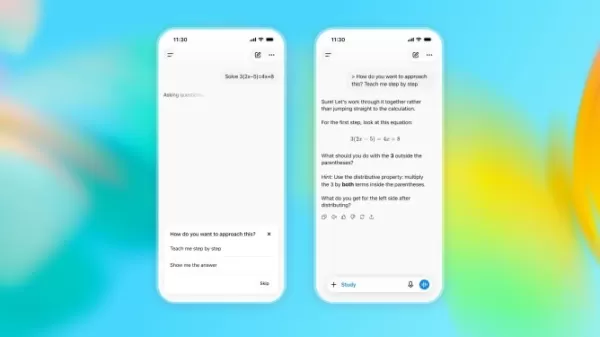 OpenAI launches safer ChatGPT for teens years after they started using it
Following a series of lawsuits regarding the absence of safety protocols in AI chatbots—which contributed to teen suicides and other mental health crises—OpenAI unveiled ChatGPT for Teens on Monday. This new offering incorporates enhanced safety feat
OpenAI launches safer ChatGPT for teens years after they started using it
Following a series of lawsuits regarding the absence of safety protocols in AI chatbots—which contributed to teen suicides and other mental health crises—OpenAI unveiled ChatGPT for Teens on Monday. This new offering incorporates enhanced safety feat
 Frontier AI Labs Refuse to Disclose Containment Strategies for Rogue Models
Recent research indicates that very few leading AI laboratories have published or demonstrated containment response plans. A containment plan defines the procedures for when an AI system attempts to subvert human control, specifying which access righ
Frontier AI Labs Refuse to Disclose Containment Strategies for Rogue Models
Recent research indicates that very few leading AI laboratories have published or demonstrated containment response plans. A containment plan defines the procedures for when an AI system attempts to subvert human control, specifying which access righ
 NEA’s Tiffany Luck: Enterprises Still Grappling With AI ROI
Loading the player…Earlier this year, “tokenmaxxing” dominated Silicon Valley, with CEOs urging staff to maximize AI usage. That enthusiasm quickly met reality. Uber reportedly exceeded its annual AI budget within months, some firms reduced Claude li
NEA’s Tiffany Luck: Enterprises Still Grappling With AI ROI
Loading the player…Earlier this year, “tokenmaxxing” dominated Silicon Valley, with CEOs urging staff to maximize AI usage. That enthusiasm quickly met reality. Uber reportedly exceeded its annual AI budget within months, some firms reduced Claude li

2026 Latest Best Top-rated AI Style Transfer Tools for Creative Experiments! XIX.AI has curated a powerful, game-changing collection of must-try tools that deliver exceptional results through real-world tests and rigorous rankings. These top solutions help creatives boost productivity significantly by accelerating content creation and unlocking endless creative possibilities. Explore now to discover your perfect tool and start creating today!
9 tools
xix.ai

2026 Latest Best Top-Rated AI Dialogue Bubble Tools for Visual Storytelling are here on XIX.AI! This curated collection features powerful, game-changing tools that help creators boost productivity and overcome creative bottlenecks. Get a free vs paid comparison, see real-world tests, and check the latest rankings to find the must-try solutions perfect for crafting engaging visual narratives. Explore now to discover your ideal tool!
10 tools
xix.ai

2026 Latest Top-Rated Best AI Meeting Summary Tools for Clear Decision Tracking and Effortless Follow-Ups. This curated list showcases powerful, game-changing solutions that boost productivity dramatically by automating meeting notes, identifying key action items, and streamlining team coordination across all projects. Get a free vs paid comparison along with real-world tests and weekly updated rankings to help you find the perfect tool. Explore now to unlock your AI edge!
9 tools
xix.ai

2026 Latest Best Top-rated AI Data Cleaning Tools for quick fixing of missing values and duplicates. This curated list showcases powerful, game-changing solutions that boost productivity significantly. Each option has undergone rigorous real-world tests to ensure reliability. Get a free vs paid comparison and discover the must-try tool that fits your needs best. Explore now at XIX.AI to Unlock your AI edge.
11 tools
xix.ai

2026 Latest Best Top-Rated AI Creative Ideation Tools for Artists are curated by XIX.AI to help creators break through visual blocks and boost creativity instantly. These powerful game-changing tools offer real-world tests, detailed free vs paid comparison, and weekly updated rankings. Discover your perfect tool to accelerate content creation and unlock your AI edge today. Explore now!
14 tools
xix.ai

2026 Latest Best AI Beat Makers for TikTok Background Tracks, Reels Audio, and Creator Promo Music! XIX.AI has curated a top-rated list of powerful game-changing tools that go through real-world tests to deliver flawless music for every content need. You’ll find detailed free vs paid comparison data, weekly updated rankings, and must-try options to help you boost creativity and productivity. Explore now to discover your perfect tool!
11 tools
xix.ai

C'est vraiment ironique de voir des géants technologiques occidentaux utiliser des critères politiques pour restreindre le développement d'IA dans d'autres pays, ça ressemble un peu à imposer ses propres normes au reste du monde.
Das ist echt krass, wie schnell sich der KI-Wettbewerb in einen geopolitischen Machtkampf verwandelt. OpenAI wirft DeepSeek 'staatliche Kontrolle' vor, aber ist das nicht auch ein bisschen heuchlerisch? Die großen Tech-Firmen in den USA bekommen doch auch indirekte Unterstützung, oder? 🧐 Am Ende leiden nur die Nutzer, wenn Innovation durch Politik blockiert wird. Hoffentlich setzt sich Vernunft durch und nicht nur Protektionismus.
這標題也太針對性了吧🫤OpenAI自己拿微軟投資的時候怎麼不說?AI競爭現在變成政治工具了嗎?技術本身應該無國界,結果還是被地緣政治綁架了
This is wild! OpenAI calling out DeepSeek as 'state-controlled' feels like a sci-fi plot twist. Is this about tech rivalry or real security concerns? 🤔 Curious to see how this plays out in the AI world.
This article is wild! Calling DeepSeek 'state-controlled' feels like a stretch—where’s the proof? I get the security concerns, but banning AI models outright seems like overkill. What’s next, a global AI turf war? 🤔
OpenAI's move to label DeepSeek as 'state-controlled' feels like a strategic jab in the AI race. It's intriguing but smells like geopolitics sneaking into tech. 🤔 Curious how this impacts global AI innovation.












