


 Home
HomeForget SaaS: The future is Services as Software, thanks to AI

For over two decades, Software as a Service (SaaS) has been a cornerstone of the tech world, with applications accessible entirely over the internet. However, the rise of artificial intelligence (AI) is reshaping this landscape by leveraging applications to autonomously deliver services. This new paradigm is dubbed "Services as Software."
AI is carving out a fresh frontier for tech professionals and businesses. Frank Diana, a futurist at Tata Consultancy Services, recently highlighted this shift, stating, "Historically, businesses bought software and hired human professionals to operate it. AI is flipping that model. Increasingly, businesses will design their processes around AI from the start -- not as an add-on, but as the default worker. This shift will impact nearly every function."
An HFS survey reveals that 60% of 1,000 surveyed enterprises are already eyeing services as tech offerings. The same percentage plans to replace some or all of their professional services with AI within the next three to five years.
Similar trends are evident in routine IT maintenance, HR, procurement, accounting, and customer service, which "are becoming much easier to replicate with advancing generative AI and agentic software, supported by public and private cloud capabilities to secure and scale transaction volumes," according to HFS authors Saurabh Gupta and Phil Fersht.
Tasks that once required teams of specialists are now increasingly handled by AI-powered systems capable of executing tasks autonomously, Diana explained. "This transformation isn't just about automation -- it's about redefining how businesses consume and deliver services. The emerging model marks a profound departure from the past: software is no longer a tool for human workers; in many cases, it is the worker."
This shift heralds significant changes in the roles of tech professionals. "SaaS models primarily revolved around cloud-hosted applications," Diana told ZDNET. Services as Software "incorporates intelligent technologies such as AI, digital twins, predictive analytics, and autonomous systems, requiring professionals to pivot from infrastructure management to the orchestration of dynamic, adaptive services."
This transition underscores the need for professionals to realign their skillsets, Diana continued. "Prioritizing AI literacy, strategic thinking, and human-machine synergy is crucial. Adapting to new career paths focused on orchestrating integrated service ecosystems and enhancing cross-functional collaboration will be essential."
To prepare for this shift, Diana urged technology professionals to "embrace continuous learning, deepen their proficiency in AI and automation, and sharpen soft skills such as communication and problem-solving." By doing so, tech professionals can position themselves as strategic enablers of business outcomes rather than merely technical facilitators.
Despite the surge in automation, human expertise remains vital, Diana emphasized. Oversight and ethics are crucial, as "AI requires human governance to ensure fairness, compliance, and security." Additionally, while AI can process data, humans will provide context, vision, and leadership.
Gupta and Fersht also highlighted the challenges faced by technology and business professionals as services and software converge. "Services and software people come from different worlds and speak different languages, but now these need to come together in a way we can all understand and develop," they noted. "We can't simply buy shiny new S-a-S solutions and plug them in like we did with an ERP solution. This is where we need to define real business value, which can be delivered by AI technology and priced according to that value and the desired outcomes we expect."
Related article
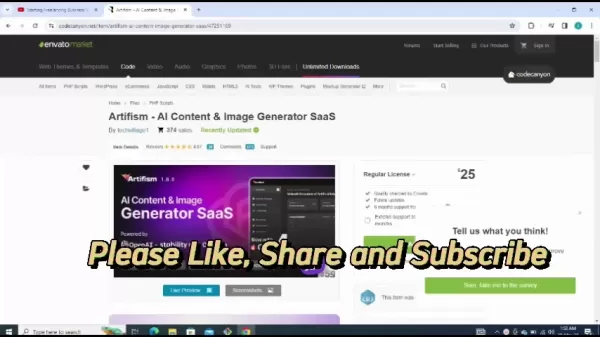
 Artifism Review: AI-Powered Content & Image Generator SaaS Script
In today's content-driven digital ecosystem, consistently producing high-quality materials presents significant challenges for creators and marketers alike. The Artifism AI Content & Image Generator SaaS script offers an innovative solution by automa
Alibaba Super Cup: Qwen3.8-Max Debuts with Boosted Coding and Office Tools
Alibaba has officially unveiled Qwen3.8-Max, a next-generation foundation large model boasting 2.4 trillion parameters. This significant AI advancement delivers substantial performance gains in core areas like coding and professional office tasks, sh
Indian Tech Tycoon Invests $30M in AI Rival to Microsoft Office
Serial entrepreneur Bhavin Turakhia is investing $30 million of his own capital, betting that the enterprise AI sector still has room for new players. His latest startup, Neo, operates on a core belief: legacy workplace software cannot simply be patc
Related Special Topic Recommendations
chatbot
Artifism Review: AI-Powered Content & Image Generator SaaS Script
In today's content-driven digital ecosystem, consistently producing high-quality materials presents significant challenges for creators and marketers alike. The Artifism AI Content & Image Generator SaaS script offers an innovative solution by automa
Alibaba Super Cup: Qwen3.8-Max Debuts with Boosted Coding and Office Tools
Alibaba has officially unveiled Qwen3.8-Max, a next-generation foundation large model boasting 2.4 trillion parameters. This significant AI advancement delivers substantial performance gains in core areas like coding and professional office tasks, sh
Indian Tech Tycoon Invests $30M in AI Rival to Microsoft Office
Serial entrepreneur Bhavin Turakhia is investing $30 million of his own capital, betting that the enterprise AI sector still has room for new players. His latest startup, Neo, operates on a core belief: legacy workplace software cannot simply be patc
Related Special Topic Recommendations
chatbot
 Best AI Conversation Trainer Tools for Interview Practice
2026 Latest Best Top-rated AI Conversation Trainer Tools for Interview Practice are here on XIX.AI! This curated collection features powerful, game-changing tools that go through rigorous real-world tests to deliver accurate feedback. You’ll find a free vs paid comparison and detailed rankings to help you choose the must-try option that boosts your confidence and skills. Explore now to Discover your perfect tool for interview success!
 12 tools
 xix.ai
Design & Art
Best AI Style Transfer Tools for Creative Experiments
xix.ai
Design & Art
Best AI Style Transfer Tools for Creative Experiments
2026 Latest Best Top-rated AI Style Transfer Tools for Creative Experiments! XIX.AI has curated a powerful, game-changing collection of must-try tools that deliver exceptional results through real-world tests and rigorous rankings. These top solutions help creatives boost productivity significantly by accelerating content creation and unlocking endless creative possibilities. Explore now to discover your perfect tool and start creating today!
9 tools
xix.ai
Comic Creation
Best AI Dialogue Bubble Tools for Visual Storytelling
2026 Latest Best Top-Rated AI Dialogue Bubble Tools for Visual Storytelling are here on XIX.AI! This curated collection features powerful, game-changing tools that help creators boost productivity and overcome creative bottlenecks. Get a free vs paid comparison, see real-world tests, and check the latest rankings to find the must-try solutions perfect for crafting engaging visual narratives. Explore now to discover your ideal tool!
10 tools
xix.ai
Meeting Assistant
Top AI Meeting Summary Tools: Track Decisions and Follow-Ups Clearly
2026 Latest Top-Rated Best AI Meeting Summary Tools for Clear Decision Tracking and Effortless Follow-Ups. This curated list showcases powerful, game-changing solutions that boost productivity dramatically by automating meeting notes, identifying key action items, and streamlining team coordination across all projects. Get a free vs paid comparison along with real-world tests and weekly updated rankings to help you find the perfect tool. Explore now to unlock your AI edge!
9 tools
xix.ai
Data Analysis
Best AI Data Cleaning Tools: Fix Missing Values and Duplicates Fast
2026 Latest Best Top-rated AI Data Cleaning Tools for quick fixing of missing values and duplicates. This curated list showcases powerful, game-changing solutions that boost productivity significantly. Each option has undergone rigorous real-world tests to ensure reliability. Get a free vs paid comparison and discover the must-try tool that fits your needs best. Explore now at XIX.AI to Unlock your AI edge.
11 tools
xix.ai
Design & Art
Best AI Creative Ideation Tools for Artists: Break Through Visual Blocks
2026 Latest Best Top-Rated AI Creative Ideation Tools for Artists are curated by XIX.AI to help creators break through visual blocks and boost creativity instantly. These powerful game-changing tools offer real-world tests, detailed free vs paid comparison, and weekly updated rankings. Discover your perfect tool to accelerate content creation and unlock your AI edge today. Explore now!
14 tools
xix.ai

 Comments (30)
0/500
Comments (30)
0/500
![PaulHarris]()
Interesting read! The shift from SaaS to 'Services as Software' feels like a natural evolution with AI taking the wheel. It makes me wonder how this will change the pricing models and who really owns the automated workflows. Exciting but also a bit daunting for smaller businesses trying to keep up. 🤔
![HenryJackson]()
AIがサービスを自律的に提供するって、SaaSの次はSaa...S?🤔 ちょっとややこしいけど、確かに最近のAIツールは単なるソフト以上のことをしてる気がする。でも完全自律化すると雇用への影響が心配...人間とAIの協業モデルが理想かな。個人的には料理ロボットが欲しい!🍳
![NicholasDavis]()
AI讓軟體變成服務,這概念聽起來有點可怕😅 以後我們的工作會不會都被AI取代了啊?不過這種模式如果真能實現,企業營運成本應該會大幅降低,蠻期待實際案例的!
![GaryJones]()
AI turning apps into service providers? Mind-blowing shift! SaaS feels like ancient history now. Excited to see where this goes! 🚀
![WalterRodriguez]()
AI turning software into services sounds wild! 🤯 Imagine apps just doing the work for you, no middleman needed. But are we ready for machines to take over like that? Kinda spooky if you ask me.
![BillyThomas]()
¿Olvidar SaaS? ¡Más bien 'olvídalo, SaaS sigue siendo el rey!' AI convirtiendo servicios en software suena genial, pero no reemplazará mis herramientas SaaS tan pronto. Aún así, es un concepto interesante para seguir de cerca. 🤔
For over two decades, Software as a Service (SaaS) has been a cornerstone of the tech world, with applications accessible entirely over the internet. However, the rise of artificial intelligence (AI) is reshaping this landscape by leveraging applications to autonomously deliver services. This new paradigm is dubbed "Services as Software."
AI is carving out a fresh frontier for tech professionals and businesses. Frank Diana, a futurist at Tata Consultancy Services, recently highlighted this shift, stating, "Historically, businesses bought software and hired human professionals to operate it. AI is flipping that model. Increasingly, businesses will design their processes around AI from the start -- not as an add-on, but as the default worker. This shift will impact nearly every function."
An HFS survey reveals that 60% of 1,000 surveyed enterprises are already eyeing services as tech offerings. The same percentage plans to replace some or all of their professional services with AI within the next three to five years.
Similar trends are evident in routine IT maintenance, HR, procurement, accounting, and customer service, which "are becoming much easier to replicate with advancing generative AI and agentic software, supported by public and private cloud capabilities to secure and scale transaction volumes," according to HFS authors Saurabh Gupta and Phil Fersht.
Tasks that once required teams of specialists are now increasingly handled by AI-powered systems capable of executing tasks autonomously, Diana explained. "This transformation isn't just about automation -- it's about redefining how businesses consume and deliver services. The emerging model marks a profound departure from the past: software is no longer a tool for human workers; in many cases, it is the worker."
This shift heralds significant changes in the roles of tech professionals. "SaaS models primarily revolved around cloud-hosted applications," Diana told ZDNET. Services as Software "incorporates intelligent technologies such as AI, digital twins, predictive analytics, and autonomous systems, requiring professionals to pivot from infrastructure management to the orchestration of dynamic, adaptive services."
This transition underscores the need for professionals to realign their skillsets, Diana continued. "Prioritizing AI literacy, strategic thinking, and human-machine synergy is crucial. Adapting to new career paths focused on orchestrating integrated service ecosystems and enhancing cross-functional collaboration will be essential."
To prepare for this shift, Diana urged technology professionals to "embrace continuous learning, deepen their proficiency in AI and automation, and sharpen soft skills such as communication and problem-solving." By doing so, tech professionals can position themselves as strategic enablers of business outcomes rather than merely technical facilitators.
Despite the surge in automation, human expertise remains vital, Diana emphasized. Oversight and ethics are crucial, as "AI requires human governance to ensure fairness, compliance, and security." Additionally, while AI can process data, humans will provide context, vision, and leadership.
Gupta and Fersht also highlighted the challenges faced by technology and business professionals as services and software converge. "Services and software people come from different worlds and speak different languages, but now these need to come together in a way we can all understand and develop," they noted. "We can't simply buy shiny new S-a-S solutions and plug them in like we did with an ERP solution. This is where we need to define real business value, which can be delivered by AI technology and priced according to that value and the desired outcomes we expect."








 Artifism Review: AI-Powered Content & Image Generator SaaS Script
In today's content-driven digital ecosystem, consistently producing high-quality materials presents significant challenges for creators and marketers alike. The Artifism AI Content & Image Generator SaaS script offers an innovative solution by automa
Artifism Review: AI-Powered Content & Image Generator SaaS Script
In today's content-driven digital ecosystem, consistently producing high-quality materials presents significant challenges for creators and marketers alike. The Artifism AI Content & Image Generator SaaS script offers an innovative solution by automa
 Alibaba Super Cup: Qwen3.8-Max Debuts with Boosted Coding and Office Tools
Alibaba has officially unveiled Qwen3.8-Max, a next-generation foundation large model boasting 2.4 trillion parameters. This significant AI advancement delivers substantial performance gains in core areas like coding and professional office tasks, sh
Alibaba Super Cup: Qwen3.8-Max Debuts with Boosted Coding and Office Tools
Alibaba has officially unveiled Qwen3.8-Max, a next-generation foundation large model boasting 2.4 trillion parameters. This significant AI advancement delivers substantial performance gains in core areas like coding and professional office tasks, sh
 Indian Tech Tycoon Invests $30M in AI Rival to Microsoft Office
Serial entrepreneur Bhavin Turakhia is investing $30 million of his own capital, betting that the enterprise AI sector still has room for new players. His latest startup, Neo, operates on a core belief: legacy workplace software cannot simply be patc
Indian Tech Tycoon Invests $30M in AI Rival to Microsoft Office
Serial entrepreneur Bhavin Turakhia is investing $30 million of his own capital, betting that the enterprise AI sector still has room for new players. His latest startup, Neo, operates on a core belief: legacy workplace software cannot simply be patc
2026 Latest Best Top-rated AI Conversation Trainer Tools for Interview Practice are here on XIX.AI! This curated collection features powerful, game-changing tools that go through rigorous real-world tests to deliver accurate feedback. You’ll find a free vs paid comparison and detailed rankings to help you choose the must-try option that boosts your confidence and skills. Explore now to Discover your perfect tool for interview success!
12 tools
xix.ai

2026 Latest Best Top-rated AI Style Transfer Tools for Creative Experiments! XIX.AI has curated a powerful, game-changing collection of must-try tools that deliver exceptional results through real-world tests and rigorous rankings. These top solutions help creatives boost productivity significantly by accelerating content creation and unlocking endless creative possibilities. Explore now to discover your perfect tool and start creating today!
9 tools
xix.ai
2026 Latest Best Top-Rated AI Dialogue Bubble Tools for Visual Storytelling are here on XIX.AI! This curated collection features powerful, game-changing tools that help creators boost productivity and overcome creative bottlenecks. Get a free vs paid comparison, see real-world tests, and check the latest rankings to find the must-try solutions perfect for crafting engaging visual narratives. Explore now to discover your ideal tool!
10 tools
xix.ai
2026 Latest Top-Rated Best AI Meeting Summary Tools for Clear Decision Tracking and Effortless Follow-Ups. This curated list showcases powerful, game-changing solutions that boost productivity dramatically by automating meeting notes, identifying key action items, and streamlining team coordination across all projects. Get a free vs paid comparison along with real-world tests and weekly updated rankings to help you find the perfect tool. Explore now to unlock your AI edge!
9 tools
xix.ai
2026 Latest Best Top-rated AI Data Cleaning Tools for quick fixing of missing values and duplicates. This curated list showcases powerful, game-changing solutions that boost productivity significantly. Each option has undergone rigorous real-world tests to ensure reliability. Get a free vs paid comparison and discover the must-try tool that fits your needs best. Explore now at XIX.AI to Unlock your AI edge.
11 tools
xix.ai
2026 Latest Best Top-Rated AI Creative Ideation Tools for Artists are curated by XIX.AI to help creators break through visual blocks and boost creativity instantly. These powerful game-changing tools offer real-world tests, detailed free vs paid comparison, and weekly updated rankings. Discover your perfect tool to accelerate content creation and unlock your AI edge today. Explore now!
14 tools
xix.ai

Interesting read! The shift from SaaS to 'Services as Software' feels like a natural evolution with AI taking the wheel. It makes me wonder how this will change the pricing models and who really owns the automated workflows. Exciting but also a bit daunting for smaller businesses trying to keep up. 🤔
AIがサービスを自律的に提供するって、SaaSの次はSaa...S?🤔 ちょっとややこしいけど、確かに最近のAIツールは単なるソフト以上のことをしてる気がする。でも完全自律化すると雇用への影響が心配...人間とAIの協業モデルが理想かな。個人的には料理ロボットが欲しい!🍳
AI讓軟體變成服務,這概念聽起來有點可怕😅 以後我們的工作會不會都被AI取代了啊?不過這種模式如果真能實現,企業營運成本應該會大幅降低,蠻期待實際案例的!
AI turning apps into service providers? Mind-blowing shift! SaaS feels like ancient history now. Excited to see where this goes! 🚀
AI turning software into services sounds wild! 🤯 Imagine apps just doing the work for you, no middleman needed. But are we ready for machines to take over like that? Kinda spooky if you ask me.
¿Olvidar SaaS? ¡Más bien 'olvídalo, SaaS sigue siendo el rey!' AI convirtiendo servicios en software suena genial, pero no reemplazará mis herramientas SaaS tan pronto. Aún así, es un concepto interesante para seguir de cerca. 🤔












