


 Home
HomeE-Scooter Founder Raises $5 Million to Build Space Data Centers
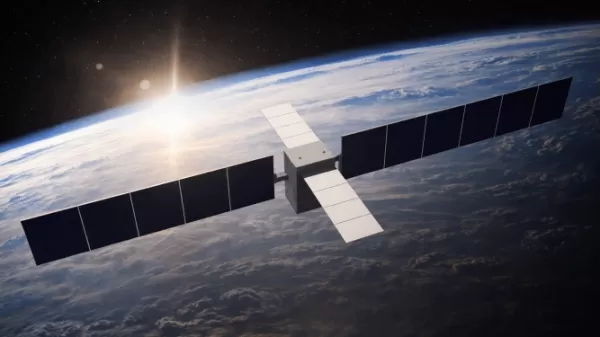
One telling metric for SpaceX's IPO this week is how the company has reshaped venture capital's view of long-term, capital-intensive space ventures. A talented founder with no prior space experience can now secure funding for a space data center startup.
Orbital, a startup that emerged in May from a16z’s Speedrun accelerator with a $5 million seed round, is the latest to promise in-space inference — once Starship begins regular flights. Other backers include Basis Set, Human Element, Wayfinder, Antler, Anti Fund, Ascent, Rubik, Zero Knowledge Ventures, LYVC, Feld Ventures, New Legacy, FNDR, UpHonest, and Asterisk.
Founder and CEO Euwyn Poon previously founded the e-scooter company Spin in 2017 and sold it to Ford a year later, joining the automaker. When he was ready to start a new venture, a16z’s Speedrun was keen to participate, according to partner Andrew Chen, who told TechCrunch that Poon explored several ideas before settling on space data centers.
You've heard the pitch before. The demand for AI compute is insatiable, and deploying it on Earth is proceeding slowly. Why not move to space, with its endless sunshine and minimal environmental reviews? The main hurdle is the brutal economics of launching into orbit, which currently prevents the business case from closing.
Orbital, like many of its competitors, is betting that SpaceX will perfect its Starship rocket and offer it to commercial customers. "We will get to full scale when Starship comes online," Poon explained. The price of the Falcon 9, the current state-of-the-art, "makes this not economically feasible."
For now, Poon and his team — about a dozen people in Los Angeles, with experience at Amazon LEO, SpaceX, and Northrop Grumman — are working toward a demo flight. The company will fly an Nvidia Blackwell chip on a partner’s satellite to test Orbital’s radiation shielding and thermal management technology. In 2028, it hopes to launch its first data-processing spacecraft with Nvidia’s Space-1 Vera Rubin-class GPUs.
At that point, the company aims to begin piecemeal inference work, generating revenue with each satellite launched. That mirrors the path of rival data center startup Starcloud, which already has a GPU in orbit and plans to launch several more to generate income until Starship allows them to deploy their full constellation.
Orbital’s goal is to deploy 10,000 satellites providing a distributed gigawatt of computing power, with each satellite offering 100 kW. For context, Elon Musk has said SpaceX expects its AI satellites to produce up to 150 kW, while Starcloud plans to field larger 200 kW-rated spacecraft to run chips.
Some companies are unwilling to wait for Starship. Cowboy Space Company, another space data center startup backed by a16z, recently decided to build its own rockets. Jeff Bezos’ Blue Origin also announced plans to launch data centers into orbit using its New Glenn launch vehicle.
Poon is confident that the breadth of AI demand will allow many companies to thrive. "There are so many lanes for companies in our space to pursue," he told TechCrunch, before listing an array of options, including firms pursuing different AI workloads, designs, and concepts of what a space data center looks like.
Chen noted that Poon’s experience scaling a company that deployed 250,000 scooters across 100 cities demonstrates his ability to manage the challenging task of building an aerospace company. Over the long term, a project like this might take a decade and $5 billion or more, but Chen said venture firms are now more comfortable with such timelines.
"This kind of thing would have sounded crazy 10 years ago when we were all building mobile apps," he said. "Starting it in 2026 just lets you tap into all the energy and excitement happening in the capital markets."
Poon found his way into the space data center business through a circuitous route. After leaving Ford, he bought an Nvidia A100 on a whim, co-located it in a Santa Clara data center, and served open-weight models. That first-hand experience convinced him of the value in delivering compute in the AI era.
Now he just needs to put a few thousand GPUs in space.
Related article
 Crypto exchange OKX aims to empower AI agents to hire and pay each other
As AI agents start serving individuals and collaborating with each other, they require mechanisms to locate tasks, compensate for services, and establish credibility. Crypto exchange OKX anticipates this future is arriving sooner than anticipated, in
Thiel-backed startup claims AI can judge journalism, despite risks to whistleblowers
Following his role in the lawsuit that led to Gawker’s bankruptcy, Aron D’Souza identified a critical flaw in the American media landscape: individuals harmed by coverage lacked effective means to respond.His answer is technology. D’Souza’s new ventu
Prentis, New AI Lab Co-Founded by Reid Hoffman and Marc Pincus, in Talks to Raise $100M
Prentis, an emerging AI research lab specializing in computer-use models, is co-founded by serial entrepreneur Ritankar Das alongside tech industry leaders Reid Hoffman and Marc Pincus. According to two individuals familiar with the matter, the compa
Related Special Topic Recommendations
Design & Art
Crypto exchange OKX aims to empower AI agents to hire and pay each other
As AI agents start serving individuals and collaborating with each other, they require mechanisms to locate tasks, compensate for services, and establish credibility. Crypto exchange OKX anticipates this future is arriving sooner than anticipated, in
Thiel-backed startup claims AI can judge journalism, despite risks to whistleblowers
Following his role in the lawsuit that led to Gawker’s bankruptcy, Aron D’Souza identified a critical flaw in the American media landscape: individuals harmed by coverage lacked effective means to respond.His answer is technology. D’Souza’s new ventu
Prentis, New AI Lab Co-Founded by Reid Hoffman and Marc Pincus, in Talks to Raise $100M
Prentis, an emerging AI research lab specializing in computer-use models, is co-founded by serial entrepreneur Ritankar Das alongside tech industry leaders Reid Hoffman and Marc Pincus. According to two individuals familiar with the matter, the compa
Related Special Topic Recommendations
Design & Art
 Best AI Style Transfer Tools for Creative Experiments
2026 Latest Best Top-rated AI Style Transfer Tools for Creative Experiments! XIX.AI has curated a powerful, game-changing collection of must-try tools that deliver exceptional results through real-world tests and rigorous rankings. These top solutions help creatives boost productivity significantly by accelerating content creation and unlocking endless creative possibilities. Explore now to discover your perfect tool and start creating today!
 9 tools
 xix.ai
Comic Creation
Best AI Dialogue Bubble Tools for Visual Storytelling
xix.ai
Comic Creation
Best AI Dialogue Bubble Tools for Visual Storytelling
2026 Latest Best Top-Rated AI Dialogue Bubble Tools for Visual Storytelling are here on XIX.AI! This curated collection features powerful, game-changing tools that help creators boost productivity and overcome creative bottlenecks. Get a free vs paid comparison, see real-world tests, and check the latest rankings to find the must-try solutions perfect for crafting engaging visual narratives. Explore now to discover your ideal tool!
10 tools
xix.ai
Meeting Assistant
Top AI Meeting Summary Tools: Track Decisions and Follow-Ups Clearly
2026 Latest Top-Rated Best AI Meeting Summary Tools for Clear Decision Tracking and Effortless Follow-Ups. This curated list showcases powerful, game-changing solutions that boost productivity dramatically by automating meeting notes, identifying key action items, and streamlining team coordination across all projects. Get a free vs paid comparison along with real-world tests and weekly updated rankings to help you find the perfect tool. Explore now to unlock your AI edge!
9 tools
xix.ai
Data Analysis
Best AI Data Cleaning Tools: Fix Missing Values and Duplicates Fast
2026 Latest Best Top-rated AI Data Cleaning Tools for quick fixing of missing values and duplicates. This curated list showcases powerful, game-changing solutions that boost productivity significantly. Each option has undergone rigorous real-world tests to ensure reliability. Get a free vs paid comparison and discover the must-try tool that fits your needs best. Explore now at XIX.AI to Unlock your AI edge.
11 tools
xix.ai
Design & Art
Best AI Creative Ideation Tools for Artists: Break Through Visual Blocks
2026 Latest Best Top-Rated AI Creative Ideation Tools for Artists are curated by XIX.AI to help creators break through visual blocks and boost creativity instantly. These powerful game-changing tools offer real-world tests, detailed free vs paid comparison, and weekly updated rankings. Discover your perfect tool to accelerate content creation and unlock your AI edge today. Explore now!
14 tools
xix.ai
Music composition
AI Beat Makers for TikTok Background Tracks, Reels Audio, and Creator Promo Music
2026 Latest Best AI Beat Makers for TikTok Background Tracks, Reels Audio, and Creator Promo Music! XIX.AI has curated a top-rated list of powerful game-changing tools that go through real-world tests to deliver flawless music for every content need. You’ll find detailed free vs paid comparison data, weekly updated rankings, and must-try options to help you boost creativity and productivity. Explore now to discover your perfect tool!
11 tools
xix.ai

 Comments (1)
0/500
Comments (1)
0/500
![JackRoberts]()
Wait, so the guy who made e-scooters is now building data centers in space? 🤯 That's quite a pivot. I guess if you can convince VCs to fund your scooter startup, you can convince them anything. SpaceX really changed the game. 🚀
One telling metric for SpaceX's IPO this week is how the company has reshaped venture capital's view of long-term, capital-intensive space ventures. A talented founder with no prior space experience can now secure funding for a space data center startup.
Orbital, a startup that emerged in May from a16z’s Speedrun accelerator with a $5 million seed round, is the latest to promise in-space inference — once Starship begins regular flights. Other backers include Basis Set, Human Element, Wayfinder, Antler, Anti Fund, Ascent, Rubik, Zero Knowledge Ventures, LYVC, Feld Ventures, New Legacy, FNDR, UpHonest, and Asterisk.
Founder and CEO Euwyn Poon previously founded the e-scooter company Spin in 2017 and sold it to Ford a year later, joining the automaker. When he was ready to start a new venture, a16z’s Speedrun was keen to participate, according to partner Andrew Chen, who told TechCrunch that Poon explored several ideas before settling on space data centers.
You've heard the pitch before. The demand for AI compute is insatiable, and deploying it on Earth is proceeding slowly. Why not move to space, with its endless sunshine and minimal environmental reviews? The main hurdle is the brutal economics of launching into orbit, which currently prevents the business case from closing.
Orbital, like many of its competitors, is betting that SpaceX will perfect its Starship rocket and offer it to commercial customers. "We will get to full scale when Starship comes online," Poon explained. The price of the Falcon 9, the current state-of-the-art, "makes this not economically feasible."
For now, Poon and his team — about a dozen people in Los Angeles, with experience at Amazon LEO, SpaceX, and Northrop Grumman — are working toward a demo flight. The company will fly an Nvidia Blackwell chip on a partner’s satellite to test Orbital’s radiation shielding and thermal management technology. In 2028, it hopes to launch its first data-processing spacecraft with Nvidia’s Space-1 Vera Rubin-class GPUs.
At that point, the company aims to begin piecemeal inference work, generating revenue with each satellite launched. That mirrors the path of rival data center startup Starcloud, which already has a GPU in orbit and plans to launch several more to generate income until Starship allows them to deploy their full constellation.
Orbital’s goal is to deploy 10,000 satellites providing a distributed gigawatt of computing power, with each satellite offering 100 kW. For context, Elon Musk has said SpaceX expects its AI satellites to produce up to 150 kW, while Starcloud plans to field larger 200 kW-rated spacecraft to run chips.
Some companies are unwilling to wait for Starship. Cowboy Space Company, another space data center startup backed by a16z, recently decided to build its own rockets. Jeff Bezos’ Blue Origin also announced plans to launch data centers into orbit using its New Glenn launch vehicle.
Poon is confident that the breadth of AI demand will allow many companies to thrive. "There are so many lanes for companies in our space to pursue," he told TechCrunch, before listing an array of options, including firms pursuing different AI workloads, designs, and concepts of what a space data center looks like.
Chen noted that Poon’s experience scaling a company that deployed 250,000 scooters across 100 cities demonstrates his ability to manage the challenging task of building an aerospace company. Over the long term, a project like this might take a decade and $5 billion or more, but Chen said venture firms are now more comfortable with such timelines.
"This kind of thing would have sounded crazy 10 years ago when we were all building mobile apps," he said. "Starting it in 2026 just lets you tap into all the energy and excitement happening in the capital markets."
Poon found his way into the space data center business through a circuitous route. After leaving Ford, he bought an Nvidia A100 on a whim, co-located it in a Santa Clara data center, and served open-weight models. That first-hand experience convinced him of the value in delivering compute in the AI era.
Now he just needs to put a few thousand GPUs in space.








 Crypto exchange OKX aims to empower AI agents to hire and pay each other
As AI agents start serving individuals and collaborating with each other, they require mechanisms to locate tasks, compensate for services, and establish credibility. Crypto exchange OKX anticipates this future is arriving sooner than anticipated, in
Crypto exchange OKX aims to empower AI agents to hire and pay each other
As AI agents start serving individuals and collaborating with each other, they require mechanisms to locate tasks, compensate for services, and establish credibility. Crypto exchange OKX anticipates this future is arriving sooner than anticipated, in
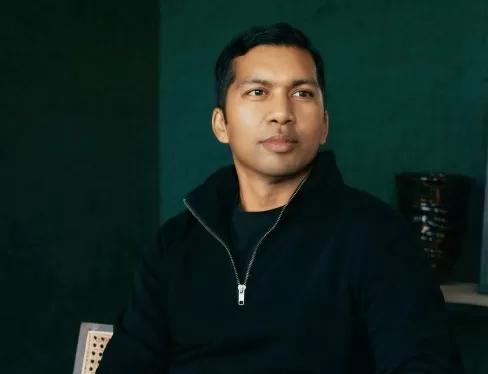 Thiel-backed startup claims AI can judge journalism, despite risks to whistleblowers
Following his role in the lawsuit that led to Gawker’s bankruptcy, Aron D’Souza identified a critical flaw in the American media landscape: individuals harmed by coverage lacked effective means to respond.His answer is technology. D’Souza’s new ventu
Thiel-backed startup claims AI can judge journalism, despite risks to whistleblowers
Following his role in the lawsuit that led to Gawker’s bankruptcy, Aron D’Souza identified a critical flaw in the American media landscape: individuals harmed by coverage lacked effective means to respond.His answer is technology. D’Souza’s new ventu
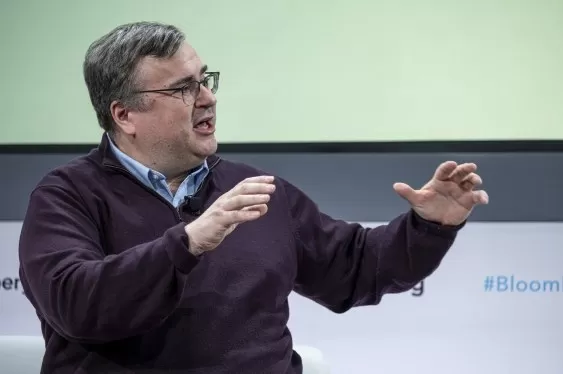 Prentis, New AI Lab Co-Founded by Reid Hoffman and Marc Pincus, in Talks to Raise $100M
Prentis, an emerging AI research lab specializing in computer-use models, is co-founded by serial entrepreneur Ritankar Das alongside tech industry leaders Reid Hoffman and Marc Pincus. According to two individuals familiar with the matter, the compa
Prentis, New AI Lab Co-Founded by Reid Hoffman and Marc Pincus, in Talks to Raise $100M
Prentis, an emerging AI research lab specializing in computer-use models, is co-founded by serial entrepreneur Ritankar Das alongside tech industry leaders Reid Hoffman and Marc Pincus. According to two individuals familiar with the matter, the compa

2026 Latest Best Top-rated AI Style Transfer Tools for Creative Experiments! XIX.AI has curated a powerful, game-changing collection of must-try tools that deliver exceptional results through real-world tests and rigorous rankings. These top solutions help creatives boost productivity significantly by accelerating content creation and unlocking endless creative possibilities. Explore now to discover your perfect tool and start creating today!
9 tools
xix.ai

2026 Latest Best Top-Rated AI Dialogue Bubble Tools for Visual Storytelling are here on XIX.AI! This curated collection features powerful, game-changing tools that help creators boost productivity and overcome creative bottlenecks. Get a free vs paid comparison, see real-world tests, and check the latest rankings to find the must-try solutions perfect for crafting engaging visual narratives. Explore now to discover your ideal tool!
10 tools
xix.ai
2026 Latest Top-Rated Best AI Meeting Summary Tools for Clear Decision Tracking and Effortless Follow-Ups. This curated list showcases powerful, game-changing solutions that boost productivity dramatically by automating meeting notes, identifying key action items, and streamlining team coordination across all projects. Get a free vs paid comparison along with real-world tests and weekly updated rankings to help you find the perfect tool. Explore now to unlock your AI edge!
9 tools
xix.ai

2026 Latest Best Top-rated AI Data Cleaning Tools for quick fixing of missing values and duplicates. This curated list showcases powerful, game-changing solutions that boost productivity significantly. Each option has undergone rigorous real-world tests to ensure reliability. Get a free vs paid comparison and discover the must-try tool that fits your needs best. Explore now at XIX.AI to Unlock your AI edge.
11 tools
xix.ai

2026 Latest Best Top-Rated AI Creative Ideation Tools for Artists are curated by XIX.AI to help creators break through visual blocks and boost creativity instantly. These powerful game-changing tools offer real-world tests, detailed free vs paid comparison, and weekly updated rankings. Discover your perfect tool to accelerate content creation and unlock your AI edge today. Explore now!
14 tools
xix.ai

2026 Latest Best AI Beat Makers for TikTok Background Tracks, Reels Audio, and Creator Promo Music! XIX.AI has curated a top-rated list of powerful game-changing tools that go through real-world tests to deliver flawless music for every content need. You’ll find detailed free vs paid comparison data, weekly updated rankings, and must-try options to help you boost creativity and productivity. Explore now to discover your perfect tool!
11 tools
xix.ai

Wait, so the guy who made e-scooters is now building data centers in space? 🤯 That's quite a pivot. I guess if you can convince VCs to fund your scooter startup, you can convince them anything. SpaceX really changed the game. 🚀












