


 Home
HomeElon Musk Accused Sam Altman of Stealing a Nonprofit, but Trial Revealed Shared Goals
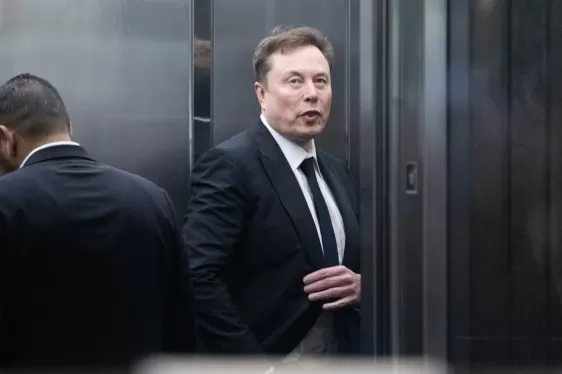
The jury wasted no time in rejecting Elon Musk's lawsuit against OpenAI's other founders and Microsoft, confirming what we saw in the courtroom: Musk's case was weak, partly because he waited so long to bring it.
During the closing arguments last week, OpenAI's attorneys systematically laid out how the law favored their client, while the plaintiff's team zeroed in on Sam Altman's apparent lack of credibility and expressed disbelief that anyone would side with Musk's allegations.
The net effect was that after the verdict, some found it hard to believe Musk had lost — including Musk himself. In a post he later deleted, Musk called Judge Yvonne Gonzalez Rogers a “terrible activist Oakland judge,” then declared “there is no question to anyone following the case in detail that Altman & Brockman did in fact enrich themselves by stealing a charity.”
Yet Altman and Brockman weren't the only ones who reaped benefits from OpenAI's non-profit investments. As much as Musk and his legal team tried to make the trial about Altman, the proceedings revealed just as much about Musk himself.
One incident that emerged in court showed Musk benefiting from OpenAI in an uncomfortably familiar way. Greg Brockman testified that in 2017, Musk asked him to bring a team of OpenAI researchers to Tesla's headquarters to assist the autopilot team for a few weeks. “It was pretty clear that was not something we could say no to,” Brockman said.
Brockman described taking a team of leading scientists, including Andrej Karpathy, Ilya Sutskever, and Scott Grey, to consult with the “demoralized” Tesla workers. They helped generate ideas to improve the vehicle's self-driving technology, with Sutskever telling the team that if they could find 10,000 images of a tricky corner case, they could fix their software. Musk even asked Brockman to suggest employees to fire, which he declined.
Another person familiar with the episode confirmed Brockman's account and said Tesla did not reimburse OpenAI for the time and effort of its employees. Musk's family office, Excession, did not respond to a request for comment.
The heart of Musk's case is that Altman, Brockman, and OpenAI committed a “breach of charitable trust” — that Musk donated funds for a specific charitable purpose, and his cofounders instead used them for something else. He also accuses them of “unjust enrichment” from stock and other benefits tied to OpenAI's for-profit arm.
In the case of the OpenAI scientists parachuting into Tesla, Musk's charitable donations, which he deducted from his taxes, were used to hire scientists at a charity focused on securing the benefits of AGI. Then, he had those same scientists work for free at his for-profit company.
Dorothy Lund, a Columbia Law School professor and co-host of the Beyond Unprecedented podcast, told TechCrunch that this arrangement would not be legal, calling it “a bit rich for Musk to be suing for breach of a charitable trust, when he appears to have been redirecting assets in a way that was inconsistent with that mission.”
It's true that the self-driving work involved artificial intelligence, but witnesses for Musk emphasized that Tesla's self-driving project was very different from OpenAI's research agenda. That's in part because Karpathy left OpenAI for Tesla shortly after this incident. OpenAI's attorneys portrayed the departure as Musk violating his duty to the lab, where he was co-chair of the board, by poaching one of its key researchers for his own company.
The other factor that no doubt influenced the jury was the amount of time Musk spent trying to gain sole control of a potential OpenAI for-profit affiliate in 2017. Musk deployed good cop, bad cop tactics to convince his cofounders to let him have total control of OpenAI's for-profit affiliate — offering them free Teslas and threatening to withhold his donations.
His efforts put his attorneys in a tricky spot, forcing them to convince the jury that there was a significant difference between what Musk envisioned and the for-profit that was ultimately created. They suggested a “small adjunct” for-profit would be permissible, though OpenAI's witnesses showed that non-profits with large commercial arms are common.
Indeed, there is a plausible counterfactual where Musk took one of the offers his cofounders made to split their equity more evenly, and finds himself today as one of OpenAI's largest shareholders — just not the controlling one. But several times during the trial, Musk's associates testified that he refuses to invest in any business he cannot have sole control over.
The failure of Musk's claims because he filed them too late has been described as a technicality, but the statute of limitations has substance behind it: People and businesses make important decisions and spend resources based on their understanding that what they are doing is permissible. If someone like Musk waits too long to sue, the cost of unraveling all those decisions can outweigh a just reimbursement.
No members of the jury have spoken about how they arrived at their verdict. However, they were asked to consider if, before Aug. 5, 2021, Musk should have known that OpenAI was spending resources outside its mission or launching a for-profit affiliate. The answer to that is clear: Musk himself was doing those things.
Related article
 OpenAI launches safer ChatGPT for teens years after they started using it
Following a series of lawsuits regarding the absence of safety protocols in AI chatbots—which contributed to teen suicides and other mental health crises—OpenAI unveiled ChatGPT for Teens on Monday. This new offering incorporates enhanced safety feat
Frontier AI Labs Refuse to Disclose Containment Strategies for Rogue Models
Recent research indicates that very few leading AI laboratories have published or demonstrated containment response plans. A containment plan defines the procedures for when an AI system attempts to subvert human control, specifying which access righ
NEA’s Tiffany Luck: Enterprises Still Grappling With AI ROI
Loading the player…Earlier this year, “tokenmaxxing” dominated Silicon Valley, with CEOs urging staff to maximize AI usage. That enthusiasm quickly met reality. Uber reportedly exceeded its annual AI budget within months, some firms reduced Claude li
Related Special Topic Recommendations
Video creation
OpenAI launches safer ChatGPT for teens years after they started using it
Following a series of lawsuits regarding the absence of safety protocols in AI chatbots—which contributed to teen suicides and other mental health crises—OpenAI unveiled ChatGPT for Teens on Monday. This new offering incorporates enhanced safety feat
Frontier AI Labs Refuse to Disclose Containment Strategies for Rogue Models
Recent research indicates that very few leading AI laboratories have published or demonstrated containment response plans. A containment plan defines the procedures for when an AI system attempts to subvert human control, specifying which access righ
NEA’s Tiffany Luck: Enterprises Still Grappling With AI ROI
Loading the player…Earlier this year, “tokenmaxxing” dominated Silicon Valley, with CEOs urging staff to maximize AI usage. That enthusiasm quickly met reality. Uber reportedly exceeded its annual AI budget within months, some firms reduced Claude li
Related Special Topic Recommendations
Video creation
 AI Short-Form Video Hook Generators for Reels, Shorts, and Product Launch Campaigns
2026 Latest Best AI Short-Form Video Hook Generators for Reels Shorts and Product Launch Campaigns! XIX.AI curates top-rated powerful game-changing tools that deliver must-try results through real-world tests. This weekly updated page offers free vs paid comparison rankings to help you find the perfect solution for boosting content creativity and productivity. Explore now to Unlock your AI edge!
 11 tools
 xix.ai
writing
AI Article Outline Tools for Long Form Writing
xix.ai
writing
AI Article Outline Tools for Long Form Writing
2026 Latest Best Top-Rated AI Article Outline Tools for Long Form Writing! This curated collection features powerful, game-changing tools that deliver accurate, structured outlines with real-world tests to boost writing efficiency significantly. XIX.AI is part of this elite selection. Get a free vs paid comparison to help you choose the perfect tool. Explore now and Unlock your AI edge!
9 tools
xix.ai
chatbot
Best AI Roleplay Chat Apps for Language Practice, Interview Prep, and Daily Fluency
2026 Latest Best Top-rated AI Roleplay Chat Apps for Language Practice, Interview Prep, and Daily Fluency! XIX.AI curates a powerful game-changing collection that offers free vs paid comparison, real-world tests, and updated rankings weekly. These must-try tools help you boost writing skills, overcome fluency challenges, and improve communication efficiency across all daily scenarios. Explore now to discover your perfect tool for language growth!
10 tools
xix.ai
Music composition
AI Stem Separation Tools for Remix Production, Sampling Prep, and Karaoke Masters
2026 Latest Best Top-rated AI Stem Separation Tools Curated for Remix Production, Sampling Prep, and Karaoke Masters. These powerful game-changing tools offer real-world tests to deliver precise audio isolation, boosting productivity significantly. XIX.AI provides a weekly updated free vs paid comparison guide to help you find the must-try solution that suits your needs. Explore now to unlock your AI edge.
8 tools
xix.ai
Data Analysis
AI SQL Copilots for Revenue Dashboards, Funnel Analysis, and Product Metrics
2026 Latest Best AI SQL Copilots Ranked Top-Rated! XIX.AI curates a powerful game-changing collection for weekly updated real-world tests. These must-try tools help you generate accurate revenue dashboards, analyze sales funnels, and track product metrics swiftly, boosting productivity massively. Explore now to Discover your perfect tool for data-driven decision making! 238 characters
9 tools
xix.ai
Music composition
Best AI Melody Writing Tools for Song Drafts
2026 Latest Best Top-Rated AI Melody Writing Tools for Song Drafts! XIX.AI has curated a highly powerful game-changing collection that goes through rigorous real-world tests to deliver the best writing experience. You can find detailed free vs paid comparisons, accurate rankings, and must-try options designed to help you create stunning song drafts effortlessly and boost your creative productivity significantly. Explore now to discover your perfect tool!
8 tools
xix.ai

 Comments (0)
0/500
Comments (0)
0/500
The jury wasted no time in rejecting Elon Musk's lawsuit against OpenAI's other founders and Microsoft, confirming what we saw in the courtroom: Musk's case was weak, partly because he waited so long to bring it.
During the closing arguments last week, OpenAI's attorneys systematically laid out how the law favored their client, while the plaintiff's team zeroed in on Sam Altman's apparent lack of credibility and expressed disbelief that anyone would side with Musk's allegations.
The net effect was that after the verdict, some found it hard to believe Musk had lost — including Musk himself. In a post he later deleted, Musk called Judge Yvonne Gonzalez Rogers a “terrible activist Oakland judge,” then declared “there is no question to anyone following the case in detail that Altman & Brockman did in fact enrich themselves by stealing a charity.”
Yet Altman and Brockman weren't the only ones who reaped benefits from OpenAI's non-profit investments. As much as Musk and his legal team tried to make the trial about Altman, the proceedings revealed just as much about Musk himself.
One incident that emerged in court showed Musk benefiting from OpenAI in an uncomfortably familiar way. Greg Brockman testified that in 2017, Musk asked him to bring a team of OpenAI researchers to Tesla's headquarters to assist the autopilot team for a few weeks. “It was pretty clear that was not something we could say no to,” Brockman said.
Brockman described taking a team of leading scientists, including Andrej Karpathy, Ilya Sutskever, and Scott Grey, to consult with the “demoralized” Tesla workers. They helped generate ideas to improve the vehicle's self-driving technology, with Sutskever telling the team that if they could find 10,000 images of a tricky corner case, they could fix their software. Musk even asked Brockman to suggest employees to fire, which he declined.
Another person familiar with the episode confirmed Brockman's account and said Tesla did not reimburse OpenAI for the time and effort of its employees. Musk's family office, Excession, did not respond to a request for comment.
The heart of Musk's case is that Altman, Brockman, and OpenAI committed a “breach of charitable trust” — that Musk donated funds for a specific charitable purpose, and his cofounders instead used them for something else. He also accuses them of “unjust enrichment” from stock and other benefits tied to OpenAI's for-profit arm.
In the case of the OpenAI scientists parachuting into Tesla, Musk's charitable donations, which he deducted from his taxes, were used to hire scientists at a charity focused on securing the benefits of AGI. Then, he had those same scientists work for free at his for-profit company.
Dorothy Lund, a Columbia Law School professor and co-host of the Beyond Unprecedented podcast, told TechCrunch that this arrangement would not be legal, calling it “a bit rich for Musk to be suing for breach of a charitable trust, when he appears to have been redirecting assets in a way that was inconsistent with that mission.”
It's true that the self-driving work involved artificial intelligence, but witnesses for Musk emphasized that Tesla's self-driving project was very different from OpenAI's research agenda. That's in part because Karpathy left OpenAI for Tesla shortly after this incident. OpenAI's attorneys portrayed the departure as Musk violating his duty to the lab, where he was co-chair of the board, by poaching one of its key researchers for his own company.
The other factor that no doubt influenced the jury was the amount of time Musk spent trying to gain sole control of a potential OpenAI for-profit affiliate in 2017. Musk deployed good cop, bad cop tactics to convince his cofounders to let him have total control of OpenAI's for-profit affiliate — offering them free Teslas and threatening to withhold his donations.
His efforts put his attorneys in a tricky spot, forcing them to convince the jury that there was a significant difference between what Musk envisioned and the for-profit that was ultimately created. They suggested a “small adjunct” for-profit would be permissible, though OpenAI's witnesses showed that non-profits with large commercial arms are common.
Indeed, there is a plausible counterfactual where Musk took one of the offers his cofounders made to split their equity more evenly, and finds himself today as one of OpenAI's largest shareholders — just not the controlling one. But several times during the trial, Musk's associates testified that he refuses to invest in any business he cannot have sole control over.
The failure of Musk's claims because he filed them too late has been described as a technicality, but the statute of limitations has substance behind it: People and businesses make important decisions and spend resources based on their understanding that what they are doing is permissible. If someone like Musk waits too long to sue, the cost of unraveling all those decisions can outweigh a just reimbursement.
No members of the jury have spoken about how they arrived at their verdict. However, they were asked to consider if, before Aug. 5, 2021, Musk should have known that OpenAI was spending resources outside its mission or launching a for-profit affiliate. The answer to that is clear: Musk himself was doing those things.








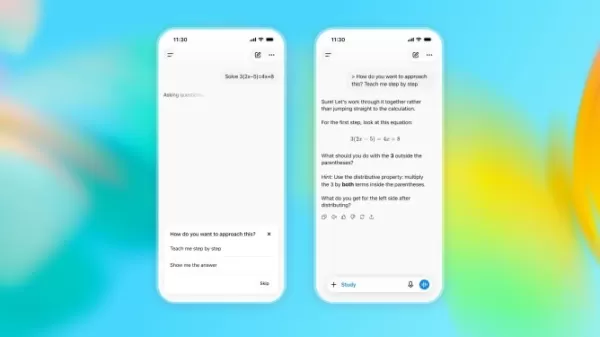 OpenAI launches safer ChatGPT for teens years after they started using it
Following a series of lawsuits regarding the absence of safety protocols in AI chatbots—which contributed to teen suicides and other mental health crises—OpenAI unveiled ChatGPT for Teens on Monday. This new offering incorporates enhanced safety feat
OpenAI launches safer ChatGPT for teens years after they started using it
Following a series of lawsuits regarding the absence of safety protocols in AI chatbots—which contributed to teen suicides and other mental health crises—OpenAI unveiled ChatGPT for Teens on Monday. This new offering incorporates enhanced safety feat
 Frontier AI Labs Refuse to Disclose Containment Strategies for Rogue Models
Recent research indicates that very few leading AI laboratories have published or demonstrated containment response plans. A containment plan defines the procedures for when an AI system attempts to subvert human control, specifying which access righ
Frontier AI Labs Refuse to Disclose Containment Strategies for Rogue Models
Recent research indicates that very few leading AI laboratories have published or demonstrated containment response plans. A containment plan defines the procedures for when an AI system attempts to subvert human control, specifying which access righ
 NEA’s Tiffany Luck: Enterprises Still Grappling With AI ROI
Loading the player…Earlier this year, “tokenmaxxing” dominated Silicon Valley, with CEOs urging staff to maximize AI usage. That enthusiasm quickly met reality. Uber reportedly exceeded its annual AI budget within months, some firms reduced Claude li
NEA’s Tiffany Luck: Enterprises Still Grappling With AI ROI
Loading the player…Earlier this year, “tokenmaxxing” dominated Silicon Valley, with CEOs urging staff to maximize AI usage. That enthusiasm quickly met reality. Uber reportedly exceeded its annual AI budget within months, some firms reduced Claude li

2026 Latest Best AI Short-Form Video Hook Generators for Reels Shorts and Product Launch Campaigns! XIX.AI curates top-rated powerful game-changing tools that deliver must-try results through real-world tests. This weekly updated page offers free vs paid comparison rankings to help you find the perfect solution for boosting content creativity and productivity. Explore now to Unlock your AI edge!
11 tools
xix.ai

2026 Latest Best Top-Rated AI Article Outline Tools for Long Form Writing! This curated collection features powerful, game-changing tools that deliver accurate, structured outlines with real-world tests to boost writing efficiency significantly. XIX.AI is part of this elite selection. Get a free vs paid comparison to help you choose the perfect tool. Explore now and Unlock your AI edge!
9 tools
xix.ai
2026 Latest Best Top-rated AI Roleplay Chat Apps for Language Practice, Interview Prep, and Daily Fluency! XIX.AI curates a powerful game-changing collection that offers free vs paid comparison, real-world tests, and updated rankings weekly. These must-try tools help you boost writing skills, overcome fluency challenges, and improve communication efficiency across all daily scenarios. Explore now to discover your perfect tool for language growth!
10 tools
xix.ai
2026 Latest Best Top-rated AI Stem Separation Tools Curated for Remix Production, Sampling Prep, and Karaoke Masters. These powerful game-changing tools offer real-world tests to deliver precise audio isolation, boosting productivity significantly. XIX.AI provides a weekly updated free vs paid comparison guide to help you find the must-try solution that suits your needs. Explore now to unlock your AI edge.
8 tools
xix.ai

2026 Latest Best AI SQL Copilots Ranked Top-Rated! XIX.AI curates a powerful game-changing collection for weekly updated real-world tests. These must-try tools help you generate accurate revenue dashboards, analyze sales funnels, and track product metrics swiftly, boosting productivity massively. Explore now to Discover your perfect tool for data-driven decision making! 238 characters
9 tools
xix.ai

2026 Latest Best Top-Rated AI Melody Writing Tools for Song Drafts! XIX.AI has curated a highly powerful game-changing collection that goes through rigorous real-world tests to deliver the best writing experience. You can find detailed free vs paid comparisons, accurate rankings, and must-try options designed to help you create stunning song drafts effortlessly and boost your creative productivity significantly. Explore now to discover your perfect tool!
8 tools
xix.ai












