


 Home
HomeWhat Anthropic's Pentagon Standoff Means for National Security
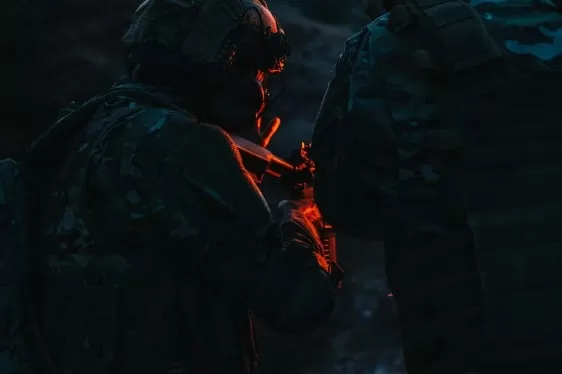
The past two weeks have been dominated by a public standoff between Anthropic CEO Dario Amodei and Defense Secretary Pete Hegseth, centering on the military's application of AI technology.
Anthropic has established policies prohibiting its AI models from being used for mass surveillance of American citizens or for fully autonomous weapon systems that initiate strikes without human approval. In contrast, Secretary Hegseth contends that the Department of Defense should not be constrained by a vendor's rules, advocating for permission to employ the technology for any "lawful use."
On Thursday, Amodei publicly indicated that Anthropic has no intention of retreating from its position, despite facing potential designation as a supply chain risk. Given the rapid pace of news, it is crucial to clearly understand the core issues at stake in this conflict.
Fundamentally, this dispute is about control: who governs the deployment of powerful AI systems—the companies that create them, or the government agencies that seek to implement them.
What is Anthropic worried about?
As mentioned, Anthropic's primary concerns involve its models being applied to mass surveillance or autonomous weapons lacking human oversight for targeting and engagement decisions. Unlike traditional defense contractors who often have limited control over end-use, Anthropic has argued from its founding that AI's unique risks necessitate unique safeguards. The company's central challenge is upholding these safeguards when its technology is utilized by the military.
The U.S. military already operates highly automated systems, some with lethal capabilities. While the final decision to use lethal force has traditionally rested with humans, few legal restrictions exist on autonomous military weapons. The Department of Defense does not have an outright ban on fully autonomous systems. A 2023 directive permits AI to select and engage targets independently, provided certain standards are met and senior officials grant approval.
This policy framework is precisely what alarms Anthropic. Military technology development is often opaque; steps toward automating lethal decision-making might not become public knowledge until a system is already operational. If such a system incorporated Anthropic's models, the Pentagon could consider it a 'lawful use.'
Techcrunch eventSave up to $300 or 30% to TechCrunch Founder Summit
Over 1,000 founders and investors will gather at TechCrunch Founder Summit 2026 for a day dedicated to growth, execution, and practical scaling strategies. Gain insights from industry-shaping founders and investors. Connect with peers facing similar growth challenges. Leave with actionable tactics you can implement right away.
Offer ends March 13.
Save up to $300 or 30% to TechCrunch Founder Summit
Join 1,000+ founders and investors at TechCrunch Founder Summit 2026 for an intensive day focused on growth, execution, and real-world scaling. Learn from founders and investors who have defined the industry. Network with peers at similar stages. Depart with practical tactics for immediate application.
Offer ends March 13.
Boston, MA|June 9, 2026REGISTER NOWAnthropic's stance is not that such applications should be banned forever, but that its current models are not yet sufficiently capable to handle them safely. Consider the risks: an autonomous system misidentifying a target, escalating a conflict without authorization, or making an irreversible lethal decision in an instant. Placing a less-than-perfect AI in control of weapons creates a fast, confident system ill-equipped for high-stakes judgment calls.
Furthermore, AI has the potential to amplify lawful surveillance of U.S. citizens to a disturbing scale. While surveillance through the collection of texts, emails, and communications is already permitted under certain laws, AI transforms the landscape. It enables automated, large-scale pattern recognition, cross-dataset analysis, predictive risk assessment, and continuous behavioral monitoring.
What does the Pentagon want?
The Pentagon's position is straightforward: it seeks the freedom to deploy Anthropic's technology for any lawful purpose it deems necessary, without being bound by the company's internal policies on autonomous weapons or surveillance.
Secretary Hegseth has specifically argued that the Defense Department should not be restricted by a vendor's rules, emphasizing it would only engage in "lawful use" of the technology.
Sean Parnell, the Pentagon's chief spokesperson, stated in a Thursday post on X that the department has no interest in conducting mass domestic surveillance or deploying autonomous weapons.
"Our request is simple: Allow the Pentagon to use Anthropic's model for all lawful purposes," Parnell said. "This is a common-sense approach to prevent Anthropic from jeopardizing critical military operations and potentially endangering our personnel. We cannot allow any company to dictate the terms of our operational decisions."
He added that Anthropic has until 5:01 PM ET on Friday to decide. "Otherwise, we will terminate our partnership and designate Anthropic as a supply chain risk for the Department of Defense," he said.
While the Department's official stance focuses on operational freedom, Secretary Hegseth's criticisms have occasionally touched on cultural issues. In a January speech at SpaceX and xAI offices, he denounced what he called "woke AI," comments many viewed as foreshadowing the current clash with Anthropic.
"Department of Defense AI will not be woke," Hegseth declared. "We are building war-ready systems, not chatbots designed for an Ivy League seminar."
So what now?
The Pentagon has threatened two potential actions: declaring Anthropic a "supply chain risk," which would effectively blacklist the company from government contracts, or invoking the Defense Production Act to compel the company to adapt its models for military use. With Hegseth's Friday deadline approaching, it remains uncertain whether the Pentagon will follow through.
This is a high-stakes impasse for both sides. Sachin Seth, a venture capitalist at Trousdale Ventures focusing on defense technology, suggests a supply chain risk designation could be catastrophic for Anthropic.
Conversely, he notes, if the DOD severs ties with Anthropic, it could create a national security vulnerability.
"The Department would face a six- to twelve-month gap waiting for rivals like OpenAI or xAI to reach comparable capability," Seth told TechCrunch. "That creates a window where they might be relying on second- or third-best models."
xAI is preparing its technology for security classifications and could potentially replace Anthropic. Given owner Elon Musk's public statements, it is likely xAI would grant the Pentagon full control over its technology. Recent reports suggest OpenAI may uphold restrictions similar to Anthropic's.
Related article
 Anthropic CEO Outlines Plan To Pace The Frontier
AI researchers have issued increasingly urgent warnings about artificial intelligence risks, with OpenAI CEO Sam Altman suggesting it may be time to “pace” development. But what would that actually entail?In a recent blog post, Anthropic CEO Dario Am
Anthropic Unveils Opus 4.6, a Controversial Content Generator
Anthropic’s universal usage standards for Claude prohibit the model from generating sexually explicit content, including depicting or requesting sexual intercourse or sex acts, generating content related to sexual fetishes or fantasies, or engaging i
Anthropic reports workforce seniority rising as meeting time increases
Anthropic’s workforce composition and work patterns have shifted dramatically over the last year, according to a report released by the AI company on Friday.Anthropic suggests its internal trends may signal broader economic shifts in hiring, labor de
Related Special Topic Recommendations
Design & Art
Anthropic CEO Outlines Plan To Pace The Frontier
AI researchers have issued increasingly urgent warnings about artificial intelligence risks, with OpenAI CEO Sam Altman suggesting it may be time to “pace” development. But what would that actually entail?In a recent blog post, Anthropic CEO Dario Am
Anthropic Unveils Opus 4.6, a Controversial Content Generator
Anthropic’s universal usage standards for Claude prohibit the model from generating sexually explicit content, including depicting or requesting sexual intercourse or sex acts, generating content related to sexual fetishes or fantasies, or engaging i
Anthropic reports workforce seniority rising as meeting time increases
Anthropic’s workforce composition and work patterns have shifted dramatically over the last year, according to a report released by the AI company on Friday.Anthropic suggests its internal trends may signal broader economic shifts in hiring, labor de
Related Special Topic Recommendations
Design & Art
 Top AI Illustration Tools: Create Editorial Scenes and Cover Art Faster
2026 Latest Top-rated AI Illustration Tools: Our curated list features the best powerfully designed tools for creating stunning editorial scenes and eye-catching cover art quickly. Each option has gone through rigorous real-world tests, offering a free vs paid comparison to help you find the perfect match for your workflow. Try these must-try solutions today to unlock your AI edge and boost your creative productivity. Explore now at XIX.AI.
 10 tools
 xix.ai
Education and Learning
Top AI Tutors for Exam Prep: Practice Math, Science, and English
xix.ai
Education and Learning
Top AI Tutors for Exam Prep: Practice Math, Science, and English
2026 Latest Top-Rated Best AI Tutors for Exam Prep are here on XIX.AI! Our curated list features powerful game-changing tools that offer free vs paid comparison, real-world tests, and weekly updated rankings. They help boost your writing efficiency, simplify complex topic learning, and unlock your academic potential. Explore now to Discover your perfect exam prep tool and Start creating today to Unlock your AI edge!
10 tools
xix.ai
Finance
AI Budget Planning Tools for Personal Money Management
2026 Latest Best Top-Rated AI Budget Planning Tools for Personal Money Management are here on XIX.AI! This curated collection features powerful, game-changing solutions that help you conduct real-world tests, understand spending habits, and create personalized plans to boost productivity. Enjoy a free vs paid comparison along with detailed rankings. Must-try tools designed to simplify money management and unlock your AI edge. Explore now!
11 tools
xix.ai
Health & Wellness
AI Sleep Tracking Assistants: Improve Recovery with Better Bedtime Habits
2026 Latest Best Top-Rated AI Sleep Tracking Assistants curated for ultimate recovery. This fully updated weekly guide features powerful tools that deliver real-world tests, free vs paid comparison, and detailed rankings to help you find the must-try solution that boosts sleep quality and supports better bedtime habits. Explore now at XIX.AI to Unlock your AI edge.
10 tools
xix.ai
Data Analysis
AI SQL Copilots for Product and Revenue Analytics
2026 Latest Best Top-Rated AI SQL Copilots for Product and Revenue Analytics! XIX.AI has curated a powerful, game-changing collection of must-try tools that undergo real-world tests through weekly updated rankings. These tools help users boost productivity significantly by accelerating data analysis, streamlining complex queries, and generating accurate insights to drive smarter business decisions. Explore now to Discover your perfect tool for unlocking your AI edge!
14 tools
xix.ai
Education and Learning
Best AI Homework Helpers That Teach: Learn Concepts, Not Just Answers
2026 Latest Best Top-Rated AI Homework Helpers That Teach Core Concepts Not Just Answers Powerful Tools for Students Must-Try Curated List Weekly Updated Free vs Paid Comparison Real-World Tests Accurate Rankings to Help You Unlock Your Full Learning Potential Explore now to Discover your perfect tool for smarter studying.
10 tools
xix.ai

 Comments (0)
0/500
Comments (0)
0/500
The past two weeks have been dominated by a public standoff between Anthropic CEO Dario Amodei and Defense Secretary Pete Hegseth, centering on the military's application of AI technology.
Anthropic has established policies prohibiting its AI models from being used for mass surveillance of American citizens or for fully autonomous weapon systems that initiate strikes without human approval. In contrast, Secretary Hegseth contends that the Department of Defense should not be constrained by a vendor's rules, advocating for permission to employ the technology for any "lawful use."
On Thursday, Amodei publicly indicated that Anthropic has no intention of retreating from its position, despite facing potential designation as a supply chain risk. Given the rapid pace of news, it is crucial to clearly understand the core issues at stake in this conflict.
Fundamentally, this dispute is about control: who governs the deployment of powerful AI systems—the companies that create them, or the government agencies that seek to implement them.
What is Anthropic worried about?
As mentioned, Anthropic's primary concerns involve its models being applied to mass surveillance or autonomous weapons lacking human oversight for targeting and engagement decisions. Unlike traditional defense contractors who often have limited control over end-use, Anthropic has argued from its founding that AI's unique risks necessitate unique safeguards. The company's central challenge is upholding these safeguards when its technology is utilized by the military.
The U.S. military already operates highly automated systems, some with lethal capabilities. While the final decision to use lethal force has traditionally rested with humans, few legal restrictions exist on autonomous military weapons. The Department of Defense does not have an outright ban on fully autonomous systems. A 2023 directive permits AI to select and engage targets independently, provided certain standards are met and senior officials grant approval.
This policy framework is precisely what alarms Anthropic. Military technology development is often opaque; steps toward automating lethal decision-making might not become public knowledge until a system is already operational. If such a system incorporated Anthropic's models, the Pentagon could consider it a 'lawful use.'
Techcrunch eventSave up to $300 or 30% to TechCrunch Founder Summit
Over 1,000 founders and investors will gather at TechCrunch Founder Summit 2026 for a day dedicated to growth, execution, and practical scaling strategies. Gain insights from industry-shaping founders and investors. Connect with peers facing similar growth challenges. Leave with actionable tactics you can implement right away.
Offer ends March 13.
Save up to $300 or 30% to TechCrunch Founder Summit
Join 1,000+ founders and investors at TechCrunch Founder Summit 2026 for an intensive day focused on growth, execution, and real-world scaling. Learn from founders and investors who have defined the industry. Network with peers at similar stages. Depart with practical tactics for immediate application.
Offer ends March 13.
Boston, MA|June 9, 2026REGISTER NOWAnthropic's stance is not that such applications should be banned forever, but that its current models are not yet sufficiently capable to handle them safely. Consider the risks: an autonomous system misidentifying a target, escalating a conflict without authorization, or making an irreversible lethal decision in an instant. Placing a less-than-perfect AI in control of weapons creates a fast, confident system ill-equipped for high-stakes judgment calls.
Furthermore, AI has the potential to amplify lawful surveillance of U.S. citizens to a disturbing scale. While surveillance through the collection of texts, emails, and communications is already permitted under certain laws, AI transforms the landscape. It enables automated, large-scale pattern recognition, cross-dataset analysis, predictive risk assessment, and continuous behavioral monitoring.
What does the Pentagon want?
The Pentagon's position is straightforward: it seeks the freedom to deploy Anthropic's technology for any lawful purpose it deems necessary, without being bound by the company's internal policies on autonomous weapons or surveillance.
Secretary Hegseth has specifically argued that the Defense Department should not be restricted by a vendor's rules, emphasizing it would only engage in "lawful use" of the technology.
Sean Parnell, the Pentagon's chief spokesperson, stated in a Thursday post on X that the department has no interest in conducting mass domestic surveillance or deploying autonomous weapons.
"Our request is simple: Allow the Pentagon to use Anthropic's model for all lawful purposes," Parnell said. "This is a common-sense approach to prevent Anthropic from jeopardizing critical military operations and potentially endangering our personnel. We cannot allow any company to dictate the terms of our operational decisions."
He added that Anthropic has until 5:01 PM ET on Friday to decide. "Otherwise, we will terminate our partnership and designate Anthropic as a supply chain risk for the Department of Defense," he said.
While the Department's official stance focuses on operational freedom, Secretary Hegseth's criticisms have occasionally touched on cultural issues. In a January speech at SpaceX and xAI offices, he denounced what he called "woke AI," comments many viewed as foreshadowing the current clash with Anthropic.
"Department of Defense AI will not be woke," Hegseth declared. "We are building war-ready systems, not chatbots designed for an Ivy League seminar."
So what now?
The Pentagon has threatened two potential actions: declaring Anthropic a "supply chain risk," which would effectively blacklist the company from government contracts, or invoking the Defense Production Act to compel the company to adapt its models for military use. With Hegseth's Friday deadline approaching, it remains uncertain whether the Pentagon will follow through.
This is a high-stakes impasse for both sides. Sachin Seth, a venture capitalist at Trousdale Ventures focusing on defense technology, suggests a supply chain risk designation could be catastrophic for Anthropic.
Conversely, he notes, if the DOD severs ties with Anthropic, it could create a national security vulnerability.
"The Department would face a six- to twelve-month gap waiting for rivals like OpenAI or xAI to reach comparable capability," Seth told TechCrunch. "That creates a window where they might be relying on second- or third-best models."
xAI is preparing its technology for security classifications and could potentially replace Anthropic. Given owner Elon Musk's public statements, it is likely xAI would grant the Pentagon full control over its technology. Recent reports suggest OpenAI may uphold restrictions similar to Anthropic's.








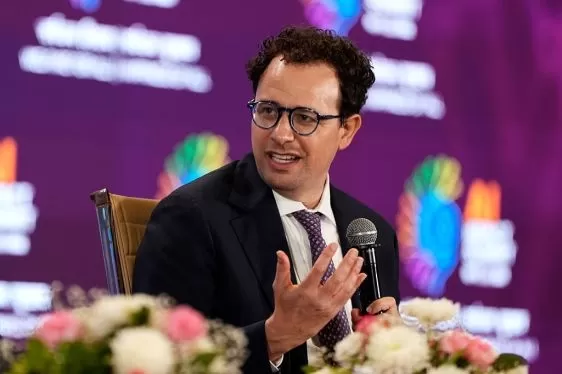 Anthropic CEO Outlines Plan To Pace The Frontier
AI researchers have issued increasingly urgent warnings about artificial intelligence risks, with OpenAI CEO Sam Altman suggesting it may be time to “pace” development. But what would that actually entail?In a recent blog post, Anthropic CEO Dario Am
Anthropic CEO Outlines Plan To Pace The Frontier
AI researchers have issued increasingly urgent warnings about artificial intelligence risks, with OpenAI CEO Sam Altman suggesting it may be time to “pace” development. But what would that actually entail?In a recent blog post, Anthropic CEO Dario Am
 Anthropic Unveils Opus 4.6, a Controversial Content Generator
Anthropic’s universal usage standards for Claude prohibit the model from generating sexually explicit content, including depicting or requesting sexual intercourse or sex acts, generating content related to sexual fetishes or fantasies, or engaging i
Anthropic Unveils Opus 4.6, a Controversial Content Generator
Anthropic’s universal usage standards for Claude prohibit the model from generating sexually explicit content, including depicting or requesting sexual intercourse or sex acts, generating content related to sexual fetishes or fantasies, or engaging i
 Anthropic reports workforce seniority rising as meeting time increases
Anthropic’s workforce composition and work patterns have shifted dramatically over the last year, according to a report released by the AI company on Friday.Anthropic suggests its internal trends may signal broader economic shifts in hiring, labor de
Anthropic reports workforce seniority rising as meeting time increases
Anthropic’s workforce composition and work patterns have shifted dramatically over the last year, according to a report released by the AI company on Friday.Anthropic suggests its internal trends may signal broader economic shifts in hiring, labor de

2026 Latest Top-rated AI Illustration Tools: Our curated list features the best powerfully designed tools for creating stunning editorial scenes and eye-catching cover art quickly. Each option has gone through rigorous real-world tests, offering a free vs paid comparison to help you find the perfect match for your workflow. Try these must-try solutions today to unlock your AI edge and boost your creative productivity. Explore now at XIX.AI.
10 tools
xix.ai

2026 Latest Top-Rated Best AI Tutors for Exam Prep are here on XIX.AI! Our curated list features powerful game-changing tools that offer free vs paid comparison, real-world tests, and weekly updated rankings. They help boost your writing efficiency, simplify complex topic learning, and unlock your academic potential. Explore now to Discover your perfect exam prep tool and Start creating today to Unlock your AI edge!
10 tools
xix.ai

2026 Latest Best Top-Rated AI Budget Planning Tools for Personal Money Management are here on XIX.AI! This curated collection features powerful, game-changing solutions that help you conduct real-world tests, understand spending habits, and create personalized plans to boost productivity. Enjoy a free vs paid comparison along with detailed rankings. Must-try tools designed to simplify money management and unlock your AI edge. Explore now!
11 tools
xix.ai

2026 Latest Best Top-Rated AI Sleep Tracking Assistants curated for ultimate recovery. This fully updated weekly guide features powerful tools that deliver real-world tests, free vs paid comparison, and detailed rankings to help you find the must-try solution that boosts sleep quality and supports better bedtime habits. Explore now at XIX.AI to Unlock your AI edge.
10 tools
xix.ai

2026 Latest Best Top-Rated AI SQL Copilots for Product and Revenue Analytics! XIX.AI has curated a powerful, game-changing collection of must-try tools that undergo real-world tests through weekly updated rankings. These tools help users boost productivity significantly by accelerating data analysis, streamlining complex queries, and generating accurate insights to drive smarter business decisions. Explore now to Discover your perfect tool for unlocking your AI edge!
14 tools
xix.ai

2026 Latest Best Top-Rated AI Homework Helpers That Teach Core Concepts Not Just Answers Powerful Tools for Students Must-Try Curated List Weekly Updated Free vs Paid Comparison Real-World Tests Accurate Rankings to Help You Unlock Your Full Learning Potential Explore now to Discover your perfect tool for smarter studying.
10 tools
xix.ai












