


 Home
HomeVDMA Announces VDA 5050 Version 3.0 to Boost Mobile Robot Fleet Scalability
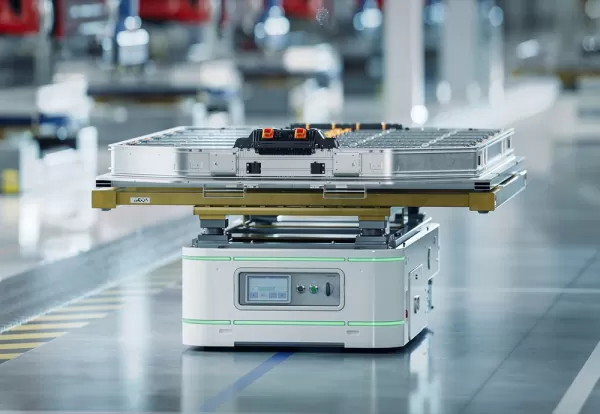
VDA 5050 is designed to facilitate communication between mobile robots from different manufacturers. Source: Shutterstock
VDMA Materials Handling, one of Europe's largest industry associations, has recently launched Version 3.0 of its VDA 5050 communication interface. This interface allows a single control system to operate diverse mobile robots within a mixed fleet.
“Version 3.0 of VDA 5050 establishes the foundation needed to address the rising demands for efficiency and flexibility in intralogistics material flow,” stated Dr. Marcus Bollig, managing director of VDA. “This update delivers precisely the tools required for the next phase of mobile robot automation, making it a strategic component for the future resilience of global production and logistics operations.”
VDA 5050 is an open interface that standardizes communication between a central master controller and various mobile robots. It enables interoperability within heterogeneous fleets using a single controller.
“VDA 5050 provides an open framework for cross-manufacturer data exchange, supporting the scalable automation solutions that both system providers and logistics operators need,” explained VDA.
VDA 5050 v3 enables integration of additional mobile robots
With Version 3.0, the VDMA Materials Handling and Intralogistics Association and the German Association of the Automotive Industry (VDA e.V.) have enhanced the interface to better integrate mobile robots with higher levels of autonomy.
For highly autonomous mobile robots, VDMA has introduced a zone-based concept for free navigation. These zones define areas with specific movement rules, such as restricted zones, one-way paths, or sections requiring explicit controller authorization.
Using this data, robots can independently plan their routes between designated waypoints. This allows the central control system to maintain oversight over where and how robots move, while detailed route planning is handled by the individual vehicle.
Robots can then share their planned paths with the central controller via “path sharing,” enabling continued centralized influence over traffic management.
VDMA noted that Version 3.0 of VDA 5050 acts as a toolkit for automation projects. The appropriate framework can be chosen based on the robots' autonomy level and specific project needs.
VDMA introduces additional features
Other new features aim to streamline robot operation. For example, robot error messages can now be displayed in the vehicle's stored local languages.
A new power-saving mode allows mobile robots to be placed into or reactivated from an energy-saving state using a standardized command.
VDMA confirmed that existing concepts, such as predefined trajectories and corridors for obstacle avoidance, remain core parts of the interface in Version 3.0 to support all types of mobile robots.
Related article
 Stripe to Acquire OpenRouter as AI Model Routing Gains Momentum
Stripe has agreed to acquire OpenRouter, an AI model-routing platform that gives developers access to hundreds of models through a single interface. The deal adds model selection and routing to Stripe’s existing work around AI usage and token-based b
Former OpenAI Researcher Barrett Zoph Returns to Google to Support Gemini Development
Barret Zoph, who previously abruptly left and joined OpenAI due to a disagreement with Thinking Machines Lab CEO Miriam Mularati, has once again changed employers. Alphabet's Google announced that Zoph will return as Vice President of Research, bring
How Recursive Intelligence Raised $335M at $4B Valuation in 4 Months
The co-founders of startup Ricursive Intelligence seemed destined to be co-founders.Anna Goldie, CEO, and Azalia Mirhoseini, CTO, are so well-known in the AI community that they were among those AI engineers who “got those weird emails from Zuckerber
Related Special Topic Recommendations
Design & Art
Stripe to Acquire OpenRouter as AI Model Routing Gains Momentum
Stripe has agreed to acquire OpenRouter, an AI model-routing platform that gives developers access to hundreds of models through a single interface. The deal adds model selection and routing to Stripe’s existing work around AI usage and token-based b
Former OpenAI Researcher Barrett Zoph Returns to Google to Support Gemini Development
Barret Zoph, who previously abruptly left and joined OpenAI due to a disagreement with Thinking Machines Lab CEO Miriam Mularati, has once again changed employers. Alphabet's Google announced that Zoph will return as Vice President of Research, bring
How Recursive Intelligence Raised $335M at $4B Valuation in 4 Months
The co-founders of startup Ricursive Intelligence seemed destined to be co-founders.Anna Goldie, CEO, and Azalia Mirhoseini, CTO, are so well-known in the AI community that they were among those AI engineers who “got those weird emails from Zuckerber
Related Special Topic Recommendations
Design & Art
 Top AI Illustration Tools: Create Editorial Scenes and Cover Art Faster
2026 Latest Top-rated AI Illustration Tools: Our curated list features the best powerfully designed tools for creating stunning editorial scenes and eye-catching cover art quickly. Each option has gone through rigorous real-world tests, offering a free vs paid comparison to help you find the perfect match for your workflow. Try these must-try solutions today to unlock your AI edge and boost your creative productivity. Explore now at XIX.AI.
 10 tools
 xix.ai
Education and Learning
Top AI Tutors for Exam Prep: Practice Math, Science, and English
xix.ai
Education and Learning
Top AI Tutors for Exam Prep: Practice Math, Science, and English
2026 Latest Top-Rated Best AI Tutors for Exam Prep are here on XIX.AI! Our curated list features powerful game-changing tools that offer free vs paid comparison, real-world tests, and weekly updated rankings. They help boost your writing efficiency, simplify complex topic learning, and unlock your academic potential. Explore now to Discover your perfect exam prep tool and Start creating today to Unlock your AI edge!
10 tools
xix.ai
Finance
AI Budget Planning Tools for Personal Money Management
2026 Latest Best Top-Rated AI Budget Planning Tools for Personal Money Management are here on XIX.AI! This curated collection features powerful, game-changing solutions that help you conduct real-world tests, understand spending habits, and create personalized plans to boost productivity. Enjoy a free vs paid comparison along with detailed rankings. Must-try tools designed to simplify money management and unlock your AI edge. Explore now!
11 tools
xix.ai
Health & Wellness
AI Sleep Tracking Assistants: Improve Recovery with Better Bedtime Habits
2026 Latest Best Top-Rated AI Sleep Tracking Assistants curated for ultimate recovery. This fully updated weekly guide features powerful tools that deliver real-world tests, free vs paid comparison, and detailed rankings to help you find the must-try solution that boosts sleep quality and supports better bedtime habits. Explore now at XIX.AI to Unlock your AI edge.
10 tools
xix.ai
Data Analysis
AI SQL Copilots for Product and Revenue Analytics
2026 Latest Best Top-Rated AI SQL Copilots for Product and Revenue Analytics! XIX.AI has curated a powerful, game-changing collection of must-try tools that undergo real-world tests through weekly updated rankings. These tools help users boost productivity significantly by accelerating data analysis, streamlining complex queries, and generating accurate insights to drive smarter business decisions. Explore now to Discover your perfect tool for unlocking your AI edge!
14 tools
xix.ai
Education and Learning
Best AI Homework Helpers That Teach: Learn Concepts, Not Just Answers
2026 Latest Best Top-Rated AI Homework Helpers That Teach Core Concepts Not Just Answers Powerful Tools for Students Must-Try Curated List Weekly Updated Free vs Paid Comparison Real-World Tests Accurate Rankings to Help You Unlock Your Full Learning Potential Explore now to Discover your perfect tool for smarter studying.
10 tools
xix.ai

 Comments (1)
0/500
Comments (1)
0/500
![AlbertLopez]()
Finally, a standard that actually scales! 🤖 The new VDA 5050 v3.0 could be a game-changer for warehouse logistics. But I wonder how smaller manufacturers will keep up with compliance costs?
VDA 5050 is designed to facilitate communication between mobile robots from different manufacturers. Source: Shutterstock
VDMA Materials Handling, one of Europe's largest industry associations, has recently launched Version 3.0 of its VDA 5050 communication interface. This interface allows a single control system to operate diverse mobile robots within a mixed fleet.
“Version 3.0 of VDA 5050 establishes the foundation needed to address the rising demands for efficiency and flexibility in intralogistics material flow,” stated Dr. Marcus Bollig, managing director of VDA. “This update delivers precisely the tools required for the next phase of mobile robot automation, making it a strategic component for the future resilience of global production and logistics operations.”
VDA 5050 is an open interface that standardizes communication between a central master controller and various mobile robots. It enables interoperability within heterogeneous fleets using a single controller.
“VDA 5050 provides an open framework for cross-manufacturer data exchange, supporting the scalable automation solutions that both system providers and logistics operators need,” explained VDA.
VDA 5050 v3 enables integration of additional mobile robots
With Version 3.0, the VDMA Materials Handling and Intralogistics Association and the German Association of the Automotive Industry (VDA e.V.) have enhanced the interface to better integrate mobile robots with higher levels of autonomy.
For highly autonomous mobile robots, VDMA has introduced a zone-based concept for free navigation. These zones define areas with specific movement rules, such as restricted zones, one-way paths, or sections requiring explicit controller authorization.
Using this data, robots can independently plan their routes between designated waypoints. This allows the central control system to maintain oversight over where and how robots move, while detailed route planning is handled by the individual vehicle.
Robots can then share their planned paths with the central controller via “path sharing,” enabling continued centralized influence over traffic management.
VDMA noted that Version 3.0 of VDA 5050 acts as a toolkit for automation projects. The appropriate framework can be chosen based on the robots' autonomy level and specific project needs.
VDMA introduces additional features
Other new features aim to streamline robot operation. For example, robot error messages can now be displayed in the vehicle's stored local languages.
A new power-saving mode allows mobile robots to be placed into or reactivated from an energy-saving state using a standardized command.
VDMA confirmed that existing concepts, such as predefined trajectories and corridors for obstacle avoidance, remain core parts of the interface in Version 3.0 to support all types of mobile robots.








 Stripe to Acquire OpenRouter as AI Model Routing Gains Momentum
Stripe has agreed to acquire OpenRouter, an AI model-routing platform that gives developers access to hundreds of models through a single interface. The deal adds model selection and routing to Stripe’s existing work around AI usage and token-based b
Stripe to Acquire OpenRouter as AI Model Routing Gains Momentum
Stripe has agreed to acquire OpenRouter, an AI model-routing platform that gives developers access to hundreds of models through a single interface. The deal adds model selection and routing to Stripe’s existing work around AI usage and token-based b
 Former OpenAI Researcher Barrett Zoph Returns to Google to Support Gemini Development
Barret Zoph, who previously abruptly left and joined OpenAI due to a disagreement with Thinking Machines Lab CEO Miriam Mularati, has once again changed employers. Alphabet's Google announced that Zoph will return as Vice President of Research, bring
Former OpenAI Researcher Barrett Zoph Returns to Google to Support Gemini Development
Barret Zoph, who previously abruptly left and joined OpenAI due to a disagreement with Thinking Machines Lab CEO Miriam Mularati, has once again changed employers. Alphabet's Google announced that Zoph will return as Vice President of Research, bring
 How Recursive Intelligence Raised $335M at $4B Valuation in 4 Months
The co-founders of startup Ricursive Intelligence seemed destined to be co-founders.Anna Goldie, CEO, and Azalia Mirhoseini, CTO, are so well-known in the AI community that they were among those AI engineers who “got those weird emails from Zuckerber
How Recursive Intelligence Raised $335M at $4B Valuation in 4 Months
The co-founders of startup Ricursive Intelligence seemed destined to be co-founders.Anna Goldie, CEO, and Azalia Mirhoseini, CTO, are so well-known in the AI community that they were among those AI engineers who “got those weird emails from Zuckerber

2026 Latest Top-rated AI Illustration Tools: Our curated list features the best powerfully designed tools for creating stunning editorial scenes and eye-catching cover art quickly. Each option has gone through rigorous real-world tests, offering a free vs paid comparison to help you find the perfect match for your workflow. Try these must-try solutions today to unlock your AI edge and boost your creative productivity. Explore now at XIX.AI.
10 tools
xix.ai

2026 Latest Top-Rated Best AI Tutors for Exam Prep are here on XIX.AI! Our curated list features powerful game-changing tools that offer free vs paid comparison, real-world tests, and weekly updated rankings. They help boost your writing efficiency, simplify complex topic learning, and unlock your academic potential. Explore now to Discover your perfect exam prep tool and Start creating today to Unlock your AI edge!
10 tools
xix.ai

2026 Latest Best Top-Rated AI Budget Planning Tools for Personal Money Management are here on XIX.AI! This curated collection features powerful, game-changing solutions that help you conduct real-world tests, understand spending habits, and create personalized plans to boost productivity. Enjoy a free vs paid comparison along with detailed rankings. Must-try tools designed to simplify money management and unlock your AI edge. Explore now!
11 tools
xix.ai

2026 Latest Best Top-Rated AI Sleep Tracking Assistants curated for ultimate recovery. This fully updated weekly guide features powerful tools that deliver real-world tests, free vs paid comparison, and detailed rankings to help you find the must-try solution that boosts sleep quality and supports better bedtime habits. Explore now at XIX.AI to Unlock your AI edge.
10 tools
xix.ai

2026 Latest Best Top-Rated AI SQL Copilots for Product and Revenue Analytics! XIX.AI has curated a powerful, game-changing collection of must-try tools that undergo real-world tests through weekly updated rankings. These tools help users boost productivity significantly by accelerating data analysis, streamlining complex queries, and generating accurate insights to drive smarter business decisions. Explore now to Discover your perfect tool for unlocking your AI edge!
14 tools
xix.ai

2026 Latest Best Top-Rated AI Homework Helpers That Teach Core Concepts Not Just Answers Powerful Tools for Students Must-Try Curated List Weekly Updated Free vs Paid Comparison Real-World Tests Accurate Rankings to Help You Unlock Your Full Learning Potential Explore now to Discover your perfect tool for smarter studying.
10 tools
xix.ai

Finally, a standard that actually scales! 🤖 The new VDA 5050 v3.0 could be a game-changer for warehouse logistics. But I wonder how smaller manufacturers will keep up with compliance costs?












