


 Home
HomeUK Government Departments Clash Over Energy Needs for AI Data Centers

The UK government is grappling with a major challenge: advancing clean energy while aiming to become a global leader in artificial intelligence. Yet serious inconsistencies appear between the departments responsible for these goals. The Department for Science, Innovation and Technology (DSIT) and the Department for Energy Security and Net Zero (DESNZ) hold sharply contrasting forecasts for the future electricity demand of AI data centers.
DSIT projects that AI data centers will need 6 gigawatts of electricity by 2030, while DESNZ estimates this figure at less than one-tenth of that. This gap has caught the attention of the non-profit organization Foxglove. Its strategy director, Tim Squirrell, called the government's disregard for data centers' environmental impact shocking. Cecilia Rikap, a researcher at University College London, noted that the discrepancy may stem from departmental capacity constraints or unrealistic expectations about large technology companies.
DESNZ oversees the UK's carbon budget plan, which details how the government will meet its international climate targets. Foxglove submitted a request to DESNZ for an environmental impact assessment, asking how the growth of AI data centers would be reflected in carbon emission projections. DESNZ responded that researchers could consult the broader energy consumption forecasts for the commercial services sector, without offering specific predictions for data center expansion.
According to that forecast, overall industry energy consumption will increase by 528 megawatts between 2025 and 2030—roughly equivalent to the electricity needs of 170,000 households. This projected value is far lower than the tenfold power requirement for AI data centers cited in DSIT's "UK Computing Roadmap." DSIT's report emphasizes that by 2030, the UK will need at least 6 GW of AI data center capacity.
During the same period, DSIT appears to have revised its earlier emissions projections for AI data centers dramatically, increasing the figures by more than a hundredfold. Initially, DSIT predicted carbon emissions from additional AI computing capacity at between 0.025 and 0.142 million tons. That estimate was later updated to between 34 and 123 million tons, accounting for 0.9% to 3.4% of the UK's projected total emissions.
Related article
 Google Unveils Agentic AI for Gemini, Launching with Enterprise Clients
During a Google Cloud event on Thursday, the company unveiled plans to integrate Gemini AI into the agentic era. This launch introduces a unified agent capable of not only answering queries but also executing tasks on behalf of users, all within a si
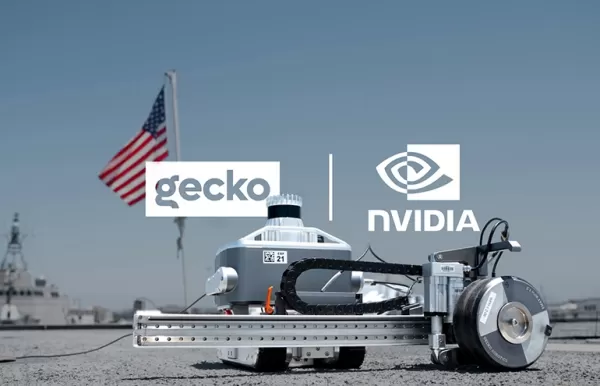
Gecko Robotics partners with NVIDIA to integrate AI agent security and control
Gecko Robotics is leveraging NVIDIA’s latest agentic AI security layer within its inspection robot fleet. Source: Gecko RoboticsNVIDIA Corp. unveiled its Open Agent Safety Platform today, featuring the open-source OpenShell software and the Sentry re
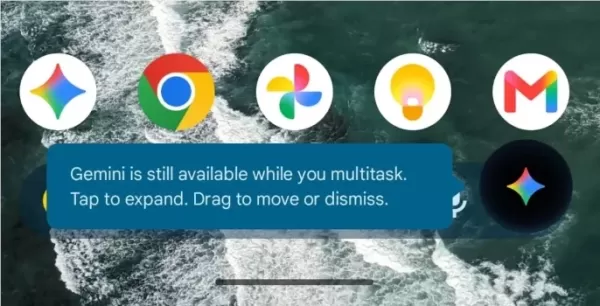
Google Gemini Upgrades Floating Bubbles to Promote Lightweight AI Assistants
Starting September 6, Google initiated a phased rollout of the updated "minimized" quick action button featuring the Gemini interface for Android users. This update enables users to collapse the expansive Gemini overlay into a compact floating bubble
Related Special Topic Recommendations
Design & Art
Google Unveils Agentic AI for Gemini, Launching with Enterprise Clients
During a Google Cloud event on Thursday, the company unveiled plans to integrate Gemini AI into the agentic era. This launch introduces a unified agent capable of not only answering queries but also executing tasks on behalf of users, all within a si
Gecko Robotics partners with NVIDIA to integrate AI agent security and control
Gecko Robotics is leveraging NVIDIA’s latest agentic AI security layer within its inspection robot fleet. Source: Gecko RoboticsNVIDIA Corp. unveiled its Open Agent Safety Platform today, featuring the open-source OpenShell software and the Sentry re
Google Gemini Upgrades Floating Bubbles to Promote Lightweight AI Assistants
Starting September 6, Google initiated a phased rollout of the updated "minimized" quick action button featuring the Gemini interface for Android users. This update enables users to collapse the expansive Gemini overlay into a compact floating bubble
Related Special Topic Recommendations
Design & Art
 Top AI Illustration Tools: Create Editorial Scenes and Cover Art Faster
2026 Latest Top-rated AI Illustration Tools: Our curated list features the best powerfully designed tools for creating stunning editorial scenes and eye-catching cover art quickly. Each option has gone through rigorous real-world tests, offering a free vs paid comparison to help you find the perfect match for your workflow. Try these must-try solutions today to unlock your AI edge and boost your creative productivity. Explore now at XIX.AI.
 10 tools
 xix.ai
Education and Learning
Top AI Tutors for Exam Prep: Practice Math, Science, and English
xix.ai
Education and Learning
Top AI Tutors for Exam Prep: Practice Math, Science, and English
2026 Latest Top-Rated Best AI Tutors for Exam Prep are here on XIX.AI! Our curated list features powerful game-changing tools that offer free vs paid comparison, real-world tests, and weekly updated rankings. They help boost your writing efficiency, simplify complex topic learning, and unlock your academic potential. Explore now to Discover your perfect exam prep tool and Start creating today to Unlock your AI edge!
10 tools
xix.ai
Finance
AI Budget Planning Tools for Personal Money Management
2026 Latest Best Top-Rated AI Budget Planning Tools for Personal Money Management are here on XIX.AI! This curated collection features powerful, game-changing solutions that help you conduct real-world tests, understand spending habits, and create personalized plans to boost productivity. Enjoy a free vs paid comparison along with detailed rankings. Must-try tools designed to simplify money management and unlock your AI edge. Explore now!
11 tools
xix.ai
Health & Wellness
AI Sleep Tracking Assistants: Improve Recovery with Better Bedtime Habits
2026 Latest Best Top-Rated AI Sleep Tracking Assistants curated for ultimate recovery. This fully updated weekly guide features powerful tools that deliver real-world tests, free vs paid comparison, and detailed rankings to help you find the must-try solution that boosts sleep quality and supports better bedtime habits. Explore now at XIX.AI to Unlock your AI edge.
10 tools
xix.ai
Data Analysis
AI SQL Copilots for Product and Revenue Analytics
2026 Latest Best Top-Rated AI SQL Copilots for Product and Revenue Analytics! XIX.AI has curated a powerful, game-changing collection of must-try tools that undergo real-world tests through weekly updated rankings. These tools help users boost productivity significantly by accelerating data analysis, streamlining complex queries, and generating accurate insights to drive smarter business decisions. Explore now to Discover your perfect tool for unlocking your AI edge!
14 tools
xix.ai
Education and Learning
Best AI Homework Helpers That Teach: Learn Concepts, Not Just Answers
2026 Latest Best Top-Rated AI Homework Helpers That Teach Core Concepts Not Just Answers Powerful Tools for Students Must-Try Curated List Weekly Updated Free vs Paid Comparison Real-World Tests Accurate Rankings to Help You Unlock Your Full Learning Potential Explore now to Discover your perfect tool for smarter studying.
10 tools
xix.ai

 Comments (0)
0/500
Comments (0)
0/500
The UK government is grappling with a major challenge: advancing clean energy while aiming to become a global leader in artificial intelligence. Yet serious inconsistencies appear between the departments responsible for these goals. The Department for Science, Innovation and Technology (DSIT) and the Department for Energy Security and Net Zero (DESNZ) hold sharply contrasting forecasts for the future electricity demand of AI data centers.
DSIT projects that AI data centers will need 6 gigawatts of electricity by 2030, while DESNZ estimates this figure at less than one-tenth of that. This gap has caught the attention of the non-profit organization Foxglove. Its strategy director, Tim Squirrell, called the government's disregard for data centers' environmental impact shocking. Cecilia Rikap, a researcher at University College London, noted that the discrepancy may stem from departmental capacity constraints or unrealistic expectations about large technology companies.
DESNZ oversees the UK's carbon budget plan, which details how the government will meet its international climate targets. Foxglove submitted a request to DESNZ for an environmental impact assessment, asking how the growth of AI data centers would be reflected in carbon emission projections. DESNZ responded that researchers could consult the broader energy consumption forecasts for the commercial services sector, without offering specific predictions for data center expansion.
According to that forecast, overall industry energy consumption will increase by 528 megawatts between 2025 and 2030—roughly equivalent to the electricity needs of 170,000 households. This projected value is far lower than the tenfold power requirement for AI data centers cited in DSIT's "UK Computing Roadmap." DSIT's report emphasizes that by 2030, the UK will need at least 6 GW of AI data center capacity.
During the same period, DSIT appears to have revised its earlier emissions projections for AI data centers dramatically, increasing the figures by more than a hundredfold. Initially, DSIT predicted carbon emissions from additional AI computing capacity at between 0.025 and 0.142 million tons. That estimate was later updated to between 34 and 123 million tons, accounting for 0.9% to 3.4% of the UK's projected total emissions.








 Google Unveils Agentic AI for Gemini, Launching with Enterprise Clients
During a Google Cloud event on Thursday, the company unveiled plans to integrate Gemini AI into the agentic era. This launch introduces a unified agent capable of not only answering queries but also executing tasks on behalf of users, all within a si
Google Unveils Agentic AI for Gemini, Launching with Enterprise Clients
During a Google Cloud event on Thursday, the company unveiled plans to integrate Gemini AI into the agentic era. This launch introduces a unified agent capable of not only answering queries but also executing tasks on behalf of users, all within a si
 Gecko Robotics partners with NVIDIA to integrate AI agent security and control
Gecko Robotics is leveraging NVIDIA’s latest agentic AI security layer within its inspection robot fleet. Source: Gecko RoboticsNVIDIA Corp. unveiled its Open Agent Safety Platform today, featuring the open-source OpenShell software and the Sentry re
Gecko Robotics partners with NVIDIA to integrate AI agent security and control
Gecko Robotics is leveraging NVIDIA’s latest agentic AI security layer within its inspection robot fleet. Source: Gecko RoboticsNVIDIA Corp. unveiled its Open Agent Safety Platform today, featuring the open-source OpenShell software and the Sentry re
 Google Gemini Upgrades Floating Bubbles to Promote Lightweight AI Assistants
Starting September 6, Google initiated a phased rollout of the updated "minimized" quick action button featuring the Gemini interface for Android users. This update enables users to collapse the expansive Gemini overlay into a compact floating bubble
Google Gemini Upgrades Floating Bubbles to Promote Lightweight AI Assistants
Starting September 6, Google initiated a phased rollout of the updated "minimized" quick action button featuring the Gemini interface for Android users. This update enables users to collapse the expansive Gemini overlay into a compact floating bubble

2026 Latest Top-rated AI Illustration Tools: Our curated list features the best powerfully designed tools for creating stunning editorial scenes and eye-catching cover art quickly. Each option has gone through rigorous real-world tests, offering a free vs paid comparison to help you find the perfect match for your workflow. Try these must-try solutions today to unlock your AI edge and boost your creative productivity. Explore now at XIX.AI.
10 tools
xix.ai

2026 Latest Top-Rated Best AI Tutors for Exam Prep are here on XIX.AI! Our curated list features powerful game-changing tools that offer free vs paid comparison, real-world tests, and weekly updated rankings. They help boost your writing efficiency, simplify complex topic learning, and unlock your academic potential. Explore now to Discover your perfect exam prep tool and Start creating today to Unlock your AI edge!
10 tools
xix.ai

2026 Latest Best Top-Rated AI Budget Planning Tools for Personal Money Management are here on XIX.AI! This curated collection features powerful, game-changing solutions that help you conduct real-world tests, understand spending habits, and create personalized plans to boost productivity. Enjoy a free vs paid comparison along with detailed rankings. Must-try tools designed to simplify money management and unlock your AI edge. Explore now!
11 tools
xix.ai

2026 Latest Best Top-Rated AI Sleep Tracking Assistants curated for ultimate recovery. This fully updated weekly guide features powerful tools that deliver real-world tests, free vs paid comparison, and detailed rankings to help you find the must-try solution that boosts sleep quality and supports better bedtime habits. Explore now at XIX.AI to Unlock your AI edge.
10 tools
xix.ai

2026 Latest Best Top-Rated AI SQL Copilots for Product and Revenue Analytics! XIX.AI has curated a powerful, game-changing collection of must-try tools that undergo real-world tests through weekly updated rankings. These tools help users boost productivity significantly by accelerating data analysis, streamlining complex queries, and generating accurate insights to drive smarter business decisions. Explore now to Discover your perfect tool for unlocking your AI edge!
14 tools
xix.ai

2026 Latest Best Top-Rated AI Homework Helpers That Teach Core Concepts Not Just Answers Powerful Tools for Students Must-Try Curated List Weekly Updated Free vs Paid Comparison Real-World Tests Accurate Rankings to Help You Unlock Your Full Learning Potential Explore now to Discover your perfect tool for smarter studying.
10 tools
xix.ai












