


 Home
HomeUber Shifts Strategy to Focus on Asset Ownership
Welcome back to TechCrunch Mobility, your source for the future of transportation and the growing role of AI. To receive this newsletter directly in your inbox for free, simply subscribe here and select TechCrunch Mobility!
A few weeks ago, I discussed Uber's pervasive presence across the autonomous vehicle technology landscape. The Financial Times has now quantified that involvement. Based on public filings and insider discussions, the FT estimates Uber has allocated over $10 billion toward purchasing autonomous vehicles and acquiring equity stakes in the companies developing them. The report indicates about $2.5 billion constitutes direct investments, with the remaining $7.5 billion earmarked for purchasing robotaxis in the coming years.
We have covered Uber's numerous investments and partnerships with AV companies in drones, robotaxis, and freight. Its portfolio includes stakes in companies like WeRide, Lucid, Nuro, Rivian, and Wayve.
This substantial figure—particularly the $7.5 billion commitment—reminded me of another transformative period in Uber's history when it similarly embraced asset-heavy strategies. While Uber initially aimed for an asset-light model, it briefly pursued the opposite approach.
Between 2015 and 2018, Uber embarked on several ambitious "moonshot" projects. It launched the electric air taxi initiative Uber Elevate and its in-house autonomous vehicle unit, Uber ATG, which expanded with the acquisition of Otto in 2016. The company also acquired the micromobility startup Jump in 2018.
Then, in 2020, Uber abruptly shifted away from these capital-intensive ventures. It sold Uber ATG to Aurora, Jump to Lime, and Elevate to Joby Aviation. However, it didn't fully exit; Uber retained equity positions in each of these companies.
Uber is now entering a new, distinct asset-heavy phase. It isn't investing billions to develop core technology in-house—though internal R&D certainly continues. Instead, the focus appears to be on owning (or possibly leasing) the physical vehicles themselves.

Image Credits: Bryce Durbin
Earlier this month, I spoke with Eclipse partner Jiten Behl about the firm's new $1.3 billion fund and its investment focus. As I noted, Eclipse plans to incubate more startups, having previously facilitated the Rivian spinout Also. Behl was tight-lipped on specifics, stating only, "We're definitely working on a couple of really cool ideas." He added that Eclipse is particularly interested in startups serving enterprise clients.
Thanks to a tip and some document research by senior reporter Sean O'Kane, it appears a seed funding announcement is nearing for a San Francisco-based startup developing an autonomous hauler without a traditional driver's cab. This sounds similar to Einride's model, but details are scarce for now.
The startup's team is small but features several Silicon Valley tech veterans, including a founder with experience at Uber ATG, Pronto, and Waabi. More to come on this story.
Have a news tip? Email Kirsten Korosec at [email protected] or message her on Signal at kkorosec.07. You can also email Sean O'Kane at [email protected].
Deals!

Image Credits: Bryce Durbin
Slate has secured more funding as it gears up to start production of its first affordable electric pickup trucks by late 2026.
The EV startup, initially backed by Jeff Bezos, raised an additional $650 million in a Series C round led by TWG Global. Keep an eye on TWG—the firm is run by Guggenheim Partners CEO (and Los Angeles Dodgers owner) Mark Walter and investor Thomas Tull.
To date, Slate has raised approximately $1.4 billion. Previous investors include General Catalyst, Jeff Bezos's family office, VC firm Slauson & Co., and former Amazon executive Diego Piacentini, as TechCrunch first reported last year.
Other deals that caught my eye …
Glydways, a San Francisco startup developing compact autonomous pods for dedicated urban lanes, raised $170 million in a Series C round co-led by Suzuki Motor Corporation, ACS Group, and Khosla Ventures. Existing investors Mitsui Chemicals and Gates Frontier, along with new investor Obayashi Corporation, also participated.
GM and Ford are reportedly in discussions with the Pentagon about how the automotive industry could assist the military in modernizing its procurement process to acquire vehicles, munitions, and other hardware more quickly and cost-effectively, according to a New York Times report citing anonymous sources.
Loop, a San Francisco-based startup, raised $95 million in a Series C round led by Valor Equity Partners and the Valor Atreides AI Fund. The round included participation from 8VC, Founders Fund, Index Ventures, and J.P. Morgan's Growth Equity Partners.
Monarch Tractor, which developed electric autonomous tractors, has been acquired by Caterpillar. The startup faced challenges in its pivot to a software services business.
Uber is increasing its stake in Delivery Hero by 4.5%, the Financial Times reported. Uber agreed to purchase roughly 270 million euros worth of shares from Prosus, the Dutch investment group and Delivery Hero's largest shareholder.
Notable reads and other tidbits

Image Credits: Bryce Durbin
Doug Field, the prominent executive who led Ford's electric vehicle and technology strategies for the past five years, is departing. Notably, Ford is also restructuring, forming a new "product creation and industrialization" team to be led by COO Kumar Galhotra. Any predictions on Field's next move? A return to Silicon Valley seems plausible.
Lightship, the all-electric RV startup, is expanding its Colorado factory by an additional 44,000 square feet, which will quadruple its manufacturing capacity.
The partnership between Rivian and battery recycling startup Redwood Materials is yielding results. Redwood is installing a battery energy storage system at Rivian's Illinois factory. Notably, the system will use 100 second-life Rivian battery packs to provide 10 megawatt-hours (MWh) of dispatchable energy, reducing costs and grid load during peak demand.
Tesla launched a new self-driving app that simplifies subscribing to its Full Self-Driving software and provides detailed statistics on usage. This may not be groundbreaking, but the gamified presentation of these new metrics is noteworthy.
Waymo has several updates this week, as usual. The Alphabet-owned company began testing its autonomous vehicles on public roads in London. It also removed the waitlist in Miami and Orlando to accelerate the scaling of its robotaxi services in both cities.
One more thing …
This newsletter isn't my only project delving deeper into robotics. My podcast, The Autonocast, is also exploring the convergence of autonomous vehicles, AI, and robotics. Check out this episode featuring an interview with Foxglove founder Adrian MacNeil, a former Cruise engineer.
Related article
 Apple's New Hardware Chief John Ternus Steers Vision for Future Products
Loading the player…The Ternus era at Apple has officially begun.Tim Cook stepped down as CEO this week, handing leadership to former hardware chief John Ternus. Ternus’s first memo promised a “huge launch next week,” meaning the next iPhone event lan
SpaceX Buys $329M in Tesla Megapacks This Year
SpaceX has significantly increased its acquisition of Tesla Megapack units, investing $295 million during the second quarter and $329 million year-to-date, as detailed in the company’s earnings report published on Tuesday.This move highlights the dee
Agility Robotics Expands Operations in Direct Competition with Tesla
Agility Robotics is set to open a 60,000-square-foot training facility in Fremont, California, to develop its humanoid robot models. The site is located near the factory where Tesla plans to begin producing its Optimus robots this year.Tesla has plac
Related Special Topic Recommendations
Design & Art
Apple's New Hardware Chief John Ternus Steers Vision for Future Products
Loading the player…The Ternus era at Apple has officially begun.Tim Cook stepped down as CEO this week, handing leadership to former hardware chief John Ternus. Ternus’s first memo promised a “huge launch next week,” meaning the next iPhone event lan
SpaceX Buys $329M in Tesla Megapacks This Year
SpaceX has significantly increased its acquisition of Tesla Megapack units, investing $295 million during the second quarter and $329 million year-to-date, as detailed in the company’s earnings report published on Tuesday.This move highlights the dee
Agility Robotics Expands Operations in Direct Competition with Tesla
Agility Robotics is set to open a 60,000-square-foot training facility in Fremont, California, to develop its humanoid robot models. The site is located near the factory where Tesla plans to begin producing its Optimus robots this year.Tesla has plac
Related Special Topic Recommendations
Design & Art
 Top AI Illustration Tools: Create Editorial Scenes and Cover Art Faster
2026 Latest Top-rated AI Illustration Tools: Our curated list features the best powerfully designed tools for creating stunning editorial scenes and eye-catching cover art quickly. Each option has gone through rigorous real-world tests, offering a free vs paid comparison to help you find the perfect match for your workflow. Try these must-try solutions today to unlock your AI edge and boost your creative productivity. Explore now at XIX.AI.
 10 tools
 xix.ai
Education and Learning
Top AI Tutors for Exam Prep: Practice Math, Science, and English
xix.ai
Education and Learning
Top AI Tutors for Exam Prep: Practice Math, Science, and English
2026 Latest Top-Rated Best AI Tutors for Exam Prep are here on XIX.AI! Our curated list features powerful game-changing tools that offer free vs paid comparison, real-world tests, and weekly updated rankings. They help boost your writing efficiency, simplify complex topic learning, and unlock your academic potential. Explore now to Discover your perfect exam prep tool and Start creating today to Unlock your AI edge!
10 tools
xix.ai
Finance
AI Budget Planning Tools for Personal Money Management
2026 Latest Best Top-Rated AI Budget Planning Tools for Personal Money Management are here on XIX.AI! This curated collection features powerful, game-changing solutions that help you conduct real-world tests, understand spending habits, and create personalized plans to boost productivity. Enjoy a free vs paid comparison along with detailed rankings. Must-try tools designed to simplify money management and unlock your AI edge. Explore now!
11 tools
xix.ai
Health & Wellness
AI Sleep Tracking Assistants: Improve Recovery with Better Bedtime Habits
2026 Latest Best Top-Rated AI Sleep Tracking Assistants curated for ultimate recovery. This fully updated weekly guide features powerful tools that deliver real-world tests, free vs paid comparison, and detailed rankings to help you find the must-try solution that boosts sleep quality and supports better bedtime habits. Explore now at XIX.AI to Unlock your AI edge.
10 tools
xix.ai
Data Analysis
AI SQL Copilots for Product and Revenue Analytics
2026 Latest Best Top-Rated AI SQL Copilots for Product and Revenue Analytics! XIX.AI has curated a powerful, game-changing collection of must-try tools that undergo real-world tests through weekly updated rankings. These tools help users boost productivity significantly by accelerating data analysis, streamlining complex queries, and generating accurate insights to drive smarter business decisions. Explore now to Discover your perfect tool for unlocking your AI edge!
14 tools
xix.ai
Education and Learning
Best AI Homework Helpers That Teach: Learn Concepts, Not Just Answers
2026 Latest Best Top-Rated AI Homework Helpers That Teach Core Concepts Not Just Answers Powerful Tools for Students Must-Try Curated List Weekly Updated Free vs Paid Comparison Real-World Tests Accurate Rankings to Help You Unlock Your Full Learning Potential Explore now to Discover your perfect tool for smarter studying.
10 tools
xix.ai

 Comments (0)
0/500
Comments (0)
0/500
Welcome back to TechCrunch Mobility, your source for the future of transportation and the growing role of AI. To receive this newsletter directly in your inbox for free, simply subscribe here and select TechCrunch Mobility!
A few weeks ago, I discussed Uber's pervasive presence across the autonomous vehicle technology landscape. The Financial Times has now quantified that involvement. Based on public filings and insider discussions, the FT estimates Uber has allocated over $10 billion toward purchasing autonomous vehicles and acquiring equity stakes in the companies developing them. The report indicates about $2.5 billion constitutes direct investments, with the remaining $7.5 billion earmarked for purchasing robotaxis in the coming years.
We have covered Uber's numerous investments and partnerships with AV companies in drones, robotaxis, and freight. Its portfolio includes stakes in companies like WeRide, Lucid, Nuro, Rivian, and Wayve.
This substantial figure—particularly the $7.5 billion commitment—reminded me of another transformative period in Uber's history when it similarly embraced asset-heavy strategies. While Uber initially aimed for an asset-light model, it briefly pursued the opposite approach.
Between 2015 and 2018, Uber embarked on several ambitious "moonshot" projects. It launched the electric air taxi initiative Uber Elevate and its in-house autonomous vehicle unit, Uber ATG, which expanded with the acquisition of Otto in 2016. The company also acquired the micromobility startup Jump in 2018.
Then, in 2020, Uber abruptly shifted away from these capital-intensive ventures. It sold Uber ATG to Aurora, Jump to Lime, and Elevate to Joby Aviation. However, it didn't fully exit; Uber retained equity positions in each of these companies.
Uber is now entering a new, distinct asset-heavy phase. It isn't investing billions to develop core technology in-house—though internal R&D certainly continues. Instead, the focus appears to be on owning (or possibly leasing) the physical vehicles themselves.
Image Credits: Bryce Durbin
Earlier this month, I spoke with Eclipse partner Jiten Behl about the firm's new $1.3 billion fund and its investment focus. As I noted, Eclipse plans to incubate more startups, having previously facilitated the Rivian spinout Also. Behl was tight-lipped on specifics, stating only, "We're definitely working on a couple of really cool ideas." He added that Eclipse is particularly interested in startups serving enterprise clients.
Thanks to a tip and some document research by senior reporter Sean O'Kane, it appears a seed funding announcement is nearing for a San Francisco-based startup developing an autonomous hauler without a traditional driver's cab. This sounds similar to Einride's model, but details are scarce for now.
The startup's team is small but features several Silicon Valley tech veterans, including a founder with experience at Uber ATG, Pronto, and Waabi. More to come on this story.
Have a news tip? Email Kirsten Korosec at [email protected] or message her on Signal at kkorosec.07. You can also email Sean O'Kane at [email protected].
Deals!
Image Credits: Bryce Durbin
Slate has secured more funding as it gears up to start production of its first affordable electric pickup trucks by late 2026.
The EV startup, initially backed by Jeff Bezos, raised an additional $650 million in a Series C round led by TWG Global. Keep an eye on TWG—the firm is run by Guggenheim Partners CEO (and Los Angeles Dodgers owner) Mark Walter and investor Thomas Tull.
To date, Slate has raised approximately $1.4 billion. Previous investors include General Catalyst, Jeff Bezos's family office, VC firm Slauson & Co., and former Amazon executive Diego Piacentini, as TechCrunch first reported last year.
Other deals that caught my eye …
Glydways, a San Francisco startup developing compact autonomous pods for dedicated urban lanes, raised $170 million in a Series C round co-led by Suzuki Motor Corporation, ACS Group, and Khosla Ventures. Existing investors Mitsui Chemicals and Gates Frontier, along with new investor Obayashi Corporation, also participated.
GM and Ford are reportedly in discussions with the Pentagon about how the automotive industry could assist the military in modernizing its procurement process to acquire vehicles, munitions, and other hardware more quickly and cost-effectively, according to a New York Times report citing anonymous sources.
Loop, a San Francisco-based startup, raised $95 million in a Series C round led by Valor Equity Partners and the Valor Atreides AI Fund. The round included participation from 8VC, Founders Fund, Index Ventures, and J.P. Morgan's Growth Equity Partners.
Monarch Tractor, which developed electric autonomous tractors, has been acquired by Caterpillar. The startup faced challenges in its pivot to a software services business.
Uber is increasing its stake in Delivery Hero by 4.5%, the Financial Times reported. Uber agreed to purchase roughly 270 million euros worth of shares from Prosus, the Dutch investment group and Delivery Hero's largest shareholder.
Notable reads and other tidbits
Image Credits: Bryce Durbin
Doug Field, the prominent executive who led Ford's electric vehicle and technology strategies for the past five years, is departing. Notably, Ford is also restructuring, forming a new "product creation and industrialization" team to be led by COO Kumar Galhotra. Any predictions on Field's next move? A return to Silicon Valley seems plausible.
Lightship, the all-electric RV startup, is expanding its Colorado factory by an additional 44,000 square feet, which will quadruple its manufacturing capacity.
The partnership between Rivian and battery recycling startup Redwood Materials is yielding results. Redwood is installing a battery energy storage system at Rivian's Illinois factory. Notably, the system will use 100 second-life Rivian battery packs to provide 10 megawatt-hours (MWh) of dispatchable energy, reducing costs and grid load during peak demand.
Tesla launched a new self-driving app that simplifies subscribing to its Full Self-Driving software and provides detailed statistics on usage. This may not be groundbreaking, but the gamified presentation of these new metrics is noteworthy.
Waymo has several updates this week, as usual. The Alphabet-owned company began testing its autonomous vehicles on public roads in London. It also removed the waitlist in Miami and Orlando to accelerate the scaling of its robotaxi services in both cities.
One more thing …
This newsletter isn't my only project delving deeper into robotics. My podcast, The Autonocast, is also exploring the convergence of autonomous vehicles, AI, and robotics. Check out this episode featuring an interview with Foxglove founder Adrian MacNeil, a former Cruise engineer.








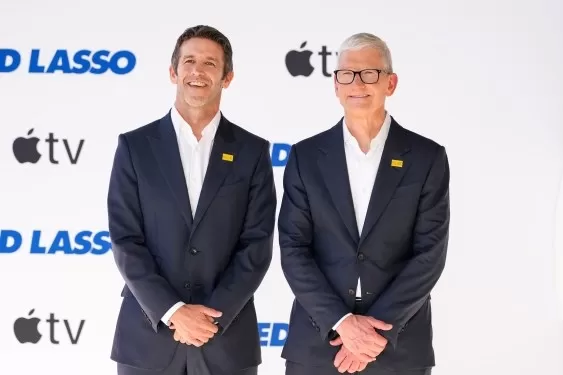 Apple's New Hardware Chief John Ternus Steers Vision for Future Products
Loading the player…The Ternus era at Apple has officially begun.Tim Cook stepped down as CEO this week, handing leadership to former hardware chief John Ternus. Ternus’s first memo promised a “huge launch next week,” meaning the next iPhone event lan
Apple's New Hardware Chief John Ternus Steers Vision for Future Products
Loading the player…The Ternus era at Apple has officially begun.Tim Cook stepped down as CEO this week, handing leadership to former hardware chief John Ternus. Ternus’s first memo promised a “huge launch next week,” meaning the next iPhone event lan
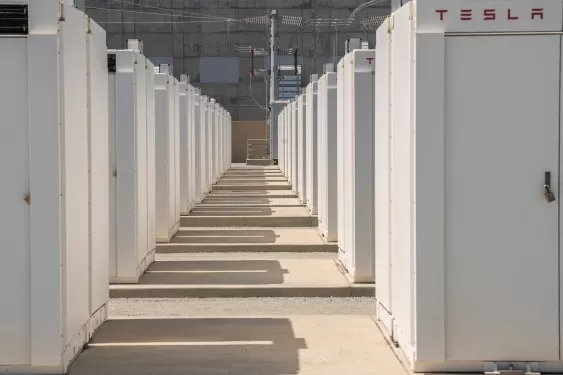 SpaceX Buys $329M in Tesla Megapacks This Year
SpaceX has significantly increased its acquisition of Tesla Megapack units, investing $295 million during the second quarter and $329 million year-to-date, as detailed in the company’s earnings report published on Tuesday.This move highlights the dee
SpaceX Buys $329M in Tesla Megapacks This Year
SpaceX has significantly increased its acquisition of Tesla Megapack units, investing $295 million during the second quarter and $329 million year-to-date, as detailed in the company’s earnings report published on Tuesday.This move highlights the dee
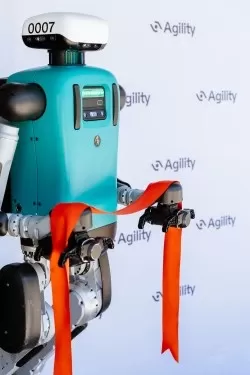 Agility Robotics Expands Operations in Direct Competition with Tesla
Agility Robotics is set to open a 60,000-square-foot training facility in Fremont, California, to develop its humanoid robot models. The site is located near the factory where Tesla plans to begin producing its Optimus robots this year.Tesla has plac
Agility Robotics Expands Operations in Direct Competition with Tesla
Agility Robotics is set to open a 60,000-square-foot training facility in Fremont, California, to develop its humanoid robot models. The site is located near the factory where Tesla plans to begin producing its Optimus robots this year.Tesla has plac

2026 Latest Top-rated AI Illustration Tools: Our curated list features the best powerfully designed tools for creating stunning editorial scenes and eye-catching cover art quickly. Each option has gone through rigorous real-world tests, offering a free vs paid comparison to help you find the perfect match for your workflow. Try these must-try solutions today to unlock your AI edge and boost your creative productivity. Explore now at XIX.AI.
10 tools
xix.ai

2026 Latest Top-Rated Best AI Tutors for Exam Prep are here on XIX.AI! Our curated list features powerful game-changing tools that offer free vs paid comparison, real-world tests, and weekly updated rankings. They help boost your writing efficiency, simplify complex topic learning, and unlock your academic potential. Explore now to Discover your perfect exam prep tool and Start creating today to Unlock your AI edge!
10 tools
xix.ai

2026 Latest Best Top-Rated AI Budget Planning Tools for Personal Money Management are here on XIX.AI! This curated collection features powerful, game-changing solutions that help you conduct real-world tests, understand spending habits, and create personalized plans to boost productivity. Enjoy a free vs paid comparison along with detailed rankings. Must-try tools designed to simplify money management and unlock your AI edge. Explore now!
11 tools
xix.ai

2026 Latest Best Top-Rated AI Sleep Tracking Assistants curated for ultimate recovery. This fully updated weekly guide features powerful tools that deliver real-world tests, free vs paid comparison, and detailed rankings to help you find the must-try solution that boosts sleep quality and supports better bedtime habits. Explore now at XIX.AI to Unlock your AI edge.
10 tools
xix.ai

2026 Latest Best Top-Rated AI SQL Copilots for Product and Revenue Analytics! XIX.AI has curated a powerful, game-changing collection of must-try tools that undergo real-world tests through weekly updated rankings. These tools help users boost productivity significantly by accelerating data analysis, streamlining complex queries, and generating accurate insights to drive smarter business decisions. Explore now to Discover your perfect tool for unlocking your AI edge!
14 tools
xix.ai

2026 Latest Best Top-Rated AI Homework Helpers That Teach Core Concepts Not Just Answers Powerful Tools for Students Must-Try Curated List Weekly Updated Free vs Paid Comparison Real-World Tests Accurate Rankings to Help You Unlock Your Full Learning Potential Explore now to Discover your perfect tool for smarter studying.
10 tools
xix.ai












