


 Home
HomeMichael Burry Takes Aim at Nvidia This Thanksgiving
While everyone has been preoccupied with Thanksgiving details, famed investor Michael Burry – portrayed by Christian Bale in "The Big Short" – has been escalating a highly aggressive campaign against Nvidia.
This is a battle worth watching, as Burry has a credible chance of winning. What sets his warning apart from other AI bubble alarms is his current position: he now commands a significant audience and operates free from regulatory constraints that could silence him, potentially making him the catalyst for the very downturn he forecasts. He's not just betting against the AI boom; he's actively trying to persuade his growing followers that the emperor, Nvidia, has no clothes.
The central question now is whether Burry can generate enough widespread doubt to seriously undermine Nvidia and, by extension, other key players in this narrative, including OpenAI.
Burry has intensified his efforts in recent weeks. He has consistently criticized Nvidia and engaged in a public spat with Palantir CEO Alex Karp after regulatory filings revealed Burry held bearish put options against both companies – a bet worth over $1 billion on their decline. (Karp appeared on CNBC to label Burry's strategy "batshit crazy," prompting Burry to mock Karp for misreading an SEC filing.) This exchange highlights the market's fundamental divide: Is AI a transformative force justifying immense investment, or are we in a speculative mania headed for a painful correction?
Burry's accusations are precise and severe. He claims Nvidia's stock-based compensation has cost shareholders $112.5 billion, effectively "reducing owner's earnings by 50%." He has implied AI companies are using creative accounting by stretching out depreciation on rapidly depreciating equipment. (Burry argues Nvidia's customers are overstating the useful life of its GPUs to justify excessive capital spending.) Regarding the celebrated customer demand, Burry suggests it's an illusion, alleging a circular financing scheme where customers are "funded by their dealers."
Burry's commentary has gained enough traction that Nvidia, despite its dominant market position and a stellar recent earnings report, felt compelled to respond. In a seven-page memo to Wall Street analysts reported by Barron's, Nvidia's investor relations team pushed back, asserting Burry's calculations are flawed – for instance, by "incorrectly included RSU taxes" (the actual share buyback figure is $91 billion, not $112.5 billion, according to the memo). The company stated its employee compensation is "consistent with peers" and firmly rejected any comparison to Enron.
Burry's retort was succinct: he never compared Nvidia to Enron. His comparison is to Cisco in the late 1990s, which overbuilt network infrastructure that lacked immediate demand, leading to a 75% stock crash when the market realized it.
Techcrunch event Join the Disrupt 2026 Waitlist
Secure your spot on the Disrupt 2026 waitlist for priority access when Early Bird tickets are released. Previous Disrupt events have featured industry pioneers like Google Cloud, Netflix, Microsoft, Box, Phia, a16z, ElevenLabs, Wayve, Hugging Face, Elad Gil, and Vinod Khosla – part of over 250 leaders delivering 200+ sessions designed to accelerate your growth and refine your competitive edge. You'll also connect with hundreds of groundbreaking startups across every industry.
Join the Disrupt 2026 Waitlist
Secure your spot on the Disrupt 2026 waitlist for priority access when Early Bird tickets are released. Previous Disrupt events have featured industry pioneers like Google Cloud, Netflix, Microsoft, Box, Phia, a16z, ElevenLabs, Wayve, Hugging Face, Elad Gil, and Vinod Khosla – part of over 250 leaders delivering 200+ sessions designed to accelerate your growth and refine your competitive edge. You'll also connect with hundreds of groundbreaking startups across every industry.
San Francisco | October 13-15, 2026 WAITLIST NOW By next Thanksgiving, this could all seem like a minor controversy. Or it might not.
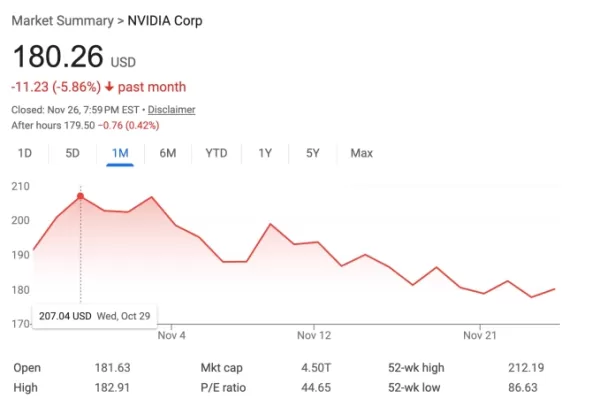
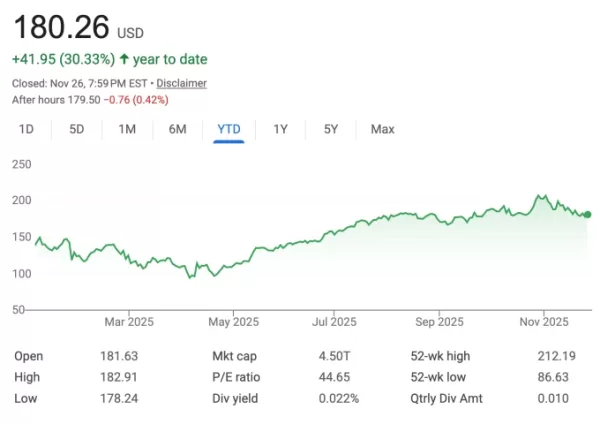
Nvidia's stock has surged twelvefold since early 2023. The company's current market capitalization is $4.5 trillion, and its rise to become the world's most valuable company is historically unprecedented.
However, Burry's track record is mixed. His correct prediction of the housing crisis earned him fame. Yet since 2008, he has persistently forecast various downturns, leading critics to label him a "permabear." Followers who adhered strictly to his views missed significant bull markets. For instance, Burry bought GameStop early but sold before its meme-stock surge. He shorted Tesla and suffered substantial losses. After his housing call, prolonged underperformance drove frustrated investors from his fund.
Earlier this month, Burry deregistered his investment firm, Scion Asset Management, with the SEC. He cited "regulatory and compliance restrictions that effectively muzzled my ability to communicate," expressing frustration over the misinterpretation of his posts on X.
Last weekend, he launched a Substack titled "Cassandra Unchained" to advance his case against the AI industrial complex. The newsletter, with an annual subscription cost of $400, is described as Burry's "sole focus as he gives you a front row seat to his analytical efforts and projections for stocks, markets, and bubbles, often with an eye to history and its remarkably timeless patterns."
People are certainly listening. The newsletter launched less than a week ago and already has 90,000 subscribers. This brings us back to the unsettling question at the heart of this saga: Is Burry a canary in the coal mine warning of an inevitable collapse, or could his fame, his record, his unfettered voice, and rapidly expanding audience actually trigger the implosion he predicts?
History suggests this isn't far-fetched. Short-seller Jim Chanos didn't create Enron's fraud, but his prominent critiques in 2000-2001 gave other investors the confidence to question the company, accelerating its demise. Similarly, hedge fund manager David Einhorn's detailed 2008 critique of Lehman Brothers' accounting raised widespread skepticism and likely hastened the loss of confidence that led to its collapse. In both cases, the underlying flaws were real, but a credible critic with a platform created a self-fulfilling crisis of confidence.
If enough investors are persuaded by Burry's warnings of AI overcapacity, they will sell. That selling would validate his bearish stance, prompting more selling. Burry doesn't need to be correct on every detail; he only needs to be persuasive enough to start the stampede. Examining Nvidia's performance in November might suggest his warnings are gaining traction, but looking at the stock's performance for the entire year paints a less clear picture.
What is abundantly clear is that Nvidia has an astonishing market cap and its status as the AI era's most essential company to lose. Meanwhile, Burry risks little beyond his reputation, armed with a new megaphone he is likely to use at full volume for the foreseeable future.
Related article
 Nvidia H200 China deal survives Trump-Xi summit, but not as expected
President Trump traveled to Beijing with Jensen Huang joining the delegation at the eleventh hour, departing two days later with vague remarks about potential chip export developments. No deal materialized. Since Trump first authorized sales in Decem
Nvidia to Derive 25% of Next Year’s Revenue from Funded Labs
Nvidia has deployed nearly US$50 billion into AI labs purchasing its chips, securing commitments for over $500 billion in total.On August 26, CFO Colette Kress informed analysts that these labs, backed by Nvidia’s balance sheet, will account for roug
ElevenLabs brings on BlackRock, Jamie Foxx and Longoria as new investors
ElevenLabs, a leader in Voice AI, has announced new participants in its $500 million Series D funding round, initially revealed in February. The investor roster now features major institutions like BlackRock, Wellington, D.E. Shaw, and Schroders, alo
Related Special Topic Recommendations
Design & Art
Nvidia H200 China deal survives Trump-Xi summit, but not as expected
President Trump traveled to Beijing with Jensen Huang joining the delegation at the eleventh hour, departing two days later with vague remarks about potential chip export developments. No deal materialized. Since Trump first authorized sales in Decem
Nvidia to Derive 25% of Next Year’s Revenue from Funded Labs
Nvidia has deployed nearly US$50 billion into AI labs purchasing its chips, securing commitments for over $500 billion in total.On August 26, CFO Colette Kress informed analysts that these labs, backed by Nvidia’s balance sheet, will account for roug
ElevenLabs brings on BlackRock, Jamie Foxx and Longoria as new investors
ElevenLabs, a leader in Voice AI, has announced new participants in its $500 million Series D funding round, initially revealed in February. The investor roster now features major institutions like BlackRock, Wellington, D.E. Shaw, and Schroders, alo
Related Special Topic Recommendations
Design & Art
 Top AI Illustration Tools: Create Editorial Scenes and Cover Art Faster
2026 Latest Top-rated AI Illustration Tools: Our curated list features the best powerfully designed tools for creating stunning editorial scenes and eye-catching cover art quickly. Each option has gone through rigorous real-world tests, offering a free vs paid comparison to help you find the perfect match for your workflow. Try these must-try solutions today to unlock your AI edge and boost your creative productivity. Explore now at XIX.AI.
 10 tools
 xix.ai
Education and Learning
Top AI Tutors for Exam Prep: Practice Math, Science, and English
xix.ai
Education and Learning
Top AI Tutors for Exam Prep: Practice Math, Science, and English
2026 Latest Top-Rated Best AI Tutors for Exam Prep are here on XIX.AI! Our curated list features powerful game-changing tools that offer free vs paid comparison, real-world tests, and weekly updated rankings. They help boost your writing efficiency, simplify complex topic learning, and unlock your academic potential. Explore now to Discover your perfect exam prep tool and Start creating today to Unlock your AI edge!
10 tools
xix.ai
Finance
AI Budget Planning Tools for Personal Money Management
2026 Latest Best Top-Rated AI Budget Planning Tools for Personal Money Management are here on XIX.AI! This curated collection features powerful, game-changing solutions that help you conduct real-world tests, understand spending habits, and create personalized plans to boost productivity. Enjoy a free vs paid comparison along with detailed rankings. Must-try tools designed to simplify money management and unlock your AI edge. Explore now!
11 tools
xix.ai
Health & Wellness
AI Sleep Tracking Assistants: Improve Recovery with Better Bedtime Habits
2026 Latest Best Top-Rated AI Sleep Tracking Assistants curated for ultimate recovery. This fully updated weekly guide features powerful tools that deliver real-world tests, free vs paid comparison, and detailed rankings to help you find the must-try solution that boosts sleep quality and supports better bedtime habits. Explore now at XIX.AI to Unlock your AI edge.
10 tools
xix.ai
Data Analysis
AI SQL Copilots for Product and Revenue Analytics
2026 Latest Best Top-Rated AI SQL Copilots for Product and Revenue Analytics! XIX.AI has curated a powerful, game-changing collection of must-try tools that undergo real-world tests through weekly updated rankings. These tools help users boost productivity significantly by accelerating data analysis, streamlining complex queries, and generating accurate insights to drive smarter business decisions. Explore now to Discover your perfect tool for unlocking your AI edge!
14 tools
xix.ai
Education and Learning
Best AI Homework Helpers That Teach: Learn Concepts, Not Just Answers
2026 Latest Best Top-Rated AI Homework Helpers That Teach Core Concepts Not Just Answers Powerful Tools for Students Must-Try Curated List Weekly Updated Free vs Paid Comparison Real-World Tests Accurate Rankings to Help You Unlock Your Full Learning Potential Explore now to Discover your perfect tool for smarter studying.
10 tools
xix.ai

 Comments (2)
0/500
Comments (2)
0/500
![EricRoberts]()
バリー氏の相場観はいつも刺激的だね。AI関連株は実態に注目すべきかも。投資家としての動きに注目しながら、業界の成長性とバブルの危うさのバランスを考える必要がありそうだ。🤔
![ArthurJackson]()
Берри снова в деле! 😄 Интересно, это просто шорт или у него есть реальные аргументы против NVIDIA? Напомнило мне 2008 год, но сейчас всё сложнее с ИИ-бумом. Кто-нибудь следит за его позицией?
While everyone has been preoccupied with Thanksgiving details, famed investor Michael Burry – portrayed by Christian Bale in "The Big Short" – has been escalating a highly aggressive campaign against Nvidia.
This is a battle worth watching, as Burry has a credible chance of winning. What sets his warning apart from other AI bubble alarms is his current position: he now commands a significant audience and operates free from regulatory constraints that could silence him, potentially making him the catalyst for the very downturn he forecasts. He's not just betting against the AI boom; he's actively trying to persuade his growing followers that the emperor, Nvidia, has no clothes.
The central question now is whether Burry can generate enough widespread doubt to seriously undermine Nvidia and, by extension, other key players in this narrative, including OpenAI.
Burry has intensified his efforts in recent weeks. He has consistently criticized Nvidia and engaged in a public spat with Palantir CEO Alex Karp after regulatory filings revealed Burry held bearish put options against both companies – a bet worth over $1 billion on their decline. (Karp appeared on CNBC to label Burry's strategy "batshit crazy," prompting Burry to mock Karp for misreading an SEC filing.) This exchange highlights the market's fundamental divide: Is AI a transformative force justifying immense investment, or are we in a speculative mania headed for a painful correction?
Burry's accusations are precise and severe. He claims Nvidia's stock-based compensation has cost shareholders $112.5 billion, effectively "reducing owner's earnings by 50%." He has implied AI companies are using creative accounting by stretching out depreciation on rapidly depreciating equipment. (Burry argues Nvidia's customers are overstating the useful life of its GPUs to justify excessive capital spending.) Regarding the celebrated customer demand, Burry suggests it's an illusion, alleging a circular financing scheme where customers are "funded by their dealers."
Burry's commentary has gained enough traction that Nvidia, despite its dominant market position and a stellar recent earnings report, felt compelled to respond. In a seven-page memo to Wall Street analysts reported by Barron's, Nvidia's investor relations team pushed back, asserting Burry's calculations are flawed – for instance, by "incorrectly included RSU taxes" (the actual share buyback figure is $91 billion, not $112.5 billion, according to the memo). The company stated its employee compensation is "consistent with peers" and firmly rejected any comparison to Enron.
Burry's retort was succinct: he never compared Nvidia to Enron. His comparison is to Cisco in the late 1990s, which overbuilt network infrastructure that lacked immediate demand, leading to a 75% stock crash when the market realized it.
Techcrunch eventJoin the Disrupt 2026 Waitlist
Secure your spot on the Disrupt 2026 waitlist for priority access when Early Bird tickets are released. Previous Disrupt events have featured industry pioneers like Google Cloud, Netflix, Microsoft, Box, Phia, a16z, ElevenLabs, Wayve, Hugging Face, Elad Gil, and Vinod Khosla – part of over 250 leaders delivering 200+ sessions designed to accelerate your growth and refine your competitive edge. You'll also connect with hundreds of groundbreaking startups across every industry.
Join the Disrupt 2026 Waitlist
Secure your spot on the Disrupt 2026 waitlist for priority access when Early Bird tickets are released. Previous Disrupt events have featured industry pioneers like Google Cloud, Netflix, Microsoft, Box, Phia, a16z, ElevenLabs, Wayve, Hugging Face, Elad Gil, and Vinod Khosla – part of over 250 leaders delivering 200+ sessions designed to accelerate your growth and refine your competitive edge. You'll also connect with hundreds of groundbreaking startups across every industry.
San Francisco | October 13-15, 2026 WAITLIST NOWBy next Thanksgiving, this could all seem like a minor controversy. Or it might not.
Nvidia's stock has surged twelvefold since early 2023. The company's current market capitalization is $4.5 trillion, and its rise to become the world's most valuable company is historically unprecedented.
However, Burry's track record is mixed. His correct prediction of the housing crisis earned him fame. Yet since 2008, he has persistently forecast various downturns, leading critics to label him a "permabear." Followers who adhered strictly to his views missed significant bull markets. For instance, Burry bought GameStop early but sold before its meme-stock surge. He shorted Tesla and suffered substantial losses. After his housing call, prolonged underperformance drove frustrated investors from his fund.
Earlier this month, Burry deregistered his investment firm, Scion Asset Management, with the SEC. He cited "regulatory and compliance restrictions that effectively muzzled my ability to communicate," expressing frustration over the misinterpretation of his posts on X.
Last weekend, he launched a Substack titled "Cassandra Unchained" to advance his case against the AI industrial complex. The newsletter, with an annual subscription cost of $400, is described as Burry's "sole focus as he gives you a front row seat to his analytical efforts and projections for stocks, markets, and bubbles, often with an eye to history and its remarkably timeless patterns."
People are certainly listening. The newsletter launched less than a week ago and already has 90,000 subscribers. This brings us back to the unsettling question at the heart of this saga: Is Burry a canary in the coal mine warning of an inevitable collapse, or could his fame, his record, his unfettered voice, and rapidly expanding audience actually trigger the implosion he predicts?
History suggests this isn't far-fetched. Short-seller Jim Chanos didn't create Enron's fraud, but his prominent critiques in 2000-2001 gave other investors the confidence to question the company, accelerating its demise. Similarly, hedge fund manager David Einhorn's detailed 2008 critique of Lehman Brothers' accounting raised widespread skepticism and likely hastened the loss of confidence that led to its collapse. In both cases, the underlying flaws were real, but a credible critic with a platform created a self-fulfilling crisis of confidence.
If enough investors are persuaded by Burry's warnings of AI overcapacity, they will sell. That selling would validate his bearish stance, prompting more selling. Burry doesn't need to be correct on every detail; he only needs to be persuasive enough to start the stampede. Examining Nvidia's performance in November might suggest his warnings are gaining traction, but looking at the stock's performance for the entire year paints a less clear picture.
What is abundantly clear is that Nvidia has an astonishing market cap and its status as the AI era's most essential company to lose. Meanwhile, Burry risks little beyond his reputation, armed with a new megaphone he is likely to use at full volume for the foreseeable future.








 Nvidia H200 China deal survives Trump-Xi summit, but not as expected
President Trump traveled to Beijing with Jensen Huang joining the delegation at the eleventh hour, departing two days later with vague remarks about potential chip export developments. No deal materialized. Since Trump first authorized sales in Decem
Nvidia H200 China deal survives Trump-Xi summit, but not as expected
President Trump traveled to Beijing with Jensen Huang joining the delegation at the eleventh hour, departing two days later with vague remarks about potential chip export developments. No deal materialized. Since Trump first authorized sales in Decem
 Nvidia to Derive 25% of Next Year’s Revenue from Funded Labs
Nvidia has deployed nearly US$50 billion into AI labs purchasing its chips, securing commitments for over $500 billion in total.On August 26, CFO Colette Kress informed analysts that these labs, backed by Nvidia’s balance sheet, will account for roug
Nvidia to Derive 25% of Next Year’s Revenue from Funded Labs
Nvidia has deployed nearly US$50 billion into AI labs purchasing its chips, securing commitments for over $500 billion in total.On August 26, CFO Colette Kress informed analysts that these labs, backed by Nvidia’s balance sheet, will account for roug
 ElevenLabs brings on BlackRock, Jamie Foxx and Longoria as new investors
ElevenLabs, a leader in Voice AI, has announced new participants in its $500 million Series D funding round, initially revealed in February. The investor roster now features major institutions like BlackRock, Wellington, D.E. Shaw, and Schroders, alo
ElevenLabs brings on BlackRock, Jamie Foxx and Longoria as new investors
ElevenLabs, a leader in Voice AI, has announced new participants in its $500 million Series D funding round, initially revealed in February. The investor roster now features major institutions like BlackRock, Wellington, D.E. Shaw, and Schroders, alo

2026 Latest Top-rated AI Illustration Tools: Our curated list features the best powerfully designed tools for creating stunning editorial scenes and eye-catching cover art quickly. Each option has gone through rigorous real-world tests, offering a free vs paid comparison to help you find the perfect match for your workflow. Try these must-try solutions today to unlock your AI edge and boost your creative productivity. Explore now at XIX.AI.
10 tools
xix.ai

2026 Latest Top-Rated Best AI Tutors for Exam Prep are here on XIX.AI! Our curated list features powerful game-changing tools that offer free vs paid comparison, real-world tests, and weekly updated rankings. They help boost your writing efficiency, simplify complex topic learning, and unlock your academic potential. Explore now to Discover your perfect exam prep tool and Start creating today to Unlock your AI edge!
10 tools
xix.ai

2026 Latest Best Top-Rated AI Budget Planning Tools for Personal Money Management are here on XIX.AI! This curated collection features powerful, game-changing solutions that help you conduct real-world tests, understand spending habits, and create personalized plans to boost productivity. Enjoy a free vs paid comparison along with detailed rankings. Must-try tools designed to simplify money management and unlock your AI edge. Explore now!
11 tools
xix.ai

2026 Latest Best Top-Rated AI Sleep Tracking Assistants curated for ultimate recovery. This fully updated weekly guide features powerful tools that deliver real-world tests, free vs paid comparison, and detailed rankings to help you find the must-try solution that boosts sleep quality and supports better bedtime habits. Explore now at XIX.AI to Unlock your AI edge.
10 tools
xix.ai

2026 Latest Best Top-Rated AI SQL Copilots for Product and Revenue Analytics! XIX.AI has curated a powerful, game-changing collection of must-try tools that undergo real-world tests through weekly updated rankings. These tools help users boost productivity significantly by accelerating data analysis, streamlining complex queries, and generating accurate insights to drive smarter business decisions. Explore now to Discover your perfect tool for unlocking your AI edge!
14 tools
xix.ai

2026 Latest Best Top-Rated AI Homework Helpers That Teach Core Concepts Not Just Answers Powerful Tools for Students Must-Try Curated List Weekly Updated Free vs Paid Comparison Real-World Tests Accurate Rankings to Help You Unlock Your Full Learning Potential Explore now to Discover your perfect tool for smarter studying.
10 tools
xix.ai

バリー氏の相場観はいつも刺激的だね。AI関連株は実態に注目すべきかも。投資家としての動きに注目しながら、業界の成長性とバブルの危うさのバランスを考える必要がありそうだ。🤔
Берри снова в деле! 😄 Интересно, это просто шорт или у него есть реальные аргументы против NVIDIA? Напомнило мне 2008 год, но сейчас всё сложнее с ИИ-бумом. Кто-нибудь следит за его позицией?












