


 Home
Home
Tencent Cloud ADP 4.0 Debuts Claw Mode, Enabling Instant Agent Creation via Single Sentence
On June 5, during the 2026 Tencent Cloud AI Industrial Application Conference, Tencent Cloud officially launched version 4.0 of its Intelligent Agent Development Platform ADP, now an enterprise-grade AgentOps platform. This release introduces support for the Claw mode of the Agentic Loop and, through Connector, Skills, knowledge base, MCP, and Agent Portal, connects the full lifecycle of enterprise-level agent building, integration, deployment, and governance, enabling large-scale industrial deployment.
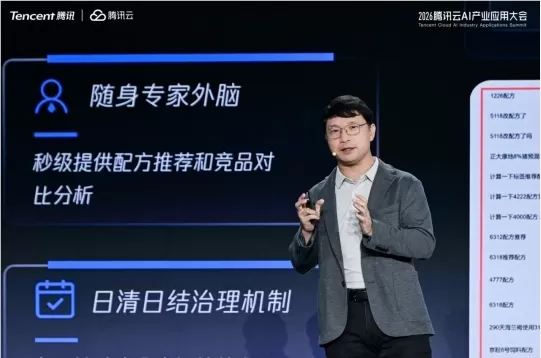
Wu Yunsheng, Vice President of Tencent Cloud
Upgraded Claw Mode Lowers the Barrier for Enterprise Agent Construction
A core upgrade in ADP 4.0 is the introduction of the Claw mode, which supports the Agentic Loop mechanism, complementing the existing three construction modes: LLM+RAG, workflow, and Multi-Agent.
The Claw mode is built for more complex, longer-running business tasks. It enables the creation of agents that can autonomously write and execute code in a cloud sandbox, invoke enterprise Skills, and handle persistent tasks. Once built, these agents can be directly embedded into enterprise systems via APIs and reach employees and customers through channels like WeCom and WeChat.
From an operational standpoint, creators no longer need to fill out forms; they simply describe their requirements in natural language, and the platform automatically generates prompts, attaches the knowledge base, configures tools, and orchestrates workflows. For standard business scenarios, applications can also be quickly built from templates, with agent capabilities refined through ongoing conversations.
To ensure agents reliably complete complex tasks, ADP 4.0 also supports bidirectional calls between agents and workflows. Agents can invoke workflows for well-defined, deterministic processes, while workflows can trigger agents when they encounter unstructured judgments, complex analyses, or open-ended tasks. This mechanism allows enterprises to set up more flexible collaboration between deterministic workflows and intelligent decision-making.
The Claw mode has been validated across many scenarios. For instance, on the Tencent Industrial Quality Inspection Platform TI-AOI, traditional visual inspection relies heavily on engineers’ on-site experience, requiring them to switch between multiple pages for data checks, log reviews, model evaluations, and parameter adjustments. A quality inspection agent built with the Claw mode can close the loop for processes like "identifying defects, reviewing standards, performing inspections, checking logs, and adjusting models." Engineers simply input "Help me check if this batch of data can be trained," and the agent automatically performs data health checks, assesses training feasibility, and provides optimization suggestions.
Connect Enterprise Systems, Knowledge, and Tools to Embed Agents into Workflows
For enterprise-grade agents to operate in production environments, they need to be integrated with existing systems, data, and processes. ADP 4.0 enables connections to enterprise systems, data, and workflows via Connectors, Skills, knowledge bases, and the MCP standard protocol, turning scattered business resources into reusable AI assets.
Regarding Connectors, ADP 4.0 initially launches nearly 40 curated Connectors, supporting integration with high-frequency office and business systems such as CRM, ERP, OA, ticketing, customer service, project collaboration, enterprise cloud storage, knowledge bases, and document systems. Enterprises no longer need to manually transfer data or reorganize materials; agents can directly read, retrieve, and invoke information from business systems, and perform operations like querying, analyzing, generating, and transferring data.
As for Skills, ADP 4.0 upgrades the Skills Square, now supporting over 150 Skills. Business teams or developers can also package custom Skills and submit them as shared plugins for the enterprise. After security reviews and approval, these Skills become available in the enterprise area for agents and smart workstations.
Meanwhile, ADP 4.0 has accumulated over 50 scenario-based templates and industry-specific applications. For example, in retail, the platform offers ready-to-use business templates for marketing short video creation, copywriting assistants, and e-commerce Q&A review. Enterprises can either quickly build applications from these templates or customize them by adding their own processes, knowledge bases, and tools, shortening the time from zero to one.
On the model ecosystem front, ADP 4.0 supports unified integration of mainstream large language models and enterprise-built models, and natively complies with the MCP standard protocol, allowing one-time configuration for multiple uses.
Additionally, the ADP 4.0 Intelligent Agent Workbench supports access through multiple entry points, including the platform, browser, Office, IM channels, and API/SDK, enabling agents to be embedded into employees' daily workflows.
Full-Chain Governance from Development to Deployment, Passing the "Security Check" Before Going Live
When intelligent agents enter production systems, security and governance become critical. ADP 4.0 embeds governance capabilities at the development source. Through a focus on permission management, Skills governance, operational observability, and deployment compliance, it establishes a comprehensive security control system covering the entire agent lifecycle.
In permission management, ADP 4.0 supports a hierarchical permission architecture at enterprise, space, and application levels, combined with RBAC role permission matrices, achieving dual-dimensional isolation of functional and data permissions. Enterprises can configure access scopes based on organizational structure, departments, positions, and roles, ensuring clear permission boundaries between teams, applications, and knowledge bases.
For Skills governance, the platform supports a closed-loop lifecycle from submission, security checks, approval, listing, distribution, to usage monitoring. Employee-submitted custom Skills must pass code static scanning, data access, network outbound, and dependency whitelist security checks, along with multi-level approval, before being made available in the enterprise area. Through these governance upgrades, Skills evolve from personal tools to approved, shared, and managed enterprise assets.
For agent observability and governance, ADP provides end-to-end monitoring capabilities. Enterprises can centrally manage agents across platforms and business scenarios through the Agent Portal. Using business dashboards and resource dashboards, they can view key metrics like call volume, activity level, response quality, operational cost, and error reports in real time, quickly identify root causes, and optimize performance.
To meet compliance needs across industries, ADP 4.0 supports four deployment modes: public cloud, private cloud, hybrid cloud, and dedicated cloud. Additionally, the private deployment solution for the intelligent workbench and security sandbox will be released in future version iterations, enabling secure code execution, Skill invocation, and long-term task execution within the customer's internal network.
At the event, Tencent Cloud upgraded its ecosystem strategy for ADP, partnering with ISVs to co-develop vertical industry agents, driving large-scale deployment of industry-specific intelligent agents. It also opened up standard products, development frameworks, and toolchains for resellers and delivery partners, helping enterprises quickly achieve AI efficiency gains and personalized implementations. For example, together with Zhaogangwang, they jointly developed a steel trading industry agent covering the entire supply chain—from inquiry and procurement to warehousing and logistics—and extended the model to areas like bulk goods, manufacturing, and energy.
Wu Yunsheng, Vice President of Tencent Cloud and Head of the Tencent Cloud Intelligent Agent Development Platform, noted that enterprise-grade agents are not about who builds them faster, but who can operate them stably, securely, and continuously in a business environment. ADP aims to provide an enterprise-grade AgentOps foundation, enabling companies to quickly build agents, integrate them into systems, deploy them to the front line, and operate them continuously under permission, security, evaluation, and observability frameworks, thereby unlocking productivity value.
Related article
 Apple Smart Glasses Could Debut at WWDC27, Highlighting Privacy Protection
Bloomberg’s Mark Gurman reports that Apple’s smart glasses, codenamed N50, are slated for a WWDC27 debut in June 2027, with a retail launch expected in autumn 2027. Originally targeted for late this year and early 2027, the device’s release has been
Inside Details Exposed About Next-Gen Gemini: Strained Computing Power, Internal Teams Disagreed on Development Priorities and Resource Allocation
Reports indicate that the launch of Google’s highly anticipated next-generation Gemini model has been pushed back. Internal disagreements over development priorities and resource allocation, combined with limited computing capacity and complex approv
OpenAI Dismisses Growth Slowdown Concerns, Says Multiple Business Units Accelerating
In response to external scrutiny regarding decelerating sales growth and missed internal benchmarks, AI leader OpenAI issued a confident statement on Tuesday, April 28. The company clarified that its consumer products and enterprise services are adva
Related Special Topic Recommendations
Data Analysis
Apple Smart Glasses Could Debut at WWDC27, Highlighting Privacy Protection
Bloomberg’s Mark Gurman reports that Apple’s smart glasses, codenamed N50, are slated for a WWDC27 debut in June 2027, with a retail launch expected in autumn 2027. Originally targeted for late this year and early 2027, the device’s release has been
Inside Details Exposed About Next-Gen Gemini: Strained Computing Power, Internal Teams Disagreed on Development Priorities and Resource Allocation
Reports indicate that the launch of Google’s highly anticipated next-generation Gemini model has been pushed back. Internal disagreements over development priorities and resource allocation, combined with limited computing capacity and complex approv
OpenAI Dismisses Growth Slowdown Concerns, Says Multiple Business Units Accelerating
In response to external scrutiny regarding decelerating sales growth and missed internal benchmarks, AI leader OpenAI issued a confident statement on Tuesday, April 28. The company clarified that its consumer products and enterprise services are adva
Related Special Topic Recommendations
Data Analysis
 AI SQL Copilots for Revenue Dashboards, Funnel Analysis, and Product Metrics
2026 Latest Best AI SQL Copilots Ranked Top-Rated! XIX.AI curates a powerful game-changing collection for weekly updated real-world tests. These must-try tools help you generate accurate revenue dashboards, analyze sales funnels, and track product metrics swiftly, boosting productivity massively. Explore now to Discover your perfect tool for data-driven decision making! 238 characters
 9 tools
 xix.ai
Music composition
Best AI Melody Writing Tools for Song Drafts
xix.ai
Music composition
Best AI Melody Writing Tools for Song Drafts
2026 Latest Best Top-Rated AI Melody Writing Tools for Song Drafts! XIX.AI has curated a highly powerful game-changing collection that goes through rigorous real-world tests to deliver the best writing experience. You can find detailed free vs paid comparisons, accurate rankings, and must-try options designed to help you create stunning song drafts effortlessly and boost your creative productivity significantly. Explore now to discover your perfect tool!
8 tools
xix.ai
chatbot
Best AI Conversation Trainer Tools for Interview Practice
2026 Latest Best Top-rated AI Conversation Trainer Tools for Interview Practice are here on XIX.AI! This curated collection features powerful, game-changing tools that go through rigorous real-world tests to deliver accurate feedback. You’ll find a free vs paid comparison and detailed rankings to help you choose the must-try option that boosts your confidence and skills. Explore now to Discover your perfect tool for interview success!
12 tools
xix.ai
Design & Art
Best AI Style Transfer Tools for Creative Experiments
2026 Latest Best Top-rated AI Style Transfer Tools for Creative Experiments! XIX.AI has curated a powerful, game-changing collection of must-try tools that deliver exceptional results through real-world tests and rigorous rankings. These top solutions help creatives boost productivity significantly by accelerating content creation and unlocking endless creative possibilities. Explore now to discover your perfect tool and start creating today!
9 tools
xix.ai
Comic Creation
Best AI Dialogue Bubble Tools for Visual Storytelling
2026 Latest Best Top-Rated AI Dialogue Bubble Tools for Visual Storytelling are here on XIX.AI! This curated collection features powerful, game-changing tools that help creators boost productivity and overcome creative bottlenecks. Get a free vs paid comparison, see real-world tests, and check the latest rankings to find the must-try solutions perfect for crafting engaging visual narratives. Explore now to discover your ideal tool!
10 tools
xix.ai
Meeting Assistant
Top AI Meeting Summary Tools: Track Decisions and Follow-Ups Clearly
2026 Latest Top-Rated Best AI Meeting Summary Tools for Clear Decision Tracking and Effortless Follow-Ups. This curated list showcases powerful, game-changing solutions that boost productivity dramatically by automating meeting notes, identifying key action items, and streamlining team coordination across all projects. Get a free vs paid comparison along with real-world tests and weekly updated rankings to help you find the perfect tool. Explore now to unlock your AI edge!
9 tools
xix.ai

 Comments (0)
0/500
Comments (0)
0/500
On June 5, during the 2026 Tencent Cloud AI Industrial Application Conference, Tencent Cloud officially launched version 4.0 of its Intelligent Agent Development Platform ADP, now an enterprise-grade AgentOps platform. This release introduces support for the Claw mode of the Agentic Loop and, through Connector, Skills, knowledge base, MCP, and Agent Portal, connects the full lifecycle of enterprise-level agent building, integration, deployment, and governance, enabling large-scale industrial deployment.
Wu Yunsheng, Vice President of Tencent Cloud
Upgraded Claw Mode Lowers the Barrier for Enterprise Agent Construction
A core upgrade in ADP 4.0 is the introduction of the Claw mode, which supports the Agentic Loop mechanism, complementing the existing three construction modes: LLM+RAG, workflow, and Multi-Agent.
The Claw mode is built for more complex, longer-running business tasks. It enables the creation of agents that can autonomously write and execute code in a cloud sandbox, invoke enterprise Skills, and handle persistent tasks. Once built, these agents can be directly embedded into enterprise systems via APIs and reach employees and customers through channels like WeCom and WeChat.
From an operational standpoint, creators no longer need to fill out forms; they simply describe their requirements in natural language, and the platform automatically generates prompts, attaches the knowledge base, configures tools, and orchestrates workflows. For standard business scenarios, applications can also be quickly built from templates, with agent capabilities refined through ongoing conversations.
To ensure agents reliably complete complex tasks, ADP 4.0 also supports bidirectional calls between agents and workflows. Agents can invoke workflows for well-defined, deterministic processes, while workflows can trigger agents when they encounter unstructured judgments, complex analyses, or open-ended tasks. This mechanism allows enterprises to set up more flexible collaboration between deterministic workflows and intelligent decision-making.
The Claw mode has been validated across many scenarios. For instance, on the Tencent Industrial Quality Inspection Platform TI-AOI, traditional visual inspection relies heavily on engineers’ on-site experience, requiring them to switch between multiple pages for data checks, log reviews, model evaluations, and parameter adjustments. A quality inspection agent built with the Claw mode can close the loop for processes like "identifying defects, reviewing standards, performing inspections, checking logs, and adjusting models." Engineers simply input "Help me check if this batch of data can be trained," and the agent automatically performs data health checks, assesses training feasibility, and provides optimization suggestions.
Connect Enterprise Systems, Knowledge, and Tools to Embed Agents into Workflows
For enterprise-grade agents to operate in production environments, they need to be integrated with existing systems, data, and processes. ADP 4.0 enables connections to enterprise systems, data, and workflows via Connectors, Skills, knowledge bases, and the MCP standard protocol, turning scattered business resources into reusable AI assets.
Regarding Connectors, ADP 4.0 initially launches nearly 40 curated Connectors, supporting integration with high-frequency office and business systems such as CRM, ERP, OA, ticketing, customer service, project collaboration, enterprise cloud storage, knowledge bases, and document systems. Enterprises no longer need to manually transfer data or reorganize materials; agents can directly read, retrieve, and invoke information from business systems, and perform operations like querying, analyzing, generating, and transferring data.
As for Skills, ADP 4.0 upgrades the Skills Square, now supporting over 150 Skills. Business teams or developers can also package custom Skills and submit them as shared plugins for the enterprise. After security reviews and approval, these Skills become available in the enterprise area for agents and smart workstations.
Meanwhile, ADP 4.0 has accumulated over 50 scenario-based templates and industry-specific applications. For example, in retail, the platform offers ready-to-use business templates for marketing short video creation, copywriting assistants, and e-commerce Q&A review. Enterprises can either quickly build applications from these templates or customize them by adding their own processes, knowledge bases, and tools, shortening the time from zero to one.
On the model ecosystem front, ADP 4.0 supports unified integration of mainstream large language models and enterprise-built models, and natively complies with the MCP standard protocol, allowing one-time configuration for multiple uses.
Additionally, the ADP 4.0 Intelligent Agent Workbench supports access through multiple entry points, including the platform, browser, Office, IM channels, and API/SDK, enabling agents to be embedded into employees' daily workflows.
Full-Chain Governance from Development to Deployment, Passing the "Security Check" Before Going Live
When intelligent agents enter production systems, security and governance become critical. ADP 4.0 embeds governance capabilities at the development source. Through a focus on permission management, Skills governance, operational observability, and deployment compliance, it establishes a comprehensive security control system covering the entire agent lifecycle.
In permission management, ADP 4.0 supports a hierarchical permission architecture at enterprise, space, and application levels, combined with RBAC role permission matrices, achieving dual-dimensional isolation of functional and data permissions. Enterprises can configure access scopes based on organizational structure, departments, positions, and roles, ensuring clear permission boundaries between teams, applications, and knowledge bases.
For Skills governance, the platform supports a closed-loop lifecycle from submission, security checks, approval, listing, distribution, to usage monitoring. Employee-submitted custom Skills must pass code static scanning, data access, network outbound, and dependency whitelist security checks, along with multi-level approval, before being made available in the enterprise area. Through these governance upgrades, Skills evolve from personal tools to approved, shared, and managed enterprise assets.
For agent observability and governance, ADP provides end-to-end monitoring capabilities. Enterprises can centrally manage agents across platforms and business scenarios through the Agent Portal. Using business dashboards and resource dashboards, they can view key metrics like call volume, activity level, response quality, operational cost, and error reports in real time, quickly identify root causes, and optimize performance.
To meet compliance needs across industries, ADP 4.0 supports four deployment modes: public cloud, private cloud, hybrid cloud, and dedicated cloud. Additionally, the private deployment solution for the intelligent workbench and security sandbox will be released in future version iterations, enabling secure code execution, Skill invocation, and long-term task execution within the customer's internal network.
At the event, Tencent Cloud upgraded its ecosystem strategy for ADP, partnering with ISVs to co-develop vertical industry agents, driving large-scale deployment of industry-specific intelligent agents. It also opened up standard products, development frameworks, and toolchains for resellers and delivery partners, helping enterprises quickly achieve AI efficiency gains and personalized implementations. For example, together with Zhaogangwang, they jointly developed a steel trading industry agent covering the entire supply chain—from inquiry and procurement to warehousing and logistics—and extended the model to areas like bulk goods, manufacturing, and energy.
Wu Yunsheng, Vice President of Tencent Cloud and Head of the Tencent Cloud Intelligent Agent Development Platform, noted that enterprise-grade agents are not about who builds them faster, but who can operate them stably, securely, and continuously in a business environment. ADP aims to provide an enterprise-grade AgentOps foundation, enabling companies to quickly build agents, integrate them into systems, deploy them to the front line, and operate them continuously under permission, security, evaluation, and observability frameworks, thereby unlocking productivity value.








 Apple Smart Glasses Could Debut at WWDC27, Highlighting Privacy Protection
Bloomberg’s Mark Gurman reports that Apple’s smart glasses, codenamed N50, are slated for a WWDC27 debut in June 2027, with a retail launch expected in autumn 2027. Originally targeted for late this year and early 2027, the device’s release has been
Apple Smart Glasses Could Debut at WWDC27, Highlighting Privacy Protection
Bloomberg’s Mark Gurman reports that Apple’s smart glasses, codenamed N50, are slated for a WWDC27 debut in June 2027, with a retail launch expected in autumn 2027. Originally targeted for late this year and early 2027, the device’s release has been
 Inside Details Exposed About Next-Gen Gemini: Strained Computing Power, Internal Teams Disagreed on Development Priorities and Resource Allocation
Reports indicate that the launch of Google’s highly anticipated next-generation Gemini model has been pushed back. Internal disagreements over development priorities and resource allocation, combined with limited computing capacity and complex approv
Inside Details Exposed About Next-Gen Gemini: Strained Computing Power, Internal Teams Disagreed on Development Priorities and Resource Allocation
Reports indicate that the launch of Google’s highly anticipated next-generation Gemini model has been pushed back. Internal disagreements over development priorities and resource allocation, combined with limited computing capacity and complex approv
 OpenAI Dismisses Growth Slowdown Concerns, Says Multiple Business Units Accelerating
In response to external scrutiny regarding decelerating sales growth and missed internal benchmarks, AI leader OpenAI issued a confident statement on Tuesday, April 28. The company clarified that its consumer products and enterprise services are adva
OpenAI Dismisses Growth Slowdown Concerns, Says Multiple Business Units Accelerating
In response to external scrutiny regarding decelerating sales growth and missed internal benchmarks, AI leader OpenAI issued a confident statement on Tuesday, April 28. The company clarified that its consumer products and enterprise services are adva
2026 Latest Best AI SQL Copilots Ranked Top-Rated! XIX.AI curates a powerful game-changing collection for weekly updated real-world tests. These must-try tools help you generate accurate revenue dashboards, analyze sales funnels, and track product metrics swiftly, boosting productivity massively. Explore now to Discover your perfect tool for data-driven decision making! 238 characters
9 tools
xix.ai

2026 Latest Best Top-Rated AI Melody Writing Tools for Song Drafts! XIX.AI has curated a highly powerful game-changing collection that goes through rigorous real-world tests to deliver the best writing experience. You can find detailed free vs paid comparisons, accurate rankings, and must-try options designed to help you create stunning song drafts effortlessly and boost your creative productivity significantly. Explore now to discover your perfect tool!
8 tools
xix.ai
2026 Latest Best Top-rated AI Conversation Trainer Tools for Interview Practice are here on XIX.AI! This curated collection features powerful, game-changing tools that go through rigorous real-world tests to deliver accurate feedback. You’ll find a free vs paid comparison and detailed rankings to help you choose the must-try option that boosts your confidence and skills. Explore now to Discover your perfect tool for interview success!
12 tools
xix.ai

2026 Latest Best Top-rated AI Style Transfer Tools for Creative Experiments! XIX.AI has curated a powerful, game-changing collection of must-try tools that deliver exceptional results through real-world tests and rigorous rankings. These top solutions help creatives boost productivity significantly by accelerating content creation and unlocking endless creative possibilities. Explore now to discover your perfect tool and start creating today!
9 tools
xix.ai

2026 Latest Best Top-Rated AI Dialogue Bubble Tools for Visual Storytelling are here on XIX.AI! This curated collection features powerful, game-changing tools that help creators boost productivity and overcome creative bottlenecks. Get a free vs paid comparison, see real-world tests, and check the latest rankings to find the must-try solutions perfect for crafting engaging visual narratives. Explore now to discover your ideal tool!
10 tools
xix.ai
2026 Latest Top-Rated Best AI Meeting Summary Tools for Clear Decision Tracking and Effortless Follow-Ups. This curated list showcases powerful, game-changing solutions that boost productivity dramatically by automating meeting notes, identifying key action items, and streamlining team coordination across all projects. Get a free vs paid comparison along with real-world tests and weekly updated rankings to help you find the perfect tool. Explore now to unlock your AI edge!
9 tools
xix.ai












