


 Home
HomeStartup Aims to Transform Enterprise Software with Prompt-Like Interface

Every new technology reshapes our work environment, but the specific impact of AI remains uncertain. One potential outcome is the complete disappearance of the traditional user interface.
This is the vision of Josh Sirota, founder of the startup Eragon. Launched in August, the company recently secured $12 million in funding at a $100 million post-money valuation to develop an agentic AI operating system for enterprise clients.
The core thesis is straightforward: "Software as we know it is obsolete," Sirota states. Buttons, dialog boxes, and dropdown menus belong to the past; future business operations will be driven by prompts. Eragon aims to deliver the entire suite of business software—platforms like Salesforce, Snowflake, Tableau, and Jira—through a single LLM interface.
Sirota, whose background includes go-to-market roles at Oracle and Salesforce, admits to experiencing a quarter-life crisis before relocating to San Francisco. He launched Eragon with a small team from a live-work loft opposite the Giants' baseball stadium. On a recent sunny Wednesday, the dining table held a bottle of Moët, several Mac minis, and a copy of the fantasy novel "Eragon" by Christopher Paolini, which inspired the company's name—following in the footsteps of Palantir and Anduril, which also drew from fictional lore.
His hands-on experience deploying major corporate software convinced investors of his strong "founder-market fit." Backers include Arielle Zuckerberg at Long Journey Ventures, Soma Capital, Axiom Partners, and strategic angels like Mike Knoop and Elias Torres.
"We see tremendous potential for Eragon to become the essential connective tissue for how modern teams operate and make decisions," said Sandhya Venkatachalam of Axiom. The technical team features Rishabh Tiwari, a Berkeley computer science PhD student, and Vin Agarwal, an MIT PhD; together, they are building the company's core technology stack.
At Eragon's customer center of excellence—a well-worn white sofa—Sirota demonstrates how the company uses its own product. Eragon fine-tunes open-source models such as Qwen and Kimi on customer datasets and integrates with company email and other resources. To onboard a new client—demonstrated with Dedalus Labs, which is adopting the tool this week—Sirota simply issues a natural language prompt. The software then automatically assigns user credentials, provisions a new Eragon instance in the cloud, and initiates an onboarding workflow.
Sirota envisions Eragon as the platform executives will use to request analysis on at-risk deals or to identify steps for improving supply chain lead times, then deploying AI agents to execute actions. Need a dashboard? Just ask Eragon to create one.
The demonstration is impressive, though it's easy to imagine edge-case queries that could confuse the system or complex failures that are difficult to audit. Sirota even uses Eragon to showcase automatic invoice approval—the system processes invoices directly from his inbox—which tempted this reporter to submit one just to see the outcome. (For the record, I did not.)
While the security implications of AI agents are significant, Eragon is currently focused on refining its product in real-world settings. It is already deployed in several large enterprises and dozens of startups. Nico Laqua, CEO of the insurance startup Corgi, which raised $180 million after graduating from Y Combinator last year, called Eragon "the best applied AI solution for enterprise on the market."
"Most of our data must remain secure and within our own cloud environment," Laqua explained. "Eragon trains state-of-the-art models specifically on our data and deploys them within our own infrastructure."
This is central to Eragon's value proposition: a company's data remains on its own servers within its security perimeter, and it retains ownership of its model weights—the fundamental parameters that dictate an AI's behavior. Sirota believes models trained on years of proprietary corporate data will themselves become valuable assets. While frontier AI labs may offer the most capable general models, as long as companies must access them via API without owning their configurations, Sirota is confident Eragon holds a competitive edge.
He compares AI's evolution to the shift from mainframes to personal computers: frontier labs provide powerful, centralized services, but widespread corporate adoption will hinge on localized, purpose-built tools. Businesses will require tailored agents and models for their specific needs and will demand control over them.
A few days later, Nvidia CEO Jensen Huang echoed a similar perspective at Nvidia's GTC developer conference. He argued that agentic AI tools for enterprise will overhaul current white-collar work paradigms: "It's analogous to how Windows enabled the personal computer revolution... every single SaaS company will evolve into an 'Agentic as a Service' provider."
Huang's comments related to Nvidia's new initiative, NemoClaw, designed to help OpenClaw agents operate within secure enterprise systems. This signals both that Sirota's vision is gaining traction and that competition—from frontier labs to model wrapper companies—will be intense.
Sirota remains undeterred, forecasting that Eragon will become a billion-dollar company by year's end. He acknowledges the often-cited MIT statistic that 95% of corporate AI pilots fail to gain adoption, joking that it's because senior leadership often lacks visibility into daily employee workflows. Eragon aims to give them a tool that delivers tangible, actionable value.
Related article
 AstroForge Deploys AI to Control Next Spacecraft
Reaching an asteroid, landing safely, and executing flawless maneuvers sounds simple—but it’s far from easy.NASA spacecraft exploring the solar system rely on redundancy and automation, yet flight controllers on Earth still manage most operations. Th
Prentis, New AI Lab Co-Founded by Reid Hoffman and Mark Pincus, in Talks to Raise $100M
Prentis, an emerging AI research lab specializing in computer-use models and co-founded by serial entrepreneur Ritankar Das alongside tech industry veterans Reid Hoffman and Mark Pincus, is currently negotiating to secure $100 million in funding at a
DeepMind Trio Behind Poker AI Now Generating Returns for Quant Hedge Funds
Three ex-DeepMind researchers, who previously developed an AI capable of defeating human poker champions, have pivoted that technology to financial markets — and the strategy is yielding significant returns. Their Prague-based AI venture, EquiLibre T
Related Special Topic Recommendations
Design & Art
AstroForge Deploys AI to Control Next Spacecraft
Reaching an asteroid, landing safely, and executing flawless maneuvers sounds simple—but it’s far from easy.NASA spacecraft exploring the solar system rely on redundancy and automation, yet flight controllers on Earth still manage most operations. Th
Prentis, New AI Lab Co-Founded by Reid Hoffman and Mark Pincus, in Talks to Raise $100M
Prentis, an emerging AI research lab specializing in computer-use models and co-founded by serial entrepreneur Ritankar Das alongside tech industry veterans Reid Hoffman and Mark Pincus, is currently negotiating to secure $100 million in funding at a
DeepMind Trio Behind Poker AI Now Generating Returns for Quant Hedge Funds
Three ex-DeepMind researchers, who previously developed an AI capable of defeating human poker champions, have pivoted that technology to financial markets — and the strategy is yielding significant returns. Their Prague-based AI venture, EquiLibre T
Related Special Topic Recommendations
Design & Art
 Top AI Illustration Tools: Create Editorial Scenes and Cover Art Faster
2026 Latest Top-rated AI Illustration Tools: Our curated list features the best powerfully designed tools for creating stunning editorial scenes and eye-catching cover art quickly. Each option has gone through rigorous real-world tests, offering a free vs paid comparison to help you find the perfect match for your workflow. Try these must-try solutions today to unlock your AI edge and boost your creative productivity. Explore now at XIX.AI.
 10 tools
 xix.ai
Education and Learning
Top AI Tutors for Exam Prep: Practice Math, Science, and English
xix.ai
Education and Learning
Top AI Tutors for Exam Prep: Practice Math, Science, and English
2026 Latest Top-Rated Best AI Tutors for Exam Prep are here on XIX.AI! Our curated list features powerful game-changing tools that offer free vs paid comparison, real-world tests, and weekly updated rankings. They help boost your writing efficiency, simplify complex topic learning, and unlock your academic potential. Explore now to Discover your perfect exam prep tool and Start creating today to Unlock your AI edge!
10 tools
xix.ai
Finance
AI Budget Planning Tools for Personal Money Management
2026 Latest Best Top-Rated AI Budget Planning Tools for Personal Money Management are here on XIX.AI! This curated collection features powerful, game-changing solutions that help you conduct real-world tests, understand spending habits, and create personalized plans to boost productivity. Enjoy a free vs paid comparison along with detailed rankings. Must-try tools designed to simplify money management and unlock your AI edge. Explore now!
11 tools
xix.ai
Health & Wellness
AI Sleep Tracking Assistants: Improve Recovery with Better Bedtime Habits
2026 Latest Best Top-Rated AI Sleep Tracking Assistants curated for ultimate recovery. This fully updated weekly guide features powerful tools that deliver real-world tests, free vs paid comparison, and detailed rankings to help you find the must-try solution that boosts sleep quality and supports better bedtime habits. Explore now at XIX.AI to Unlock your AI edge.
10 tools
xix.ai
Data Analysis
AI SQL Copilots for Product and Revenue Analytics
2026 Latest Best Top-Rated AI SQL Copilots for Product and Revenue Analytics! XIX.AI has curated a powerful, game-changing collection of must-try tools that undergo real-world tests through weekly updated rankings. These tools help users boost productivity significantly by accelerating data analysis, streamlining complex queries, and generating accurate insights to drive smarter business decisions. Explore now to Discover your perfect tool for unlocking your AI edge!
14 tools
xix.ai
Education and Learning
Best AI Homework Helpers That Teach: Learn Concepts, Not Just Answers
2026 Latest Best Top-Rated AI Homework Helpers That Teach Core Concepts Not Just Answers Powerful Tools for Students Must-Try Curated List Weekly Updated Free vs Paid Comparison Real-World Tests Accurate Rankings to Help You Unlock Your Full Learning Potential Explore now to Discover your perfect tool for smarter studying.
10 tools
xix.ai

 Comments (1)
0/500
Comments (1)
0/500
![WilliamCarter]()
Honestly, I've been waiting for someone to kill those bloated enterprise dashboards. If Erago can actually replace a dozen dropdowns and checkboxes with a single prompt, sign me up. But I'm skeptical—"prompt-like" often means you end up typing 50 words just to sort a table. Still, kudos for shaking up the boring UI status quo 🚀
Every new technology reshapes our work environment, but the specific impact of AI remains uncertain. One potential outcome is the complete disappearance of the traditional user interface.
This is the vision of Josh Sirota, founder of the startup Eragon. Launched in August, the company recently secured $12 million in funding at a $100 million post-money valuation to develop an agentic AI operating system for enterprise clients.
The core thesis is straightforward: "Software as we know it is obsolete," Sirota states. Buttons, dialog boxes, and dropdown menus belong to the past; future business operations will be driven by prompts. Eragon aims to deliver the entire suite of business software—platforms like Salesforce, Snowflake, Tableau, and Jira—through a single LLM interface.
Sirota, whose background includes go-to-market roles at Oracle and Salesforce, admits to experiencing a quarter-life crisis before relocating to San Francisco. He launched Eragon with a small team from a live-work loft opposite the Giants' baseball stadium. On a recent sunny Wednesday, the dining table held a bottle of Moët, several Mac minis, and a copy of the fantasy novel "Eragon" by Christopher Paolini, which inspired the company's name—following in the footsteps of Palantir and Anduril, which also drew from fictional lore.
His hands-on experience deploying major corporate software convinced investors of his strong "founder-market fit." Backers include Arielle Zuckerberg at Long Journey Ventures, Soma Capital, Axiom Partners, and strategic angels like Mike Knoop and Elias Torres.
"We see tremendous potential for Eragon to become the essential connective tissue for how modern teams operate and make decisions," said Sandhya Venkatachalam of Axiom. The technical team features Rishabh Tiwari, a Berkeley computer science PhD student, and Vin Agarwal, an MIT PhD; together, they are building the company's core technology stack.
At Eragon's customer center of excellence—a well-worn white sofa—Sirota demonstrates how the company uses its own product. Eragon fine-tunes open-source models such as Qwen and Kimi on customer datasets and integrates with company email and other resources. To onboard a new client—demonstrated with Dedalus Labs, which is adopting the tool this week—Sirota simply issues a natural language prompt. The software then automatically assigns user credentials, provisions a new Eragon instance in the cloud, and initiates an onboarding workflow.
Sirota envisions Eragon as the platform executives will use to request analysis on at-risk deals or to identify steps for improving supply chain lead times, then deploying AI agents to execute actions. Need a dashboard? Just ask Eragon to create one.
The demonstration is impressive, though it's easy to imagine edge-case queries that could confuse the system or complex failures that are difficult to audit. Sirota even uses Eragon to showcase automatic invoice approval—the system processes invoices directly from his inbox—which tempted this reporter to submit one just to see the outcome. (For the record, I did not.)
While the security implications of AI agents are significant, Eragon is currently focused on refining its product in real-world settings. It is already deployed in several large enterprises and dozens of startups. Nico Laqua, CEO of the insurance startup Corgi, which raised $180 million after graduating from Y Combinator last year, called Eragon "the best applied AI solution for enterprise on the market."
"Most of our data must remain secure and within our own cloud environment," Laqua explained. "Eragon trains state-of-the-art models specifically on our data and deploys them within our own infrastructure."
This is central to Eragon's value proposition: a company's data remains on its own servers within its security perimeter, and it retains ownership of its model weights—the fundamental parameters that dictate an AI's behavior. Sirota believes models trained on years of proprietary corporate data will themselves become valuable assets. While frontier AI labs may offer the most capable general models, as long as companies must access them via API without owning their configurations, Sirota is confident Eragon holds a competitive edge.
He compares AI's evolution to the shift from mainframes to personal computers: frontier labs provide powerful, centralized services, but widespread corporate adoption will hinge on localized, purpose-built tools. Businesses will require tailored agents and models for their specific needs and will demand control over them.
A few days later, Nvidia CEO Jensen Huang echoed a similar perspective at Nvidia's GTC developer conference. He argued that agentic AI tools for enterprise will overhaul current white-collar work paradigms: "It's analogous to how Windows enabled the personal computer revolution... every single SaaS company will evolve into an 'Agentic as a Service' provider."
Huang's comments related to Nvidia's new initiative, NemoClaw, designed to help OpenClaw agents operate within secure enterprise systems. This signals both that Sirota's vision is gaining traction and that competition—from frontier labs to model wrapper companies—will be intense.
Sirota remains undeterred, forecasting that Eragon will become a billion-dollar company by year's end. He acknowledges the often-cited MIT statistic that 95% of corporate AI pilots fail to gain adoption, joking that it's because senior leadership often lacks visibility into daily employee workflows. Eragon aims to give them a tool that delivers tangible, actionable value.







 AstroForge Deploys AI to Control Next Spacecraft
Reaching an asteroid, landing safely, and executing flawless maneuvers sounds simple—but it’s far from easy.NASA spacecraft exploring the solar system rely on redundancy and automation, yet flight controllers on Earth still manage most operations. Th
AstroForge Deploys AI to Control Next Spacecraft
Reaching an asteroid, landing safely, and executing flawless maneuvers sounds simple—but it’s far from easy.NASA spacecraft exploring the solar system rely on redundancy and automation, yet flight controllers on Earth still manage most operations. Th
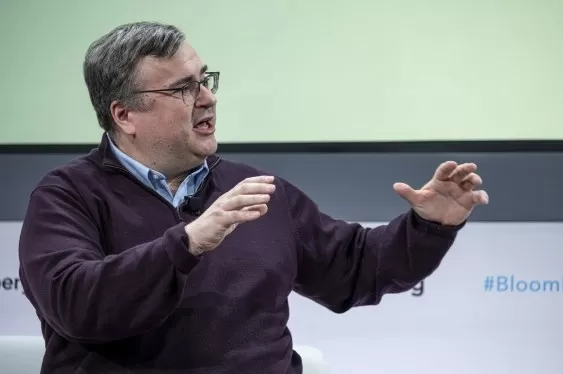 Prentis, New AI Lab Co-Founded by Reid Hoffman and Mark Pincus, in Talks to Raise $100M
Prentis, an emerging AI research lab specializing in computer-use models and co-founded by serial entrepreneur Ritankar Das alongside tech industry veterans Reid Hoffman and Mark Pincus, is currently negotiating to secure $100 million in funding at a
Prentis, New AI Lab Co-Founded by Reid Hoffman and Mark Pincus, in Talks to Raise $100M
Prentis, an emerging AI research lab specializing in computer-use models and co-founded by serial entrepreneur Ritankar Das alongside tech industry veterans Reid Hoffman and Mark Pincus, is currently negotiating to secure $100 million in funding at a
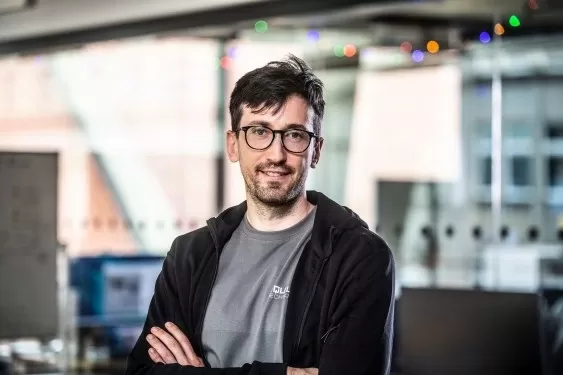 DeepMind Trio Behind Poker AI Now Generating Returns for Quant Hedge Funds
Three ex-DeepMind researchers, who previously developed an AI capable of defeating human poker champions, have pivoted that technology to financial markets — and the strategy is yielding significant returns. Their Prague-based AI venture, EquiLibre T
DeepMind Trio Behind Poker AI Now Generating Returns for Quant Hedge Funds
Three ex-DeepMind researchers, who previously developed an AI capable of defeating human poker champions, have pivoted that technology to financial markets — and the strategy is yielding significant returns. Their Prague-based AI venture, EquiLibre T

2026 Latest Top-rated AI Illustration Tools: Our curated list features the best powerfully designed tools for creating stunning editorial scenes and eye-catching cover art quickly. Each option has gone through rigorous real-world tests, offering a free vs paid comparison to help you find the perfect match for your workflow. Try these must-try solutions today to unlock your AI edge and boost your creative productivity. Explore now at XIX.AI.
10 tools
xix.ai

2026 Latest Top-Rated Best AI Tutors for Exam Prep are here on XIX.AI! Our curated list features powerful game-changing tools that offer free vs paid comparison, real-world tests, and weekly updated rankings. They help boost your writing efficiency, simplify complex topic learning, and unlock your academic potential. Explore now to Discover your perfect exam prep tool and Start creating today to Unlock your AI edge!
10 tools
xix.ai

2026 Latest Best Top-Rated AI Budget Planning Tools for Personal Money Management are here on XIX.AI! This curated collection features powerful, game-changing solutions that help you conduct real-world tests, understand spending habits, and create personalized plans to boost productivity. Enjoy a free vs paid comparison along with detailed rankings. Must-try tools designed to simplify money management and unlock your AI edge. Explore now!
11 tools
xix.ai

2026 Latest Best Top-Rated AI Sleep Tracking Assistants curated for ultimate recovery. This fully updated weekly guide features powerful tools that deliver real-world tests, free vs paid comparison, and detailed rankings to help you find the must-try solution that boosts sleep quality and supports better bedtime habits. Explore now at XIX.AI to Unlock your AI edge.
10 tools
xix.ai

2026 Latest Best Top-Rated AI SQL Copilots for Product and Revenue Analytics! XIX.AI has curated a powerful, game-changing collection of must-try tools that undergo real-world tests through weekly updated rankings. These tools help users boost productivity significantly by accelerating data analysis, streamlining complex queries, and generating accurate insights to drive smarter business decisions. Explore now to Discover your perfect tool for unlocking your AI edge!
14 tools
xix.ai

2026 Latest Best Top-Rated AI Homework Helpers That Teach Core Concepts Not Just Answers Powerful Tools for Students Must-Try Curated List Weekly Updated Free vs Paid Comparison Real-World Tests Accurate Rankings to Help You Unlock Your Full Learning Potential Explore now to Discover your perfect tool for smarter studying.
10 tools
xix.ai

Honestly, I've been waiting for someone to kill those bloated enterprise dashboards. If Erago can actually replace a dozen dropdowns and checkboxes with a single prompt, sign me up. But I'm skeptical—"prompt-like" often means you end up typing 50 words just to sort a table. Still, kudos for shaking up the boring UI status quo 🚀












