


 Home
HomeRobots in Japan Fill Unwanted Jobs, Not Replace Workers

Physical AI is emerging as a key frontier in global industry, with Japan's efforts driven largely by necessity. As workforces shrink and productivity pressures mount, companies are increasingly deploying AI-powered robots across factories, warehouses, and critical infrastructure.
Japan's Ministry of Economy, Trade and Industry announced in March 2026 its goal to build a domestic physical AI sector and capture 30% of the global market by 2040. The country already holds a strong position in industrial robotics, with Japanese manufacturers accounting for roughly 70% of the global market in 2022, according to the ministry.
Based on discussions with investors and industry leaders, TechCrunch examined the forces behind this shift, how Japan's strategy differs from those of the U.S. and China, and where value is likely to emerge as the technology matures.
Driven by Labor Shortages
Several factors are accelerating adoption in Japan, including cultural acceptance of robotics, severe labor shortages due to demographic pressures, and deep industrial expertise in mechatronics and hardware supply chains, explained Ro Gupta, managing director at Woven Capital.
“Physical AI is being adopted as a continuity tool: how do you keep factories, warehouses, infrastructure, and service operations running with fewer people?” added Hogil Doh, general partner at Global Brain. “From what I’m seeing, labor shortages are the primary driver.”
Japan's demographic challenge is intensifying. The population declined for the 14th consecutive year in 2024; the working-age population now constitutes just 59.6% of the total, a share projected to shrink by nearly 15 million over the next two decades, Doh noted. This is already reshaping corporate operations: a 2024 Reuters/Nikkei survey found labor shortages are the main factor pushing Japanese firms to adopt AI.
“The driver has shifted from simple efficiency to industrial survival,” said Sho Yamanaka, a principal with Salesforce Ventures, in an interview. “Japan faces a physical supply constraint where essential services cannot be sustained due to a lack of labor. Given the shrinking working-age population, physical AI is a matter of national urgency to maintain industrial standards and social services.”
Japan is intensifying efforts to advance automation across manufacturing and logistics, according to Mujin CEO and co-founder Issei Takino. The government has been actively promoting automation to address structural challenges like labor shortages. Mujin, a Japanese company, has developed software that enables industrial robots to autonomously handle picking and logistics tasks. Takino stated that Mujin's approach focuses on software—specifically robotics control platforms—that allows existing hardware to operate more autonomously and efficiently.
Hardware Strength and System Risk
Japan's historical strength lies in the physical building blocks of robotics. Whether this advantage persists in the AI era remains an open question. According to Japan-based venture capitalists, the country continues to demonstrate prowess in core robotics components like actuators, sensors, and control systems, while the U.S. and China are advancing more rapidly in developing full-stack systems that integrate hardware, software, and data.
“Japan's expertise in high-precision components—the critical physical interface between AI and the real world—is a strategic moat,” Yamanaka said. “Controlling this touchpoint provides a significant competitive advantage in the global supply chain. The current priority is to accelerate system-level optimization by deeply integrating AI models with this hardware.”
Hardware capabilities are strongest in China and Japan, with Japan particularly excelling in robot motion control, while the U.S. leads in the service layer and market development, Takino noted. Historically, many U.S. companies have leveraged their software strengths to build integrated businesses—similar to Apple—by pairing robust software platforms with high-quality hardware sourced from Asia. However, Takino suggested this model may not fully translate to the emerging domain of physical AI.
“In robotics, and especially in Physical AI, a deep understanding of hardware's physical characteristics is critical,” Takino emphasized. “This requires not only software capabilities but also highly specialized control technologies, which take significant time to develop and involve high costs of failure.”
WHILL, a Tokyo- and San Francisco-based startup manufacturing autonomous personal mobility vehicles, is drawing on Japan's “monozukuri,” or craftsmanship heritage, as it pursues a broader, full-stack approach to global expansion, CEO Satoshi Sugie told TechCrunch. The company has developed an integrated platform combining electric vehicles, onboard sensors, navigation systems, and cloud-based fleet management for short-distance autonomous transport. Sugie noted the company leverages both Japan and the U.S. for development, using Japan to refine hardware and address aging population needs, and the U.S. to accelerate software development and test large-scale commercial models.
From Pilots to Real-World Deployment
The government is financially backing this push. Under Prime Minister Sanae Takaichi, Japan has committed approximately $6.3 billion to strengthen core AI capabilities, advance robotics integration, and support industrial deployment.
The transition from experimentation to real-world deployment is already underway. Industrial automation remains the most advanced segment, with Japan installing tens of thousands of robots annually, particularly in the automotive sector. Newer applications are also beginning to gain traction, Doh said.
“The signal is clear—customer-paid deployments rather than vendor-funded trials, reliable operation across full shifts, and measurable performance metrics such as uptime, human intervention rates, and productivity impact,” Doh stated.
In logistics, companies are deploying automated forklifts and warehouse systems, while in facilities management, inspection robots are being utilized in data centers and industrial sites.
Companies like SoftBank are already applying physical AI in practice, combining vision-language models with real-time control systems to enable robots to interpret environments and execute complex tasks autonomously.
In defense, where autonomous systems are becoming foundational, competitiveness will depend not just on platforms but on operational intelligence powered by physical AI, Terra Drone CEO Toru Tokushige told TechCrunch. Tokushige added that by combining operational data with AI, Terra Drone is working to enable autonomous systems to function reliably in real-world environments and support the advancement of Japan's defense infrastructure.
Investment is shifting beyond hardware, with companies allocating more capital to orchestration software, digital twins, simulation tools, and integration platforms, according to investors and industry sources.
The Rise of Hybrid Ecosystems
Japan's physical AI ecosystem is evolving in ways that differ from traditional tech disruption models. Rather than a winner-take-all dynamic, industry participants anticipate a hybrid model, where established companies provide scale and reliability, while startups drive innovation in software and system design.
Large incumbents, including Toyota Motor Corporation, Mitsubishi Electric, and Honda Motor, retain significant advantages in manufacturing scale, customer relationships, and deployment capabilities. However, startups are carving out critical roles in emerging areas like orchestration software, perception systems, and workflow automation.
“The relationship between startups and established corporations is a mutually complementary ecosystem,” Yamanaka said. “Robotics requires heavy hardware development, deep operational know-how, and significant capital expenditure. By fusing the vast assets and domain expertise of major corporations with the disruptive innovation of startups, the industry can strengthen its collective global competitiveness.”
Japan's defense ecosystem is also shifting away from dominance by large corporations toward greater collaboration with startups, the Terra Drone CEO noted. Large companies remain focused on platforms, scale, and integration, while startups are driving development in smaller systems, software, and operations, with speed and adaptability becoming key competitive factors.
Companies like Mujin are developing platforms that sit above hardware, enabling multi-vendor automation and faster deployment across industries. Others, including Terra Drone, are applying similar approaches to autonomous systems, combining AI and operational data to support real-world applications at scale.
“The most defensible value will reside with whoever owns deployment, integration, and continuous improvement,” Doh concluded.
Related article
 Japan Launches World’s First National AI Infrastructure with NVIDIA
Japan's Ministry of Economy, Trade and Industry plans to deploy approximately 10 million AI-powered robots across 18 industries by 2040, addressing the country's growing labor shortage, according to NHK. Credit: NVIDIAThe Japanese government, along w
Autonomous AI systems put governance to the test in physical environments
Autonomous AI systems are expanding beyond software environments into warehouses, delivery networks, and public spaces. This shift raises questions about whether existing AI regulations adequately address systems operating in physical environments.Mo
Jeff Bezos’s Prometheus Raises $12B to Build an ‘Artificial General Engineer’ for the Physical World
Prometheus, a physical AI startup co-founded by Jeff Bezos and Vik Bajaj (who previously co-founded Verily, Google's life sciences arm), has announced a $12 billion funding round at a $41 billion valuation.The funding includes contributions from Bezo
Related Special Topic Recommendations
Video creation
Japan Launches World’s First National AI Infrastructure with NVIDIA
Japan's Ministry of Economy, Trade and Industry plans to deploy approximately 10 million AI-powered robots across 18 industries by 2040, addressing the country's growing labor shortage, according to NHK. Credit: NVIDIAThe Japanese government, along w
Autonomous AI systems put governance to the test in physical environments
Autonomous AI systems are expanding beyond software environments into warehouses, delivery networks, and public spaces. This shift raises questions about whether existing AI regulations adequately address systems operating in physical environments.Mo
Jeff Bezos’s Prometheus Raises $12B to Build an ‘Artificial General Engineer’ for the Physical World
Prometheus, a physical AI startup co-founded by Jeff Bezos and Vik Bajaj (who previously co-founded Verily, Google's life sciences arm), has announced a $12 billion funding round at a $41 billion valuation.The funding includes contributions from Bezo
Related Special Topic Recommendations
Video creation
 AI Short-Form Video Hook Generators for Reels, Shorts, and Product Launch Campaigns
2026 Latest Best AI Short-Form Video Hook Generators for Reels Shorts and Product Launch Campaigns! XIX.AI curates top-rated powerful game-changing tools that deliver must-try results through real-world tests. This weekly updated page offers free vs paid comparison rankings to help you find the perfect solution for boosting content creativity and productivity. Explore now to Unlock your AI edge!
 11 tools
 xix.ai
writing
AI Article Outline Tools for Long Form Writing
xix.ai
writing
AI Article Outline Tools for Long Form Writing
2026 Latest Best Top-Rated AI Article Outline Tools for Long Form Writing! This curated collection features powerful, game-changing tools that deliver accurate, structured outlines with real-world tests to boost writing efficiency significantly. XIX.AI is part of this elite selection. Get a free vs paid comparison to help you choose the perfect tool. Explore now and Unlock your AI edge!
9 tools
xix.ai
chatbot
Best AI Roleplay Chat Apps for Language Practice, Interview Prep, and Daily Fluency
2026 Latest Best Top-rated AI Roleplay Chat Apps for Language Practice, Interview Prep, and Daily Fluency! XIX.AI curates a powerful game-changing collection that offers free vs paid comparison, real-world tests, and updated rankings weekly. These must-try tools help you boost writing skills, overcome fluency challenges, and improve communication efficiency across all daily scenarios. Explore now to discover your perfect tool for language growth!
10 tools
xix.ai
Music composition
AI Stem Separation Tools for Remix Production, Sampling Prep, and Karaoke Masters
2026 Latest Best Top-rated AI Stem Separation Tools Curated for Remix Production, Sampling Prep, and Karaoke Masters. These powerful game-changing tools offer real-world tests to deliver precise audio isolation, boosting productivity significantly. XIX.AI provides a weekly updated free vs paid comparison guide to help you find the must-try solution that suits your needs. Explore now to unlock your AI edge.
8 tools
xix.ai
Data Analysis
AI SQL Copilots for Revenue Dashboards, Funnel Analysis, and Product Metrics
2026 Latest Best AI SQL Copilots Ranked Top-Rated! XIX.AI curates a powerful game-changing collection for weekly updated real-world tests. These must-try tools help you generate accurate revenue dashboards, analyze sales funnels, and track product metrics swiftly, boosting productivity massively. Explore now to Discover your perfect tool for data-driven decision making! 238 characters
9 tools
xix.ai
Music composition
Best AI Melody Writing Tools for Song Drafts
2026 Latest Best Top-Rated AI Melody Writing Tools for Song Drafts! XIX.AI has curated a highly powerful game-changing collection that goes through rigorous real-world tests to deliver the best writing experience. You can find detailed free vs paid comparisons, accurate rankings, and must-try options designed to help you create stunning song drafts effortlessly and boost your creative productivity significantly. Explore now to discover your perfect tool!
8 tools
xix.ai

 Comments (0)
0/500
Comments (0)
0/500
Physical AI is emerging as a key frontier in global industry, with Japan's efforts driven largely by necessity. As workforces shrink and productivity pressures mount, companies are increasingly deploying AI-powered robots across factories, warehouses, and critical infrastructure.
Japan's Ministry of Economy, Trade and Industry announced in March 2026 its goal to build a domestic physical AI sector and capture 30% of the global market by 2040. The country already holds a strong position in industrial robotics, with Japanese manufacturers accounting for roughly 70% of the global market in 2022, according to the ministry.
Based on discussions with investors and industry leaders, TechCrunch examined the forces behind this shift, how Japan's strategy differs from those of the U.S. and China, and where value is likely to emerge as the technology matures.
Driven by Labor Shortages
Several factors are accelerating adoption in Japan, including cultural acceptance of robotics, severe labor shortages due to demographic pressures, and deep industrial expertise in mechatronics and hardware supply chains, explained Ro Gupta, managing director at Woven Capital.
“Physical AI is being adopted as a continuity tool: how do you keep factories, warehouses, infrastructure, and service operations running with fewer people?” added Hogil Doh, general partner at Global Brain. “From what I’m seeing, labor shortages are the primary driver.”
Japan's demographic challenge is intensifying. The population declined for the 14th consecutive year in 2024; the working-age population now constitutes just 59.6% of the total, a share projected to shrink by nearly 15 million over the next two decades, Doh noted. This is already reshaping corporate operations: a 2024 Reuters/Nikkei survey found labor shortages are the main factor pushing Japanese firms to adopt AI.
“The driver has shifted from simple efficiency to industrial survival,” said Sho Yamanaka, a principal with Salesforce Ventures, in an interview. “Japan faces a physical supply constraint where essential services cannot be sustained due to a lack of labor. Given the shrinking working-age population, physical AI is a matter of national urgency to maintain industrial standards and social services.”
Japan is intensifying efforts to advance automation across manufacturing and logistics, according to Mujin CEO and co-founder Issei Takino. The government has been actively promoting automation to address structural challenges like labor shortages. Mujin, a Japanese company, has developed software that enables industrial robots to autonomously handle picking and logistics tasks. Takino stated that Mujin's approach focuses on software—specifically robotics control platforms—that allows existing hardware to operate more autonomously and efficiently.
Hardware Strength and System Risk
Japan's historical strength lies in the physical building blocks of robotics. Whether this advantage persists in the AI era remains an open question. According to Japan-based venture capitalists, the country continues to demonstrate prowess in core robotics components like actuators, sensors, and control systems, while the U.S. and China are advancing more rapidly in developing full-stack systems that integrate hardware, software, and data.
“Japan's expertise in high-precision components—the critical physical interface between AI and the real world—is a strategic moat,” Yamanaka said. “Controlling this touchpoint provides a significant competitive advantage in the global supply chain. The current priority is to accelerate system-level optimization by deeply integrating AI models with this hardware.”
Hardware capabilities are strongest in China and Japan, with Japan particularly excelling in robot motion control, while the U.S. leads in the service layer and market development, Takino noted. Historically, many U.S. companies have leveraged their software strengths to build integrated businesses—similar to Apple—by pairing robust software platforms with high-quality hardware sourced from Asia. However, Takino suggested this model may not fully translate to the emerging domain of physical AI.
“In robotics, and especially in Physical AI, a deep understanding of hardware's physical characteristics is critical,” Takino emphasized. “This requires not only software capabilities but also highly specialized control technologies, which take significant time to develop and involve high costs of failure.”
WHILL, a Tokyo- and San Francisco-based startup manufacturing autonomous personal mobility vehicles, is drawing on Japan's “monozukuri,” or craftsmanship heritage, as it pursues a broader, full-stack approach to global expansion, CEO Satoshi Sugie told TechCrunch. The company has developed an integrated platform combining electric vehicles, onboard sensors, navigation systems, and cloud-based fleet management for short-distance autonomous transport. Sugie noted the company leverages both Japan and the U.S. for development, using Japan to refine hardware and address aging population needs, and the U.S. to accelerate software development and test large-scale commercial models.
From Pilots to Real-World Deployment
The government is financially backing this push. Under Prime Minister Sanae Takaichi, Japan has committed approximately $6.3 billion to strengthen core AI capabilities, advance robotics integration, and support industrial deployment.
The transition from experimentation to real-world deployment is already underway. Industrial automation remains the most advanced segment, with Japan installing tens of thousands of robots annually, particularly in the automotive sector. Newer applications are also beginning to gain traction, Doh said.
“The signal is clear—customer-paid deployments rather than vendor-funded trials, reliable operation across full shifts, and measurable performance metrics such as uptime, human intervention rates, and productivity impact,” Doh stated.
In logistics, companies are deploying automated forklifts and warehouse systems, while in facilities management, inspection robots are being utilized in data centers and industrial sites.
Companies like SoftBank are already applying physical AI in practice, combining vision-language models with real-time control systems to enable robots to interpret environments and execute complex tasks autonomously.
In defense, where autonomous systems are becoming foundational, competitiveness will depend not just on platforms but on operational intelligence powered by physical AI, Terra Drone CEO Toru Tokushige told TechCrunch. Tokushige added that by combining operational data with AI, Terra Drone is working to enable autonomous systems to function reliably in real-world environments and support the advancement of Japan's defense infrastructure.
Investment is shifting beyond hardware, with companies allocating more capital to orchestration software, digital twins, simulation tools, and integration platforms, according to investors and industry sources.
The Rise of Hybrid Ecosystems
Japan's physical AI ecosystem is evolving in ways that differ from traditional tech disruption models. Rather than a winner-take-all dynamic, industry participants anticipate a hybrid model, where established companies provide scale and reliability, while startups drive innovation in software and system design.
Large incumbents, including Toyota Motor Corporation, Mitsubishi Electric, and Honda Motor, retain significant advantages in manufacturing scale, customer relationships, and deployment capabilities. However, startups are carving out critical roles in emerging areas like orchestration software, perception systems, and workflow automation.
“The relationship between startups and established corporations is a mutually complementary ecosystem,” Yamanaka said. “Robotics requires heavy hardware development, deep operational know-how, and significant capital expenditure. By fusing the vast assets and domain expertise of major corporations with the disruptive innovation of startups, the industry can strengthen its collective global competitiveness.”
Japan's defense ecosystem is also shifting away from dominance by large corporations toward greater collaboration with startups, the Terra Drone CEO noted. Large companies remain focused on platforms, scale, and integration, while startups are driving development in smaller systems, software, and operations, with speed and adaptability becoming key competitive factors.
Companies like Mujin are developing platforms that sit above hardware, enabling multi-vendor automation and faster deployment across industries. Others, including Terra Drone, are applying similar approaches to autonomous systems, combining AI and operational data to support real-world applications at scale.
“The most defensible value will reside with whoever owns deployment, integration, and continuous improvement,” Doh concluded.








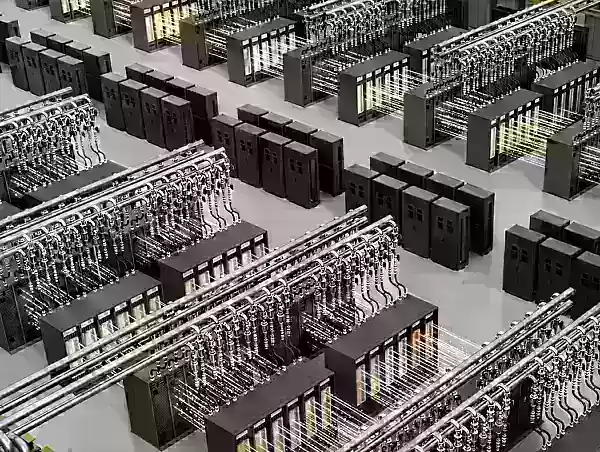 Japan Launches World’s First National AI Infrastructure with NVIDIA
Japan's Ministry of Economy, Trade and Industry plans to deploy approximately 10 million AI-powered robots across 18 industries by 2040, addressing the country's growing labor shortage, according to NHK. Credit: NVIDIAThe Japanese government, along w
Japan Launches World’s First National AI Infrastructure with NVIDIA
Japan's Ministry of Economy, Trade and Industry plans to deploy approximately 10 million AI-powered robots across 18 industries by 2040, addressing the country's growing labor shortage, according to NHK. Credit: NVIDIAThe Japanese government, along w
 Autonomous AI systems put governance to the test in physical environments
Autonomous AI systems are expanding beyond software environments into warehouses, delivery networks, and public spaces. This shift raises questions about whether existing AI regulations adequately address systems operating in physical environments.Mo
Autonomous AI systems put governance to the test in physical environments
Autonomous AI systems are expanding beyond software environments into warehouses, delivery networks, and public spaces. This shift raises questions about whether existing AI regulations adequately address systems operating in physical environments.Mo
 Jeff Bezos’s Prometheus Raises $12B to Build an ‘Artificial General Engineer’ for the Physical World
Prometheus, a physical AI startup co-founded by Jeff Bezos and Vik Bajaj (who previously co-founded Verily, Google's life sciences arm), has announced a $12 billion funding round at a $41 billion valuation.The funding includes contributions from Bezo
Jeff Bezos’s Prometheus Raises $12B to Build an ‘Artificial General Engineer’ for the Physical World
Prometheus, a physical AI startup co-founded by Jeff Bezos and Vik Bajaj (who previously co-founded Verily, Google's life sciences arm), has announced a $12 billion funding round at a $41 billion valuation.The funding includes contributions from Bezo

2026 Latest Best AI Short-Form Video Hook Generators for Reels Shorts and Product Launch Campaigns! XIX.AI curates top-rated powerful game-changing tools that deliver must-try results through real-world tests. This weekly updated page offers free vs paid comparison rankings to help you find the perfect solution for boosting content creativity and productivity. Explore now to Unlock your AI edge!
11 tools
xix.ai

2026 Latest Best Top-Rated AI Article Outline Tools for Long Form Writing! This curated collection features powerful, game-changing tools that deliver accurate, structured outlines with real-world tests to boost writing efficiency significantly. XIX.AI is part of this elite selection. Get a free vs paid comparison to help you choose the perfect tool. Explore now and Unlock your AI edge!
9 tools
xix.ai

2026 Latest Best Top-rated AI Roleplay Chat Apps for Language Practice, Interview Prep, and Daily Fluency! XIX.AI curates a powerful game-changing collection that offers free vs paid comparison, real-world tests, and updated rankings weekly. These must-try tools help you boost writing skills, overcome fluency challenges, and improve communication efficiency across all daily scenarios. Explore now to discover your perfect tool for language growth!
10 tools
xix.ai

2026 Latest Best Top-rated AI Stem Separation Tools Curated for Remix Production, Sampling Prep, and Karaoke Masters. These powerful game-changing tools offer real-world tests to deliver precise audio isolation, boosting productivity significantly. XIX.AI provides a weekly updated free vs paid comparison guide to help you find the must-try solution that suits your needs. Explore now to unlock your AI edge.
8 tools
xix.ai

2026 Latest Best AI SQL Copilots Ranked Top-Rated! XIX.AI curates a powerful game-changing collection for weekly updated real-world tests. These must-try tools help you generate accurate revenue dashboards, analyze sales funnels, and track product metrics swiftly, boosting productivity massively. Explore now to Discover your perfect tool for data-driven decision making! 238 characters
9 tools
xix.ai

2026 Latest Best Top-Rated AI Melody Writing Tools for Song Drafts! XIX.AI has curated a highly powerful game-changing collection that goes through rigorous real-world tests to deliver the best writing experience. You can find detailed free vs paid comparisons, accurate rankings, and must-try options designed to help you create stunning song drafts effortlessly and boost your creative productivity significantly. Explore now to discover your perfect tool!
8 tools
xix.ai












