


 Home
HomeOpenAI Alumni Launch New Fund with $100 Million Target
The founders of a new venture capital fund with strong connections to OpenAI have informed TechCrunch that they have completed the first close toward their $100 million target. The partners have already begun making investments.
The fund, named Zero Shot—a nod to the AI training term—was co-founded by a team that includes several OpenAI veterans who somewhat serendipitously transitioned into venture capital.
Three of the founding partners are OpenAI alumni. Evan Morikawa, formerly head of applied engineering during the launches of DALL·E, ChatGPT, and Codex, is now at the robotics startup Generalist. Andrew Mayne, OpenAI's original prompt engineer, is widely recognized as the host of The OpenAI podcast and founded Interdimensional, an AI deployment consultancy. Shawn Jain, an engineer and former researcher at OpenAI, later became a venture capitalist and is a founder of his own generative AI startup, Synthefy.
They are joined by venture capitalist Kelly Kovacs, previously a founding partner at 01A, the growth-stage firm founded by Dick Costolo and Adam Bain. The fifth founding member is Brett Rounsaville, formerly of Twitter and Disney, who also serves as CEO at Mayne's Interdimensional.
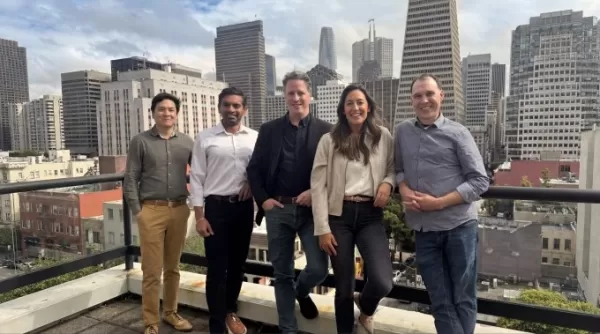
Zero Shot fund founders from left to right: Evan Morikawa, Shawn Jain, Andrew Mayne, Kelly Kovacs, and Brett Rounsaville.Image Credits:Zero Shot / Zero Shot
Mayne told TechCrunch that the OpenAI alumni have "been friends for years," having collaborated at the AI model maker from the period before ChatGPT's release through its most explosive growth phases.
After departing, they found themselves frequently approached by VCs seeking consultation on emerging AI technology and by founder friends asking for advice. This dynamic prompted Mayne to establish his consulting firm.
"Some of our friends were leaving OpenAI and interested in starting companies," Mayne said.
The alumni observed significant gaps between the many AI startups receiving funding and what the market actually required.
"Maybe we should start our own fund, because we believe we have a strong sense of where things are headed, and we have exceptional access to people we consider incredible builders," Mayne recalled of their decision.
Following discussions with institutions and family offices, and after securing an initial $20 million, the partners set a target of $100 million for their first fund. They have already made several investments.
Zero Shot invested in early OpenAI product manager Angela Jiang and her startup, Worktrace AI. The company is developing an AI-driven management software platform designed to help enterprises automate tasks by first identifying what should be automated. PitchBook estimates Worktrace AI raised a $10 million seed round from notable investors including Mira Murati and the OpenAI Fund.
The team also invested in Foundry Robotics, a startup focused on next-generation, AI-enhanced factory robotics, which recently closed a $13.5 million seed round led by Khosla Ventures. Zero Shot has additionally invested in a third, still-stealth startup.
The AI Trends They Are Avoiding
The founders of Zero Shot state that their understanding of AI's trajectory surpasses that of many venture capitalists. This insight aids them in selecting startups to back and in identifying concepts to steer clear of.
Mayne, for example, is skeptical of most iterations of "vibe coding" or AI-assisted programming platforms. He anticipates that the AI model makers, with their deep coding expertise, will rapidly advance to the point where subscriptions to such third-party platforms feel redundant.
Morikawa tells TechCrunch that, drawing on his expertise in AI and robotics, he is not enthusiastic about the numerous "ego-centric video data companies" currently operating in robotics—startups focused on embodiment training data for robots.
"There's a lot of hoping and praying right now that someone in the research community will solve how to bridge the embodiment gap," Morikawa said regarding such video data, but he believes "that's nowhere near possible" currently.
Mayne expresses similar skepticism toward most startups working on "digital twins." He has conducted due diligence on several, even building reasoning models to test them, and concluded that a standard large language model often performs just as effectively.
"There is a real skill in predicting where these AI models are headed next, because it's extremely non-obvious. The progress isn't linear," Morikawa noted.
In addition to its investing founders, Zero Shot has enlisted several recognizable names as advisors, who will receive a share of the fund's carried interest. The advisory group includes Diane Yoon, OpenAI's former head of people; Steve Dowling, former head of communications at OpenAI and Apple; and Luke Miller, a former product leader at OpenAI.
Related article
 QueryStory urges caution on AI-generated content
In 2009, Shapor Naghibzadeh discovered the power of compelling storytelling while working as a Google sysops engineer. During Operation Aurora, when state-sponsored hackers targeted the tech giant, he was summoned to a crisis room to clarify server a
PHP Armageddon: OpenAI, Google’s Wiz uncover ancient holes, sparking internet panic
The U.S. National Security Agency issued a critical alert on Wednesday regarding two severe vulnerabilities in PHP, for which patches have already been released by the PHP Foundation.As a server-side scripting language, PHP powers approximately 70% o
French Startup ZML Unveils Free Tool to Accelerate AI Inference Across Multiple Chips
Nvidia’s era of unchecked market supremacy may be winding down, yet competitors and alternatives are emerging from every angle.ZML, a prominent French AI startup backed by Turing Award laureate Yann LeCun, has unveiled inference-performance software
Related Special Topic Recommendations
Design & Art
QueryStory urges caution on AI-generated content
In 2009, Shapor Naghibzadeh discovered the power of compelling storytelling while working as a Google sysops engineer. During Operation Aurora, when state-sponsored hackers targeted the tech giant, he was summoned to a crisis room to clarify server a
PHP Armageddon: OpenAI, Google’s Wiz uncover ancient holes, sparking internet panic
The U.S. National Security Agency issued a critical alert on Wednesday regarding two severe vulnerabilities in PHP, for which patches have already been released by the PHP Foundation.As a server-side scripting language, PHP powers approximately 70% o
French Startup ZML Unveils Free Tool to Accelerate AI Inference Across Multiple Chips
Nvidia’s era of unchecked market supremacy may be winding down, yet competitors and alternatives are emerging from every angle.ZML, a prominent French AI startup backed by Turing Award laureate Yann LeCun, has unveiled inference-performance software
Related Special Topic Recommendations
Design & Art
 Top AI Illustration Tools: Create Editorial Scenes and Cover Art Faster
2026 Latest Top-rated AI Illustration Tools: Our curated list features the best powerfully designed tools for creating stunning editorial scenes and eye-catching cover art quickly. Each option has gone through rigorous real-world tests, offering a free vs paid comparison to help you find the perfect match for your workflow. Try these must-try solutions today to unlock your AI edge and boost your creative productivity. Explore now at XIX.AI.
 10 tools
 xix.ai
Education and Learning
Top AI Tutors for Exam Prep: Practice Math, Science, and English
xix.ai
Education and Learning
Top AI Tutors for Exam Prep: Practice Math, Science, and English
2026 Latest Top-Rated Best AI Tutors for Exam Prep are here on XIX.AI! Our curated list features powerful game-changing tools that offer free vs paid comparison, real-world tests, and weekly updated rankings. They help boost your writing efficiency, simplify complex topic learning, and unlock your academic potential. Explore now to Discover your perfect exam prep tool and Start creating today to Unlock your AI edge!
10 tools
xix.ai
Finance
AI Budget Planning Tools for Personal Money Management
2026 Latest Best Top-Rated AI Budget Planning Tools for Personal Money Management are here on XIX.AI! This curated collection features powerful, game-changing solutions that help you conduct real-world tests, understand spending habits, and create personalized plans to boost productivity. Enjoy a free vs paid comparison along with detailed rankings. Must-try tools designed to simplify money management and unlock your AI edge. Explore now!
11 tools
xix.ai
Health & Wellness
AI Sleep Tracking Assistants: Improve Recovery with Better Bedtime Habits
2026 Latest Best Top-Rated AI Sleep Tracking Assistants curated for ultimate recovery. This fully updated weekly guide features powerful tools that deliver real-world tests, free vs paid comparison, and detailed rankings to help you find the must-try solution that boosts sleep quality and supports better bedtime habits. Explore now at XIX.AI to Unlock your AI edge.
10 tools
xix.ai
Data Analysis
AI SQL Copilots for Product and Revenue Analytics
2026 Latest Best Top-Rated AI SQL Copilots for Product and Revenue Analytics! XIX.AI has curated a powerful, game-changing collection of must-try tools that undergo real-world tests through weekly updated rankings. These tools help users boost productivity significantly by accelerating data analysis, streamlining complex queries, and generating accurate insights to drive smarter business decisions. Explore now to Discover your perfect tool for unlocking your AI edge!
14 tools
xix.ai
Education and Learning
Best AI Homework Helpers That Teach: Learn Concepts, Not Just Answers
2026 Latest Best Top-Rated AI Homework Helpers That Teach Core Concepts Not Just Answers Powerful Tools for Students Must-Try Curated List Weekly Updated Free vs Paid Comparison Real-World Tests Accurate Rankings to Help You Unlock Your Full Learning Potential Explore now to Discover your perfect tool for smarter studying.
10 tools
xix.ai

 Comments (2)
0/500
Comments (2)
0/500
![JohnTaylor]()
I heard this new fund is backed by people linked to OpenAI, $100 million total? That’s insane money for early-stage startups, hope it focuses on real innovation instead of just hype-driven projects 🤔
![DouglasMartin]()
Interesting move. $100M seems modest compared to the AI hype. Wonder how many of these alumni funds we'll see before the bubble bursts. 🧐
The founders of a new venture capital fund with strong connections to OpenAI have informed TechCrunch that they have completed the first close toward their $100 million target. The partners have already begun making investments.
The fund, named Zero Shot—a nod to the AI training term—was co-founded by a team that includes several OpenAI veterans who somewhat serendipitously transitioned into venture capital.
Three of the founding partners are OpenAI alumni. Evan Morikawa, formerly head of applied engineering during the launches of DALL·E, ChatGPT, and Codex, is now at the robotics startup Generalist. Andrew Mayne, OpenAI's original prompt engineer, is widely recognized as the host of The OpenAI podcast and founded Interdimensional, an AI deployment consultancy. Shawn Jain, an engineer and former researcher at OpenAI, later became a venture capitalist and is a founder of his own generative AI startup, Synthefy.
They are joined by venture capitalist Kelly Kovacs, previously a founding partner at 01A, the growth-stage firm founded by Dick Costolo and Adam Bain. The fifth founding member is Brett Rounsaville, formerly of Twitter and Disney, who also serves as CEO at Mayne's Interdimensional.
Zero Shot fund founders from left to right: Evan Morikawa, Shawn Jain, Andrew Mayne, Kelly Kovacs, and Brett Rounsaville.Image Credits:Zero Shot / Zero Shot
Mayne told TechCrunch that the OpenAI alumni have "been friends for years," having collaborated at the AI model maker from the period before ChatGPT's release through its most explosive growth phases.
After departing, they found themselves frequently approached by VCs seeking consultation on emerging AI technology and by founder friends asking for advice. This dynamic prompted Mayne to establish his consulting firm.
"Some of our friends were leaving OpenAI and interested in starting companies," Mayne said.
The alumni observed significant gaps between the many AI startups receiving funding and what the market actually required.
"Maybe we should start our own fund, because we believe we have a strong sense of where things are headed, and we have exceptional access to people we consider incredible builders," Mayne recalled of their decision.
Following discussions with institutions and family offices, and after securing an initial $20 million, the partners set a target of $100 million for their first fund. They have already made several investments.
Zero Shot invested in early OpenAI product manager Angela Jiang and her startup, Worktrace AI. The company is developing an AI-driven management software platform designed to help enterprises automate tasks by first identifying what should be automated. PitchBook estimates Worktrace AI raised a $10 million seed round from notable investors including Mira Murati and the OpenAI Fund.
The team also invested in Foundry Robotics, a startup focused on next-generation, AI-enhanced factory robotics, which recently closed a $13.5 million seed round led by Khosla Ventures. Zero Shot has additionally invested in a third, still-stealth startup.
The AI Trends They Are Avoiding
The founders of Zero Shot state that their understanding of AI's trajectory surpasses that of many venture capitalists. This insight aids them in selecting startups to back and in identifying concepts to steer clear of.
Mayne, for example, is skeptical of most iterations of "vibe coding" or AI-assisted programming platforms. He anticipates that the AI model makers, with their deep coding expertise, will rapidly advance to the point where subscriptions to such third-party platforms feel redundant.
Morikawa tells TechCrunch that, drawing on his expertise in AI and robotics, he is not enthusiastic about the numerous "ego-centric video data companies" currently operating in robotics—startups focused on embodiment training data for robots.
"There's a lot of hoping and praying right now that someone in the research community will solve how to bridge the embodiment gap," Morikawa said regarding such video data, but he believes "that's nowhere near possible" currently.
Mayne expresses similar skepticism toward most startups working on "digital twins." He has conducted due diligence on several, even building reasoning models to test them, and concluded that a standard large language model often performs just as effectively.
"There is a real skill in predicting where these AI models are headed next, because it's extremely non-obvious. The progress isn't linear," Morikawa noted.
In addition to its investing founders, Zero Shot has enlisted several recognizable names as advisors, who will receive a share of the fund's carried interest. The advisory group includes Diane Yoon, OpenAI's former head of people; Steve Dowling, former head of communications at OpenAI and Apple; and Luke Miller, a former product leader at OpenAI.








 QueryStory urges caution on AI-generated content
In 2009, Shapor Naghibzadeh discovered the power of compelling storytelling while working as a Google sysops engineer. During Operation Aurora, when state-sponsored hackers targeted the tech giant, he was summoned to a crisis room to clarify server a
QueryStory urges caution on AI-generated content
In 2009, Shapor Naghibzadeh discovered the power of compelling storytelling while working as a Google sysops engineer. During Operation Aurora, when state-sponsored hackers targeted the tech giant, he was summoned to a crisis room to clarify server a
 PHP Armageddon: OpenAI, Google’s Wiz uncover ancient holes, sparking internet panic
The U.S. National Security Agency issued a critical alert on Wednesday regarding two severe vulnerabilities in PHP, for which patches have already been released by the PHP Foundation.As a server-side scripting language, PHP powers approximately 70% o
PHP Armageddon: OpenAI, Google’s Wiz uncover ancient holes, sparking internet panic
The U.S. National Security Agency issued a critical alert on Wednesday regarding two severe vulnerabilities in PHP, for which patches have already been released by the PHP Foundation.As a server-side scripting language, PHP powers approximately 70% o
 French Startup ZML Unveils Free Tool to Accelerate AI Inference Across Multiple Chips
Nvidia’s era of unchecked market supremacy may be winding down, yet competitors and alternatives are emerging from every angle.ZML, a prominent French AI startup backed by Turing Award laureate Yann LeCun, has unveiled inference-performance software
French Startup ZML Unveils Free Tool to Accelerate AI Inference Across Multiple Chips
Nvidia’s era of unchecked market supremacy may be winding down, yet competitors and alternatives are emerging from every angle.ZML, a prominent French AI startup backed by Turing Award laureate Yann LeCun, has unveiled inference-performance software

2026 Latest Top-rated AI Illustration Tools: Our curated list features the best powerfully designed tools for creating stunning editorial scenes and eye-catching cover art quickly. Each option has gone through rigorous real-world tests, offering a free vs paid comparison to help you find the perfect match for your workflow. Try these must-try solutions today to unlock your AI edge and boost your creative productivity. Explore now at XIX.AI.
10 tools
xix.ai

2026 Latest Top-Rated Best AI Tutors for Exam Prep are here on XIX.AI! Our curated list features powerful game-changing tools that offer free vs paid comparison, real-world tests, and weekly updated rankings. They help boost your writing efficiency, simplify complex topic learning, and unlock your academic potential. Explore now to Discover your perfect exam prep tool and Start creating today to Unlock your AI edge!
10 tools
xix.ai

2026 Latest Best Top-Rated AI Budget Planning Tools for Personal Money Management are here on XIX.AI! This curated collection features powerful, game-changing solutions that help you conduct real-world tests, understand spending habits, and create personalized plans to boost productivity. Enjoy a free vs paid comparison along with detailed rankings. Must-try tools designed to simplify money management and unlock your AI edge. Explore now!
11 tools
xix.ai
2026 Latest Best Top-Rated AI Sleep Tracking Assistants curated for ultimate recovery. This fully updated weekly guide features powerful tools that deliver real-world tests, free vs paid comparison, and detailed rankings to help you find the must-try solution that boosts sleep quality and supports better bedtime habits. Explore now at XIX.AI to Unlock your AI edge.
10 tools
xix.ai

2026 Latest Best Top-Rated AI SQL Copilots for Product and Revenue Analytics! XIX.AI has curated a powerful, game-changing collection of must-try tools that undergo real-world tests through weekly updated rankings. These tools help users boost productivity significantly by accelerating data analysis, streamlining complex queries, and generating accurate insights to drive smarter business decisions. Explore now to Discover your perfect tool for unlocking your AI edge!
14 tools
xix.ai

2026 Latest Best Top-Rated AI Homework Helpers That Teach Core Concepts Not Just Answers Powerful Tools for Students Must-Try Curated List Weekly Updated Free vs Paid Comparison Real-World Tests Accurate Rankings to Help You Unlock Your Full Learning Potential Explore now to Discover your perfect tool for smarter studying.
10 tools
xix.ai

I heard this new fund is backed by people linked to OpenAI, $100 million total? That’s insane money for early-stage startups, hope it focuses on real innovation instead of just hype-driven projects 🤔
Interesting move. $100M seems modest compared to the AI hype. Wonder how many of these alumni funds we'll see before the bubble bursts. 🧐












