


 Home
HomeElon Musk abandons solar power on Earth
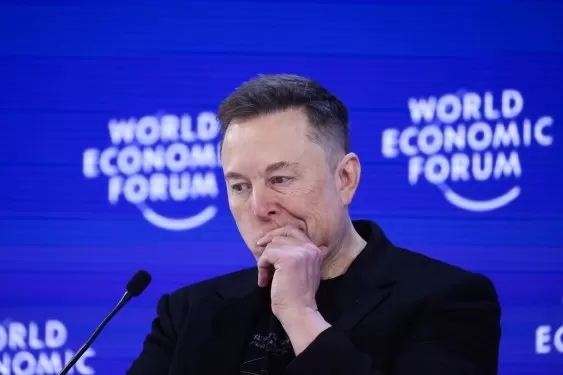
Has Elon Musk abandoned Tesla’s long-term roadmaps, the vision of an electrified economy, and solar power as we know it? Based on the SpaceX IPO filing released yesterday, it certainly appears that way.
For those less immersed in the Musk universe, here’s a quick recap: Tesla has introduced four Master Plans over the years. While the details shifted, the consistent thread has been electrifying the global economy. Musk summed it up best in his first plan: “the overarching purpose of Tesla Motors…is to help expedite the move from a mine-and-burn hydrocarbon economy towards a solar electric economy.”
Recently, however, one of Musk’s ventures, xAI, has embraced the very hydrocarbon economy it once sought to replace. The company is powering its data centers with dozens of unregulated natural gas turbines and plans to purchase an additional $2.8 billion worth, effectively cementing fossil fuels in its AI operations.
This shift is curious for a businessman who built his reputation on clean energy—and who has no hesitation directing his companies to buy from each other. SpaceX spent $131 million on 1,279 Cybertrucks, and over the past two years, xAI has spent $697 million on Tesla Megapacks, grid-scale battery storage systems used to manage peak loads. Yet, xAI has not purchased a materially significant number of solar panels from Tesla.
Solar power is not absent from the SpaceX filing; it’s simply concentrated in space, which the company promotes as the future of data center energy. Terrestrial solar receives only a few mentions—not as a power source for xAI data centers, but as a contrast to highlight how much better SpaceX believes space-based solar will be.
It’s no secret that Musk and other Silicon Valley leaders have become obsessed with orbital solar power. SpaceX claims that space-based solar arrays can generate “more than five-times the energy” of ground-based ones, thanks to around-the-clock illumination. As AI data centers face opposition on Earth, executives like Musk have begun contemplating large server racks in space, powered by that continuous sunlight. Hammer, meet nail.
Even if SpaceX manages to lower the cost of launching a data center into orbit, the economics remain challenging at best. Power costs for Starlink satellites are multiples higher than what a terrestrial data center typically spends, and protecting chips from the harshness of space is neither easy nor cheap. It’s also unclear whether AI training can be distributed across multiple satellites, leaving a significant portion of AI work earthbound. SpaceX doesn’t just have one problem to solve—it has many.
It’s likely that Musk considers xAI’s current data centers as temporary fixes. Once SpaceX can loft gigawatts’ worth of servers into orbit—perhaps just a few years away, in his mind—he may scrap what’s on the ground, natural gas turbines included, and no longer worry about NIMBY opposition. The risk, of course, is that he’s wrong.
But Musk’s concerns go beyond NIMBYs. He clearly fears that AI computing demands will soon outstrip what Earth can provide. Scattered throughout the SEC filing are references to “terawatt-scale annual AI compute growth,” which will require matching power. That’s a staggering figure when you consider that all the world’s data centers currently use about 40 gigawatts.
This is Musk’s “first principles” thinking in action. At some point, he assumed the world will need an additional terawatt of compute every year, then worked backward. “We believe that third-party estimates on data center demand are constrained by the practical supply limitations that exist in a terrestrial context and the power shortage may be far greater than what research estimates suggest,” the company argues.
Possible? Sure, I suppose. But consider that humanity today uses about 35,000 terawatt-hours of energy annually, or roughly 4 terawatts on a continuous basis. Energy demand has risen lately, and for AI, it’s likely in a phase of exponential growth—which could either continue or plateau. We have no way of knowing at this point, but if there’s one thing Musk excels at, it’s spotting a trend at its inflection point and extrapolating wildly.
Here’s where Musk’s problems settle back down to Earth. I’m no rocket scientist, but I suspect that shipping solar panels on a flatbed truck uses less energy than launching them into orbit. Plus, space-ready solar panels will need to be manufactured at an unprecedented scale. Not insurmountable problems, but also perhaps a distraction. We’ve barely scratched solar’s potential here on Earth, for example.
The perfect doesn’t have to be the enemy of the good. There’s plenty of room to improve things here on Earth even while we chase our dreams among the stars.
Just three years ago, Musk and his colleagues at Tesla released “Master Plan Part 3,” which thoughtfully outlined a “plan to eliminate fossil fuels.” A good starting point might be xAI’s data centers.
Related article
 Texas suspends new data centers amid governor’s call for audits
Technology firms and software engineers are actively scouting the United States for optimal data center locations, with Texas’s relaxed regulatory framework and seemingly abundant energy supply proving highly attractive. In fact, only Virginia curren
Massachusetts imposes fresh clean power mandates on data centers
Massachusetts has joined the growing list of states requiring data centers to supply their own power, but with a significant caveat. A new state regulation mandates that developers constructing facilities exceeding 25 megawatts must either provide cl
Google to Pay SpaceX $920M Monthly for Compute
SpaceX has secured another major compute agreement ahead of its landmark IPO, this time partnering with Google. The company disclosed the arrangement in a regulatory filing on Friday.According to the agreement, Google will pay SpaceX $920 million mon
Related Special Topic Recommendations
Design & Art
Texas suspends new data centers amid governor’s call for audits
Technology firms and software engineers are actively scouting the United States for optimal data center locations, with Texas’s relaxed regulatory framework and seemingly abundant energy supply proving highly attractive. In fact, only Virginia curren
Massachusetts imposes fresh clean power mandates on data centers
Massachusetts has joined the growing list of states requiring data centers to supply their own power, but with a significant caveat. A new state regulation mandates that developers constructing facilities exceeding 25 megawatts must either provide cl
Google to Pay SpaceX $920M Monthly for Compute
SpaceX has secured another major compute agreement ahead of its landmark IPO, this time partnering with Google. The company disclosed the arrangement in a regulatory filing on Friday.According to the agreement, Google will pay SpaceX $920 million mon
Related Special Topic Recommendations
Design & Art
 Top AI Illustration Tools: Create Editorial Scenes and Cover Art Faster
2026 Latest Top-rated AI Illustration Tools: Our curated list features the best powerfully designed tools for creating stunning editorial scenes and eye-catching cover art quickly. Each option has gone through rigorous real-world tests, offering a free vs paid comparison to help you find the perfect match for your workflow. Try these must-try solutions today to unlock your AI edge and boost your creative productivity. Explore now at XIX.AI.
 10 tools
 xix.ai
Education and Learning
Top AI Tutors for Exam Prep: Practice Math, Science, and English
xix.ai
Education and Learning
Top AI Tutors for Exam Prep: Practice Math, Science, and English
2026 Latest Top-Rated Best AI Tutors for Exam Prep are here on XIX.AI! Our curated list features powerful game-changing tools that offer free vs paid comparison, real-world tests, and weekly updated rankings. They help boost your writing efficiency, simplify complex topic learning, and unlock your academic potential. Explore now to Discover your perfect exam prep tool and Start creating today to Unlock your AI edge!
10 tools
xix.ai
Finance
AI Budget Planning Tools for Personal Money Management
2026 Latest Best Top-Rated AI Budget Planning Tools for Personal Money Management are here on XIX.AI! This curated collection features powerful, game-changing solutions that help you conduct real-world tests, understand spending habits, and create personalized plans to boost productivity. Enjoy a free vs paid comparison along with detailed rankings. Must-try tools designed to simplify money management and unlock your AI edge. Explore now!
11 tools
xix.ai
Health & Wellness
AI Sleep Tracking Assistants: Improve Recovery with Better Bedtime Habits
2026 Latest Best Top-Rated AI Sleep Tracking Assistants curated for ultimate recovery. This fully updated weekly guide features powerful tools that deliver real-world tests, free vs paid comparison, and detailed rankings to help you find the must-try solution that boosts sleep quality and supports better bedtime habits. Explore now at XIX.AI to Unlock your AI edge.
10 tools
xix.ai
Data Analysis
AI SQL Copilots for Product and Revenue Analytics
2026 Latest Best Top-Rated AI SQL Copilots for Product and Revenue Analytics! XIX.AI has curated a powerful, game-changing collection of must-try tools that undergo real-world tests through weekly updated rankings. These tools help users boost productivity significantly by accelerating data analysis, streamlining complex queries, and generating accurate insights to drive smarter business decisions. Explore now to Discover your perfect tool for unlocking your AI edge!
14 tools
xix.ai
Education and Learning
Best AI Homework Helpers That Teach: Learn Concepts, Not Just Answers
2026 Latest Best Top-Rated AI Homework Helpers That Teach Core Concepts Not Just Answers Powerful Tools for Students Must-Try Curated List Weekly Updated Free vs Paid Comparison Real-World Tests Accurate Rankings to Help You Unlock Your Full Learning Potential Explore now to Discover your perfect tool for smarter studying.
10 tools
xix.ai

 Comments (0)
0/500
Comments (0)
0/500
Has Elon Musk abandoned Tesla’s long-term roadmaps, the vision of an electrified economy, and solar power as we know it? Based on the SpaceX IPO filing released yesterday, it certainly appears that way.
For those less immersed in the Musk universe, here’s a quick recap: Tesla has introduced four Master Plans over the years. While the details shifted, the consistent thread has been electrifying the global economy. Musk summed it up best in his first plan: “the overarching purpose of Tesla Motors…is to help expedite the move from a mine-and-burn hydrocarbon economy towards a solar electric economy.”
Recently, however, one of Musk’s ventures, xAI, has embraced the very hydrocarbon economy it once sought to replace. The company is powering its data centers with dozens of unregulated natural gas turbines and plans to purchase an additional $2.8 billion worth, effectively cementing fossil fuels in its AI operations.
This shift is curious for a businessman who built his reputation on clean energy—and who has no hesitation directing his companies to buy from each other. SpaceX spent $131 million on 1,279 Cybertrucks, and over the past two years, xAI has spent $697 million on Tesla Megapacks, grid-scale battery storage systems used to manage peak loads. Yet, xAI has not purchased a materially significant number of solar panels from Tesla.
Solar power is not absent from the SpaceX filing; it’s simply concentrated in space, which the company promotes as the future of data center energy. Terrestrial solar receives only a few mentions—not as a power source for xAI data centers, but as a contrast to highlight how much better SpaceX believes space-based solar will be.
It’s no secret that Musk and other Silicon Valley leaders have become obsessed with orbital solar power. SpaceX claims that space-based solar arrays can generate “more than five-times the energy” of ground-based ones, thanks to around-the-clock illumination. As AI data centers face opposition on Earth, executives like Musk have begun contemplating large server racks in space, powered by that continuous sunlight. Hammer, meet nail.
Even if SpaceX manages to lower the cost of launching a data center into orbit, the economics remain challenging at best. Power costs for Starlink satellites are multiples higher than what a terrestrial data center typically spends, and protecting chips from the harshness of space is neither easy nor cheap. It’s also unclear whether AI training can be distributed across multiple satellites, leaving a significant portion of AI work earthbound. SpaceX doesn’t just have one problem to solve—it has many.
It’s likely that Musk considers xAI’s current data centers as temporary fixes. Once SpaceX can loft gigawatts’ worth of servers into orbit—perhaps just a few years away, in his mind—he may scrap what’s on the ground, natural gas turbines included, and no longer worry about NIMBY opposition. The risk, of course, is that he’s wrong.
But Musk’s concerns go beyond NIMBYs. He clearly fears that AI computing demands will soon outstrip what Earth can provide. Scattered throughout the SEC filing are references to “terawatt-scale annual AI compute growth,” which will require matching power. That’s a staggering figure when you consider that all the world’s data centers currently use about 40 gigawatts.
This is Musk’s “first principles” thinking in action. At some point, he assumed the world will need an additional terawatt of compute every year, then worked backward. “We believe that third-party estimates on data center demand are constrained by the practical supply limitations that exist in a terrestrial context and the power shortage may be far greater than what research estimates suggest,” the company argues.
Possible? Sure, I suppose. But consider that humanity today uses about 35,000 terawatt-hours of energy annually, or roughly 4 terawatts on a continuous basis. Energy demand has risen lately, and for AI, it’s likely in a phase of exponential growth—which could either continue or plateau. We have no way of knowing at this point, but if there’s one thing Musk excels at, it’s spotting a trend at its inflection point and extrapolating wildly.
Here’s where Musk’s problems settle back down to Earth. I’m no rocket scientist, but I suspect that shipping solar panels on a flatbed truck uses less energy than launching them into orbit. Plus, space-ready solar panels will need to be manufactured at an unprecedented scale. Not insurmountable problems, but also perhaps a distraction. We’ve barely scratched solar’s potential here on Earth, for example.
The perfect doesn’t have to be the enemy of the good. There’s plenty of room to improve things here on Earth even while we chase our dreams among the stars.
Just three years ago, Musk and his colleagues at Tesla released “Master Plan Part 3,” which thoughtfully outlined a “plan to eliminate fossil fuels.” A good starting point might be xAI’s data centers.








 Texas suspends new data centers amid governor’s call for audits
Technology firms and software engineers are actively scouting the United States for optimal data center locations, with Texas’s relaxed regulatory framework and seemingly abundant energy supply proving highly attractive. In fact, only Virginia curren
Texas suspends new data centers amid governor’s call for audits
Technology firms and software engineers are actively scouting the United States for optimal data center locations, with Texas’s relaxed regulatory framework and seemingly abundant energy supply proving highly attractive. In fact, only Virginia curren
 Massachusetts imposes fresh clean power mandates on data centers
Massachusetts has joined the growing list of states requiring data centers to supply their own power, but with a significant caveat. A new state regulation mandates that developers constructing facilities exceeding 25 megawatts must either provide cl
Massachusetts imposes fresh clean power mandates on data centers
Massachusetts has joined the growing list of states requiring data centers to supply their own power, but with a significant caveat. A new state regulation mandates that developers constructing facilities exceeding 25 megawatts must either provide cl
 Google to Pay SpaceX $920M Monthly for Compute
SpaceX has secured another major compute agreement ahead of its landmark IPO, this time partnering with Google. The company disclosed the arrangement in a regulatory filing on Friday.According to the agreement, Google will pay SpaceX $920 million mon
Google to Pay SpaceX $920M Monthly for Compute
SpaceX has secured another major compute agreement ahead of its landmark IPO, this time partnering with Google. The company disclosed the arrangement in a regulatory filing on Friday.According to the agreement, Google will pay SpaceX $920 million mon

2026 Latest Top-rated AI Illustration Tools: Our curated list features the best powerfully designed tools for creating stunning editorial scenes and eye-catching cover art quickly. Each option has gone through rigorous real-world tests, offering a free vs paid comparison to help you find the perfect match for your workflow. Try these must-try solutions today to unlock your AI edge and boost your creative productivity. Explore now at XIX.AI.
10 tools
xix.ai

2026 Latest Top-Rated Best AI Tutors for Exam Prep are here on XIX.AI! Our curated list features powerful game-changing tools that offer free vs paid comparison, real-world tests, and weekly updated rankings. They help boost your writing efficiency, simplify complex topic learning, and unlock your academic potential. Explore now to Discover your perfect exam prep tool and Start creating today to Unlock your AI edge!
10 tools
xix.ai

2026 Latest Best Top-Rated AI Budget Planning Tools for Personal Money Management are here on XIX.AI! This curated collection features powerful, game-changing solutions that help you conduct real-world tests, understand spending habits, and create personalized plans to boost productivity. Enjoy a free vs paid comparison along with detailed rankings. Must-try tools designed to simplify money management and unlock your AI edge. Explore now!
11 tools
xix.ai

2026 Latest Best Top-Rated AI Sleep Tracking Assistants curated for ultimate recovery. This fully updated weekly guide features powerful tools that deliver real-world tests, free vs paid comparison, and detailed rankings to help you find the must-try solution that boosts sleep quality and supports better bedtime habits. Explore now at XIX.AI to Unlock your AI edge.
10 tools
xix.ai

2026 Latest Best Top-Rated AI SQL Copilots for Product and Revenue Analytics! XIX.AI has curated a powerful, game-changing collection of must-try tools that undergo real-world tests through weekly updated rankings. These tools help users boost productivity significantly by accelerating data analysis, streamlining complex queries, and generating accurate insights to drive smarter business decisions. Explore now to Discover your perfect tool for unlocking your AI edge!
14 tools
xix.ai

2026 Latest Best Top-Rated AI Homework Helpers That Teach Core Concepts Not Just Answers Powerful Tools for Students Must-Try Curated List Weekly Updated Free vs Paid Comparison Real-World Tests Accurate Rankings to Help You Unlock Your Full Learning Potential Explore now to Discover your perfect tool for smarter studying.
10 tools
xix.ai












