


 Home
HomeApple Outlines Plan to Enhance AI Models Through Private User Data Analysis
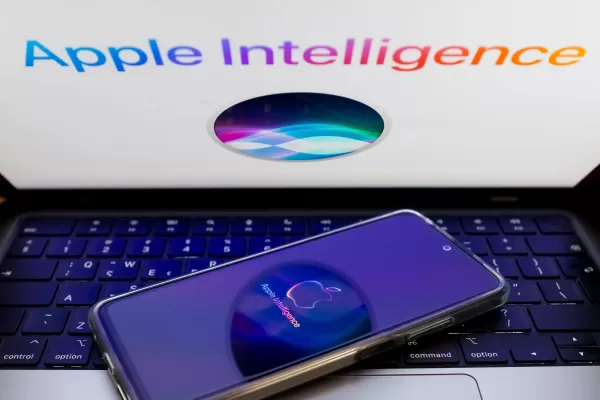
In response to the feedback regarding the less-than-stellar performance of its AI products, particularly in the realm of notification summaries, Apple has recently shared how it's enhancing its AI models. The tech giant is focusing on improving these models by analyzing user data in a privacy-conscious manner, utilizing what they call synthetic data.
Apple's strategy involves a technique known as "differential privacy." Here's how it works: they start by creating synthetic data, which is essentially made-up information designed to look and behave like real user data but without any actual user content. This synthetic data is used to test and refine their AI models. Apple then reaches out to users who have agreed to share device analytics, sending them snippets of this synthetic data. The users' devices compare this data against their real emails to see how well the AI models perform, and this feedback helps Apple fine-tune its systems.
How Synthetic Data is Used
According to Apple, "Synthetic data are created to mimic the format and important properties of user data, but do not contain any actual user-generated content." To create a realistic set of synthetic emails, they generate a large collection of synthetic messages covering various topics. From these, they derive what they call an "embedding"—a representation that captures essential aspects of the message, such as language, topic, and length.
These embeddings are then sent to a select group of user devices that have opted into Device Analytics. These devices compare the embeddings with actual emails to determine their accuracy, providing Apple with valuable insights to improve their AI models.
Applications of Synthetic Data
Apple is currently using this approach to enhance its Genmoji models. Looking ahead, they plan to apply synthetic data to improve other features such as Image Playground, Image Wand, Memories Creation, Writing Tools, and Visual Intelligence. Additionally, Apple intends to use synthetic data to refine email summaries for users who opt into sharing device analytics.
This method not only helps Apple improve its AI offerings but does so in a way that respects user privacy, ensuring that personal data remains just that—personal.
Related article
 Warner Music acquires AI attribution startup Sureel AI
Warner Music Group (WMG) confirmed on Wednesday that it is acquiring Sureel AI, an artificial intelligence attribution startup. Sureel’s proprietary technology generates “AI DNA” for musical tracks, deconstructing them into constituent elements to tr
Amazon introduces Alexa for Shopping while pushing Rufus to the background
Amazon has launched Alexa for Shopping, merging its Rufus shopping chatbot with Alexa+ across the app, website, and Echo Show devices.The assistant answers product queries, compares items, tracks prices, and supports shopping reminders. It also handl
Microsoft, Azure and AI Tech Combat California Wildfire Risks
Microsoft invests in AI-driven wildfire detection, with Juan Lavista Ferres, CVP and Chief Data Scientist, discussing strategies to mitigate environmental damage.According to NASA, climate change impacts everyone on Earth, manifesting as rising tempe
Related Special Topic Recommendations
Design & Art
Warner Music acquires AI attribution startup Sureel AI
Warner Music Group (WMG) confirmed on Wednesday that it is acquiring Sureel AI, an artificial intelligence attribution startup. Sureel’s proprietary technology generates “AI DNA” for musical tracks, deconstructing them into constituent elements to tr
Amazon introduces Alexa for Shopping while pushing Rufus to the background
Amazon has launched Alexa for Shopping, merging its Rufus shopping chatbot with Alexa+ across the app, website, and Echo Show devices.The assistant answers product queries, compares items, tracks prices, and supports shopping reminders. It also handl
Microsoft, Azure and AI Tech Combat California Wildfire Risks
Microsoft invests in AI-driven wildfire detection, with Juan Lavista Ferres, CVP and Chief Data Scientist, discussing strategies to mitigate environmental damage.According to NASA, climate change impacts everyone on Earth, manifesting as rising tempe
Related Special Topic Recommendations
Design & Art
 Best AI Style Transfer Tools for Creative Experiments
2026 Latest Best Top-rated AI Style Transfer Tools for Creative Experiments! XIX.AI has curated a powerful, game-changing collection of must-try tools that deliver exceptional results through real-world tests and rigorous rankings. These top solutions help creatives boost productivity significantly by accelerating content creation and unlocking endless creative possibilities. Explore now to discover your perfect tool and start creating today!
 9 tools
 xix.ai
Comic Creation
Best AI Dialogue Bubble Tools for Visual Storytelling
xix.ai
Comic Creation
Best AI Dialogue Bubble Tools for Visual Storytelling
2026 Latest Best Top-Rated AI Dialogue Bubble Tools for Visual Storytelling are here on XIX.AI! This curated collection features powerful, game-changing tools that help creators boost productivity and overcome creative bottlenecks. Get a free vs paid comparison, see real-world tests, and check the latest rankings to find the must-try solutions perfect for crafting engaging visual narratives. Explore now to discover your ideal tool!
10 tools
xix.ai
Meeting Assistant
Top AI Meeting Summary Tools: Track Decisions and Follow-Ups Clearly
2026 Latest Top-Rated Best AI Meeting Summary Tools for Clear Decision Tracking and Effortless Follow-Ups. This curated list showcases powerful, game-changing solutions that boost productivity dramatically by automating meeting notes, identifying key action items, and streamlining team coordination across all projects. Get a free vs paid comparison along with real-world tests and weekly updated rankings to help you find the perfect tool. Explore now to unlock your AI edge!
9 tools
xix.ai
Data Analysis
Best AI Data Cleaning Tools: Fix Missing Values and Duplicates Fast
2026 Latest Best Top-rated AI Data Cleaning Tools for quick fixing of missing values and duplicates. This curated list showcases powerful, game-changing solutions that boost productivity significantly. Each option has undergone rigorous real-world tests to ensure reliability. Get a free vs paid comparison and discover the must-try tool that fits your needs best. Explore now at XIX.AI to Unlock your AI edge.
11 tools
xix.ai
Design & Art
Best AI Creative Ideation Tools for Artists: Break Through Visual Blocks
2026 Latest Best Top-Rated AI Creative Ideation Tools for Artists are curated by XIX.AI to help creators break through visual blocks and boost creativity instantly. These powerful game-changing tools offer real-world tests, detailed free vs paid comparison, and weekly updated rankings. Discover your perfect tool to accelerate content creation and unlock your AI edge today. Explore now!
14 tools
xix.ai
Music composition
AI Beat Makers for TikTok Background Tracks, Reels Audio, and Creator Promo Music
2026 Latest Best AI Beat Makers for TikTok Background Tracks, Reels Audio, and Creator Promo Music! XIX.AI has curated a top-rated list of powerful game-changing tools that go through real-world tests to deliver flawless music for every content need. You’ll find detailed free vs paid comparison data, weekly updated rankings, and must-try options to help you boost creativity and productivity. Explore now to discover your perfect tool!
11 tools
xix.ai

 Comments (35)
0/500
Comments (35)
0/500
![BenJackson]()
Die Privatsphäre-Priorisierung ist lobenswert, aber kann Apple wirklich relevantere Benachrichtigungszusammenfassungen liefern, ohne Kontext zu verlieren? Ich bin gespannt, ob diese 'on-device'-Analyse bei komplexen Inhalten genauso gut funktioniert wie bei simplen. Andere Hersteller scheinen da schon weiter zu sein. 🤔
![RalphMartinez]()
蘋果這次總算聽見使用者心聲了!不過說到隱私分析...還是讓人有點擔心啊,Tim Cook最好說到做到 🤨 我寧可Siri笨一點也不要資料外洩啦!
![JohnNelson]()
Apple's AI push sounds cool, but analyzing my data? Hope they keep it super private! 😅 Excited for better notifications though.
![StevenWilson]()
Apple's AI push sounds cool, but I'm skeptical about how 'privacy-conscious' it really is. 🤔 Anyone else worried about their data being used like this?
![FrankMartínez]()
Apple's diving deep into user data to boost AI, huh? Sounds promising, but I hope they keep that privacy promise tight—nobody wants their secrets spilled! 😅
![GeorgeSmith]()
एप्पल का AI के प्रति नया दृष्टिकोण रोचक है, लेकिन मुझे प्राइवेसी के पहलू पर थोड़ा संदेह है। यह अच्छा है कि वे सुधार करने की कोशिश कर रहे हैं, लेकिन मुझे उम्मीद है कि वे हमारे डेटा को सुरक्षित रखेंगे। नोटिफिकेशन सारांश अभी भी असंगत हैं। देखते हैं कैसे होता है! 🤔🔍
In response to the feedback regarding the less-than-stellar performance of its AI products, particularly in the realm of notification summaries, Apple has recently shared how it's enhancing its AI models. The tech giant is focusing on improving these models by analyzing user data in a privacy-conscious manner, utilizing what they call synthetic data.
Apple's strategy involves a technique known as "differential privacy." Here's how it works: they start by creating synthetic data, which is essentially made-up information designed to look and behave like real user data but without any actual user content. This synthetic data is used to test and refine their AI models. Apple then reaches out to users who have agreed to share device analytics, sending them snippets of this synthetic data. The users' devices compare this data against their real emails to see how well the AI models perform, and this feedback helps Apple fine-tune its systems.
How Synthetic Data is Used
According to Apple, "Synthetic data are created to mimic the format and important properties of user data, but do not contain any actual user-generated content." To create a realistic set of synthetic emails, they generate a large collection of synthetic messages covering various topics. From these, they derive what they call an "embedding"—a representation that captures essential aspects of the message, such as language, topic, and length.
These embeddings are then sent to a select group of user devices that have opted into Device Analytics. These devices compare the embeddings with actual emails to determine their accuracy, providing Apple with valuable insights to improve their AI models.
Applications of Synthetic Data
Apple is currently using this approach to enhance its Genmoji models. Looking ahead, they plan to apply synthetic data to improve other features such as Image Playground, Image Wand, Memories Creation, Writing Tools, and Visual Intelligence. Additionally, Apple intends to use synthetic data to refine email summaries for users who opt into sharing device analytics.
This method not only helps Apple improve its AI offerings but does so in a way that respects user privacy, ensuring that personal data remains just that—personal.








 Warner Music acquires AI attribution startup Sureel AI
Warner Music Group (WMG) confirmed on Wednesday that it is acquiring Sureel AI, an artificial intelligence attribution startup. Sureel’s proprietary technology generates “AI DNA” for musical tracks, deconstructing them into constituent elements to tr
Amazon introduces Alexa for Shopping while pushing Rufus to the background
Amazon has launched Alexa for Shopping, merging its Rufus shopping chatbot with Alexa+ across the app, website, and Echo Show devices.The assistant answers product queries, compares items, tracks prices, and supports shopping reminders. It also handl
Warner Music acquires AI attribution startup Sureel AI
Warner Music Group (WMG) confirmed on Wednesday that it is acquiring Sureel AI, an artificial intelligence attribution startup. Sureel’s proprietary technology generates “AI DNA” for musical tracks, deconstructing them into constituent elements to tr
Amazon introduces Alexa for Shopping while pushing Rufus to the background
Amazon has launched Alexa for Shopping, merging its Rufus shopping chatbot with Alexa+ across the app, website, and Echo Show devices.The assistant answers product queries, compares items, tracks prices, and supports shopping reminders. It also handl
 Microsoft, Azure and AI Tech Combat California Wildfire Risks
Microsoft invests in AI-driven wildfire detection, with Juan Lavista Ferres, CVP and Chief Data Scientist, discussing strategies to mitigate environmental damage.According to NASA, climate change impacts everyone on Earth, manifesting as rising tempe
Microsoft, Azure and AI Tech Combat California Wildfire Risks
Microsoft invests in AI-driven wildfire detection, with Juan Lavista Ferres, CVP and Chief Data Scientist, discussing strategies to mitigate environmental damage.According to NASA, climate change impacts everyone on Earth, manifesting as rising tempe

2026 Latest Best Top-rated AI Style Transfer Tools for Creative Experiments! XIX.AI has curated a powerful, game-changing collection of must-try tools that deliver exceptional results through real-world tests and rigorous rankings. These top solutions help creatives boost productivity significantly by accelerating content creation and unlocking endless creative possibilities. Explore now to discover your perfect tool and start creating today!
9 tools
xix.ai

2026 Latest Best Top-Rated AI Dialogue Bubble Tools for Visual Storytelling are here on XIX.AI! This curated collection features powerful, game-changing tools that help creators boost productivity and overcome creative bottlenecks. Get a free vs paid comparison, see real-world tests, and check the latest rankings to find the must-try solutions perfect for crafting engaging visual narratives. Explore now to discover your ideal tool!
10 tools
xix.ai
2026 Latest Top-Rated Best AI Meeting Summary Tools for Clear Decision Tracking and Effortless Follow-Ups. This curated list showcases powerful, game-changing solutions that boost productivity dramatically by automating meeting notes, identifying key action items, and streamlining team coordination across all projects. Get a free vs paid comparison along with real-world tests and weekly updated rankings to help you find the perfect tool. Explore now to unlock your AI edge!
9 tools
xix.ai
2026 Latest Best Top-rated AI Data Cleaning Tools for quick fixing of missing values and duplicates. This curated list showcases powerful, game-changing solutions that boost productivity significantly. Each option has undergone rigorous real-world tests to ensure reliability. Get a free vs paid comparison and discover the must-try tool that fits your needs best. Explore now at XIX.AI to Unlock your AI edge.
11 tools
xix.ai

2026 Latest Best Top-Rated AI Creative Ideation Tools for Artists are curated by XIX.AI to help creators break through visual blocks and boost creativity instantly. These powerful game-changing tools offer real-world tests, detailed free vs paid comparison, and weekly updated rankings. Discover your perfect tool to accelerate content creation and unlock your AI edge today. Explore now!
14 tools
xix.ai

2026 Latest Best AI Beat Makers for TikTok Background Tracks, Reels Audio, and Creator Promo Music! XIX.AI has curated a top-rated list of powerful game-changing tools that go through real-world tests to deliver flawless music for every content need. You’ll find detailed free vs paid comparison data, weekly updated rankings, and must-try options to help you boost creativity and productivity. Explore now to discover your perfect tool!
11 tools
xix.ai

Die Privatsphäre-Priorisierung ist lobenswert, aber kann Apple wirklich relevantere Benachrichtigungszusammenfassungen liefern, ohne Kontext zu verlieren? Ich bin gespannt, ob diese 'on-device'-Analyse bei komplexen Inhalten genauso gut funktioniert wie bei simplen. Andere Hersteller scheinen da schon weiter zu sein. 🤔
蘋果這次總算聽見使用者心聲了!不過說到隱私分析...還是讓人有點擔心啊,Tim Cook最好說到做到 🤨 我寧可Siri笨一點也不要資料外洩啦!
Apple's AI push sounds cool, but analyzing my data? Hope they keep it super private! 😅 Excited for better notifications though.
Apple's AI push sounds cool, but I'm skeptical about how 'privacy-conscious' it really is. 🤔 Anyone else worried about their data being used like this?
Apple's diving deep into user data to boost AI, huh? Sounds promising, but I hope they keep that privacy promise tight—nobody wants their secrets spilled! 😅
एप्पल का AI के प्रति नया दृष्टिकोण रोचक है, लेकिन मुझे प्राइवेसी के पहलू पर थोड़ा संदेह है। यह अच्छा है कि वे सुधार करने की कोशिश कर रहे हैं, लेकिन मुझे उम्मीद है कि वे हमारे डेटा को सुरक्षित रखेंगे। नोटिफिकेशन सारांश अभी भी असंगत हैं। देखते हैं कैसे होता है! 🤔🔍












