


 Home
Home
YouTube expands its ‘likeness’ detection technology, which detects AI fakes, to a handful of top creators
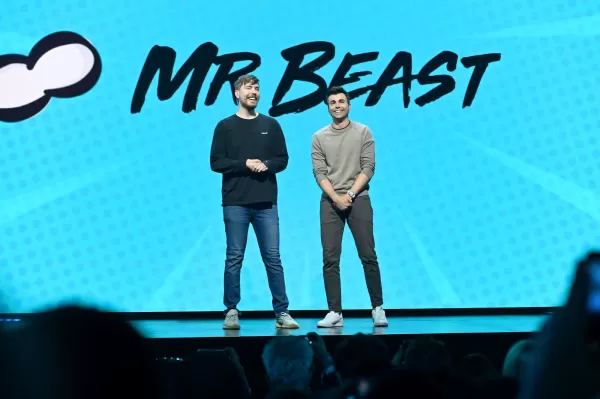
On Wednesday, YouTube took a significant step forward in managing AI-generated content by expanding its pilot program. This initiative aims to identify and handle content that uses the "likeness," such as the face, of creators, artists, and other notable figures. Alongside this, YouTube publicly endorsed the NO FAKES ACT, a piece of legislation designed to combat the creation of misleading and harmful AI-generated replicas that simulate someone’s image or voice.
YouTube has been actively involved in shaping the NO FAKES ACT, collaborating with its sponsors, Senators Chris Coons (D-DE) and Marsha Blackburn (R-TN), as well as industry giants like the Recording Industry Association of America (RIAA) and the Motion Picture Association (MPA). The reintroduction of the legislation will be announced by Coons and Blackburn at a press conference on the same day.
In a detailed blog post, YouTube outlined its reasons for supporting the act. While acknowledging AI's potential to revolutionize creative expression, the company also highlighted the risks, such as the potential for misuse and the creation of harmful content. "Platforms have a responsibility to address these challenges proactively," the post emphasized.
YouTube praised the NO FAKES ACT for its approach to balancing protection with innovation. "The NO FAKES Act provides a smart path forward because it focuses on the best way to balance protection with innovation: putting power directly in the hands of individuals to notify platforms of AI-generated likenesses they believe should come down," the company stated. This notification process is crucial as it enables platforms to differentiate between authorized content and harmful fakes, allowing for more informed decision-making.
YouTube's Likeness Detection System
YouTube's efforts in this area began with the introduction of its likeness detection system in partnership with the Creative Artists Agency (CAA) in December 2024. This new technology is an extension of YouTube’s existing Content ID system, which identifies copyright-protected material in uploaded videos. The likeness detection program similarly works to automatically identify content that violates policies, specifically focusing on AI-generated faces or voices.
Pilot Program and Initial Testers
For the first time, YouTube disclosed the list of initial pilot testers for the program. These include prominent YouTube creators such as MrBeast, Mark Rober, Doctor Mike, the Flow Podcast, Marques Brownlee, and Estude Matemática. During the testing phase, YouTube will collaborate with these creators to enhance the technology and refine its controls. The company plans to expand the program to include more creators over the coming year, though it did not specify a timeline for a broader public launch.
In addition to the pilot, YouTube has updated its privacy process to allow individuals to request the removal of altered or synthetic content that simulates their likeness. Furthermore, the platform has introduced likeness management tools that help users detect and control how AI is used to represent them on YouTube.
Related article
 YouTube to automatically label AI-generated videos
As AI video models grow more advanced, YouTube is moving beyond relying solely on creators to flag AI-generated content — the platform will now automatically label such videos on its own. The company announced Wednesday that its internal systems will
YouTube expands AI deepfake detection to politicians, government officials, and journalists
On Tuesday, YouTube announced it is expanding its deepfake detection technology to a select group of government officials, political candidates, and journalists. The tool identifies AI-generated likenesses and lets pilot participants request the remo
YouTube Tests AI-Powered Search Feature with Guided Answers
Many users turn to YouTube when searching for recipes or travel plans, looking for relevant videos. Now, the platform is introducing an AI-powered interactive search tool that delivers step-by-step results, blending text and video content.With the ne
Related Special Topic Recommendations
Animation Creation
YouTube to automatically label AI-generated videos
As AI video models grow more advanced, YouTube is moving beyond relying solely on creators to flag AI-generated content — the platform will now automatically label such videos on its own. The company announced Wednesday that its internal systems will
YouTube expands AI deepfake detection to politicians, government officials, and journalists
On Tuesday, YouTube announced it is expanding its deepfake detection technology to a select group of government officials, political candidates, and journalists. The tool identifies AI-generated likenesses and lets pilot participants request the remo
YouTube Tests AI-Powered Search Feature with Guided Answers
Many users turn to YouTube when searching for recipes or travel plans, looking for relevant videos. Now, the platform is introducing an AI-powered interactive search tool that delivers step-by-step results, blending text and video content.With the ne
Related Special Topic Recommendations
Animation Creation
 AI Scene Animation Tools for Social Media Content
2026 Latest Best Top-rated AI Scene Animation Tools for Social Media Content are curated here by XIX.AI. These powerful game-changing tools offer real-world tests and detailed free vs paid comparison, helping creators boost productivity significantly. Explore now to unlock your AI edge.
 9 tools
 xix.ai
Video creation
AI Short-Form Video Hook Generators for Reels, Shorts, and Product Launch Campaigns
xix.ai
Video creation
AI Short-Form Video Hook Generators for Reels, Shorts, and Product Launch Campaigns
2026 Latest Best AI Short-Form Video Hook Generators for Reels Shorts and Product Launch Campaigns! XIX.AI curates top-rated powerful game-changing tools that deliver must-try results through real-world tests. This weekly updated page offers free vs paid comparison rankings to help you find the perfect solution for boosting content creativity and productivity. Explore now to Unlock your AI edge!
11 tools
xix.ai
writing
AI Article Outline Tools for Long Form Writing
2026 Latest Best Top-Rated AI Article Outline Tools for Long Form Writing! This curated collection features powerful, game-changing tools that deliver accurate, structured outlines with real-world tests to boost writing efficiency significantly. XIX.AI is part of this elite selection. Get a free vs paid comparison to help you choose the perfect tool. Explore now and Unlock your AI edge!
9 tools
xix.ai
chatbot
Best AI Roleplay Chat Apps for Language Practice, Interview Prep, and Daily Fluency
2026 Latest Best Top-rated AI Roleplay Chat Apps for Language Practice, Interview Prep, and Daily Fluency! XIX.AI curates a powerful game-changing collection that offers free vs paid comparison, real-world tests, and updated rankings weekly. These must-try tools help you boost writing skills, overcome fluency challenges, and improve communication efficiency across all daily scenarios. Explore now to discover your perfect tool for language growth!
10 tools
xix.ai
Music composition
AI Stem Separation Tools for Remix Production, Sampling Prep, and Karaoke Masters
2026 Latest Best Top-rated AI Stem Separation Tools Curated for Remix Production, Sampling Prep, and Karaoke Masters. These powerful game-changing tools offer real-world tests to deliver precise audio isolation, boosting productivity significantly. XIX.AI provides a weekly updated free vs paid comparison guide to help you find the must-try solution that suits your needs. Explore now to unlock your AI edge.
8 tools
xix.ai
Data Analysis
AI SQL Copilots for Revenue Dashboards, Funnel Analysis, and Product Metrics
2026 Latest Best AI SQL Copilots Ranked Top-Rated! XIX.AI curates a powerful game-changing collection for weekly updated real-world tests. These must-try tools help you generate accurate revenue dashboards, analyze sales funnels, and track product metrics swiftly, boosting productivity massively. Explore now to Discover your perfect tool for data-driven decision making! 238 characters
9 tools
xix.ai

 Comments (25)
0/500
Comments (25)
0/500
![JoeLee]()
Me preocupa que la IA generativa pueda distorsionar la realidad y hacer que confundamos lo falso con lo real. Me alegra que YouTube esté tomando medidas para proteger la identidad de los creadores, ¡espero que esta tecnología sea realmente efectiva! ⚡️ ¿Cómo crees que afectará esto a otras plataformas?
![RichardThomas]()
Finalmente uma iniciativa contra deepfakes! 🎉 Mas me pergunto: será que o YouTube vai priorizar apenas os grandes criadores ou protegerá também os pequenos canais? Essa tecnologia pode ser bem vinda, mas precisa ser acessível a todos.
![GregoryAllen]()
Finally some real action against deepfakes! Hope this actually works and doesn't just flag innocent parody videos. The internet's getting weird enough without convincing AI impersonations of my favorite YouTubers..
![MarkLopez]()
Enfin une mesure contre les deepfakes ! Mais pourquoi seulement pour les gros créateurs ? 😕 Les petits youtubeurs méritent aussi cette protection, non ? Ça semble un peu injuste comme système...
![GeorgeWilliams]()
This AI detection stuff on YouTube is wild! It's cool they're protecting creators' faces, but I wonder if it'll catch every sneaky deepfake. Tech's moving fast, hope they keep up! 😎
![KevinYoung]()
YouTube's new 'likeness' detection tech is a game changer! It's cool that they're protecting creators from AI fakes, but it's still in pilot mode. I hope they roll it out to everyone soon. It's a bit slow, but it's a step in the right direction! 🤞
On Wednesday, YouTube took a significant step forward in managing AI-generated content by expanding its pilot program. This initiative aims to identify and handle content that uses the "likeness," such as the face, of creators, artists, and other notable figures. Alongside this, YouTube publicly endorsed the NO FAKES ACT, a piece of legislation designed to combat the creation of misleading and harmful AI-generated replicas that simulate someone’s image or voice.
YouTube has been actively involved in shaping the NO FAKES ACT, collaborating with its sponsors, Senators Chris Coons (D-DE) and Marsha Blackburn (R-TN), as well as industry giants like the Recording Industry Association of America (RIAA) and the Motion Picture Association (MPA). The reintroduction of the legislation will be announced by Coons and Blackburn at a press conference on the same day.
In a detailed blog post, YouTube outlined its reasons for supporting the act. While acknowledging AI's potential to revolutionize creative expression, the company also highlighted the risks, such as the potential for misuse and the creation of harmful content. "Platforms have a responsibility to address these challenges proactively," the post emphasized.
YouTube praised the NO FAKES ACT for its approach to balancing protection with innovation. "The NO FAKES Act provides a smart path forward because it focuses on the best way to balance protection with innovation: putting power directly in the hands of individuals to notify platforms of AI-generated likenesses they believe should come down," the company stated. This notification process is crucial as it enables platforms to differentiate between authorized content and harmful fakes, allowing for more informed decision-making.
YouTube's Likeness Detection System
YouTube's efforts in this area began with the introduction of its likeness detection system in partnership with the Creative Artists Agency (CAA) in December 2024. This new technology is an extension of YouTube’s existing Content ID system, which identifies copyright-protected material in uploaded videos. The likeness detection program similarly works to automatically identify content that violates policies, specifically focusing on AI-generated faces or voices.
Pilot Program and Initial Testers
For the first time, YouTube disclosed the list of initial pilot testers for the program. These include prominent YouTube creators such as MrBeast, Mark Rober, Doctor Mike, the Flow Podcast, Marques Brownlee, and Estude Matemática. During the testing phase, YouTube will collaborate with these creators to enhance the technology and refine its controls. The company plans to expand the program to include more creators over the coming year, though it did not specify a timeline for a broader public launch.
In addition to the pilot, YouTube has updated its privacy process to allow individuals to request the removal of altered or synthetic content that simulates their likeness. Furthermore, the platform has introduced likeness management tools that help users detect and control how AI is used to represent them on YouTube.








 YouTube to automatically label AI-generated videos
As AI video models grow more advanced, YouTube is moving beyond relying solely on creators to flag AI-generated content — the platform will now automatically label such videos on its own. The company announced Wednesday that its internal systems will
YouTube to automatically label AI-generated videos
As AI video models grow more advanced, YouTube is moving beyond relying solely on creators to flag AI-generated content — the platform will now automatically label such videos on its own. The company announced Wednesday that its internal systems will
 YouTube expands AI deepfake detection to politicians, government officials, and journalists
On Tuesday, YouTube announced it is expanding its deepfake detection technology to a select group of government officials, political candidates, and journalists. The tool identifies AI-generated likenesses and lets pilot participants request the remo
YouTube expands AI deepfake detection to politicians, government officials, and journalists
On Tuesday, YouTube announced it is expanding its deepfake detection technology to a select group of government officials, political candidates, and journalists. The tool identifies AI-generated likenesses and lets pilot participants request the remo
 YouTube Tests AI-Powered Search Feature with Guided Answers
Many users turn to YouTube when searching for recipes or travel plans, looking for relevant videos. Now, the platform is introducing an AI-powered interactive search tool that delivers step-by-step results, blending text and video content.With the ne
YouTube Tests AI-Powered Search Feature with Guided Answers
Many users turn to YouTube when searching for recipes or travel plans, looking for relevant videos. Now, the platform is introducing an AI-powered interactive search tool that delivers step-by-step results, blending text and video content.With the ne
2026 Latest Best Top-rated AI Scene Animation Tools for Social Media Content are curated here by XIX.AI. These powerful game-changing tools offer real-world tests and detailed free vs paid comparison, helping creators boost productivity significantly. Explore now to unlock your AI edge.
9 tools
xix.ai

2026 Latest Best AI Short-Form Video Hook Generators for Reels Shorts and Product Launch Campaigns! XIX.AI curates top-rated powerful game-changing tools that deliver must-try results through real-world tests. This weekly updated page offers free vs paid comparison rankings to help you find the perfect solution for boosting content creativity and productivity. Explore now to Unlock your AI edge!
11 tools
xix.ai
2026 Latest Best Top-Rated AI Article Outline Tools for Long Form Writing! This curated collection features powerful, game-changing tools that deliver accurate, structured outlines with real-world tests to boost writing efficiency significantly. XIX.AI is part of this elite selection. Get a free vs paid comparison to help you choose the perfect tool. Explore now and Unlock your AI edge!
9 tools
xix.ai
2026 Latest Best Top-rated AI Roleplay Chat Apps for Language Practice, Interview Prep, and Daily Fluency! XIX.AI curates a powerful game-changing collection that offers free vs paid comparison, real-world tests, and updated rankings weekly. These must-try tools help you boost writing skills, overcome fluency challenges, and improve communication efficiency across all daily scenarios. Explore now to discover your perfect tool for language growth!
10 tools
xix.ai
2026 Latest Best Top-rated AI Stem Separation Tools Curated for Remix Production, Sampling Prep, and Karaoke Masters. These powerful game-changing tools offer real-world tests to deliver precise audio isolation, boosting productivity significantly. XIX.AI provides a weekly updated free vs paid comparison guide to help you find the must-try solution that suits your needs. Explore now to unlock your AI edge.
8 tools
xix.ai
2026 Latest Best AI SQL Copilots Ranked Top-Rated! XIX.AI curates a powerful game-changing collection for weekly updated real-world tests. These must-try tools help you generate accurate revenue dashboards, analyze sales funnels, and track product metrics swiftly, boosting productivity massively. Explore now to Discover your perfect tool for data-driven decision making! 238 characters
9 tools
xix.ai

Me preocupa que la IA generativa pueda distorsionar la realidad y hacer que confundamos lo falso con lo real. Me alegra que YouTube esté tomando medidas para proteger la identidad de los creadores, ¡espero que esta tecnología sea realmente efectiva! ⚡️ ¿Cómo crees que afectará esto a otras plataformas?
Finalmente uma iniciativa contra deepfakes! 🎉 Mas me pergunto: será que o YouTube vai priorizar apenas os grandes criadores ou protegerá também os pequenos canais? Essa tecnologia pode ser bem vinda, mas precisa ser acessível a todos.
Finally some real action against deepfakes! Hope this actually works and doesn't just flag innocent parody videos. The internet's getting weird enough without convincing AI impersonations of my favorite YouTubers..
Enfin une mesure contre les deepfakes ! Mais pourquoi seulement pour les gros créateurs ? 😕 Les petits youtubeurs méritent aussi cette protection, non ? Ça semble un peu injuste comme système...
This AI detection stuff on YouTube is wild! It's cool they're protecting creators' faces, but I wonder if it'll catch every sneaky deepfake. Tech's moving fast, hope they keep up! 😎
YouTube's new 'likeness' detection tech is a game changer! It's cool that they're protecting creators from AI fakes, but it's still in pilot mode. I hope they roll it out to everyone soon. It's a bit slow, but it's a step in the right direction! 🤞












