


 Home
Home
YouTube expands AI deepfake detection to politicians, government officials, and journalists
On Tuesday, YouTube announced it is expanding its deepfake detection technology to a select group of government officials, political candidates, and journalists. The tool identifies AI-generated likenesses and lets pilot participants request the removal of unauthorized content they believe violates YouTube’s policies.
The detection system first launched last year to roughly 4 million creators in the YouTube Partner Program after earlier testing phases.
Like YouTube’s existing Content ID system for copyrighted material, the likeness detection feature identifies AI-simulated faces. These synthetic representations are sometimes used to spread misinformation and distort reality by making notable figures appear to say or do things they never did in real life.
With this pilot program, YouTube aims to balance free expression against the risks of AI technology that can produce convincing likenesses of public figures.
“This expansion is really about protecting the integrity of public conversation,” said Leslie Miller, YouTube’s Vice President of Government Affairs and Public Policy, in a press briefing ahead of Tuesday’s announcement. “We recognize that AI impersonation poses especially high risks for those in the civic space. But while we provide this new safeguard, we are also applying it carefully,” she added.
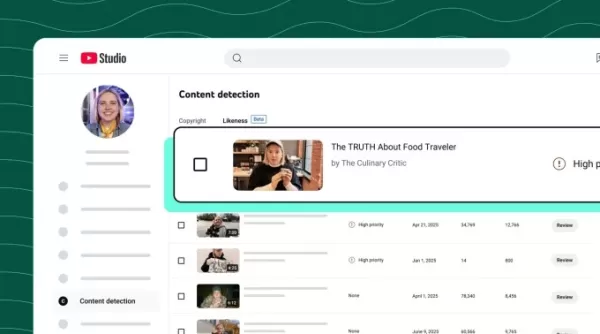
Image credit:YouTube
Miller explained that not every detected match will be removed upon request. Instead, YouTube will evaluate each request under its existing privacy policy to determine whether the content qualifies as parody or political critique, both of which are protected forms of free expression.
The company is also advocating for federal protections, supporting the NO FAKES Act in Washington, D.C., which would regulate AI-generated unauthorized recreations of an individual’s voice and visual likeness.
Eligible pilot testers must verify their identity by uploading a selfie and a government ID before using the tool. Once approved, they can create a profile, review detected matches, and request removal if needed. YouTube eventually plans to allow users to block violating content before it goes live or potentially monetize those videos, similar to how Content ID works.
YouTube declined to name specific politicians or officials in the initial tester group but said the goal is to make the technology broadly available over time.
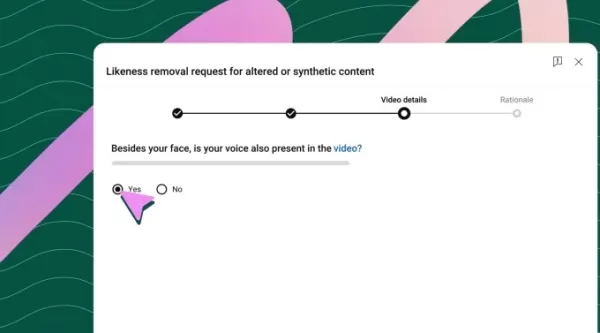
Image credit:YouTube
AI-generated videos will carry labels indicating their synthetic origin, though placement varies. For most content, the label appears in the video description. For more sensitive topics, the label is displayed prominently before the video plays. This approach mirrors YouTube’s broader policy for all AI-generated content.
“A lot of content is produced with AI, but that distinction is not always material to the content itself,” explained Amjad Hanif, YouTube’s Vice President of Creator Products, regarding label placement. “An AI-generated cartoon, for example, is different from content that may need a more visible disclaimer. Context matters,” he said.
YouTube has not disclosed how many deepfake removals have been handled through its creator-facing tool, but noted the volume so far has been “very small.”
“For most creators, the tool has mainly raised awareness of what is being produced. Actual removal requests are extremely low because most detected content turns out to be benign or even additive to their business,” Hanif said.
That may not be the case with deepfakes of government officials, politicians, or journalists.
Looking ahead, YouTube plans to extend its deepfake detection technology to additional areas, including recognizable spoken voices and intellectual property such as popular characters.
Related article
 Google Unveils Agentic AI for Gemini, Launching with Enterprise Clients
During a Google Cloud event on Thursday, the company unveiled plans to integrate Gemini AI into the agentic era. This launch introduces a unified agent capable of not only answering queries but also executing tasks on behalf of users, all within a si
Google Unveils Dreambeans, Its Most Eccentric AI Tool Yet, to Transform Your Life Into a Cartoon
Google Labs, the division responsible for experimental product design, has released a new AI-powered application for iOS and Android that brings your daily life to life.Introducing Dreambeans. The reasoning behind the name will be explained shortly.W
Stripe to Acquire OpenRouter as AI Model Routing Gains Momentum
Stripe has agreed to acquire OpenRouter, an AI model-routing platform that gives developers access to hundreds of models through a single interface. The deal adds model selection and routing to Stripe’s existing work around AI usage and token-based b
Related Special Topic Recommendations
Design & Art
Google Unveils Agentic AI for Gemini, Launching with Enterprise Clients
During a Google Cloud event on Thursday, the company unveiled plans to integrate Gemini AI into the agentic era. This launch introduces a unified agent capable of not only answering queries but also executing tasks on behalf of users, all within a si
Google Unveils Dreambeans, Its Most Eccentric AI Tool Yet, to Transform Your Life Into a Cartoon
Google Labs, the division responsible for experimental product design, has released a new AI-powered application for iOS and Android that brings your daily life to life.Introducing Dreambeans. The reasoning behind the name will be explained shortly.W
Stripe to Acquire OpenRouter as AI Model Routing Gains Momentum
Stripe has agreed to acquire OpenRouter, an AI model-routing platform that gives developers access to hundreds of models through a single interface. The deal adds model selection and routing to Stripe’s existing work around AI usage and token-based b
Related Special Topic Recommendations
Design & Art
 Top AI Illustration Tools: Create Editorial Scenes and Cover Art Faster
2026 Latest Top-rated AI Illustration Tools: Our curated list features the best powerfully designed tools for creating stunning editorial scenes and eye-catching cover art quickly. Each option has gone through rigorous real-world tests, offering a free vs paid comparison to help you find the perfect match for your workflow. Try these must-try solutions today to unlock your AI edge and boost your creative productivity. Explore now at XIX.AI.
 10 tools
 xix.ai
Education and Learning
Top AI Tutors for Exam Prep: Practice Math, Science, and English
xix.ai
Education and Learning
Top AI Tutors for Exam Prep: Practice Math, Science, and English
2026 Latest Top-Rated Best AI Tutors for Exam Prep are here on XIX.AI! Our curated list features powerful game-changing tools that offer free vs paid comparison, real-world tests, and weekly updated rankings. They help boost your writing efficiency, simplify complex topic learning, and unlock your academic potential. Explore now to Discover your perfect exam prep tool and Start creating today to Unlock your AI edge!
10 tools
xix.ai
Finance
AI Budget Planning Tools for Personal Money Management
2026 Latest Best Top-Rated AI Budget Planning Tools for Personal Money Management are here on XIX.AI! This curated collection features powerful, game-changing solutions that help you conduct real-world tests, understand spending habits, and create personalized plans to boost productivity. Enjoy a free vs paid comparison along with detailed rankings. Must-try tools designed to simplify money management and unlock your AI edge. Explore now!
11 tools
xix.ai
Health & Wellness
AI Sleep Tracking Assistants: Improve Recovery with Better Bedtime Habits
2026 Latest Best Top-Rated AI Sleep Tracking Assistants curated for ultimate recovery. This fully updated weekly guide features powerful tools that deliver real-world tests, free vs paid comparison, and detailed rankings to help you find the must-try solution that boosts sleep quality and supports better bedtime habits. Explore now at XIX.AI to Unlock your AI edge.
10 tools
xix.ai
Data Analysis
AI SQL Copilots for Product and Revenue Analytics
2026 Latest Best Top-Rated AI SQL Copilots for Product and Revenue Analytics! XIX.AI has curated a powerful, game-changing collection of must-try tools that undergo real-world tests through weekly updated rankings. These tools help users boost productivity significantly by accelerating data analysis, streamlining complex queries, and generating accurate insights to drive smarter business decisions. Explore now to Discover your perfect tool for unlocking your AI edge!
14 tools
xix.ai
Education and Learning
Best AI Homework Helpers That Teach: Learn Concepts, Not Just Answers
2026 Latest Best Top-Rated AI Homework Helpers That Teach Core Concepts Not Just Answers Powerful Tools for Students Must-Try Curated List Weekly Updated Free vs Paid Comparison Real-World Tests Accurate Rankings to Help You Unlock Your Full Learning Potential Explore now to Discover your perfect tool for smarter studying.
10 tools
xix.ai

 Comments (0)
0/500
Comments (0)
0/500
On Tuesday, YouTube announced it is expanding its deepfake detection technology to a select group of government officials, political candidates, and journalists. The tool identifies AI-generated likenesses and lets pilot participants request the removal of unauthorized content they believe violates YouTube’s policies.
The detection system first launched last year to roughly 4 million creators in the YouTube Partner Program after earlier testing phases.
Like YouTube’s existing Content ID system for copyrighted material, the likeness detection feature identifies AI-simulated faces. These synthetic representations are sometimes used to spread misinformation and distort reality by making notable figures appear to say or do things they never did in real life.
With this pilot program, YouTube aims to balance free expression against the risks of AI technology that can produce convincing likenesses of public figures.
“This expansion is really about protecting the integrity of public conversation,” said Leslie Miller, YouTube’s Vice President of Government Affairs and Public Policy, in a press briefing ahead of Tuesday’s announcement. “We recognize that AI impersonation poses especially high risks for those in the civic space. But while we provide this new safeguard, we are also applying it carefully,” she added.
Image credit:YouTube
Miller explained that not every detected match will be removed upon request. Instead, YouTube will evaluate each request under its existing privacy policy to determine whether the content qualifies as parody or political critique, both of which are protected forms of free expression.
The company is also advocating for federal protections, supporting the NO FAKES Act in Washington, D.C., which would regulate AI-generated unauthorized recreations of an individual’s voice and visual likeness.
Eligible pilot testers must verify their identity by uploading a selfie and a government ID before using the tool. Once approved, they can create a profile, review detected matches, and request removal if needed. YouTube eventually plans to allow users to block violating content before it goes live or potentially monetize those videos, similar to how Content ID works.
YouTube declined to name specific politicians or officials in the initial tester group but said the goal is to make the technology broadly available over time.
Image credit:YouTube
AI-generated videos will carry labels indicating their synthetic origin, though placement varies. For most content, the label appears in the video description. For more sensitive topics, the label is displayed prominently before the video plays. This approach mirrors YouTube’s broader policy for all AI-generated content.
“A lot of content is produced with AI, but that distinction is not always material to the content itself,” explained Amjad Hanif, YouTube’s Vice President of Creator Products, regarding label placement. “An AI-generated cartoon, for example, is different from content that may need a more visible disclaimer. Context matters,” he said.
YouTube has not disclosed how many deepfake removals have been handled through its creator-facing tool, but noted the volume so far has been “very small.”
“For most creators, the tool has mainly raised awareness of what is being produced. Actual removal requests are extremely low because most detected content turns out to be benign or even additive to their business,” Hanif said.
That may not be the case with deepfakes of government officials, politicians, or journalists.
Looking ahead, YouTube plans to extend its deepfake detection technology to additional areas, including recognizable spoken voices and intellectual property such as popular characters.








 Google Unveils Agentic AI for Gemini, Launching with Enterprise Clients
During a Google Cloud event on Thursday, the company unveiled plans to integrate Gemini AI into the agentic era. This launch introduces a unified agent capable of not only answering queries but also executing tasks on behalf of users, all within a si
Google Unveils Agentic AI for Gemini, Launching with Enterprise Clients
During a Google Cloud event on Thursday, the company unveiled plans to integrate Gemini AI into the agentic era. This launch introduces a unified agent capable of not only answering queries but also executing tasks on behalf of users, all within a si
 Google Unveils Dreambeans, Its Most Eccentric AI Tool Yet, to Transform Your Life Into a Cartoon
Google Labs, the division responsible for experimental product design, has released a new AI-powered application for iOS and Android that brings your daily life to life.Introducing Dreambeans. The reasoning behind the name will be explained shortly.W
Google Unveils Dreambeans, Its Most Eccentric AI Tool Yet, to Transform Your Life Into a Cartoon
Google Labs, the division responsible for experimental product design, has released a new AI-powered application for iOS and Android that brings your daily life to life.Introducing Dreambeans. The reasoning behind the name will be explained shortly.W
 Stripe to Acquire OpenRouter as AI Model Routing Gains Momentum
Stripe has agreed to acquire OpenRouter, an AI model-routing platform that gives developers access to hundreds of models through a single interface. The deal adds model selection and routing to Stripe’s existing work around AI usage and token-based b
Stripe to Acquire OpenRouter as AI Model Routing Gains Momentum
Stripe has agreed to acquire OpenRouter, an AI model-routing platform that gives developers access to hundreds of models through a single interface. The deal adds model selection and routing to Stripe’s existing work around AI usage and token-based b

2026 Latest Top-rated AI Illustration Tools: Our curated list features the best powerfully designed tools for creating stunning editorial scenes and eye-catching cover art quickly. Each option has gone through rigorous real-world tests, offering a free vs paid comparison to help you find the perfect match for your workflow. Try these must-try solutions today to unlock your AI edge and boost your creative productivity. Explore now at XIX.AI.
10 tools
xix.ai

2026 Latest Top-Rated Best AI Tutors for Exam Prep are here on XIX.AI! Our curated list features powerful game-changing tools that offer free vs paid comparison, real-world tests, and weekly updated rankings. They help boost your writing efficiency, simplify complex topic learning, and unlock your academic potential. Explore now to Discover your perfect exam prep tool and Start creating today to Unlock your AI edge!
10 tools
xix.ai

2026 Latest Best Top-Rated AI Budget Planning Tools for Personal Money Management are here on XIX.AI! This curated collection features powerful, game-changing solutions that help you conduct real-world tests, understand spending habits, and create personalized plans to boost productivity. Enjoy a free vs paid comparison along with detailed rankings. Must-try tools designed to simplify money management and unlock your AI edge. Explore now!
11 tools
xix.ai

2026 Latest Best Top-Rated AI Sleep Tracking Assistants curated for ultimate recovery. This fully updated weekly guide features powerful tools that deliver real-world tests, free vs paid comparison, and detailed rankings to help you find the must-try solution that boosts sleep quality and supports better bedtime habits. Explore now at XIX.AI to Unlock your AI edge.
10 tools
xix.ai
2026 Latest Best Top-Rated AI SQL Copilots for Product and Revenue Analytics! XIX.AI has curated a powerful, game-changing collection of must-try tools that undergo real-world tests through weekly updated rankings. These tools help users boost productivity significantly by accelerating data analysis, streamlining complex queries, and generating accurate insights to drive smarter business decisions. Explore now to Discover your perfect tool for unlocking your AI edge!
14 tools
xix.ai

2026 Latest Best Top-Rated AI Homework Helpers That Teach Core Concepts Not Just Answers Powerful Tools for Students Must-Try Curated List Weekly Updated Free vs Paid Comparison Real-World Tests Accurate Rankings to Help You Unlock Your Full Learning Potential Explore now to Discover your perfect tool for smarter studying.
10 tools
xix.ai












