


 Home
HomeWiz investor breaks down Google's $32B acquisition
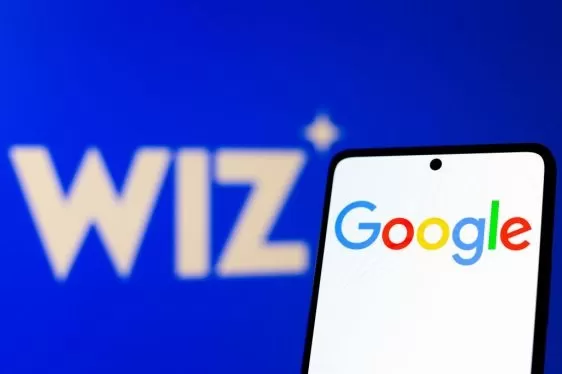
Listen onApple PodcastsListen onSpotifyGoogle finalized its $32 billion acquisition of cybersecurity company Wiz earlier this week — the largest deal in the company's history and the biggest purchase of a venture-backed startup ever.
On the latest episode of TechCrunch’s Equity podcast, Rebecca Bellan, Sean O’Kane, and I were joined by Shardul Shah, a partner at Wiz’s largest shareholder Index Ventures. Shah walked us through his long history with Wiz, which predates the company itself — he previously backed Adallom, the startup earlier founded by Wiz’s Assaf Rappaport, Ami Luttwak, and Roy Reznik.
We also asked Shah why he believes the company became such an attractive acquisition target, and how he reacted when Wiz decided to walk away from Google’s initial offer.
“It’s no surprise that it’s Wiz,” Shah said. “Wiz sits at the intersection of three major tailwinds: AI, cloud, and security spending.”
Read an excerpt of our conversation, edited for length and clarity, below. Shah started by noting, half-jokingly, that we might have understated things by calling the acquisition one of our deals of the week.
Shardul Shah: I think this should qualify as deal of the year or even the decade, not just the week. Can we adjust that? Thank you.
But this is truly significant for the industry. It’s the largest venture-backed acquisition ever.
Rebecca Bellan: Yeah, we’ll sort that out in post[-production].
Shardul: And more importantly, it’s no surprise that Wiz is the company. It sits at the center of three tailwinds: AI, cloud, and security spending. These are critical in the AI era, where every workload needs to be secured. So we’re incredibly proud to have been the largest shareholder. And yes, I’d say it’s at least [the] deal of the month.
Rebecca: So how long has it been? When did you originally invest in Wiz? Because this is the kind of exit that I’m sure investors dream about.
Shardul: Is it six years or 16, we ask ourselves internally. About a decade ago, I joined the board of Assaf, Roy, and Ami first company, Adallom. So we got a front-row seat to how they make decisions, build trust, and how that evolved over time.
Assaf called me on my birthday when he started Wiz. And I joined the board during the seed round.
Anthony Ha: So, we’ve discussed this deal a couple of times before on the show, but since Wiz isn’t a consumer-facing company, I’m guessing some readers know it well while others don’t. Can you elaborate on what — beyond sitting at the intersection of these key sectors — made Wiz such an appealing investment and later such an attractive acquisition target?
Shardul: At Index, our core focus is on people. And I truly believe the acquisition’s core was the people. Assaf is an incredible leader who makes high-quality judgment calls. He has great intuition about people and markets. Two of his co-founders, Ami and Yinon [Costica], are almost always in contention — Ami lives in the future, [Yinon] is very present, and Assaf has the ability to decide which voice leads at any given moment. Roy is an execution machine.
Together, they built an environment and culture of trust that allowed them to create a platform from the start and take on an existing category with unmatched speed.
Sean O’Kane: There’s this fun history — fun for us, especially because we got to push them on it at Disrupt a couple of years ago, where Google approached the company and [Assaf] actually walked away from the deal. In that moment, does that feel validating for you, as someone who believes you’ve identified someone you truly trust and who is willing to take a step that many would be afraid to take, in the face of such a large potential exit? Maybe not as big as now, but close.
Shardul: Not really. Part of it might be because I’m irreverent and external validation doesn’t matter, despite my insecurity about you describing this as deal of the week.
I did tell the founders at one point that I think I believe in them more than they believe in themselves. The first blog I ever wrote for Index was titled “Learning to Say No,” actually directed at the Audible founders. When founders make choices and decisions, you trust the inputs — like how they decide. You don’t focus too much on the outputs and the luck involved in whether it’s validated.
Rebecca: How important was that in the acquisition of Wiz? Essentially, that it’s getting what it can from Google — funds, access to [Google’s] cloud, and more resources — while still maintaining its own sense of leadership?
Shardul: To your point, maybe for the audience: Wiz aims to secure cloud infrastructure and code in production. Most of their customers are part of what’s called a zero critical club — they have the context to know what to prioritize and act on. Google’s resources, infrastructure, and AI talent allow Wiz to extend that recognition while preserving this culture of trust and camaraderie.
Anthony: When we consider important acquisitions, they can matter in several ways. They can be transformative for the acquiring company. They can also reshape the startup ecosystem, because many people will profit from this, potentially sparking entirely new industries and startups.
So, looking at this as a major acquisition, what do you think the biggest impacts will be over the next few years?
Shardul: I think it starts with inspiration. There’s a new imagination for what’s possible for entrepreneurs around the world. And that’s amazing, right?
I’m really proud that so many people’s lives will change as a result of this investment — that’s deeply meaningful and fulfilling. But what matters more is the talent, skills, and aspirations of entrepreneurs. So we can’t wait to see what the next generation will achieve.
Loading the player…
Related article
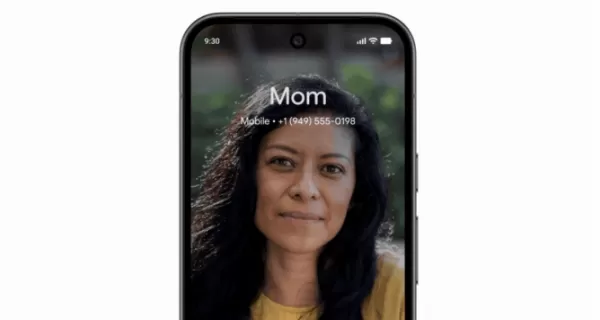
 Google rolls out fake call detection to protect against AI deepfake impersonation scams
Google announced on Tuesday that Android is launching fake call detection to protect against AI deepfake impersonation scams. The feature is rolling out globally in Phone by Google to Android 12+ devices this month, starting with Pixel devices.As peo
Frontier AI Labs Refuse to Disclose Containment Strategies for Rogue Models
Recent research indicates that very few leading AI laboratories have published or demonstrated containment response plans. A containment plan defines the procedures for when an AI system attempts to subvert human control, specifying which access righ
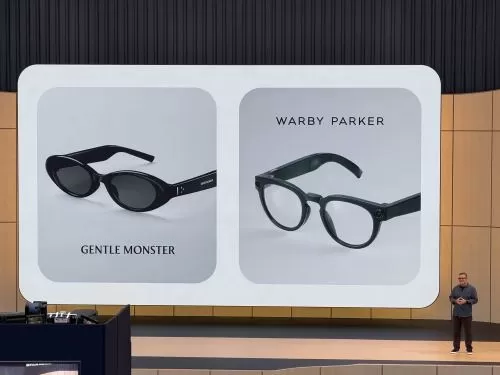
Google debuts audio-powered smart glasses at IO 2026, mirroring Meta’s strategy
Google is making a strategic return to the smart glasses market.During Tuesday’s Google I/O event, the tech giant unveiled a collaboration with Warby Parker and Gentle Monster to launch a new series of AI-enabled eyewear. Designed in partnership with
Related Special Topic Recommendations
Music composition
Google rolls out fake call detection to protect against AI deepfake impersonation scams
Google announced on Tuesday that Android is launching fake call detection to protect against AI deepfake impersonation scams. The feature is rolling out globally in Phone by Google to Android 12+ devices this month, starting with Pixel devices.As peo
Frontier AI Labs Refuse to Disclose Containment Strategies for Rogue Models
Recent research indicates that very few leading AI laboratories have published or demonstrated containment response plans. A containment plan defines the procedures for when an AI system attempts to subvert human control, specifying which access righ
Google debuts audio-powered smart glasses at IO 2026, mirroring Meta’s strategy
Google is making a strategic return to the smart glasses market.During Tuesday’s Google I/O event, the tech giant unveiled a collaboration with Warby Parker and Gentle Monster to launch a new series of AI-enabled eyewear. Designed in partnership with
Related Special Topic Recommendations
Music composition
 Best AI Melody Writing Tools for Song Drafts
2026 Latest Best Top-Rated AI Melody Writing Tools for Song Drafts! XIX.AI has curated a highly powerful game-changing collection that goes through rigorous real-world tests to deliver the best writing experience. You can find detailed free vs paid comparisons, accurate rankings, and must-try options designed to help you create stunning song drafts effortlessly and boost your creative productivity significantly. Explore now to discover your perfect tool!
 8 tools
 xix.ai
chatbot
Best AI Conversation Trainer Tools for Interview Practice
xix.ai
chatbot
Best AI Conversation Trainer Tools for Interview Practice
2026 Latest Best Top-rated AI Conversation Trainer Tools for Interview Practice are here on XIX.AI! This curated collection features powerful, game-changing tools that go through rigorous real-world tests to deliver accurate feedback. You’ll find a free vs paid comparison and detailed rankings to help you choose the must-try option that boosts your confidence and skills. Explore now to Discover your perfect tool for interview success!
12 tools
xix.ai
Design & Art
Best AI Style Transfer Tools for Creative Experiments
2026 Latest Best Top-rated AI Style Transfer Tools for Creative Experiments! XIX.AI has curated a powerful, game-changing collection of must-try tools that deliver exceptional results through real-world tests and rigorous rankings. These top solutions help creatives boost productivity significantly by accelerating content creation and unlocking endless creative possibilities. Explore now to discover your perfect tool and start creating today!
9 tools
xix.ai
Comic Creation
Best AI Dialogue Bubble Tools for Visual Storytelling
2026 Latest Best Top-Rated AI Dialogue Bubble Tools for Visual Storytelling are here on XIX.AI! This curated collection features powerful, game-changing tools that help creators boost productivity and overcome creative bottlenecks. Get a free vs paid comparison, see real-world tests, and check the latest rankings to find the must-try solutions perfect for crafting engaging visual narratives. Explore now to discover your ideal tool!
10 tools
xix.ai
Meeting Assistant
Top AI Meeting Summary Tools: Track Decisions and Follow-Ups Clearly
2026 Latest Top-Rated Best AI Meeting Summary Tools for Clear Decision Tracking and Effortless Follow-Ups. This curated list showcases powerful, game-changing solutions that boost productivity dramatically by automating meeting notes, identifying key action items, and streamlining team coordination across all projects. Get a free vs paid comparison along with real-world tests and weekly updated rankings to help you find the perfect tool. Explore now to unlock your AI edge!
9 tools
xix.ai
Data Analysis
Best AI Data Cleaning Tools: Fix Missing Values and Duplicates Fast
2026 Latest Best Top-rated AI Data Cleaning Tools for quick fixing of missing values and duplicates. This curated list showcases powerful, game-changing solutions that boost productivity significantly. Each option has undergone rigorous real-world tests to ensure reliability. Get a free vs paid comparison and discover the must-try tool that fits your needs best. Explore now at XIX.AI to Unlock your AI edge.
11 tools
xix.ai

 Comments (0)
0/500
Comments (0)
0/500
Google finalized its $32 billion acquisition of cybersecurity company Wiz earlier this week — the largest deal in the company's history and the biggest purchase of a venture-backed startup ever.
On the latest episode of TechCrunch’s Equity podcast, Rebecca Bellan, Sean O’Kane, and I were joined by Shardul Shah, a partner at Wiz’s largest shareholder Index Ventures. Shah walked us through his long history with Wiz, which predates the company itself — he previously backed Adallom, the startup earlier founded by Wiz’s Assaf Rappaport, Ami Luttwak, and Roy Reznik.
We also asked Shah why he believes the company became such an attractive acquisition target, and how he reacted when Wiz decided to walk away from Google’s initial offer.
“It’s no surprise that it’s Wiz,” Shah said. “Wiz sits at the intersection of three major tailwinds: AI, cloud, and security spending.”
Read an excerpt of our conversation, edited for length and clarity, below. Shah started by noting, half-jokingly, that we might have understated things by calling the acquisition one of our deals of the week.
Shardul Shah: I think this should qualify as deal of the year or even the decade, not just the week. Can we adjust that? Thank you.
But this is truly significant for the industry. It’s the largest venture-backed acquisition ever.
Rebecca Bellan: Yeah, we’ll sort that out in post[-production].
Shardul: And more importantly, it’s no surprise that Wiz is the company. It sits at the center of three tailwinds: AI, cloud, and security spending. These are critical in the AI era, where every workload needs to be secured. So we’re incredibly proud to have been the largest shareholder. And yes, I’d say it’s at least [the] deal of the month.
Rebecca: So how long has it been? When did you originally invest in Wiz? Because this is the kind of exit that I’m sure investors dream about.
Shardul: Is it six years or 16, we ask ourselves internally. About a decade ago, I joined the board of Assaf, Roy, and Ami first company, Adallom. So we got a front-row seat to how they make decisions, build trust, and how that evolved over time.
Assaf called me on my birthday when he started Wiz. And I joined the board during the seed round.
Anthony Ha: So, we’ve discussed this deal a couple of times before on the show, but since Wiz isn’t a consumer-facing company, I’m guessing some readers know it well while others don’t. Can you elaborate on what — beyond sitting at the intersection of these key sectors — made Wiz such an appealing investment and later such an attractive acquisition target?
Shardul: At Index, our core focus is on people. And I truly believe the acquisition’s core was the people. Assaf is an incredible leader who makes high-quality judgment calls. He has great intuition about people and markets. Two of his co-founders, Ami and Yinon [Costica], are almost always in contention — Ami lives in the future, [Yinon] is very present, and Assaf has the ability to decide which voice leads at any given moment. Roy is an execution machine.
Together, they built an environment and culture of trust that allowed them to create a platform from the start and take on an existing category with unmatched speed.
Sean O’Kane: There’s this fun history — fun for us, especially because we got to push them on it at Disrupt a couple of years ago, where Google approached the company and [Assaf] actually walked away from the deal. In that moment, does that feel validating for you, as someone who believes you’ve identified someone you truly trust and who is willing to take a step that many would be afraid to take, in the face of such a large potential exit? Maybe not as big as now, but close.
Shardul: Not really. Part of it might be because I’m irreverent and external validation doesn’t matter, despite my insecurity about you describing this as deal of the week.
I did tell the founders at one point that I think I believe in them more than they believe in themselves. The first blog I ever wrote for Index was titled “Learning to Say No,” actually directed at the Audible founders. When founders make choices and decisions, you trust the inputs — like how they decide. You don’t focus too much on the outputs and the luck involved in whether it’s validated.
Rebecca: How important was that in the acquisition of Wiz? Essentially, that it’s getting what it can from Google — funds, access to [Google’s] cloud, and more resources — while still maintaining its own sense of leadership?
Shardul: To your point, maybe for the audience: Wiz aims to secure cloud infrastructure and code in production. Most of their customers are part of what’s called a zero critical club — they have the context to know what to prioritize and act on. Google’s resources, infrastructure, and AI talent allow Wiz to extend that recognition while preserving this culture of trust and camaraderie.
Anthony: When we consider important acquisitions, they can matter in several ways. They can be transformative for the acquiring company. They can also reshape the startup ecosystem, because many people will profit from this, potentially sparking entirely new industries and startups.
So, looking at this as a major acquisition, what do you think the biggest impacts will be over the next few years?
Shardul: I think it starts with inspiration. There’s a new imagination for what’s possible for entrepreneurs around the world. And that’s amazing, right?
I’m really proud that so many people’s lives will change as a result of this investment — that’s deeply meaningful and fulfilling. But what matters more is the talent, skills, and aspirations of entrepreneurs. So we can’t wait to see what the next generation will achieve.
Loading the player…








 Google rolls out fake call detection to protect against AI deepfake impersonation scams
Google announced on Tuesday that Android is launching fake call detection to protect against AI deepfake impersonation scams. The feature is rolling out globally in Phone by Google to Android 12+ devices this month, starting with Pixel devices.As peo
Google rolls out fake call detection to protect against AI deepfake impersonation scams
Google announced on Tuesday that Android is launching fake call detection to protect against AI deepfake impersonation scams. The feature is rolling out globally in Phone by Google to Android 12+ devices this month, starting with Pixel devices.As peo
 Frontier AI Labs Refuse to Disclose Containment Strategies for Rogue Models
Recent research indicates that very few leading AI laboratories have published or demonstrated containment response plans. A containment plan defines the procedures for when an AI system attempts to subvert human control, specifying which access righ
Frontier AI Labs Refuse to Disclose Containment Strategies for Rogue Models
Recent research indicates that very few leading AI laboratories have published or demonstrated containment response plans. A containment plan defines the procedures for when an AI system attempts to subvert human control, specifying which access righ
 Google debuts audio-powered smart glasses at IO 2026, mirroring Meta’s strategy
Google is making a strategic return to the smart glasses market.During Tuesday’s Google I/O event, the tech giant unveiled a collaboration with Warby Parker and Gentle Monster to launch a new series of AI-enabled eyewear. Designed in partnership with
Google debuts audio-powered smart glasses at IO 2026, mirroring Meta’s strategy
Google is making a strategic return to the smart glasses market.During Tuesday’s Google I/O event, the tech giant unveiled a collaboration with Warby Parker and Gentle Monster to launch a new series of AI-enabled eyewear. Designed in partnership with

2026 Latest Best Top-Rated AI Melody Writing Tools for Song Drafts! XIX.AI has curated a highly powerful game-changing collection that goes through rigorous real-world tests to deliver the best writing experience. You can find detailed free vs paid comparisons, accurate rankings, and must-try options designed to help you create stunning song drafts effortlessly and boost your creative productivity significantly. Explore now to discover your perfect tool!
8 tools
xix.ai
2026 Latest Best Top-rated AI Conversation Trainer Tools for Interview Practice are here on XIX.AI! This curated collection features powerful, game-changing tools that go through rigorous real-world tests to deliver accurate feedback. You’ll find a free vs paid comparison and detailed rankings to help you choose the must-try option that boosts your confidence and skills. Explore now to Discover your perfect tool for interview success!
12 tools
xix.ai

2026 Latest Best Top-rated AI Style Transfer Tools for Creative Experiments! XIX.AI has curated a powerful, game-changing collection of must-try tools that deliver exceptional results through real-world tests and rigorous rankings. These top solutions help creatives boost productivity significantly by accelerating content creation and unlocking endless creative possibilities. Explore now to discover your perfect tool and start creating today!
9 tools
xix.ai

2026 Latest Best Top-Rated AI Dialogue Bubble Tools for Visual Storytelling are here on XIX.AI! This curated collection features powerful, game-changing tools that help creators boost productivity and overcome creative bottlenecks. Get a free vs paid comparison, see real-world tests, and check the latest rankings to find the must-try solutions perfect for crafting engaging visual narratives. Explore now to discover your ideal tool!
10 tools
xix.ai
2026 Latest Top-Rated Best AI Meeting Summary Tools for Clear Decision Tracking and Effortless Follow-Ups. This curated list showcases powerful, game-changing solutions that boost productivity dramatically by automating meeting notes, identifying key action items, and streamlining team coordination across all projects. Get a free vs paid comparison along with real-world tests and weekly updated rankings to help you find the perfect tool. Explore now to unlock your AI edge!
9 tools
xix.ai

2026 Latest Best Top-rated AI Data Cleaning Tools for quick fixing of missing values and duplicates. This curated list showcases powerful, game-changing solutions that boost productivity significantly. Each option has undergone rigorous real-world tests to ensure reliability. Get a free vs paid comparison and discover the must-try tool that fits your needs best. Explore now at XIX.AI to Unlock your AI edge.
11 tools
xix.ai












